
Leafing through the Museums Journal archives for our 125th anniversary feature, a few things stand out: politicians have long struggled to “get” museums; pay in the sector has always been too low; and the relationship between national and regional institutions has always been a little off-balance.
Several developments this year have dragged these longstanding relationship issues to the surface.
In March, MPs held a debate during which they voiced a view that has become common among professionals working at smaller regional and local museums in England – that the main national museums hoover up the “lion’s share” of Department for Culture, Media and Sport (DCMS) resources, leaving regional museums underfunded by both local and central government.
Around the same time, the English Civic Museums Network produced a vision document with a specific ask of £120m a year from central government to support local and regional museums.
It outlines the severe challenges facing the sector, with local authority museums in England having suffered a £100m cut to their annual budget since 2011, and having accumulated a £400m-£600m maintenance backlog.
It emphasises that local and regional institutions form a “distributed national collection” in themselves, and deserve a “coherent, fair and sustainable support system”.
Advertisement
Fragile state
The challenges faced by national institutions themselves were recently laid bare in a report by the National Audit Office (NAO) examining DCMS-sponsored museums and galleries’ financial resilience.
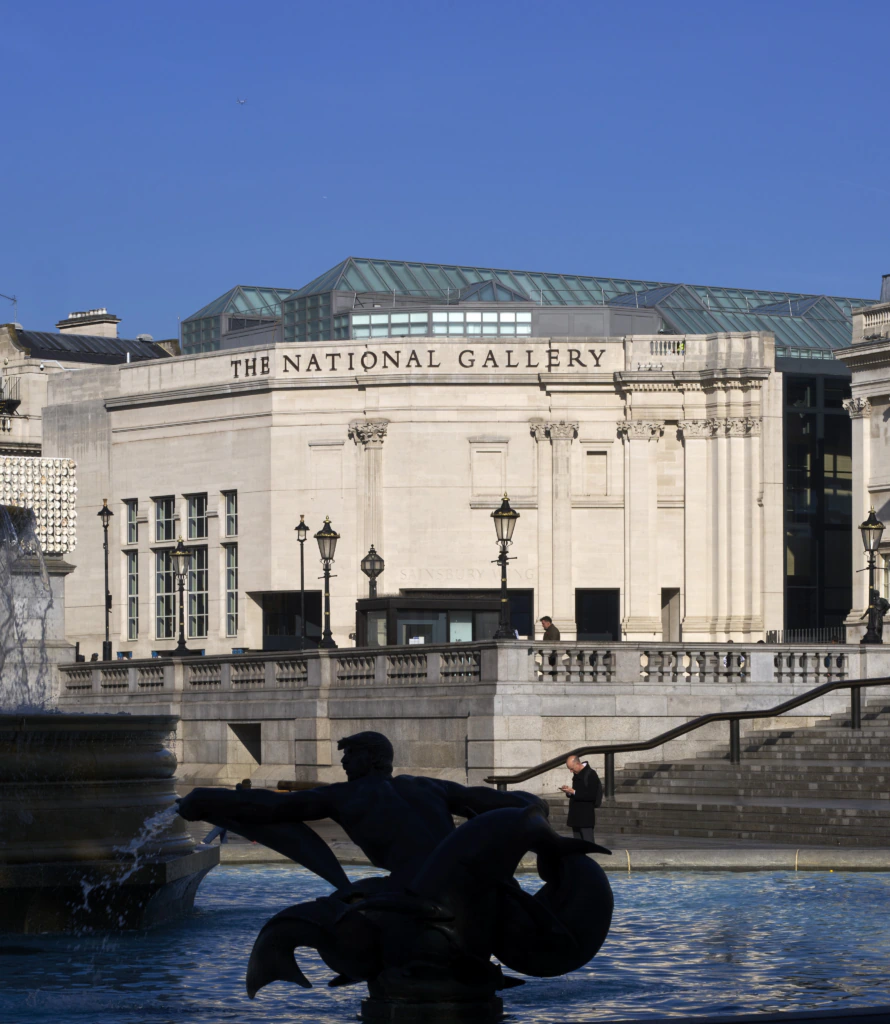
The report – which came just after the National Gallery announced redundancies to tackle an £8m deficit, following similar cutbacks at Tate’s galleries last year – found that the finances of many are in an increasingly fragile state, reliant on “riskier” income streams subject to market volatility.
These funding woes have shaken some long-held beliefs in the sector, most obviously the consensus in favour of free entry to the permanent collections of national institutions – the flagship New Labour policy once held as untouchable even to the austerity-hungry politicians of the 2010s.
In March, in its response to Labour peer Margaret Hodge’s review of Arts Council England, the UK government said it would explore scrapping free entry for overseas visitors to England’s national institutions.
Some museum and heritage leaders also broke ranks recently to signal that they are favour reintroducing admission fees in other circumstances. Nick Merriman, the former leader of the Horniman Museum & Gardens and English Heritage, said his views had changed because the policy “hadn’t done much in terms of widening the audience”.
Advertisement
Mark Jones, the former director of the Victoria and Albert Museum and British Museum, described universal free entry as “regressive and inequitable”, as it mainly benefits tourists who are “not particularly hard up”.
Such views appear to have growing support in the sector, given the increasingly stark imbalance in the public and private funding available to the mainly London-based nationals compared with smaller museums outside the capital.
A recent comment on the Museums Journal website echoed the opinion of many: “It’s time for a rethink. Charge tourists in London and share the profits with non-London museums. Why are people outside of London subsidising tourists while regional museums are cash-strapped? It’s not like people outside of London can pop into the majority of the nationals.”
Red herring?
But is the free entry debate a red herring? Some museum leaders have expressed frustration at the current discourse, questioning why a universal public good should be the first thing on the chopping block when other approaches could be taken.
Recent polling by the Art Fund showed that the public is strongly against scrapping the free entry policy, with 72% of Britons saying they would support a tourist levy to keep national museums and galleries free.
Advertisement
The Museums Association’s director, Sharon Heal, also backed the idea of a tourist tax, saying: “Introducing charges for overseas visitors would mean introducing ticketing systems and ID checks that would have ongoing staffing and costs implications. A tourism tax with ring-fenced investment back into museums would be a more effective way of channelling additional funding to the sector.”
The artist Tracey Emin, meanwhile, recently called on wealthy visitors to make a greater voluntary contribution to keep national museums free for the wider public, saying “people in responsible positions should start getting memberships not just for one museum, but for every one that they visit”.
There is also a view that the spending priorities of the bigger institutions need greater scrutiny. “We have allowed senior executives to receive honours and blue chip salaries; simultaneously, we have failed to challenge and scrutinise performance, value for money and service – and now we want to penalise the public by cutting programmes and introducing charging,” says one senior professional.

Nat Edwards, the director of the Royal Armouries – one of the few DCMS-sponsored institutions based in the north of England – feels that philanthropic funding at the nationals could be better managed.
“Tracey Emin was spot on when she said more people should be giving money for these things,” he says. “But actually, unless you’re really critical of that money coming in, it doesn’t necessarily do what it needs to.
“I know people are concerned with the situation, as they can see massive disparity between civic museums that face existential challenges, regionally based museums that are struggling, and then certain very prestigious majors that attract enormous amounts of philanthropy.”
This money is being spent in an unsustainable way, Edwards feels, with too much of a focus on capital expansion. “It creates a bubble where the investment in the new and shiny is far greater than in sustaining the boring but necessary,” he says.
“It’s not that [capital expansion projects] are wrong, it’s more that we’ve created the situation that celebrates that overblown, over-inflated stuff at the expense of the base.
“People can see massive disparity between civic museums that face existential challenges, regionally based museums that are struggling, and then certain very prestigious majors that attract enormous amounts of philanthropy”
“There are lots of well-paid jobs around the delivery of the big, glossy, philanthropic-driven project. But it’s disproportionate to the amount of money that’s going into the sustainable bit.”
‘Model of failure’
Edwards is concerned that this over-emphasis on new capital projects is “potentially creating a model of failure, because we are not addressing the fundamental stuff”.
He says the sector must start asking what the priorities for philanthropy should be: “What’s the real benefit to the public? Somewhere along the way, we seem to have lost that focus. No one’s saying, ‘hang on a minute, it’s really nice giving £100m to this institution, but what if you gave £10m to 10 institutions around the country?’.
“I think we would all benefit from a more robust and critical look about where money’s going, how it’s translating into public benefit and how we can have a conversation about reports of those benefits. Why not use some of that [private money] to create a robust arrangement that guarantees access to museums, rather than just build another shiny wing?”
Many museum professionals feel it’s well past time for a sector-wide conversation to hammer out some of these issues – and to ensure that the relationship between nationals and regionals can get back on to a more equitable footing.