Modern Art Oxford is among those galleries that offer visitors the chance to experience ambitious contemporary art programmes outside the four capital cities of the UK.
These venues, which include Mostyn in north Wales, Dundee Contemporary Arts, Ikon in Birmingham and MK Gallery in Milton Keynes as well as many others, face the challenge of operating in an environment where there is less public money to support what they do. As a result, they all have to work hard to attract audiences and generate income, whether that’s from private sources, visitor spend or activities such as corporate events.
For many of the UK’s regional art galleries, the drive to meet the changing expectations of today’s visitors combined with the need to earn income has resulted in redevelopments to help them achieve these aims.
Modern Art Oxford is the latest in a long line of galleries that have done this. The organisation has just spent £2m on a project to create what it hopes is a more welcoming, inclusive, and accessible environment for all visitors, but also one that creates opportunities to earn income from activities such as events. The redesign has also improved the environmental performance of the building, which will help Modern Art Oxford to play its part in a city-wide ambition to be carbon-neutral by 2040.
Blending past and present
A budget of £2m is not much and a lot has been achieved with this, although an ambitious four-month building schedule was a little too ambitious with the reopening having to be postponed for four weeks.
Advertisement
The gallery is housed in the former City Brewery, originally built in 1878. Modern Art Oxford first moved there in 1966 and over the years the various attempts to remodel and improve the spaces had meant that the spirit and feel of the original building had been largely lost.
A key aim of the current redevelopment, led by David Kohn Architects, was to re-establish this link by peeling away the many interventions that had covered up the original features and obscured the building’s history.
One of the legacies of its time as a brewery is a raised ground floor where beer barrels were loaded on and off the horse and carts. This does mean there is no level access at the front of the building, although visitors can use a flat-access entrance around the corner.
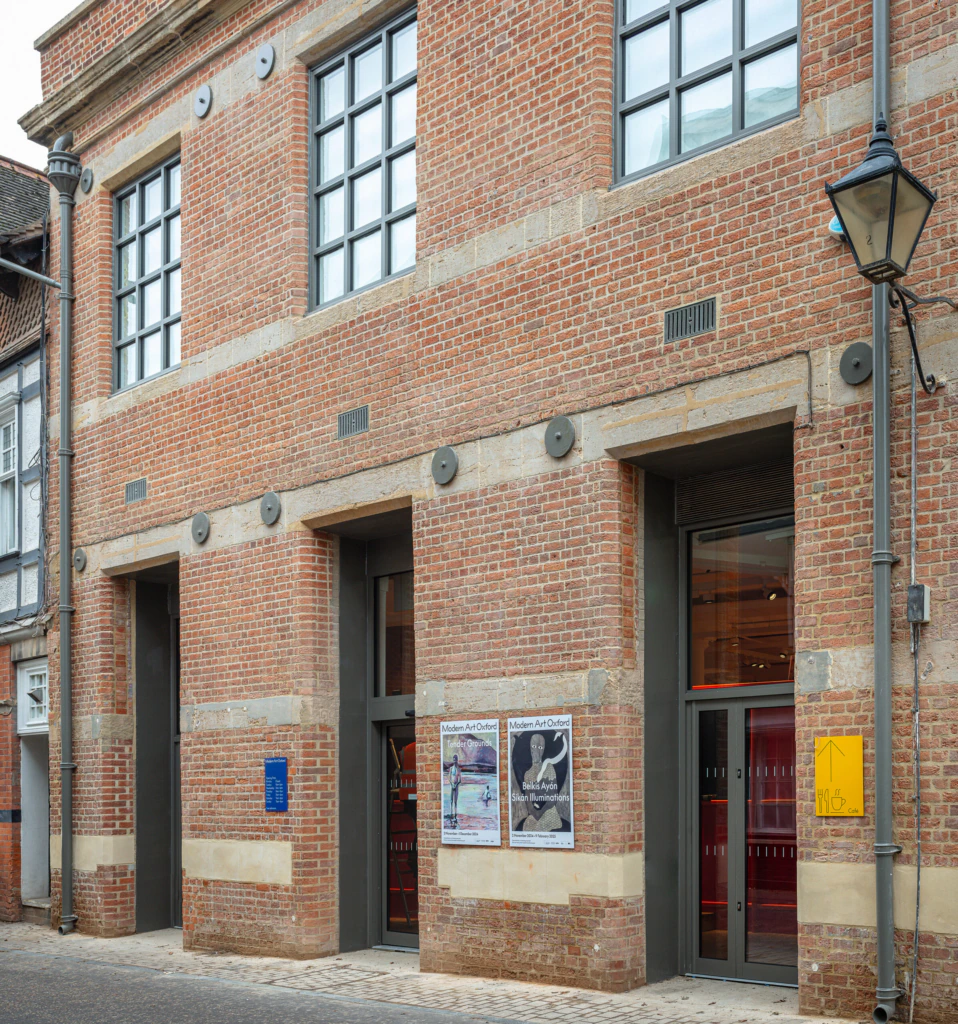
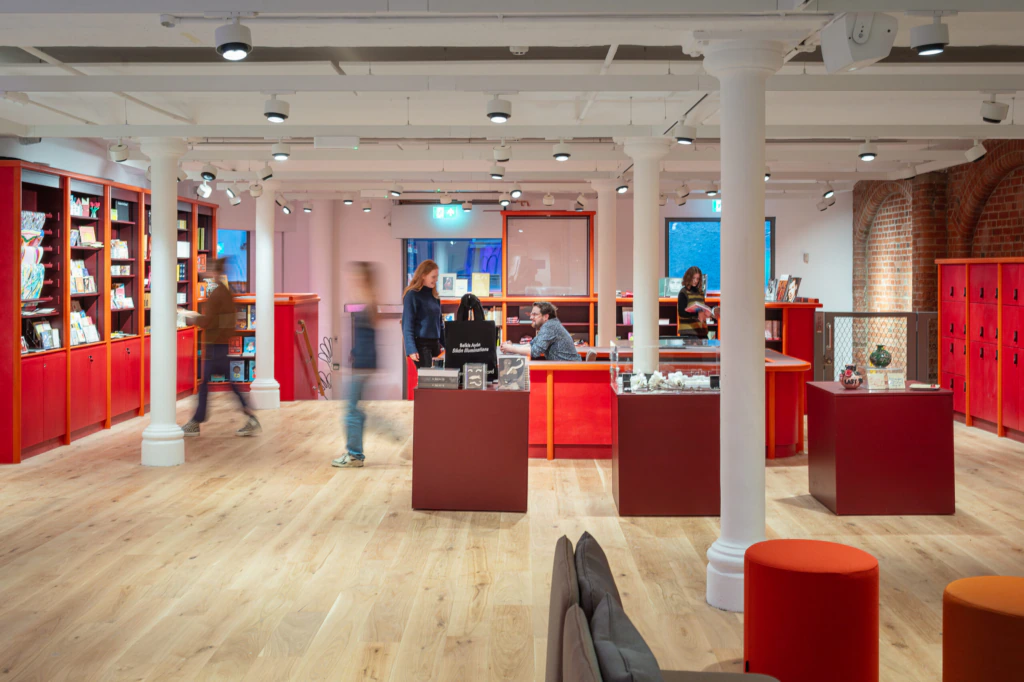
The remodelled ground floor previously housed the cafe, but this has been moved back down to the basement, which is where it was until a redevelopment in about 2010.Visitors coming in the front entrance are now greeted by a welcome desk and a shop instead of the cafe, which seems like a good decision.
Behind this is a large flexible space that can be used for a variety of events and activities. The whole space feels open and welcoming and sets a nice tone for the rest of a visit.
Advertisement
Art in the right place
The entrance area leads to a new ground floor gallery, which means visitors can see art straight away rather than having to wait until they head to the main galleries on the floor above.
This smallish space will host temporary exhibitions featuring work from creative practitioners based in Oxford, which should be a good way of forging community links and supporting the arts locally. Its first show is the Platform Graduate Award, an annual initiative that is designed to help artists further their talent after graduation.
Next to the new gallery area is an attractive space created to deliver the gallery’s learning and engagement programme. This can host workshops, talks and events, as well as providing facilities for more playful activities for families and young people.
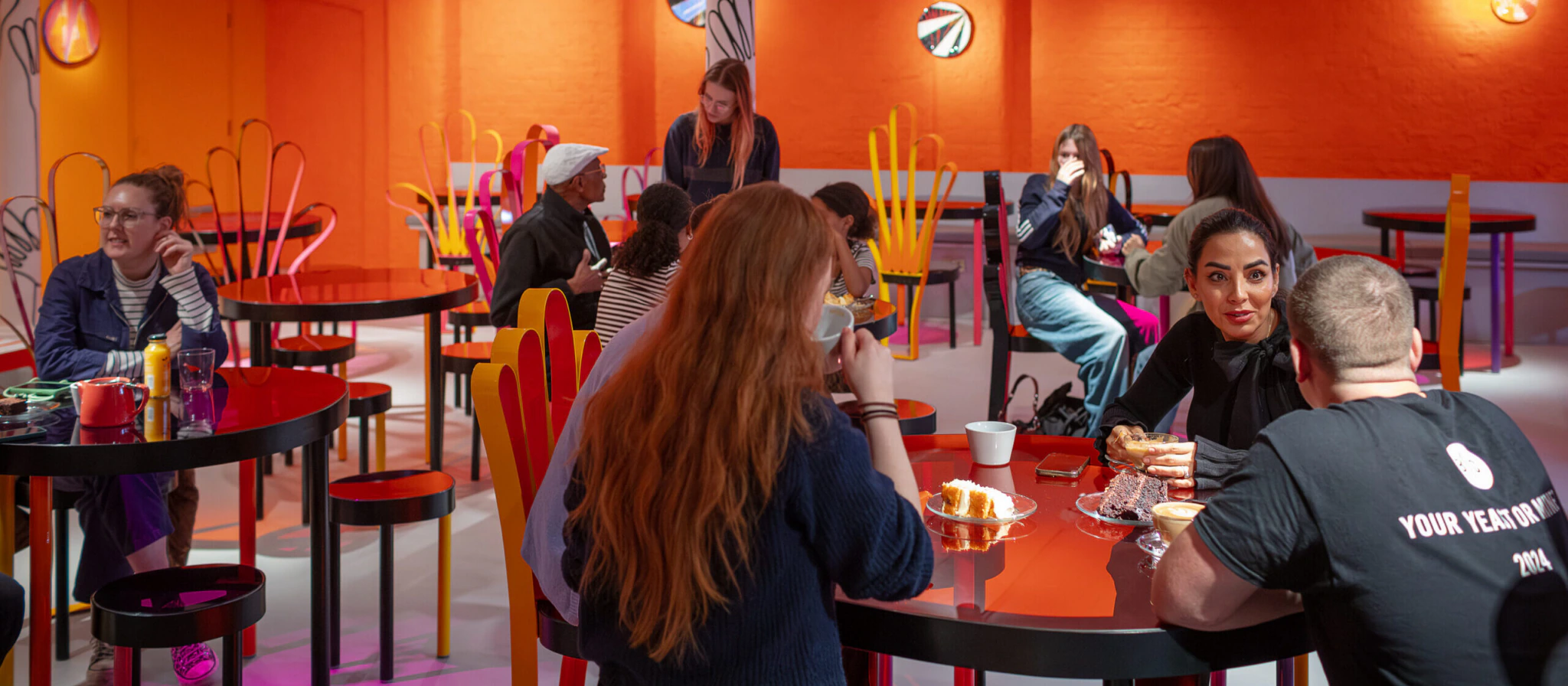
As you head down the stairs to the basement, you are greeted by a large drawing of a hand, which signals a theme that runs throughout the cafe. This has been developed by artist Emma Hart whose designs are inspired by her love of clubbing and the hands-in-the air-graphic are meant to represent the escapism of raves.
Bright oranges, reds and pinks create a joyful feel that is a far cry from the corporate look you get in many catering outlets. Named Club Together, the food in the cafe is meant to reflect the fun, attractive and inclusive theme created by Hart.
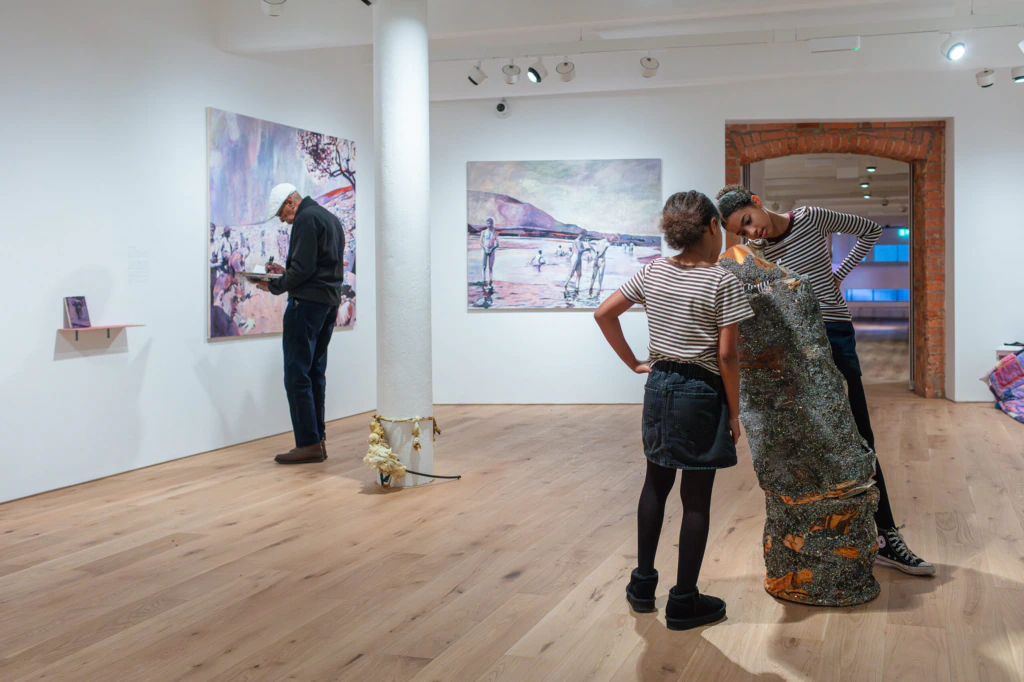
One area that is untouched by the redevelopment is the existing upper galleries. These are on the top floor of the building and combine a large main space and smaller galleries behind these.
Advertisement
A taste of Cuba
Modern Art Oxford reopened with a solo show by Cuban artist Belkis Ayón, who died age 32 in 1999. Ayón used a printmaking process called collography, producing what the gallery describes as “richly detailed and enigmatic artworks”.
The exhibition, titled Sikán Illuminations, features Ayón’s works that explore the cultural and spiritual world of the Abakuá, a predominantly Black male Cuban religious group originating in West Africa. This secret society was a lifelong source of inspiration for Ayón.
Ayón was one of the most prominent figures of 20th-century Cuban art but this is the first major survey exhibition of her work in a UK institution, showing how a gallery such as Modern Art Oxford can break new ground and offer experiences that visitors can’t see elsewhere.
Modern Art Oxford has a reputation as an important gallery with ambitious programming. Past directors include former Tate director Nicholas Serota and Andrew Nairne, who is now the director of Kettle’s Yard in Cambridge.
This latest redevelopment should help the contemporary art space maintain its reputation while making it better able to meet the needs of today’s visitors and artists.
Project data
Cost
£2m
Main funders
Arts Council England; CHK Foundation; Charina Endowment Fund; Garfield Weston Foundation; Gresswell Environment Trust; Lovington Foundation; Staples Trust; Wolfson Foundation; Jill Hackel and Andrzej Zarzycki; Béatrice and James Lupton; Anna Yang and Joseph Schull; Dasha Shenkman; Heidi and Carlo Baravalle; Domingo and Jenny Garcia; Russell and Jill Platt
Architect
David Kohn Architects
Cafe design
Emma Hart
Project management
Ridge & Partners
Environmental sustainability
Envision Consulting
Consulting structural engineer
Mike Wilford Associates
Lighting
TM Lighting
Art fabrication
The White Wall Company
Mechanical and electrical
Method Consulting
Accessibility
Evans Jones
Principal contractor
Kingerlee
Pembroke Street facade works contractor
Beard Construction
Pembroke Street facade works building surveyor
David Barrington
Exhibitions
Belkis Ayón: Sikán Illuminations, until 9 February; Barbara Steveni: I Find Myself, 1 March-8 June
Admission
Free