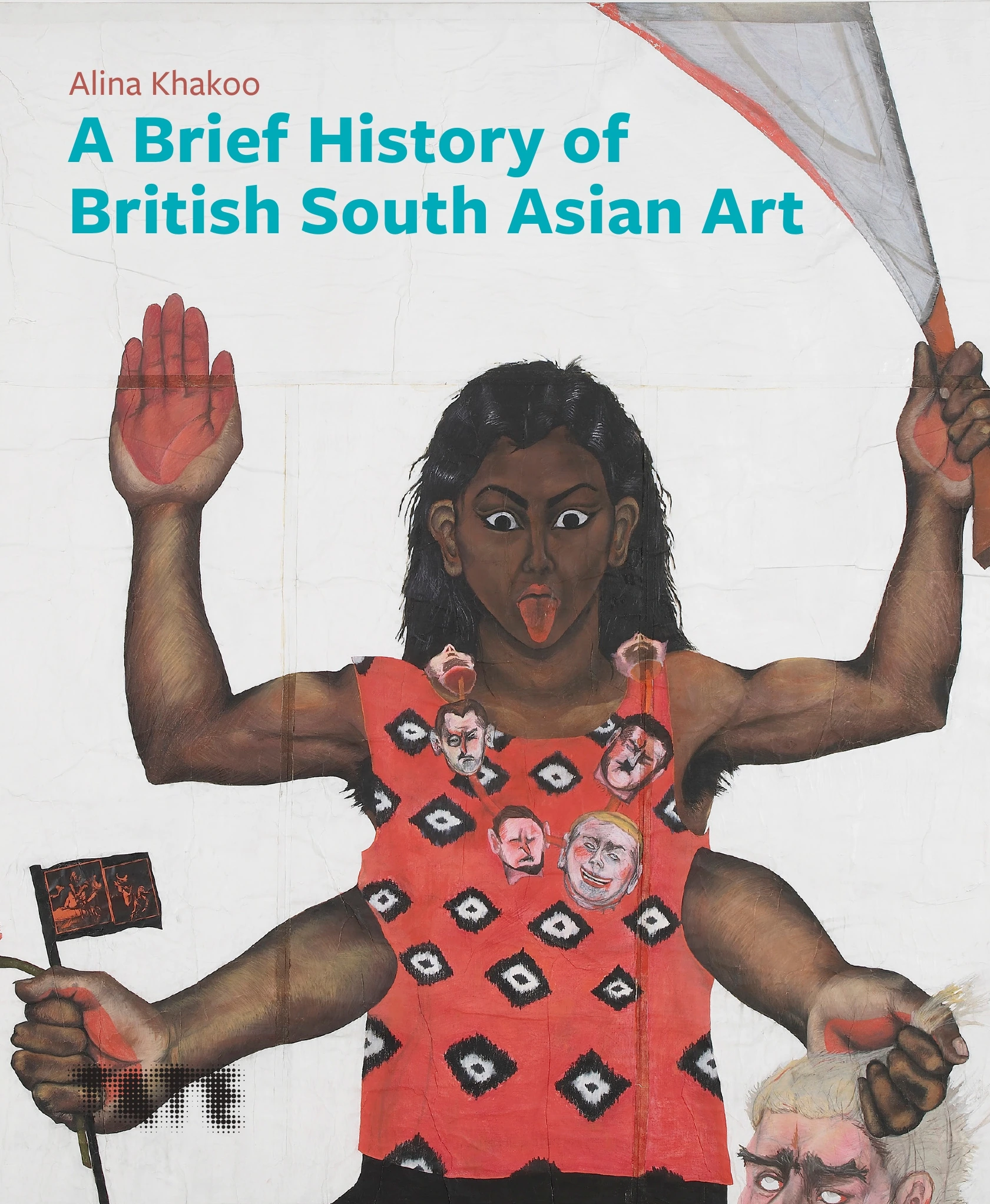
Art historian Alina Khakoo’s book establishes clear parameters from the start – how South Asian and South-Asian diasporic artists have contributed to Britain’s postwar visual arts ecology.
Sixty-four case studies spotlight painting, sculpture, photography, video and textiles made between 1950 and 2002, aiming to offer new perspectives on lesser-known artists. The book uses their work to explore the intersections of race, migration, class, gender, sexuality and disability in the context of British South Asian art and culture.
ISBN 978-1849768795
In her introduction, Khakoo divides these artists into two “waves”, broadly defined by time-based and socioeconomic factors.
Among the first wave of artists are Fatima Ahmed, Lancelot Ribeiro and FN Souza, as well as Rasheed Araeen who curated the seminal 1989 exhibition The Other Story: Afro-Asian Artists in Postwar Britain, at London’s Hayward Gallery.
The second wave includes Sutapa Biswas, Jai Chuhan, Chila Kumari Singh Burman and 2007 Turner Prize nominee, Zarina Bhimji.
Advertisement
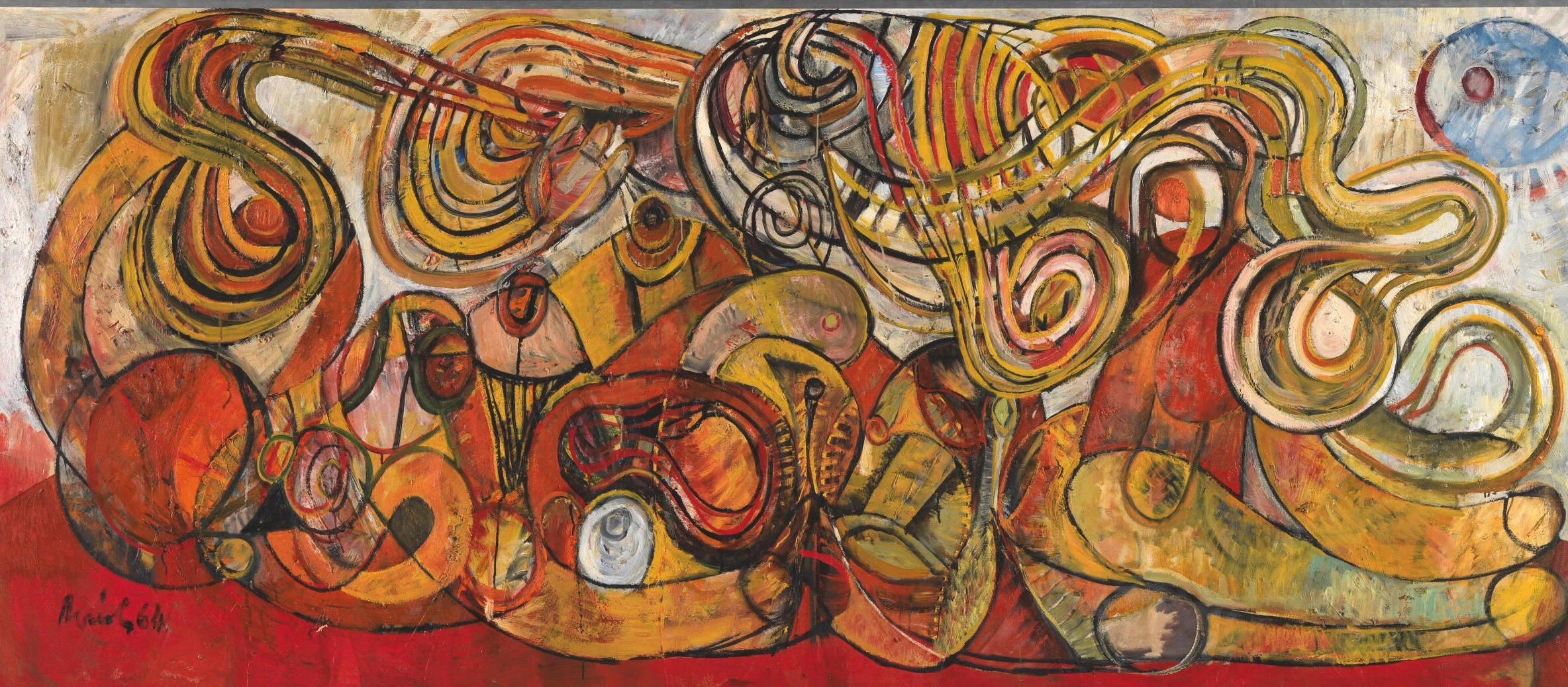
Arguably, one of the most notable figures Khakoo has selected is the Indian painter Avinash Chandra (1931-91). His oil-on-canvas Hills of Gold from 1964 alludes to the geography of both his birthplace of Shimla, in northern India, as well as to the potential status of Britain in the mind’s eye of postwar immigrants. Khakoo describes the swirling body-like hills of the painting as “fraught with ambivalence”, mirroring the experiences of many diasporic communities during this period.
Hills of Gold was one of the first works by a South Asian artist acquired by Tate. Khakoo argues that this milestone moment in 1965 resonates with a broader climate of racial unease.
One of the best-known artists featured in the book is pioneering photographer Sunil Gupta, who is represented by a portrait titled Gay. This depicts Gupta and his then partner in front of a cinema in London from his 1986 series Reflections of the Black Experience.
Gupta, whose practice is inextricably linked to his life experience, has a solo show opening later this year at Kettle’s Yard, Cambridge, called Sunil Gupta: Life with a Camera, 1970 – Now (September 2026-31 January 2027). The artist hopes to continue critical dialogue around the significance of his portraiture, and its impact on raising awareness of interracial and intercultural relationships, and international LGBTQ+ rights.
Another to feature in the book is Permindar Kaur, known for her evocative explorations of home, childhood and memory. The 1993 sculptural work Innocence, comprising a child’s orange dress and a Kirpan sword, is held in the Arts Council Collection. It is one of Kaur’s most recognisable works, combining Sikh symbolism while suggesting an uneasy confluence of adulthood and childhood.
From a body of works that also include miniature beds, Innocence marked, says Khakoo, a step away from working within the discourse of identity. Since this work, Kaur has largely used textiles, allowing her to explore scale and power in the feminine and domestic spheres, as well as the idea of belonging, as shown by her 2025 exhibition at London’s Pitzhanger Manor and Gallery.
Advertisement
Balraj Khanna, who died two years ago, is featured through the shimmering delicacy of his acrylic painting, Apple Green, made in 1991 using diffuse sprays of paint and texture. Khakoo favours a geographical, diasporic interpretation of this work, making comparisons to both journeys and explosions.
Khanna will be the subject of a solo show at Birmingham’s Ikon gallery later this year (30 September 2026-21 February 2027). It coincides with the anniversary of his commission for the nearby Birmingham Hippodrome, a 42-foot wide theatre curtain titled Safety Curtain, Astral Dance. I have seen this piece many times but, as if to prove Khakoo’s overall point, it is often overlooked.
This slim, accessible and richly illustrated anthology is part of a near-pocket-sized Tate series, and though the format allows for just one work by each artist, there is scope for a second volume focusing on work post-2002.
Indeed, this book advocates for the critical need for further, deeper research into the stories of British South Asian artists, including their processes, intentions and outputs.
Anneka French is a writer, curator and editor