A public debate has ignited following the removal of mummified Ancient Egyptian remains from display at Kelvingrove Art Gallery and Museum, and the Hunterian at the University of Glasgow.
The two museums are among a number of cultural institutions in the UK to rethink their approach to the care and treatment of human remains; in September, Manchester Museum announced that, following a public consultation, it had removed the remains of an Ancient Egyptian woman that had been on display for the past 200 years.
The same month, the Department for Digital, Culture, Media and Sport (DCMS) announced a review of its 2005 Guidance for the Care of Human Remains in Museums, saying the legal, ethical, and moral conversations around the issue had “evolved significantly”.
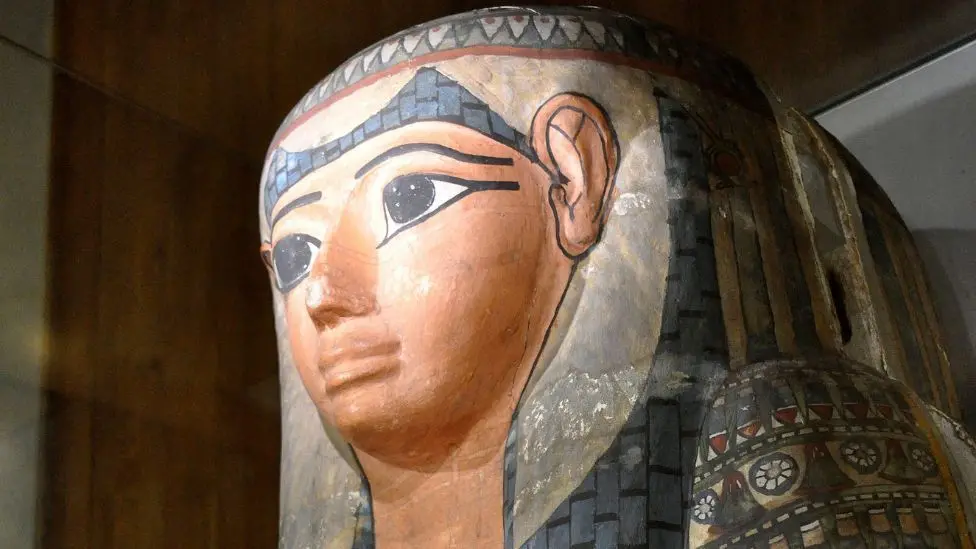
In a statement to the media, Glasgow Life, the trust that manages Kelvingrove, said the mummified remains of an Ancient Egyptian priest, Nekht, had been taken down in the “absence of consent from the deceased individual or their descendants”.
The trust said the decision “reflected contemporary museum practice” and that “removing ancient Egyptian human remains from display is more respectful to the deceased individuals”.
This follows the publication of the International Council of Museums’ revised Code of Ethics over the summer, which requires museums to “uphold the inherent dignity of human remains and promote respect for their significance”, although it does not state that all remains should be removed from display.
Advertisement
Glasgow Life also cited a report published last year by the All-Party Parliamentary Group for Afrikan Reparations, which called on museums to stop displaying African ancestral remains and urged to the government to make the public display of human remains an offence “except if appropriate consent is obtained or for religious or funerary purposes”.
Meanwhile the Hunterian confirmed that, following an internal ethical review, it had covered an open sarcophagus containing the mummified remains of Lady Shep-En-Hor. The sarcophagus itself remains on public display.
A statement from the university said: “The Hunterian takes the view that the Lady Shep-En-Hor deserves privacy in death, while retaining its commitment to providing visitors, students and staff with an accessible introduction to the importance of ancient Egyptian culture for an understanding of the world's history.”
Public reaction
The developments have shone a public spotlight on a rapidly evolving area of museum practice, attracting criticism from some politicians and commentators.
Murdo Fraser, the Scottish Tories’ culture spokesman, described the move as “woke madness” and censorship, saying that ancient Egyptian mummies were effectively being “cancelled... by a society so obsessed with modern sensibilities”.
Advertisement
Meanwhile Robert Tombs, an emeritus professor of French history at the University of Cambridge, told The Telegraph that the decision was “absolutely scandalous” given that such institutions are funded by taxpayers. He said that such policies risked making “areas of the past invisible” to ordinary people.
However, there was also public support for the museums’ decisions. The Scotsman’s arts and culture correspondent, Jane Bradley, wrote that although “the idea of offending a mummy is plain bizarre [..] respect, on the other hand, is not”, adding that it was “somewhat jarring” to see human remains on show alongside objects such as dolls.
“Instead of asking why they have suddenly been removed, perhaps the question is why they have been there for so long in the first place?” she asked.
Sector debate
There has also been disagreement within Scotland’s museum and heritage sector about the best approach.
Stuart Robinson, the former director of the Charles Rennie Mackintosh Society, wrote on LinkedIn that “applying modern, 21st-century bureaucratic consent standards retrospectively to ancient history is an absurd and impossible standard. It completely undermines the educational mission of public museums”.
Advertisement
“If we begin locking away priceless archaeological artifacts because we lack a signed waiver from 2000 BC, where does the logic end?” he asked. “Do we empty our galleries of everything that pre-dates modern legal frameworks?”
Meanwhile, heritage professional Justin Davis, of the University of Stirling, said: “Scotland is leading the way in repatriating artefacts, and returning human remains. We are doing what other museums should be doing and I’m incredibly proud.”
Other UK museums have since confirmed that they will continue to display Ancient Egyptian remains. National Museums Scotland told The Scotsman that mummified remains would stay in the galleries, but only where they are “key to telling an important story about a place, object, practice, person or people”.
The British Museum told the Daily Mail that it has “no plans to remove mummies from display”. The museum’s human remains policy lists the “public benefits of the retention of human remains in the collection”, including research, education and understanding “the varied ways that different societies have conceived of death and disposed of remains of the dead”.
The Museums Association’s director, Sharon Heal, welcomed the developments, saying ethical decisions relating to human remains depended on context and could vary between museums.
She said: “We are pleased to see Glasgow Life and the Hunterian taking a considered approach that treats these collections with the respect and dignity they deserve.
“The MA Code of Ethics asks museums to ‘be understanding of different religious, spiritual, and cultural perspectives when working with collections, particularly human remains and sacred items’ and ‘be clear and open about why the museum holds human remains’.
“What is ethical will depend on specific circumstances and contexts, and can vary between museums. We encourage museums to have conversations with stakeholders, including with communities that the human remains have originated from, about how and where these collections are best looked after.”