Museums across the UK are experiencing a “Bayeux bounce” as their visitor figures skyrocket thanks to public interest in the tapestry.
The high level of demand means thousands of people have missed out on tickets to see the real Bayeux Tapestry, which is on show at the British Museum (BM) in London until July next year.
The most recent release of tickets saw an online queue of 180,000 form by 10am - when the tickets sold out at 1pm, the queue had only reduced to 169,000.
As part of the British Museum’s broader Bayeux around Britain programme, a network of more than 60 partner organisations – sponsored by WordQuant – has been set up to provide education programming linked to the tapestry. The network includes museums, galleries, libraries, archives, cathedrals and heritage sites (see box).
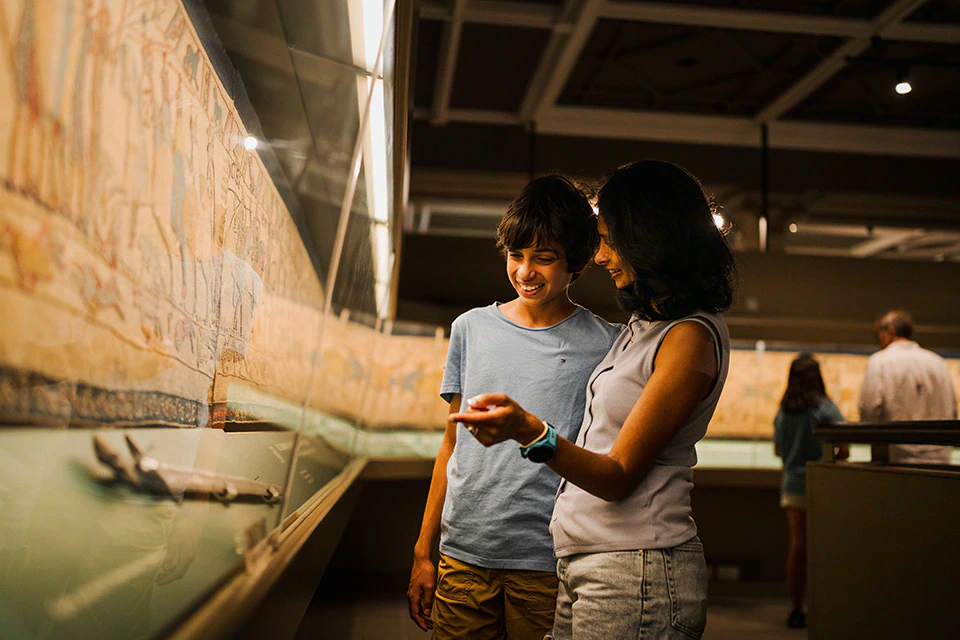
Within these partner organisations, a number of museums hold full-size replica Bayeux tapestries and are reporting immediate benefits.
At Reading Museum, museum manager Matthew Williams said that the Berkshire venue, which holds a Victorian replica of the Bayeux Tapestry in its collection, saw a 74% increase in visitors in October compared to the previous year, with a total of 16,693 people visiting the museum that month alone.
Advertisement
Reading Museum’s replica – which is an embroidery just like the original – is faithful to the 900-year-old version’s length of 70 metres and was created in 1885. Visitors can see it for free, compared to the £33 ticket price and long queues at the British Museum.
This soaring interest comes with its challenges though. “We have trained more staff to deliver our public tours and recruited more welcome volunteers to help us manage the crowds, especially at weekends and school holidays,” said Williams.
He said the local authority museum’s creative team are responding to visitors’ needs and comments while also finding innovative solutions to cope with the increase in footfall.
“We have made sure to keep our website updated to manage expectations and to clearly show when the [replica] Bayeux Tapestry is closed for booked tours or when it will be busy, to avoid disappointment,” said Williams.
“We have worked closely with our shop suppliers to keep up with demand so we don’t run out of stock, and we have also had to look at how we manage fulfilling online shop orders as demand increases.
“Our tours are fully booked until June 2027; so far in 2026 cafe income is up 46%; donations by 83% and shop sales 93%,” said Williams. “We are getting so much positive feedback and are exceeding visitors’ expectations of Reading Museum and the town itself.”
Advertisement
Williams said that the Bayeux bounce had not come as a complete surprise: “We have been planning for this since 2024 to maximise this unique opportunity to put Reading on the map with the media, particularly working Reading’s Economy & Destination Agency and the council’s marketing and communications teams to plan for the interest around the Year of the Normans [in 2027] and the Bayeux Tapestry loan.
“We have more creative programming planned in 2027,” said Williams. “The museum also manages the ruins of Reading Abbey, where King Henry I is buried, who was the youngest son of William the Conqueror, so this is another important part of our visitor offer and central to Reading’s Norman story.”
“There is a wider economic impact for Reading – annually the visitor sector is worth £405 million to the local economy – this will only add to the value,” said Williams.
The Great North Museum: Hancock in Newcastle upon Tyne is hosting the free display Bayeux-on-Tyne: Drawing the Bayeux Tapestry until 17 January 2027.
Museum manager Malavika Anderson said: “We have been in conversation with BM for a long time following the announcement of the Bayeux programme as we care for a very special item in the collections of the Society of Antiquaries of Newcastle upon Tyne. The 174-year-old Victorian paper copy of the Bayeux Tapestry, made here in Newcastle by school pupils, is 5m longer than the original, at a staggering 77m.”
Four drawing panels showing the famous scenes of the tapestry have been restored and are currently on show at the Great North Museum: Hancock.
Advertisement
Anderson said that visitor feedback has been excellent. The museum has also developed a tie-in exhibition in partnership with the food chain Greggs, which created its own history of the sausage roll in tapestry format.
“The Greggs Ta-Pastry is also on view to visitors and has been popular amongst local audiences,” said Anderson.
The museum has seen a 23% increase in visitor figures, year on year this October, which amounts to 3,107 more than last year. Donations are up by 30%, retail up 13%, cafe 11%, Anderson said.
Other organisations that are showing replicas include the Nicholson Institute in Staffordshire, which will display its replica tapestry embroidered in 1886 in the new year from 12 January until 31 March 2027, and Gloucestershire’s Tewkesbury Abbey, which has a full-scale facsimile of the Bayeux Tapestry on display in the abbey's Norman nave until July next year.
Meanwhile, London's Natural History Museum staged a temporary display earlier this year of the "Baa-Ewe Tapestry", a seven-metre tapestry created to promote the release of Shaun the Sheep: The Beast of Mossy Bottom, a new feature film from Aardman Animations. The woollen tapestry featured a section knitted by Olympic diver Tom Daley.
Bayeux Around Britain
The Stothart Cast
An cast featuring depictions of Harold Godwinson, William the Conqueror and a medieval knight. There were taken from wax impressions lifted from the Bayeux Tapestry in 1816, making them some of the most direct replicas ever taken from the original tapestry. The casts are traveling to the following venues:
- Hastings Museum & Art Gallery (ended on 8 November 2026)
- Norwich Castle Museum & Art Gallery (12 November 2026 – 10 January 2027)
- National Library of Wales (dates TBC)
- Rievaulx Abbey (March to May 2027)
- The Great Tapestry of Scotland Visitor Centre, Scottish Borders (dates TBC)
- Rochester Cathedral (dates TBC)
The Chew Valley Hoard
The hoard consists of 2,584 silver pennies from the period around 1066-68 and was likely buried for safekeeping during the period of turmoil immediately following the Norman conquest.
- Coins from the hoard feature in the British Museum’s Bayeux Tapestry Experience, until July 2027.
- Chew Valley Hoard: Coins, Kings and Conquest, Roman Baths Museum Bath, 8 Jan-14 March 2027.
- Museum of Somerset, Taunton will host items from the hoard and run a diverse programme of events across the county.
- New Chew Valley Hoard permanent gallery where all 2,584 coins will be on display opens at Museum of Somerset in 2028.
Bayeux-linked exhibitions
- Normans: The Welsh Perspective will run at the National Library of Wales, Aberystwyth from 21 November 2026 to 20 March 2027.
- Bayeux Around Britain is at North Lincolnshire Museum in Scunthorpe, an exhibition featuring large scale projections of the tapestry will be shown alongside Norman objects from the museum’s collection. 21 November-9 May 2027.
- Bayeux, Battles and Making History will run at the Box in Plymouth a multimedia display will give a scaled-up view of the Bayeux Tapestry, accompanied by special AV materials supplied by the British museum. 13 Feb-11 April 2027.
- Coins of the Conquest is at Lincoln Castle until 1 March 2027. The castle is also host to a newly commissioned model of a giant dragon named Hastings (until Aug 2028), inspired by the mythical beasts that appear throughout the borders of the Bayeux Tapestry. Hastings joins the castle’s two existing dragons to help bring the story of the Norman Conquest to life within one of William the Conqueror’s great castles.
- The Great Tapestry of Scotland visitor centre in Galashiels, Scottish Borders, will present Two Tapestries, Two Nations from 20 November 2026-July 2027. The centre, which is operated by the cultural trust Live Borders, is home to one of the world’s longest contemporary tapestries, which began with a vision by author Alexander McCall Smith, and was designed by artist Andrew Crummy who was inspired by the Bayeux Tapestry. The contemporary tapestry was hand-stitched by 1,000 people across Scotland and features 160 panels. Families, local groups, volunteers and community participants will be invited to contribute to collaborative activities such as Scotland after Bayeux: 1000 Years of Stories, creating a legacy shaped by public participation.
- In Northern Ireland, The Carrickfergus Museum will present a new exhibition which invites visitors to explore a transformative chapter in Irish history, beginning with the arrival of Anglo-Norman forces in 1169 and the profound changes that followed.