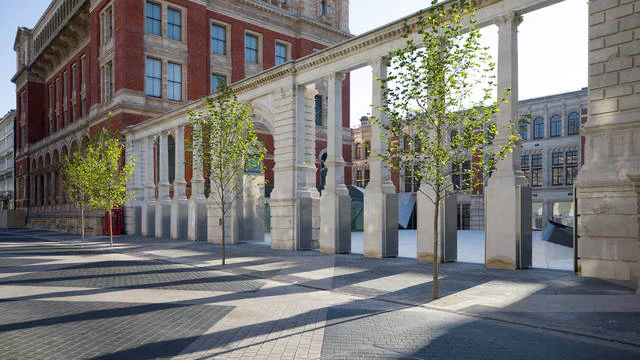
The Victoria & Albert Museum (V&A) is to end all in-person adult learning delivered by the V&A Academy, following a strategic review of the programme.
The academy delivers a range of expert-led courses, practical workshops, and lectures centred around the V&A’s collections, including professional development courses and training for museum and heritage professionals.
The V&A confirmed last week that it is moving to “more focused” provision through digital courses, lectures and talks as part of wider efforts to ensure that its activities are financially sustainable.
In a statement to Museums Journal, the V&A said: “In recent weeks, we have undertaken a strategic review of the V&A Academy, including a comprehensive consultation process with all affected staff.
“We can now confirm plans to continue our adult learning programme, with a more focused provision of digital courses, lectures and talks delivered by V&A experts, exploring a diverse range of topics celebrating design and creativity in all its forms.
“This has been a difficult decision made as part of museum-wide efforts to ensure all our activity is financially sustainable and supports the long-term priorities of the V&A across the UK.”
Advertisement
The V&A said lifelong learning would continue to be supported by its wider educational offer.
It said: “Our wider education programme supports lifelong learning through national school programmes, university partnerships, collections-based research and PhD placements, creative residencies, and specialist training programmes.”
According to source at the museum, staff at the academy feel “devastated and demoralised” by the decision. Museums Journal understands that many posts in the academy team will be made redundant in December, while some staff may transfer to different roles.
Around 150 students are currently enrolled in the academy’s in-person courses, according to the source. Those who are mid-way through course will be reimbursed.
An open letter circulated internally during the staff consultation, which was signed by 65 members of staff, expressed concern that the proposal would undermine the founding principles of the V&A and its stated commitment to lifelong learning. The letter said object-based learning directly from the museum's collections was central to the academy's distinctive offer.
It said: “For generations, the V&A has offered something extraordinary: the opportunity to study art, history, craft and design alongside the objects themselves… the academy connects people with the collection in ways that cannot be replicated through a screen.”
Advertisement
It said digital provision should complement rather than replace in-person teaching.
“For some learners, particularly those less confident with digital technology, this change will mean losing access to the academy altogether,” it said.
The letter also highlighted the wider benefits of adult learning, whose students go on to become members, advocates, patrons and regular visitors to the museum, questioning whether the financial value of the programme could be assessed solely through ticket sales.
It said the abolition of in-person learning raised “a fundamental question: what happens when the commercial success of a museum begins to take precedence over the very purpose of its existence?”.
The source told Museums Journal: “In-person open access adult learning has been happening at South Kensington from its inception. This decision trashes that whole tradition.
“Adult education is not the passive consumption of online content. It is built on sustained engagement, discussion, community and, in the case of museums, direct encounters with collections… The distinctive educational power of learning through objects, expertise and shared experience in the museum itself has simply disappeared from view.”
Advertisement
Museums Journal understands that staff had been previously concerned about the transfer of the academy into the institution’s newly established commercial division in 2024. Their fears about the move had now been realised, said the source, who described it as a “canary in the coalmine” for the growing commercialisation of public institutions.
The source also questioned plans for the future use of the V&A's educational facilities, including the Hochhauser Auditorium, which was funded via a donation from the philanthropist Andrew Hochhauser to support public education and cultural engagement.
In response to these queries, the V&A said: “The academy has made a valuable contribution to the museum. As part of this review, we have considered both audience impact and financial performance and concluded that a more focused model will enable us to sustain the programme while concentrating resources where they can deliver the greatest overall impact.”