
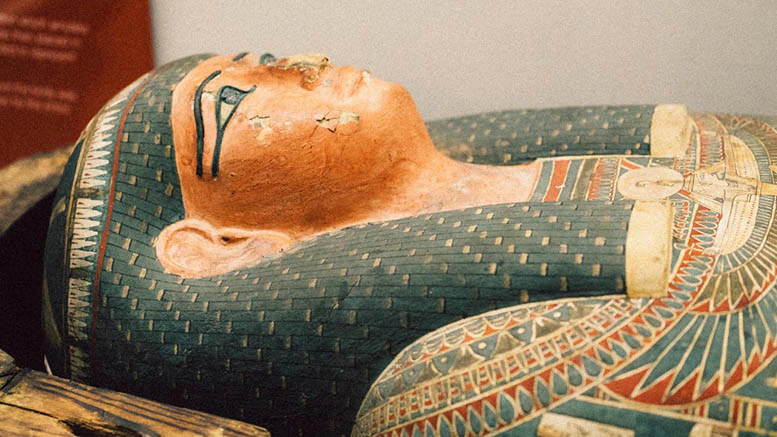
There are calls for new research and guidance on human remains in museum collections following a Guardian investigation.
The newspaper found that the number of human tissue items originating from overseas is significantly higher than previously thought.
The investigation used Freedom of Information requests to identify 241 UK museums, universities and councils that currently hold human remains. Those institutions hold more than 263,000 items of human tissue in total, with more than 37,000 of those known to originate from overseas. The origin of a further 16,000 items is unknown.
According to the Guardian, “of the 28,914 items of human remains known to originate from outside Europe, 11,856 were identified as coming from Africa, 9,550 from Asia, 3,252 from Oceania, 2,276 from North America, and 1,980 from South America”.
The research found that London’s Natural History Museum holds the largest collection of non-European remains, with at least 11,215 items, while the University of Cambridge has the second largest, with at least 8,740 items in its Duckworth laboratory, including 6,223 remains known to originate from Africa.
Around 100 museums were able to disclose an exact or estimated figure of individual people represented in their collections, totaling around 79,334. The remaining institutions were unable to provide an estimate due the co-mingling of remains or gaps in documentation.
Advertisement
The Guardian reported that many of the items are stored in “sacrilegious” ways that do not meet the Department for Culture, Media and Sport’s (DCMS) 2005 guidance for the care of human remains.
The Museums Association’s (MA) director Sharon Heal said concern about human remains had been expressed during the recent sector-wide consultation on the association’s newly revised Code of Ethics.
Heal called for the current government guidance on human remains to be updated, saying a coordinated approach across the sector is needed to address the issue.
She said: “The [Guardian] investigation provides invaluable insight into holdings of human remains across the UK.
“In order for ethical and restorative work to take place we need to understand what we have in our collections and to start conversations with stakeholders about how and where these collections are best looked after.
“A coordinated approach across the UK with funding for research and relationship-building, so that these collections can be cared for in the appropriate place with the respect and dignity that they deserve, is needed.
Advertisement
“We now have a better understanding of the meaning and impact of colonial era collections, and the Guidance for the Care of Human Remains should be updated in consultation with the sector and communities of origin.”
The MA’s Supporting Decolonisation in Museums campaign also provides valuable guidance on caring for colonial-era items and beginning a process of return, added Heal.
The historian Dan Hicks, who assisted the Guardian investigation and whose recent book Every Monument Will Fall addresses human remains in institutional collections, told Museums Journal that the current guidance from the DCMS is based on “questionable” evidence.
He said: “The Guardian investigation represents the first snapshot of human remains in UK museums and collections since the DCMS Scoping Survey in 2003 (for England), which informed the current DCMS guidance.
“That survey identified 132 institutions in England holding human remains, and informed the key statement in the 2005 guidance that ‘the vast majority of human remains in UK museums are of UK origin’.
“The Guardian investigation reveals a very different picture. Analysis of the data is ongoing, but preliminary findings indicate that some 250 UK institutions hold human remains, of which more than 200 are in England, and that less than half of the items of the more than 260,000 human remains are recorded as from UK archaeological excavations.
Advertisement
“With the evidence base for current guidance so questionable all these years later, it’s time for DCMS to review its guidelines.”
In a further post on LinkedIn, Hicks said the issue was about “transparency, ethical treatment, the failure of the guidelines, the need for regulation, returns on a case by case basis, and a national conversation about what to do with the unprovenanced human tissue in legacy colonial collections”.
The investigation follows a report last year by the All-Party Parliamentary Group for Afrikan Reparations (APPG-AR) calling for legislation banning the display of “ancestral human remains” in museums without appropriate consent.
The group’s chair, Labour MP Bell Ribeiro-Addy, recently introduced a bill to ban the sale of human tissue. She said the way human remains are stored and displayed in museums “shows a complete lack of respect, denying dignity in death and perpetuating colonial violence”.
“It brings shame on our nation,” she wrote in a post on X responding to the Guardian report. “With thousands of items originating from abroad, the scale of overseas human remains held in UK museums is far larger than previously acknowledged. Many were looted during colonial rule, often through coercion, theft and even murder.
“Like the skulls of the Chimurenga freedom fighters, executed under British colonial rule, their body parts shipped back as trophies. Their descendants are urging UK museums to help them identify and repatriate these ancestral remains.
“It is barbaric that looted human remains are being warehoused in boxes, with museums often unable to identify their provenance. Some institutions admit they hold boxes of remains with no idea of who they belong to or where they came from.
“Government guidance says remains should be ‘stored separately and handled respectfully in controlled, monitored environments’. It stipulates museums should ‘compile and make public an inventory of their holdings of human remains’. Too often, these things aren't happening.
“These remains belonged to human beings. We need to address the lack of respect and transparency museums show toward them. Remains should be openly catalogued. Looted body parts should be respectfully repatriated to the communities they were stolen from.”
Labour peer Paul Boateng, who is also a member of the APPG-AR, told the Guardian that the scale of the collections of human remains held in the UK was “frankly sacrilegious and deeply spiritually offensive”.
He called on the DCMS to “create a national register of human remains and issue mandatory guidelines for their timely return, wherever possible, to their countries and peoples of origin”.
The investigation comes amid a growing debate in the museum sector about the care and display of human remains. National Museums Northern Ireland and Manchester Museum are among a number of institutions that have carried out public consultations on their approach.
Meanwhile the University of Oxford’s Pitt Rivers Museum and the Horniman Museum and Gardens in London have introduced new human remains policies in recent years.

I wrote to the DCMS in December 2025 to point out that the DCMS Guidance on human remains relating to ownership was incorrect in law. I explained that most museums do not own any human remains in their collections. All they have is a form of non-legal custody. This is true for the national museums as well as others.
Museums need to protect their reputation and preserve public trust. The way human remains were acquired in colonised countries varied widely but would often involve wrongdoing. The DCMS Scoping Survey in 2003 (for England) noted that this included “duress, deceit, unlawful removal and, very occasionally, murder.”
When I wrote to the DCMS, I recommended that the guidance needed updating. I therefore support all of the comments made by Sharon Heal, Paul Boateng and Bell Ribeiro-Addy and Dan Hicks.
Now that we have the MA’s excellent guidance on “Supporting Decolonisation in Museums,” the time is right to update the DCMS guidance.