On 27 March 2025, the Tasmanian Aboriginal Centre returned to Tasmania the remains of a young man after his absence of about 200 years. He was killed as part of the near genocide of the Tasmanian Aboriginal people by European colonists during the early decades of the 1800s.
The tribe to which he belonged was entirely wiped out so there are no surviving direct descendants. Afterwards, his skull was taken as a racial specimen, ending up in the University of Aberdeen in the 1850s alongside other skulls from around the world to support the teaching of racist “comparative anatomy”.
The university’s first experience of repatriation was in 2002, when the Horn Society of the Kainai Nation/Blood Tribe in Canada requested the return of a sacred bundle. The precedent this set, of working collaboratively with a specific community, has guided our approach since then, with our procedure gradually changing in response to our experiences.
Today, our procedure focuses discussion through a committee with university staff, an external museum and the proposed recipient. Rather than having criteria that have to be met, the procedures aim to ensure that all aspects are discussed, including the history of the item, its significance to both the proposed recipient and the university and what possible outcomes there could be.
So far, all discussions have been consensual as well as rigorous, and the university’s senior management and governing body have been able to unanimously agree to return objects.
Poor provenance
Our collection includes the remains of several Aboriginal Australian people. While the provenance of most is poor, the origin of the remains of the Tasmanian person were clear, so in 2018 we made direct contact with the Tasmanian Aboriginal Centre.
Advertisement
We then worked together to prepare a proposal to the advisory committee, after which it was approved by the university’s governing body in February 2020.
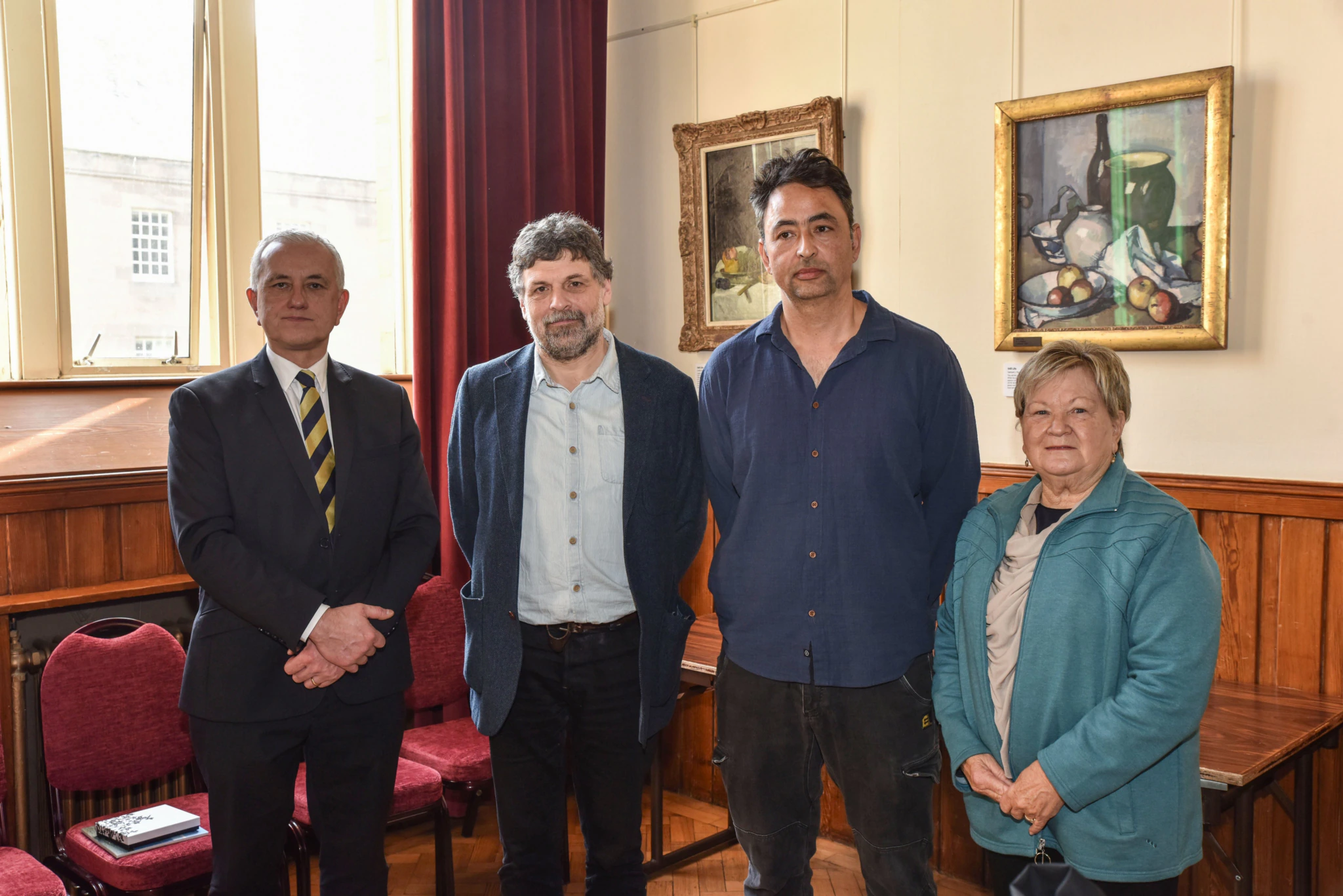
Covid and other practical and financial challenges delayed the return, but with the support of the Australian Government, two representatives from the Tasmanian Aboriginal community were able to come to Scotland in March to collect the ancestral remains and a shell necklace that was being returned by the Hunterian at the University of Glasgow. They also met with some English institutions to discuss further possible returns.
Just before their arrival, we realised that there was a Tasmanian stone scraper in the collection. As there was not enough time to go through the procedure, this was lent to the Tasmanian Aboriginal Centre and its formal transfer is now being discussed.
Challenges and legacy
While decision-making has been straightforward, there have been two main challenges. First, it is not always easy to find the appropriate body to discuss a return. When returning a Benin Bronze in 2021, this involved finding someone with good connections in Nigeria so that we could develop a proposal that had the support of the Nigerian government and its national museums, as well as the Court of the Oba to whom it was finally returned.
The other issue has been paying for the costs of the return. Fortunately, so far resources have been available, particularly from host governments, while we have been able to help with export licensing, airline formalities and packaging.
Advertisement
We have also learnt to be sensitive to how we talk about the returns, with all media communications agreed with the recipient. Our story may not be the most important one, but it is one we can tell to help other museums thinking about returns. We need to be careful not to try to speak on behalf of others and to respect who owns the knowledge, which is sometimes sensitive, that we have gained.
With collections formed over centuries, these are very small steps, but at least we can try to take them together with the people from whom ancestors and other items were taken.
We have become ever more aware of our ignorance about the collections we care for, and have been moved by the friendships that have grown as we try to address the legacies we share.
Neil Curtis is the head of museums and special collections at the University of Aberdeen