There is a point at which professional detachment becomes impossible.
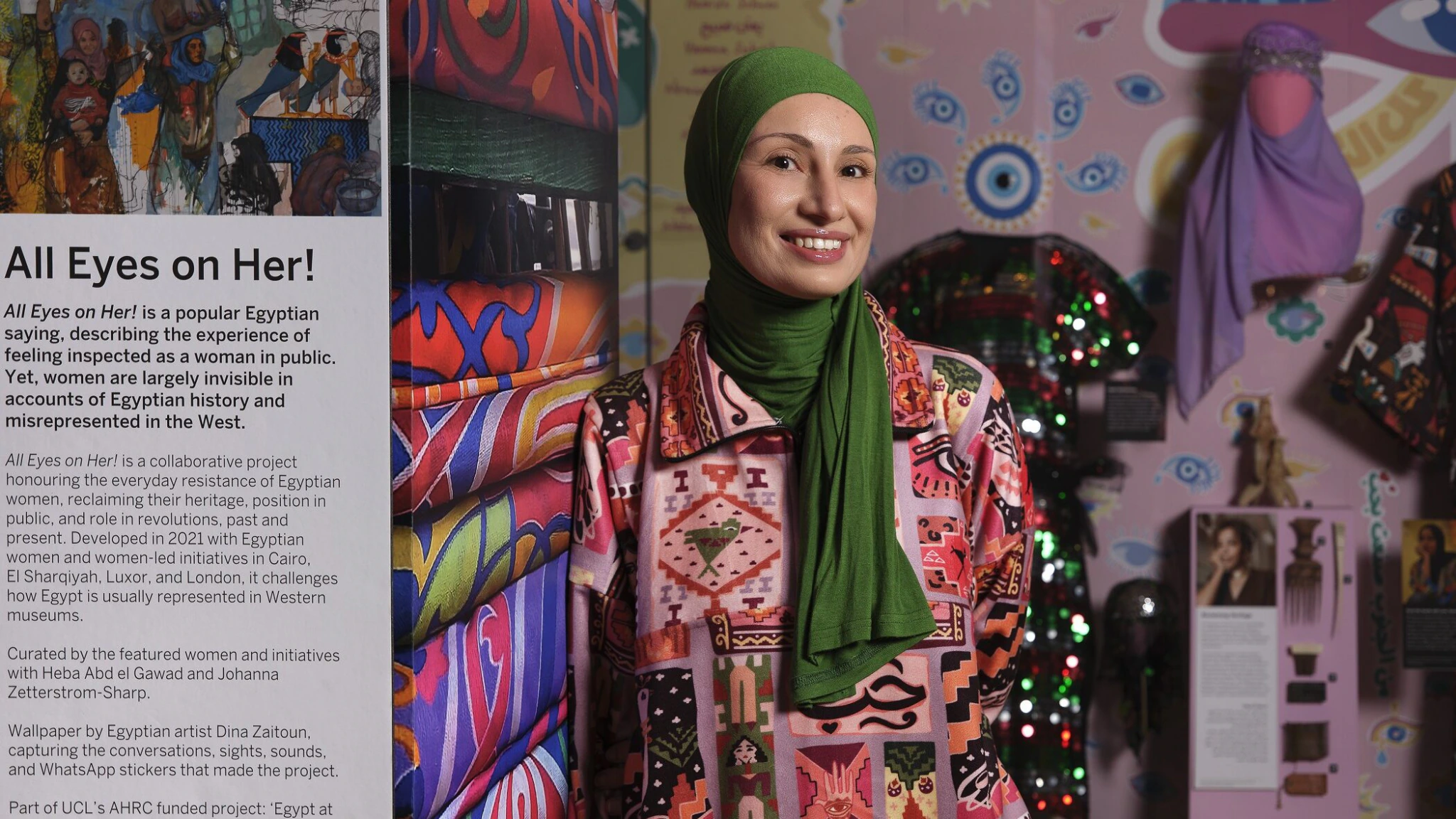
As a member of a community of descent as well as a curator, when I enter the Horniman store, I am not simply surveying collections. I am standing in the presence of my own kin. I encounter my Egyptian ancestors in spreadsheets, acid-free boxes and collection management plans.
My position is shaped by both privilege and trauma. I am privileged, because I can open the boxes and access documentation archives. But there is trauma in seeing my own ancestors described as "archaeological specimens" and in asking myself daily if I am complicit in the violence enacted on ancestors through the everyday practices of museum work.
So, while I fully support – and work within – calls for radical transparency and proactive return, I also urge the sector to expand its ethical responsibilities beyond the two poles of the display case and the repatriation ceremony.
‘Return the bones. Empty the museums’
Dan Hicks on why museums need to address the issue of the ancestral remains in their collections with transparency, openness and accountability
Between these two moments lies a long, ethically-significant stretch of time in which ancestors remain in systems of museum violence that are rarely scrutinised: storage orientation, conservation treatments, metadata, handling protocols, access permissions and internal decisions.
Advertisement
Legal frameworks, state policies and international negotiations move slowly, leaving ancestors trapped, which many descendant communities experience as a continuation rather than transformation of colonial violence. Yet, it is in this "dismissed middle" of the restitution conversation that repair is initially possible.
In our community-led workshops and collaborative research with Egyptian communities – part of the Horniman’s partnership with University College London's AHRC-funded projects Egypt’s Dispersed Heritage and Egypt at the Horniman – communities repeatedly shifted the conversation beyond display and repatriation toward the backstage practices of daily care.
We were asked: "How would you feel if your grandmother was stored in a box?"
Another person told us: ‘Their names matter. Their stories matter. They cannot be recorded as objects."
Others spoke firmly about directional orientation, gendered restrictions and the right to secrecy. The message to us was clear – the question is not simply "should ancestors be returned?" nor "should they be displayed?"
It is about how they are cared for every day, and who gets to decide until they return.
Advertisement
Transparency is crucial and long overdue – but cataloguing a body does not honour it. Listing a skull does not heal the wound that brought it here. Accountability does not begin at the process of return, it begins in the minutiae of daily care.
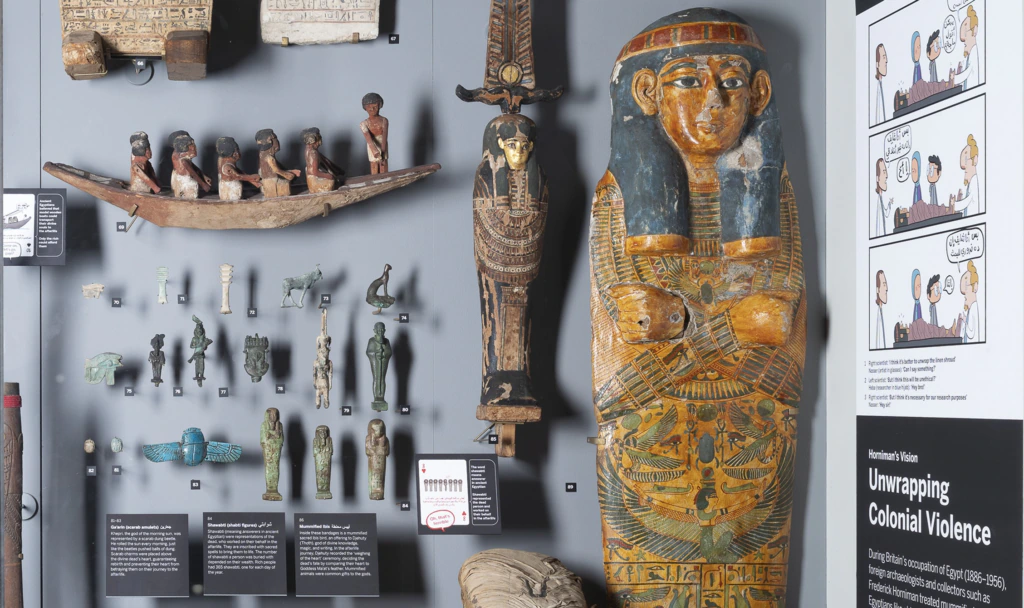
Egyptian mummified ancestors represent one of the largest and most violent displacements of ancestral remains in museum history. They are the most brutally dehumanised, transformed by colonial archaeology and pop-culture into "mummies", monsters, or medical curiosities.
Contemporary Egyptians continue to be excluded from ethical decision-making given persisting Orientalist logics that deny us Indigeneity and recognition as a community of descent, a bias reinforced by legal frameworks such as the Human Tissue Act.
Across workshops held since 2020 in Cairo, Luxor, Sharqiya, London and online through Horniman/UCL partnerships, communities articulated consistent expectations grounded in cultural continuity orientation – bodily integrity, ritual completeness, privacy, naming, and spiritual protection. Ancient Egyptian funerary texts record explicit wishes for the afterlife, concerns contemporary communities continue to recognise as ongoing.
No other Indigenous community would routinely be excluded from defining how their ancestors are treated, while visitors are surveyed on their preferences. Yet museum systems continue to prioritise visitor experience and material stability over the dead’s and their descendants’ authority regarding care and dignity.
Advertisement
Our conversations and partnerships with communities represented in the collections in our care worked towards overcoming this unbalanced power system, ceding choice to descendant communities, while recognising that they did not speak with one voice, nor did they always offer fixed demands.
What emerged instead was an insistence on process. Partners emphasised the need for museums to listen repeatedly, to accept disagreement, and to recognise that views may shift over time.
Creative methodologies – comics, humour, and social media – were essential to these conversations. For example, collaborations with artists such as Nasser Junior and initiatives like Millennial 3al Akher enabled ethical critique beyond Eurocentric formal consultation settings. As a result, our permanent Egypt display now includes updated community-led labels and comics addressing the Horniman’s legacy of colonial violence towards Egyptian ancestral remains.
Our partners and the Horniman have co-developed a 12-Point Manifesto on Encountering Egyptian Mummified Ancestors, which opens with a simple instruction: ‘Meet our ancestors with empathy, not curiosity’.
Rather than offering technical guidance, the manifesto establishes ethical parameters: personhood, restraint, humility, and communities’ right to refuse.
These collaborations informed our revised 2025 Human Remains Policy marking a significant shift in UK practice by explicitly centring the wishes of the dead, recognising communities’ right to self-identify as descendants, committing to community-led decision-making across care, and acknowledging the violence inherent in storage itself.
Our responsibility now must be to turn policy into action. The forthcoming REPAIR project, supported through Art Fund Reimagine, will pilot community-led stewardship models across Egyptian, British, Aboriginal Australian and Tibetan ancestors.
This work – partial and experimental for now – cannot resolve all tensions and does not replace repatriation. Instead, its contribution lies in recognising that ethical responsibility begins in the present, in the daily routines that shape how ancestors live while in museum care.
The Horniman is committed to proactive repatriation of ancestral remains. But repatriation is slow, and communities were clear: dignity cannot be deferred.
As one community partner put it: "If you have to keep them for now, at least treat them as if they matter."
Heba Abd el Gawad is the senior curator of anthropology at Horniman Museum and Gardens