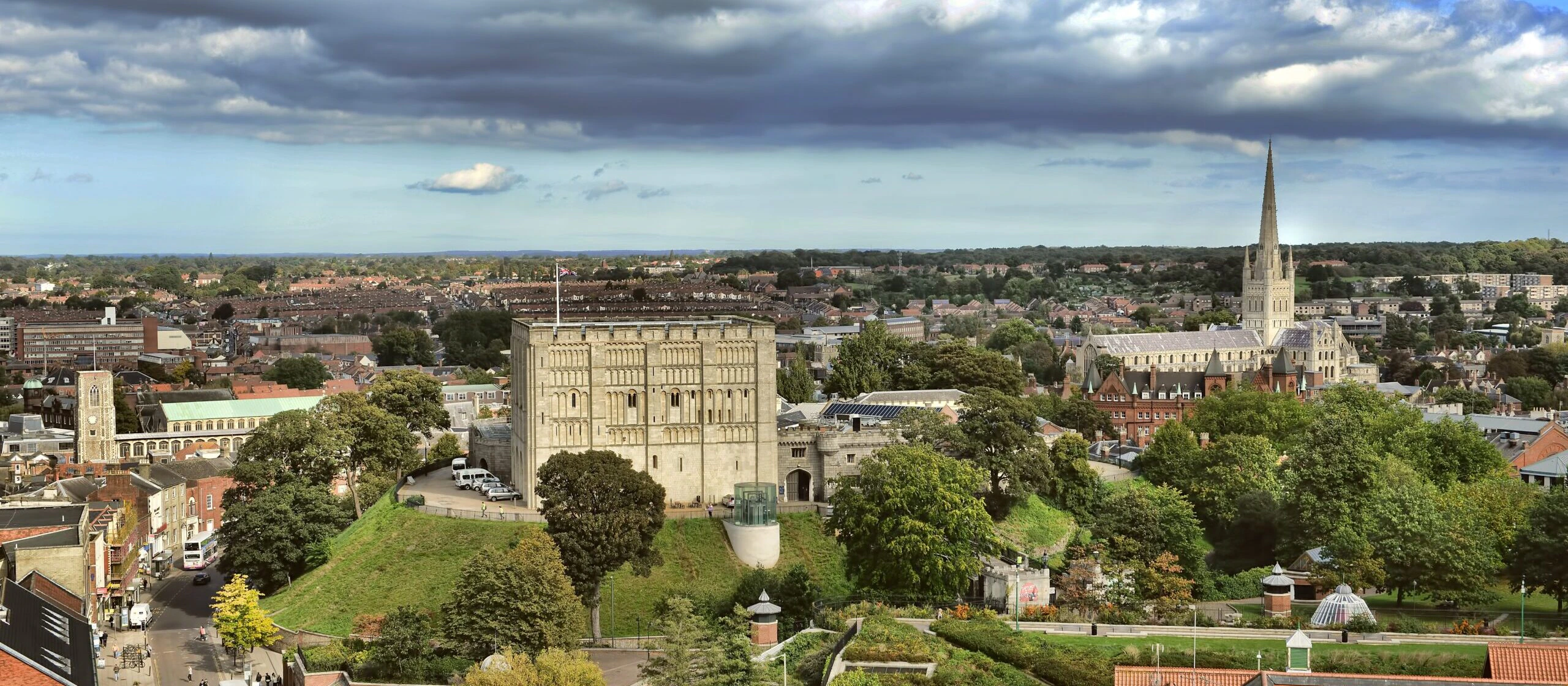
The refurbished Norwich Castle Keep reopened in August after five years of restoration and building work, and well-reported stories of delays and increasing costs.
The site, which is more than 900 years old and a designated Grade I-listed building atop a Scheduled Ancient Monument, revealed its history as the project unfolded. This provided fascinating information about its original construction but also, inevitably, obstructive and expensive issues for the redevelopment.
Expectations of such important heritage projects are high. The level of investment received from Norfolk County Council and the National Lottery Heritage Fund requires significant returns for the socioeconomic regeneration of the area. The initial signs, however, are very good.
The castle was inundated on the very hot day of my visit and there was much to admire and enjoy from the outset. There is a bright new entrance, which is uplifting, a smart shop, a small efficient-looking cafe and fancy facilities provided in a two-storey toilet block.
The presence of ticket barriers seemed to perplex some visitors and a few of us lost our way going round, suggesting signage might need to be re-evaluated.
However, staff are helpful and knowledgeable and there was a definite buzz of excitement, so no one seemed to mind the snags.
From the atrium, visitors have the option to turn left and head into to the “new” keep. By turning right, you enter the main body of the museum via the 1960s rotunda.
Advertisement
I feared this could potentially split a visit into two contrasting halves. It is noticeable that some further reaches of the museum felt comparatively tired and wan, but on the day of my visit everywhere was equally and reassuringly busy.
The narrative inside the castle keep goes back to its Norman origins – to William I (the Conqueror), to 1066 and all that.
The building of a motte-and-bailey fortification began in 1067, a symbol of the new powerful regime that towered over the important Anglo-Saxon settlement. By 1121, it was replaced with a lavish edifice in imported limestone.
Ultimately, no royalty lived here. Part of the royal estates, it was a centre of legal and financial dominance, and the elevations were grand enough for a palace with serried ranks of closed arcading, carved in the fashionable Romanesque style.
By the mid-1300s the castle had become a prison, a function that lasted 500 years. Along the way the facade was reclad, additions were made, features demolished and the keep became a roofless and empty shell.
Advertisement
By the time the building was transformed into a museum in 1894, the keep provided a lofty display space which, much later I should add, instilled a sense of wonder in me as a child.
My early adventures, it seems, were not authentically “Norman”. But now, being Norman, or at least the re-creation of a sufficiently accurate version of medieval life, is at the heart of the reincarnation of the castle keep. While the museum notionally transports us back in time, a lot of what we encounter is brand new.
Access all areas
One must first applaud the degree of modern accessibility that has been achieved in an old, complex building. It is possible to visit every floor from the basement to the barricades, and it is now described as the most accessible castle in the UK. Only the last stage to the roof has a separate two-person lifting platform and, once there, just one corner looked tight for larger mobility aids.
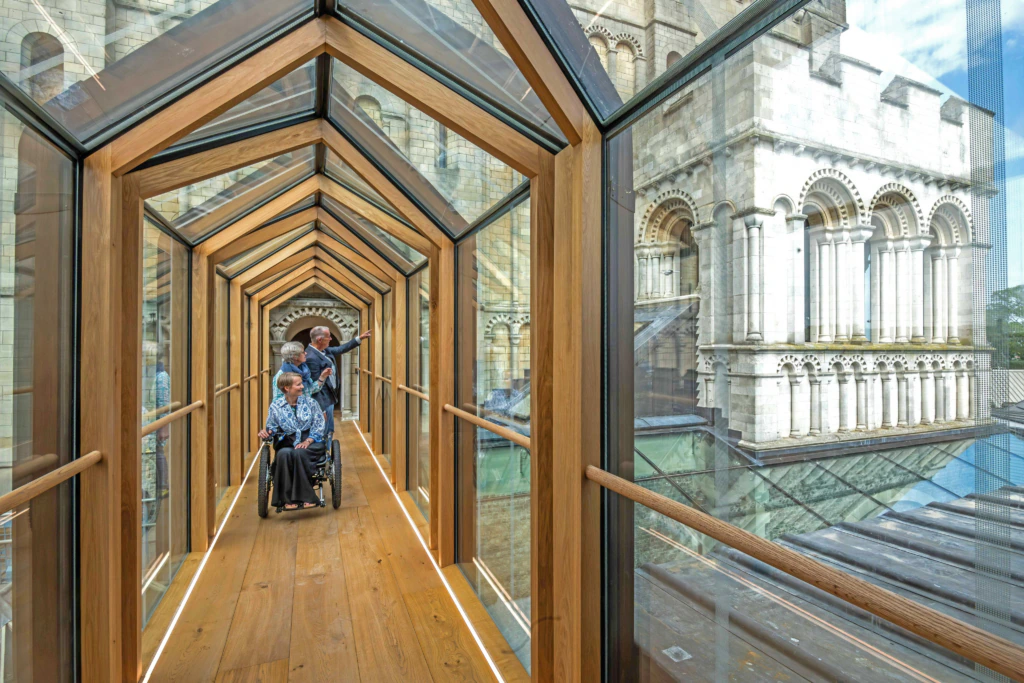
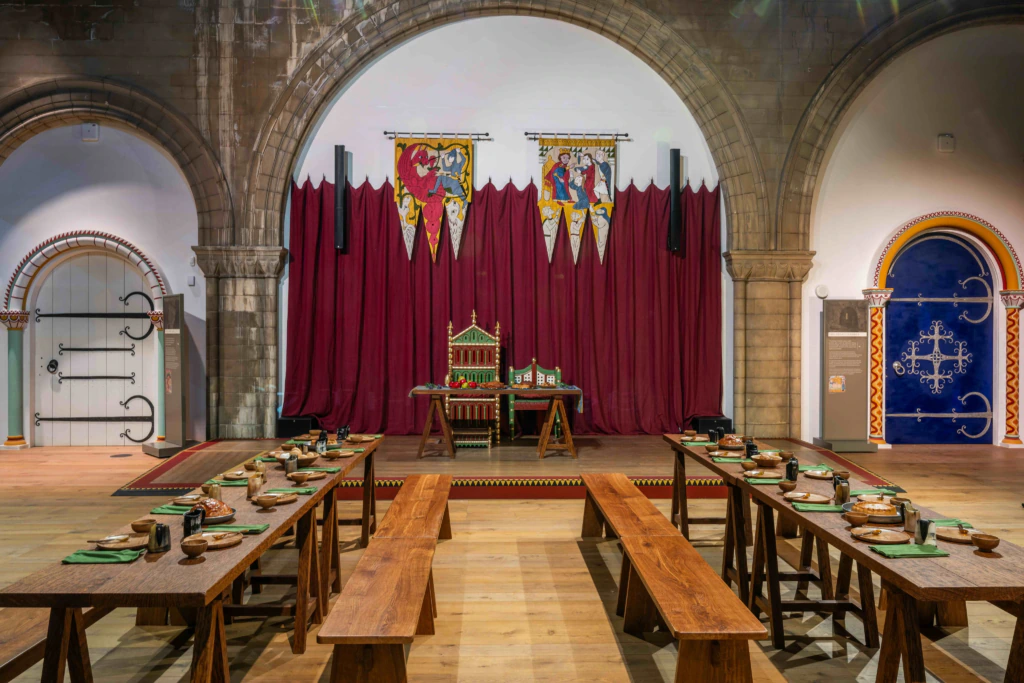
Heading down from the roof, the main floor has been reinstated and the monumental space has been divided into rooms, including a great hall, a bedchamber and a chapel. Without documentary evidence of how the original interiors looked, detail has come from a wide range of extant sources.
Advertisement
Imagery from illuminated manuscripts of the period has provided prototypes for recreated furnishings in verifiably bright colours: depictions of thrones were found in the Eadwine Psalter (c.1155-60) and the Liber Floridus (1120); a cupboard was inspired by the Winchester Psalter (1100s); and pictures of pillows were found in John of Worcester’s Chronicle (c.1140).
Illuminations from the 14th-century East Anglian School are, sadly, too late for the focus of this reconstruction, though surviving material evidence from the region has been located when appropriate.
A door from a church in the nearby village of Raveningham with elaborate 13th-century metal work, for example, is the model for new doors within the royal apartments. Authentic designs have also been sourced for grilles and even the nails and hooks used for new wall hangings.
Embroidered history
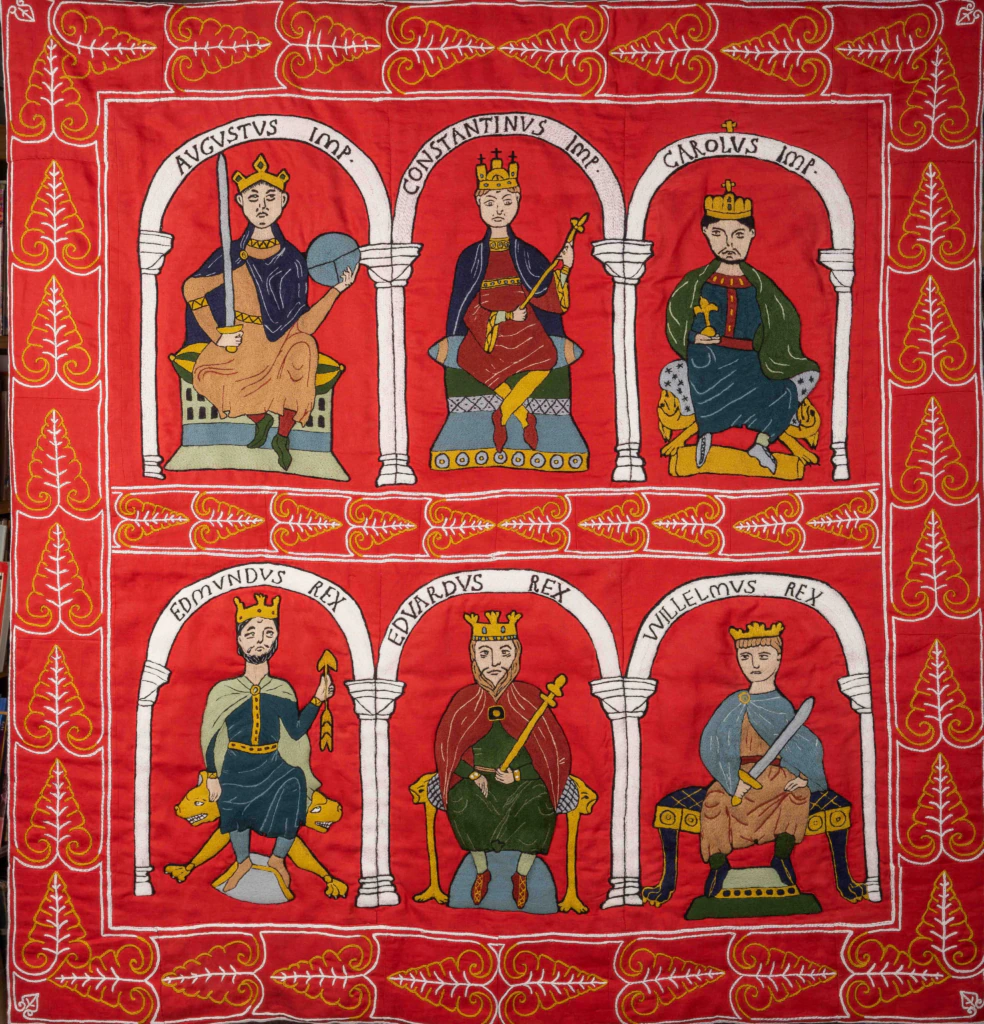
Among the numerous textiles produced by expert volunteers, an addendum to the Bayeux Tapestry depicts events after the initial Norman Conquest. At 19 metres long it provides a striking panorama, but is hung perhaps a little too high for visitors to appreciate the detailed embroidery.
Elsewhere, the expertise is shared with a sense of fun. Indeed, the great hall is where the medieval immersion really begins offering visitors a chance to dress up in costumes and sit down on thrones.
As an interactive experience that might seem pretty low-tech to some. The balance here, however, seems about right. It is authoritative without being authoritarian and would seem to appeal across age groups.
Focus on: Tapestry Making
To enable our visitors to step back in time 900 years and experience what Norwich Castle was like when it was first built, it was obvious that we would need textiles to decorate the walls of the royal palace, so we set about recruiting a team of volunteer stitchers.
The most detailed of their creations is a 19-metre-long embroidery, supported by the Friends of Norwich Museums and made in the same style as the Bayeux Tapestry, which now hangs within our lavishly recreated King’s Chamber.
This embroidery tells the story of two unsuccessful rebellions in the east of England after William the Conqueror’s victory in 1066 and how, as king, he put those rebels in their place.
It charts the life of East Anglian hero Hereward the Wake and the Rebellion of Ely in around 1070, as well as the Revolt of the Three Earls in 1075 during which Emma de Guader, the young wife of the earl of East Anglia, was left to defend Norwich Castle against the king’s army.
Like its famous predecessor, it uses the traditional Bayeux stitch, which our volunteers had to first research, then learn and master.
Designed by illustrator Fiona Gowen, the image was initially traced onto the linen before the stitchwork could commence – a task that has taken over seven years and in excess of 25,000 hours.
Our volunteer team of around 50 embroiderers have been helped by members of the public who were invited to add stitches to the tapestry during a series of events. We also took the embroidery on visits to schools and groups.
Making this tapestry was a monumental undertaking, but what our volunteers have created is a thing of wonder that we’re sure will continue to fascinate visitors for generations to come.
Hannah Jackson is the project manager for Norwich Castle: Royal Palace Reborn
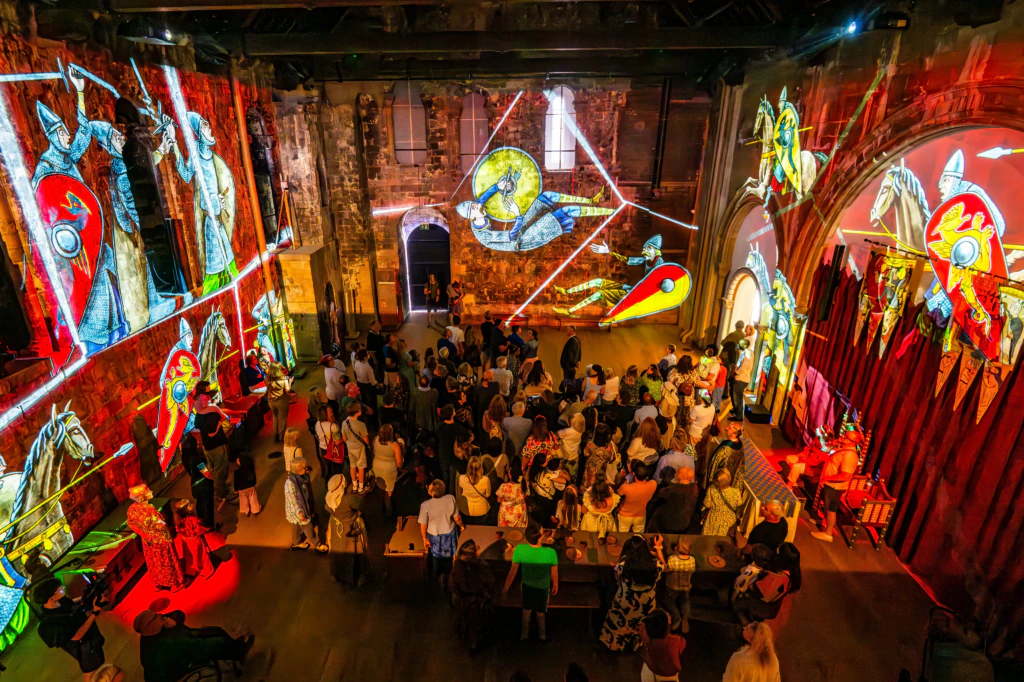
Throughout the day, an audiovisual projection, writ large across the walls of the great hall, illuminates some aspects of local Anglo-Norman history. It is entertaining, detailed and informative and the emphasis is on inclusion and being accessible to those with special educational needs and disabilities.
On the next level down, a new floor has been added dedicated to the Gallery of Medieval Life. This is a more conventional museum presentation. Numerous double-sided display cases contain just shy of 1,000 objects divided into three main aspects of society denoted by medieval chroniclers: those who worked, fought or prayed.
These subjects are then divided further into subsections, including several that explore religious themes, but there are also secular topics and more mundane matters such as health and death, food and cooking, growing and making, fashion and fun.
It is a clever conceit and the breadth and quality of items drawn from both the collections of Norfolk Museums Service and the British Museum is staggering. Orientation is not noted on the labelling, but the lion’s share of objects have come from local collections, with just 50 pieces from the British Museum.
The quality of the display is high with fascinating juxtapositions enhanced by good lighting, clear, concise labelling and useful amounts of interactive technology.
The main information panel, however, seemed to be in the wrong place. Depending on which door one enters by, the way it is worded means the display could easily be misconstrued as a visiting exhibition from the British Museum.
Some cases are perhaps overly full of tiny items, but often these seemingly less significant objects are the most intriguing. Take, for instance, the terrifyingly titled ear scoop with hooked terminal – very medieval.
Among the standard museum conventions, there are also some inventive touches. There is a display of broken images relating to iconoclasm, while a case dedicated to metal-detecting came as a surprise, and exhibiting
human remains seemed a bold choice.
What felt missing from the interpretation, however, was discussion about the more complicated narratives of gender, race and religion from history, which one has come to expect.
Strong foundations
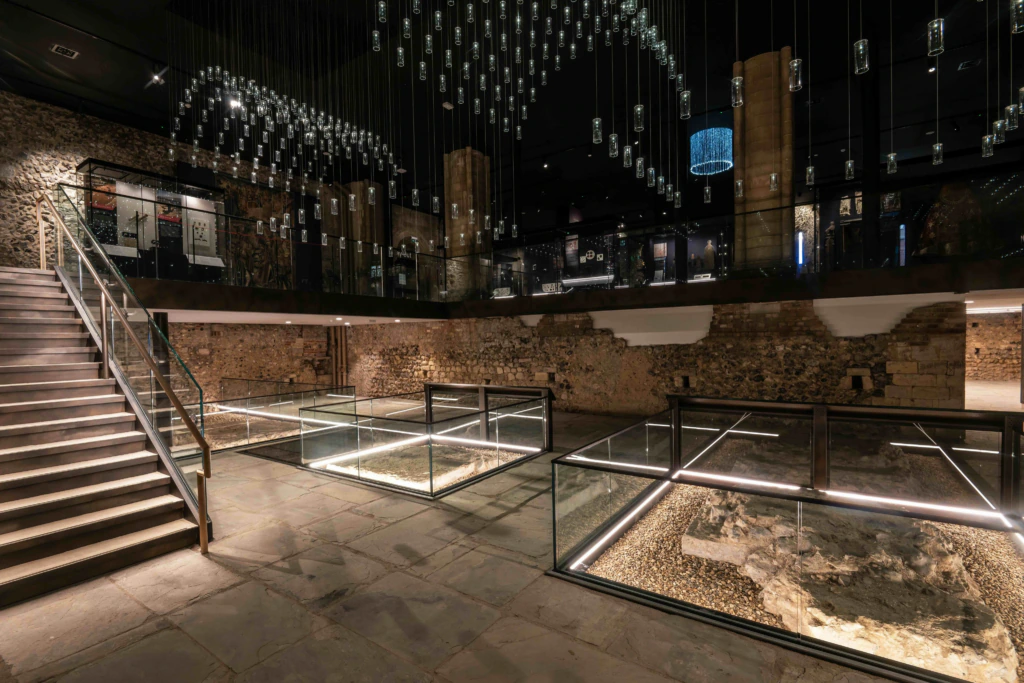
After the Gallery of Medieval Life there is the basement and the foundations of the building with its medieval post holes and pier bases. The encounter with raw stone is atmospheric and feels more archaeological. A fine glossary of architectural terms is offered on labels.
Here, too, is the well shaft around which the keep was constructed, and which originally extended an extraordinary 65 metres upwards to take water up to the principal floor and above.
The real attraction, though, is the rendering of the arcade of arches that once supported the principal floor above, reinterpreted beautifully and effectively by a light installation. As something both old and new it characterises the innovative approach often taken during this project, and which provides some of its most satisfying and successful achievements.
Stephen Feeke is an independent scholar and curator
Project data
Cost
£27.5m
Main funders
National Lottery Heritage Fund; Norfolk County Council; Arts Council England; Clore Duffield Foundation; Foyle Foundation; Garfield Weston Foundation; Wolfson Foundation
Architect
Feilden+Mawson
Structural engineer
Conisbee
Construction
Morgan Sindall
Curators
Norfolk Museums Service: Tim Pestell, Agata Gomolka, Andrew Ferrara, Dickon Whitewood; British Museum: Naomi Speakman
Graphic design
Haley Sharpe
Interactives
Heritage Interactive; The Hub
Installation
Universal Fibre Optics
Archaeology
Heather Wallis and Oxford Archaeology
Display Cases
Click Netherfield
Admission
Museums Association members go free