The opening of the new Sound and Vision Galleries at the National Science and Media Museum in early July marked the completion of the Bradford museum’s multi-million-pound redevelopment.
The site, which is part of the Science Museum Group, closed in June 2023 for a £6.8m refurbishment and was due to reopen at the start of the Bradford 2025 City of Culture celebrations in January, but issues with a lift shaft discovered during construction forced the museum to phase its reopening.
Visitors have been able to explore temporary gallery spaces and the new entrance foyer since January, but its two permanent galleries showcasing collections of photography, film, television, animation, video game and sound technologies remained closed until the summer.
I visited ahead of the general public, enjoying a tour of the new galleries with the project lead Megan Thomas and a good chat with the cleaners as they did a last whip-round with the dusters. It’s hard to believe these are the same galleries I’d visited on numerous previous occasions, which always felt dated, dark and (dare I say it) at times deadly boring.
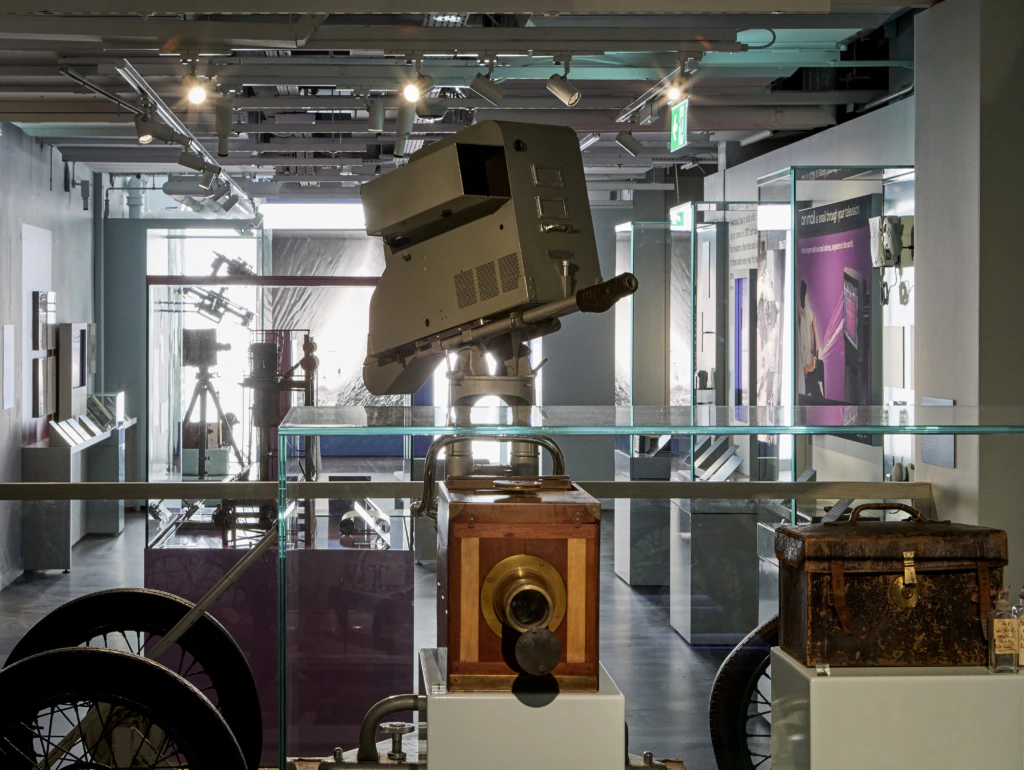
The project designers, AOC Architecture, best known for their work at the Young V&A, have opened up the galleries and created atmospheric and immersive spaces that respond to the objects on display. Working with a steering group as well as disabled-led consultancy MIMA, the museum has fore fronted accessibility, providing layered interpretation, audio description, BSL and tactile interpretation (see box).
Advertisement
There are four themes across the two galleries – Innovation and Identity on one floor, Storytelling and Everywhere on the other. Collections are displayed thematically rather than chronologically, which I always think takes the pressure off having to feel like you’re learning something new.
Focus on: Accessibility
Mima were the access consultants for Sound and Vision, advising on the technical design of the galleries from an accessibility and inclusive design perspective. This involved working closely with AOC Architects and the rest of the design team to focus on:
- The inclusive welcome of the galleries.
- Circulation and clear widths.
- Colour palettes and contrast.
- Accessible features.
- Facilities and aids.
- Seating and quieter, dwell area design and placement.
- Exhibit heights and reach ranges.
- Accessible information, formats and displays.
In addition to this, I’ve been fortunate enough to have spent the last couple of years facilitating a lived experience user group that has acted as a communal “critical friend” to the museum. The group is made up of local individuals with a variety of access requirements and lived experiences, and they’ve shared their feedback on everything from tactile label design and colour contrast to accessible resources for the “access hubs” in the galleries and have user-tested prototypes of exhibits and interactives.
The group has stuck together for the entirety of the journey, and I’ve been bowled over by the positive responses from museum staff and the wider design team throughout the project – genuinely wanting the best and most inclusive result, not just because ‘it’s the right thing to do’, but because they saw and understood the value of D/deaf, disabled and neurodivergent visitors and staff members, and wanted to future proof the experience for all by creating something truly aspirational.
Emily Yates is the director and head of accessibility and inclusive design at Mima
Many of the objects on display are historically important but aren’t exactly thrilling to look at. Louis Le Prince’s wooden single lens cine camera, for example, captured the world’s first moving film footage in Leeds – to bring this to life, his film is projected onto a nearby wall as though it’s being broadcast from the static camera itself. Who could fail to be charmed by Le Prince’s Victoria family doing a jig outside a grand manor house?
Elsewhere, an early example of a television in a display case is accompanied by a replica of the object and a historic photograph detailing how it was used. I was also impressed with panels that explain in layman’s terms exactly how some of the equipment such as film projectors work – a subtle nod to the importance of Stem at this science museum.
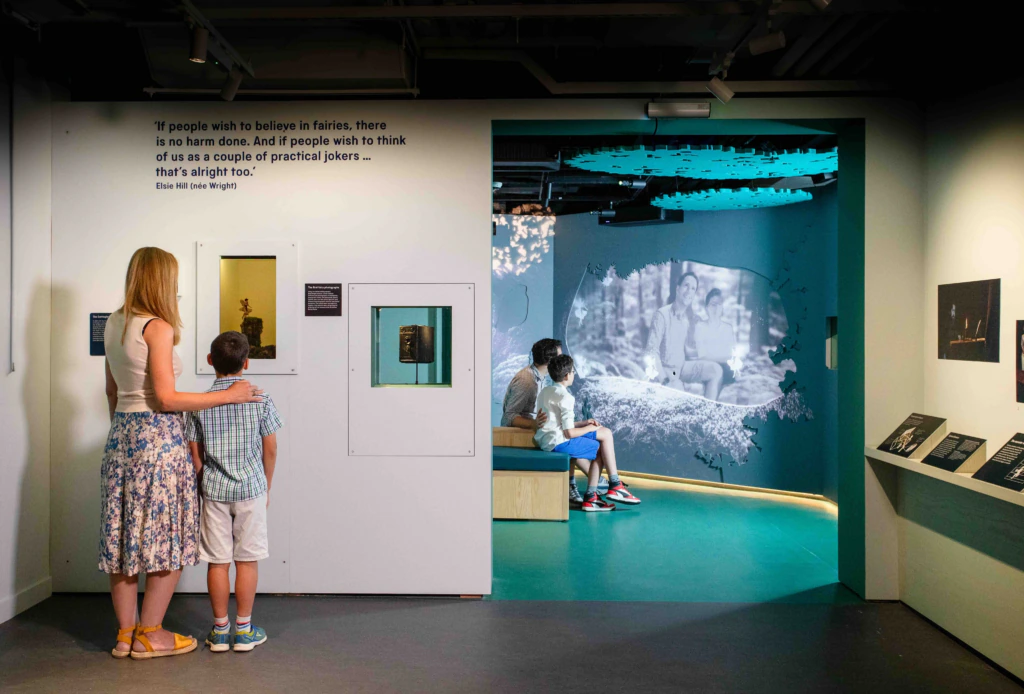
The galleries go to great lengths to pull out human stories that bring objects to life, and it’s not just the usual suspects. Women, especially scientists, feature heavily as do people from the global majority such as Gauhar Jaan, who was the first Indian singer to make gramophone records and was known as the Gramophone Girl, at the start of the 20th century. It felt quite special to be able to hear her beautiful voice more than 100 years after it was recorded.
Advertisement
I often felt like the galleries were a bit too quiet – a lot of the audio is available via headsets, which is mainly for accessibility reasons, but I would have liked to hear more voices, music and special effects.
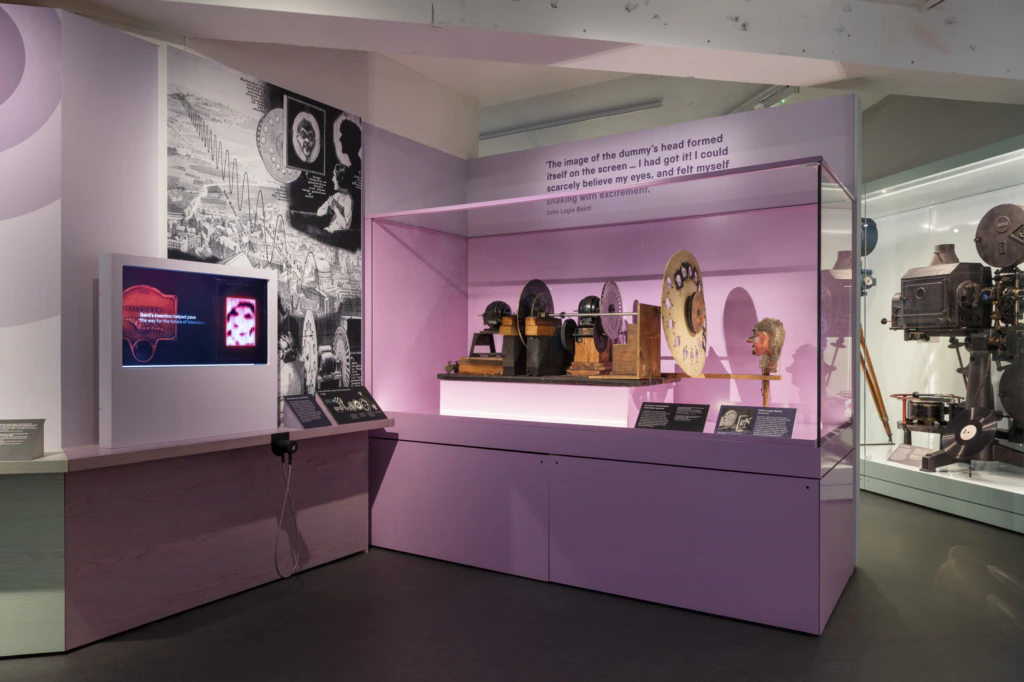
The galleries feature a lot of digital interactives, some of which are gamified – you can run your own mixing station at a gig, take a selfie with the Cottingley Fairies buzzing round your head or peer through cinematic glasses to view an early example of a horror movie.
A touchscreen allows you to watch a film that explains how slow motion and fast motion work (which I was pleased to see included lots of everyday Bradford footage as well as melting glaciers and humming birds).
These interactives bring so much to the experience, but I can’t help but worry about how disappointing it will be when they inevitably break. After all, these are permanent galleries designed to last for 25 years.
Technology will of course also move on massively during that time, and I could see the curators had been careful not to focus too heavily on the “cutting edge” tech innovation of today. Still, I wonder how dated some of the displays might look in even a few years’ time as the rise of AI changes the way we view and digest media.
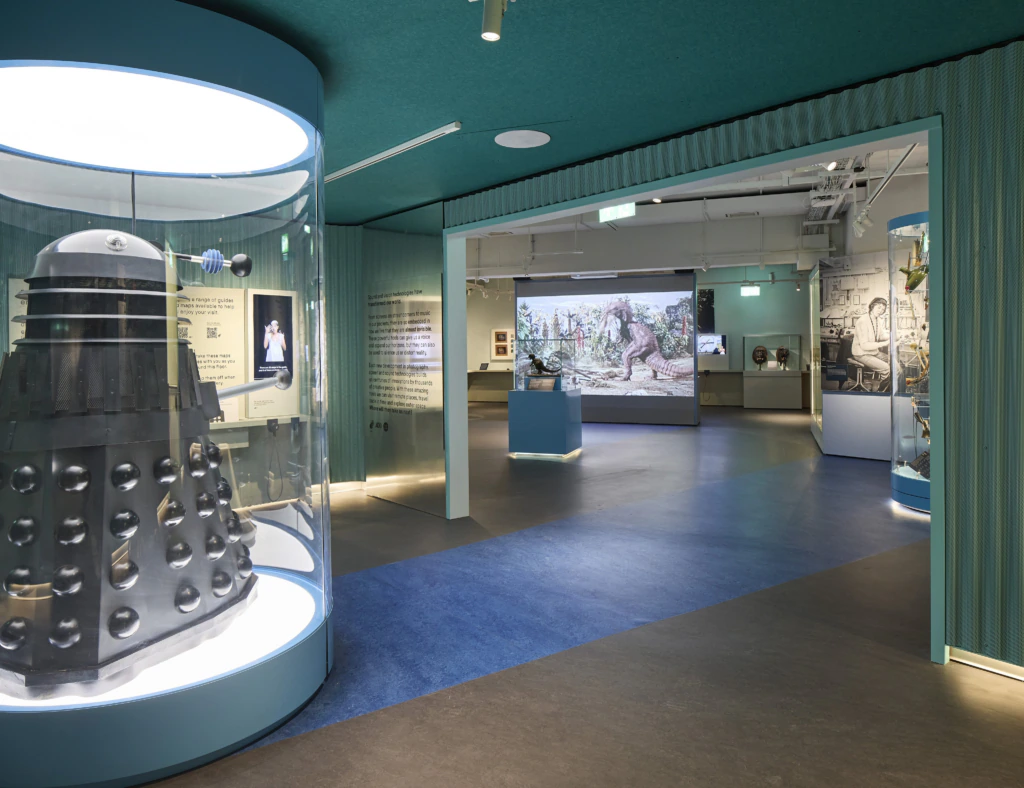
My favourite displays are the ones where you can tell the design team were really having fun, even when dealing with more difficult subjects.
Advertisement
The section on e-waste, for example, is displayed within a recreated living room, a neat trick that enables us to confront the associated challenges and ethics in a space where we feel safe and comfortable.
Elsewhere, displays on how we use technology to monitor people places a Victorian chair, used to photograph suspected criminals, at the end of a corridor where the walls have been painted to make it feel like they are closing in on you.
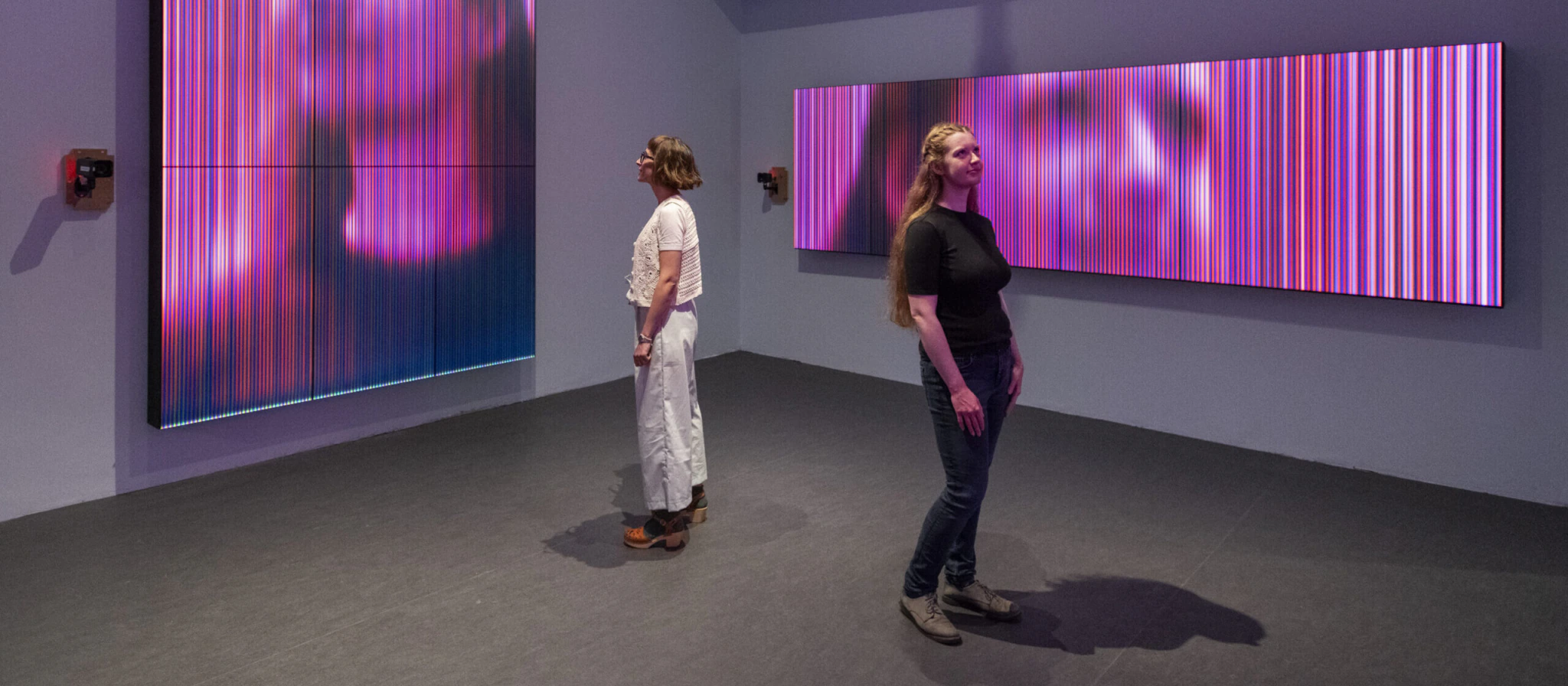
A new art installation by Nayan Kulkarni, titled Circus, is lots of fun – five cameras move with the visitor, creating a constantly evolving composite of live footage on domestic television monitors. The artist has been inspired by the collections, but for most visitors it’s simply a great excuse to pose and try to spot which camera is in operation at any one time.
The museum worked with many communities when developing the galleries, including a youth panel who I am reliably informed came up with the genius idea of having fake blood spilling out of a case displaying fangs that were worn by Christopher Lee in the 1958 film Dracula.
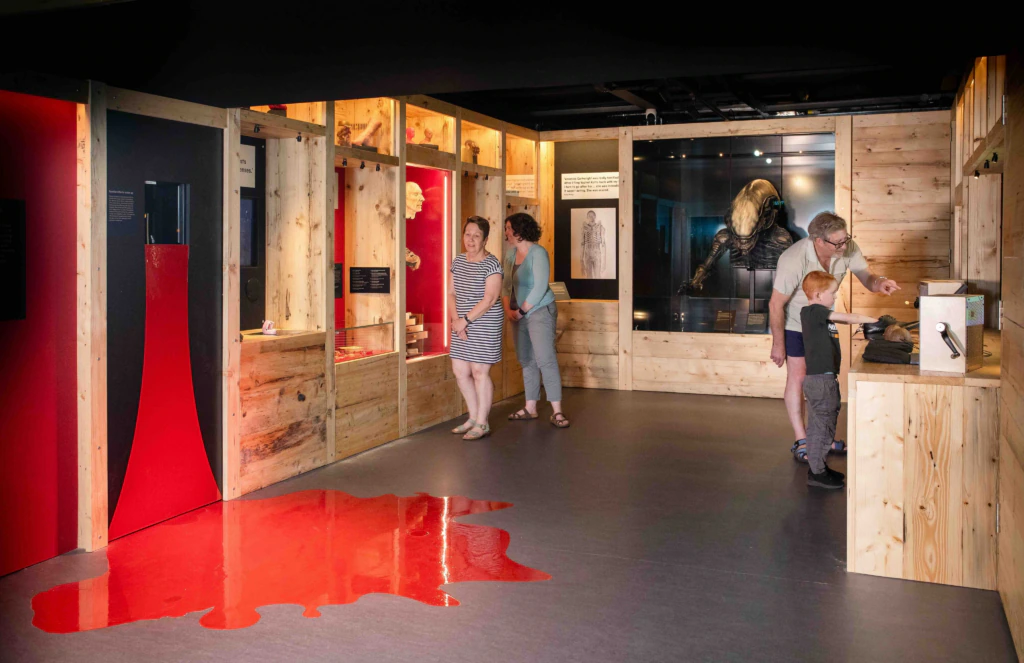
It's this quirkiness and commitment to listening to the people of Bradford that I think will keep local people coming back to visit these galleries – and attract people from outside the city to visit during the year of culture and beyond.
Project data
Cost
£6.8m
Main funders
The National Lottery Heritage Fund; Bradford 2025 UK City of Culture; City of Bradford Metropolitan District Council; DCMS/Wolfson Museums and Galleries Improvement Fund; Art Fund; David Family Foundation; Sovereign Health Care; Spectacle Makers Charity; Shenward LLP
Architects
AOC Architecture
Structure
Price and Myers
Services
P3r
Project Manager
Fraser Randall
Quantity Surveyor
Appleyard and Trew
Exhibition Design
AOC Architecture
Graphic Design
Fraser Muggeridge Studio
Lighting Design
Studio ZNA
Access Consultant
MIMA
Digital media & AV
ISO Design; Coda To Coda
Multimedia artist
Nayan Kulkarni
Main Contractor
Bermar Building
Exhibition Contractor
Workhaus Projects
Showcases
Glasshaus Displays
Admission
Free