The home of the SS Great Britain is in the midst of an ambitious reimagining project as it builds towards the 60th anniversary of the ship's return to Bristol in 2030.
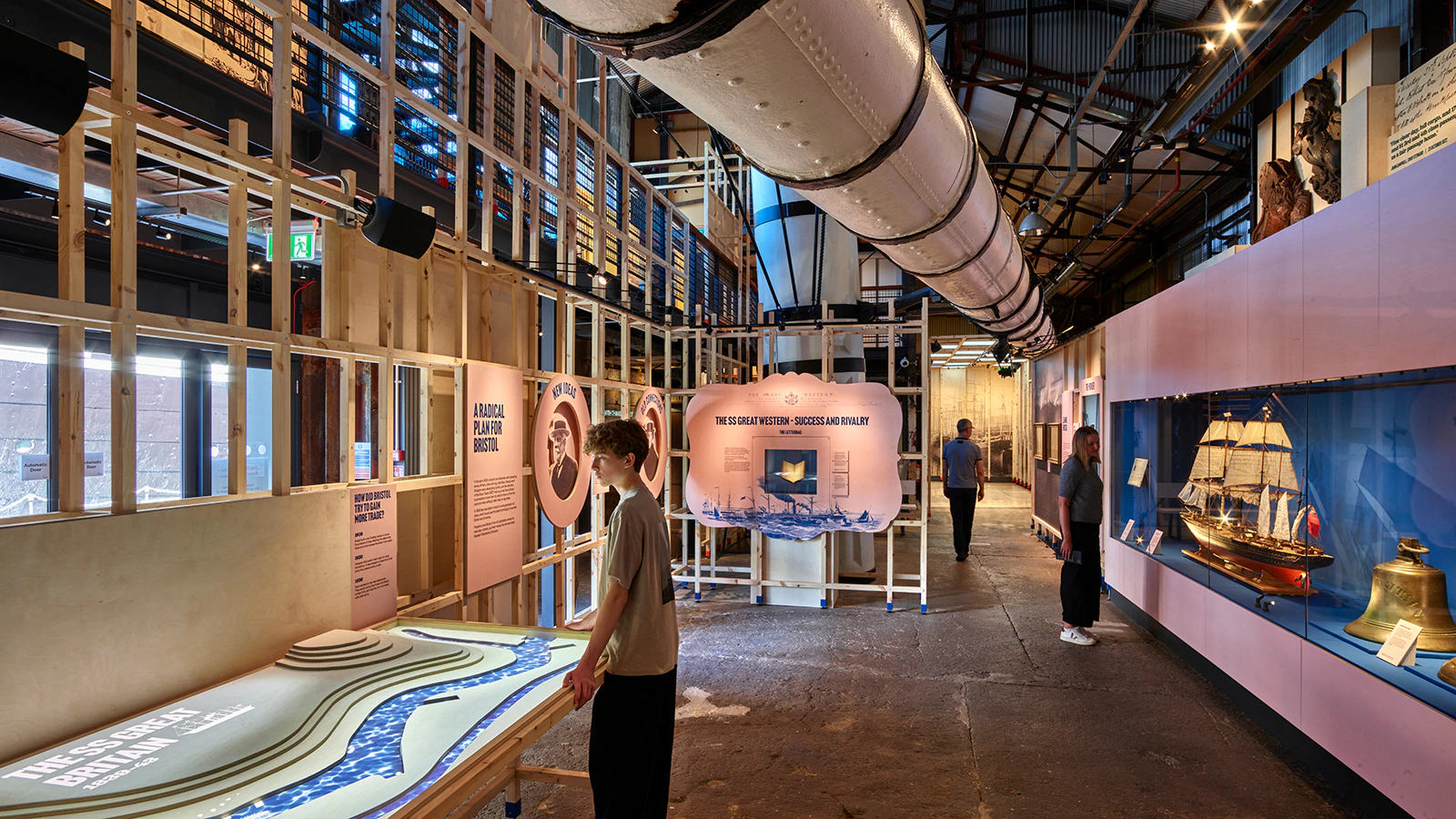
The first step in this journey is a new “human-centric” museum experience, which opened to the public this week to replace the previous dockyard museum.
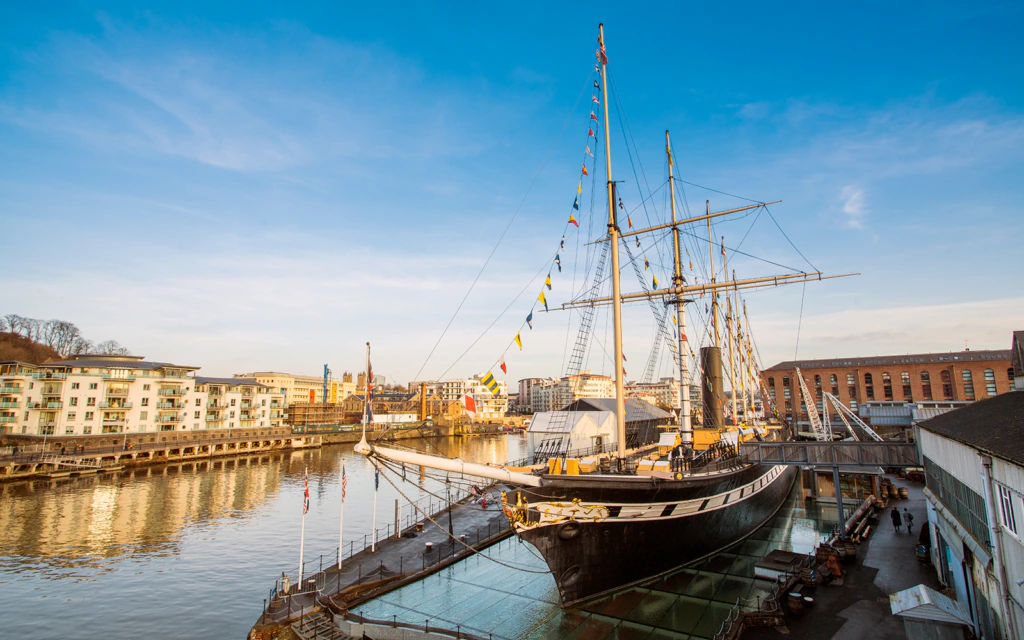
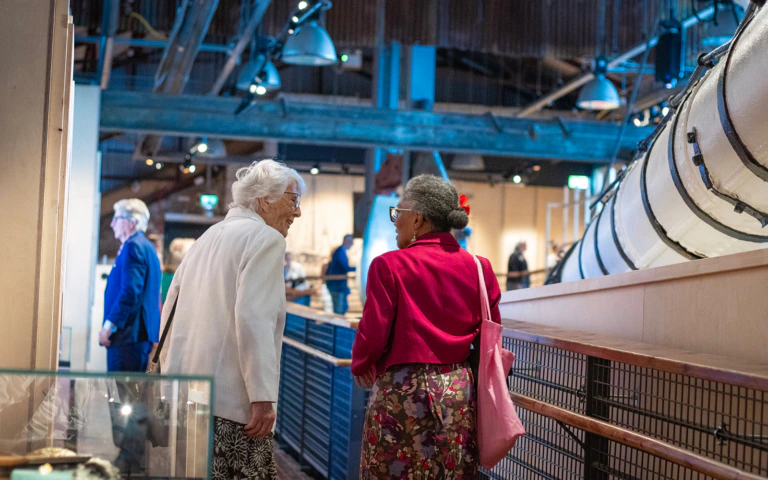
Sitting adjacent to the historic steamship, the new museum forms part of the overall SS Great Britain Experience and tells the story of the 19th-century vessel through the lives of her workers and passengers.
The opening of the museum comes after the SS Great Britain Trust, the charity that cares for the ship and the site in which she's berthed, announced in June that it would be rebranding as Bristol Dockyards – The Home of the SS Great Britain.
The new name aims to better convey that the maritime property cared for by the trust is “more than a ship”, featuring two museums, two historic dockyards, an internationally significant maritime archive, a “world-leading” education programme and a year-round programme of cultural activity.
Museums Journal sat down with Andrew Edwards, the CEO of the Bristol Dockyards, to hear more about the new museum, his future ambitions for the site – and how he dealt with a media backlash against the rebrand.
Advertisement
New museum
Designed by Isambard Kingdom Brunel, the SS Great Britain was the fastest ship of her day and is known as the world’s first great ocean liner.
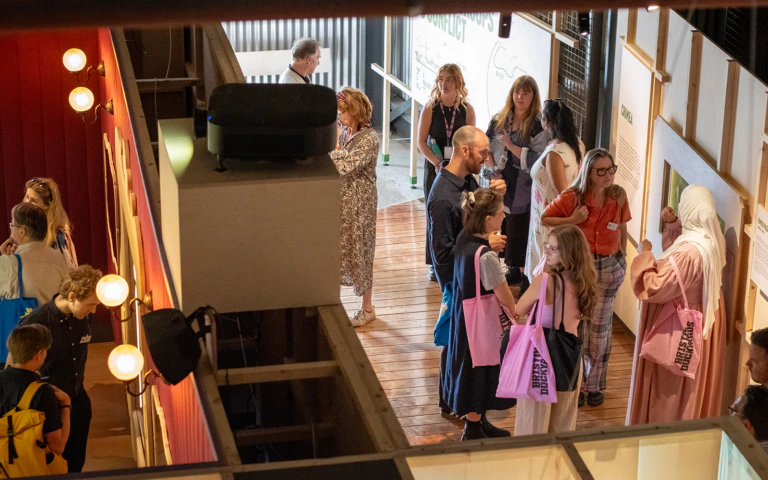
The relaunched museum draws on decades of research and the Brunel Institute’s archive of over 75,000 original drawings, letters and artefacts. It was developed in close collaboration with local community groups and researchers, with the aim of “bringing fresh eyes and new voices” to the history of the ship.
The museum explores the lives of the people who built the ship and the Bristolians who shaped her early years, as well as her role as the most popular ship connecting Britain and Australia, carrying thousands of migrants towards new lives.
Visitors will also learn about the ship’s involvement in conflicts in Crimea and India, and the “communities in Bristol today whose histories are intertwined with hers”.
The museum spotlights previously hidden stories, such as those of George Moses, a ship’s cook from Jamaica, and James W Jones, a Barbadian musician and poet.
Bristol Dockyards worked with Ralph Appelbaum Associates to develop the new visitor experience.
The museum is the first stage in the trust’s wider plans to establish the site as a cultural and educational campus. Next steps will include the restoration of the Albion Dockyard, which will remain as a fully operational working dockyard while incorporating new heritage visitor experiences.
Tell us how the new museum came about.
Andrew Edwards: I'd only been here in the organisation about six months, when we were approached by the Philip Nicholas Trust [a charity that supports maritime studies and awarded £705,000 towards Bristol Dockyards' redevelopment plans]. It was that almost bizarre moment where you've got the opportunity for a sizeable investment in something, yet you're still very premature and still new in your thinking, and a little unclear as to what you might do.
And I can remember talking to the team here and saying, ‘Well, if we are going to start somewhere in the organisation, to refresh it or reimagine it, where would we start?’
This particular museum rose to the surface almost immediately and we were very conscious that we were undertaking a project with a), really quite a short window to develop it in, and b), an equally short window to raise the money for it. So it was one of those things [where we said] ‘right, let's go for it’.
All I really wanted to do at the time was say to everybody, ‘If we're going to do this and do it well, then let's make it the start of our new journey rather than the end in itself.’ So it's been an interesting 16 months, as the team have worked so hard to deliver something that is going to be meaningful, and helps us tell stories that perhaps we haven't told before. It’s really exciting.
Advertisement
What stories are told in the new museum?
Some of the research that underpins it had been going on for a few more years, and we were aware that there were stories that were just not being told. We’ve worked very closely with our community researchers to fight to unearth stories of these characters, these people.
I suppose what I mean by that is stories about ‘Why was this ship important? Where did it go to? Who travelled on it? And what is their story?’
When I say that, it feels so obvious in a way. But it was a story that we were not telling. What I hope this will do is really give people a broader understanding as they go through the museum and then onto the ship itself, of the sort of people who travelled on it. I can remember going around the site with the Philip Nicholas Trust, and we talked about the ship's journeys to Australia.
And Sam Willis, one of the trustees, said to me: ‘If you think about it for a minute, people would have gone onto that ship, they would have travelled for nearly three months to Australia, probably not in very nice conditions, probably with pretty challenging weather occasionally. And therefore, the person who got off that ship in Melbourne, or wherever, would be a very different person to the person who got on three months earlier’.
I thought, well, those are the stories we need to tell. I'm a great believer that people relate to people, and we need to tell those stories. I want it to be a very human-centric experience.
Advertisement
How does the museum complement the experience of visiting the ship itself?
People will have a better understanding of why this ship was so important in terms of not only its build and its technology, but also in terms of what it set out to do. They'll have a better understanding of its origin here in Bristol – and why Bristol? – and then they’ll travel with the ship, whether it’s the luxury of going to New York, travelling to Australia, the Crimea, San Francisco – all those different parts of the world that the ship travelled to.
When you get onto the ship itself, it isn't always the easiest narrative to follow. If you're in the first class salon, you're looking at a space that would have been very much on the ship for its New York voyages. If you're looking right down at the bottom of the ship in the cramped bedding conditions, you're probably looking at conditions that would have been more appropriate to going to Australia. So, you're looking at different facets of the ship's existence.
What I think the museum will do is prepare people for that in a much better way.
How is the museum relevant to today’s world?
We all relate to people's stories, and for me, so many of those stories that were relevant in 1846 are completely as relevant today.
We talk a lot today about the movement of people across the planet, migration and those things. This ship was doing all of that in the 1840s and the 50s.
What I'd like to feel is that the museum challenges people around some of these themes that are still relevant today. The creation of a space in the museum for communities to come and research and explore those stories is fantastic, because when I first came here, I can remember saying to everybody, ‘The story of this ship and the story of these dockyards continues. We're just the next bit in that chapter.’
This isn't just looking back at something preserved in aspic. We're part of the narrative, and so I hope that the stories we tell in the museum are just the start of bringing to the surface all those wonderful, wonderful experiences that people have.
What was behind the decision to rebrand the site?
When I came here – and I'm just over two years into the job now – people would ask me what I do for a living. And I would say, ‘Well, I run the SS Great Britain Trust’.
And one of the responses I would get was, ‘Oh yes, the SS Great Britain, I went there when I was a child, my grandparents took me or I came on a school trip, but I haven't been back since. Has anything changed?’
And the other response I would get is, ‘Oh, you run the SS, so you look after a ship?’
And I was saying, ‘Well, no. I do look after a ship, but we also have two historic dockyards, we have two museums, we have the Brunel Institute, we have a big education and community outreach programme.’
The thing that struck me, almost from day one, was how do we make ourselves relevant again? How do we retain relevance? Particularly in the world we're living in now, which is a bit of a rollercoaster of experiences.
People often talk about 1970, when the ship was brought back to Bristol, and Bristolians all came to the side of the Avon and cheered this ‘iron island’. This is a big, iconic part of Bristol's landscape. It sits in the harbour. It has a fantastic history, a social history related to the actual construction of the ship in the dockyard. How do I bring back that relevance to Bristol again? That was a really important factor.
And the other piece was the [name of the] SS Great Britain Trust – we're talking about one thing, which is the ship itself. Does that therefore reflect the totality and the broad church that we are as an organisation?
So over the last two years, there has been this whole question of ‘how do we talk about ourselves? How do we engage with people? How do we tell those stories that make them relevant so that people can engage with them now? How do we how do we bring back that relevance that we had?’
I want to go back to that 1970s passion.
Tell us more about the rebrand process.
Firstly, [we knew] the SS Great Britain as an entity and as a brand has to remain centre stage – it cannot be diluted or in any way given secondary status.
Secondly, I was keen to avoid going down a road of typical, obvious maritime museum-type brands.
And thirdly, we worked with some very creative agencies around how we talk about ourselves, how we describe ourselves – it all had to change. This wasn't just cosmetic, ‘let's have a new logo’. It was an entire process. We spent four months consulting, we didn't just knock it up in the back office. I spoke to pretty well most major partners across the landscape.
There were misconceptions about the rebrand in the press, with some journalists reporting that you were changing the name of the ship itself. How did you deal with that?
As much there have been one or two voices of dissent, a lot of that has been misconception and misrepresentation.
Some of the media chose to angle the narrative in an unfortunate way. [The new name] felt like it gave us a broad enough canvas to do lots of different things – I would say to anybody looking at this, go back a month and look at how we described ourselves then online, and look at us now, and you will see a much broader representation of what we've got here.
We now talk about the Brunel Institute. We talk about Being Brunel as a museum experience. We didn't really talk about those things before, it was SS Great Britain.
When you take an organisation through change, particularly one that's very iconic, you're going to get a reaction. What I try to do is remain empathetic to that because I know where people come from. I know there are people out there who have a passion for the ship, who believe nothing should change, it's always been there – but I have to say to them, ‘That passion, it wasn't reflecting itself in people coming on site, so we had to do something.’
What we've done now is given ourselves a really broad platform on which we can do lots of interesting things in the future, and we have lots of plans for that as well.
You do think, ‘Really? Do you really think I'm renaming the ship?’ I mean, just think about it – I don't even know whether legally you can even do that. People choose to read what they want and see what they want.
What I will say is the vast majority of our stakeholders – from other maritime museums to the arts council to the combined authority, and city council, all of my cultural partners across the city – have been hugely supportive and feel that this was exactly the right thing for Bristol and for what we're about.
Change is never easy and you can never expect everybody to agree with everything you're doing. But that's life. I'd like to feel I've shown empathy and understanding though to those people who don't agree.
How do your wider redevelopment plans address the challenges facing the sector?
As a sector – and I'm being very honest here – the transport, aviation, maritime part of that cultural sector has really struggled post-pandemic. The Alva [Association of Leading Visitor Attractions] figures talk about a 37.5% reduction in visitor numbers.
Static heritage sites have found this all very challenging. So for me, this was all part of that bigger idea that we have to bring this organisation back into the centre of the city, make it a place where we not only tell a story, but we also continue to tell a story – a place where we will surprise people, shock them sometimes. And also [where we] present a broader cultural campus for what we're trying to do.
And so, coming back to where we started the conversation, the museum is the start of that journey, and is beginning to reshape how we talk about ourselves.
If you distil Brunel right down to the core things about him as an individual and everything that he created, he was about ideas and innovation, and that continues. We need to be innovative. We need to have new ideas about how we tell our stories. I'd like to feel that people won't view this museum as an end in itself, they will recognise that this is the part of a bigger evolution across the site.
Why do you think those parts of the cultural heritage sector are struggling?
The demographic has changed. I think the sorts of individuals that are passionate about modes of transport – that demographic has changed over time. We all talk about Covid, and the impact it had – it does feel like it was some time ago now, but that changed the world, it changed all of us. We all came out of it looking for different experiences, different narratives, different answers, different questions. Our lifestyles have changed.
And when you compact that with the challenges around the cost of living crisis, the fact that your average family don't have the choices they perhaps had many years ago – you're not just competing with other attractions or museums, you're competing with the monthly subscription to Netflix, with how people with less to spend decide how to spend their money.
The problem with static sites is that you never give people reasons for coming back. Once you've done it, why would you come back?
How will Bristol Dockyards get people to keep coming back?
A key part of this is that we will always, over the next three to four years, build programmes, we will build experiences that make people want to come back and engage with us, and we have a value over and above just being a one-site visit once a year.
Programming is going to be a big part of our makeup as we go forward. I love the idea – and it's not disrespectful to the Victorians or the Industrial Revolution or anything that Brunel achieved – but I’ve always loved the interplay between heritage and contemporary artistic intervention, and how that explores and manifests itself.
So I talk a lot with my neighbours Aardman [animation studio] and Spike Island [centre for contemporary art] – very much organisations rooted in ideas, innovation, and creativity – and say, ‘Right, let's give those artists at Spike Island a month and have an artist takeover of the ship. Let's get them to interpret it in a different way and tell a different story.’
I'm a big opera fan – I did an evening of opera on the ship. I can remember asking some of my curatorial colleagues here, ‘How authentic is this? Are we being authentic here?’ And, actually, when you look at the passengers that travelled on this ship, they had to entertain themselves, and they would produce little musical programmes on the ship when they were travelling, and they were singing pieces of late 19th-century opera to each other. So it was totally authentic.
Tell us about the wider redevelopment.
It's about bringing the ship right back centre stage in this city, and creating a different dynamic around it. And also telling the social history of the dockyards themselves more effectively than we have. We are the ship, but actually, those two dockyards that that we look after, they have a huge social history and impact in Bristol.
There is a narrative and an interpretation there to be looked at. The original dry dock that the ship currently sits in, which is the dock it was it was built in, that is a wow moment when you come on site here. You go down into this amazing environment. You see the scale of the hull of the ship.
I'd like to be able to tell the story more effectively of the dock. How do you actually build a dock? What would it have been like down there building that dock? And how can we, in those spaces, create immersive experiences that take people who are visiting on different journeys?
We've tried it here just before Christmas. We got Squidsoup [light art designers] in here to do a light installation down in that dock, just to test how effective that sort of intervention can be.
So I think a big part of the next few years is going to be centred on the dockyards themselves, both as places of social history and storytelling, and as places for imaginative, creative interventions that explore different ideas.
Then, particularly with the Albion Dockyard, which is also part of our site, we will look at the opportunities there around how do we retain it as a working dockyard, because it is one of the last here. [We want to] create opportunities for training and apprenticeship programmes around traditional craft skill and boat-making, and align to that create a wonderful soundscape that people can experience.
It is a big ambitious programme but – going back towards that relevance – if you're going to attract funders, if you're going to attract partnerships, you've got to have a big, bold ambition and a vision to do that.
Where do you see the site in four years’ time, when the ship celebrates the 60th anniversary of its return to Bristol?
I'd like to think that we are a place that people come to be surprised, reassured, learn, engage, excited, and have fun. Because if you don't have fun, there's no point.
Importantly, I'd like to think we have a more sustainable and reliable business model. So I'd like to think that our revenues and our income are coming from all sorts of different sources.
I'd like to feel that we are on top of our conservation needs as an organisation, and that we are continuing to challenge ourselves around how we conserve and protect the assets under our care, but also how we embrace technology to tell our stories. The ship hasn't been touched for over 20 years – the interpretation. I'd like to feel that we were going some way to rethinking how we tell that story.
Education/learning is our second charitable object. I'd like to feel that we had a really vibrant programme of learning for all ages, both academic and vocational. We’ve worked with all sorts of different groups around our [education] programme, because it is a centrepiece of what we do here, and we've done it very well – but let's have it for everybody. It doesn't just have to be schoolchildren – it can be for everyone.
I'd like to feel the site, and all the elements of the site, are back sitting very much centre place in the city, the region, the country, and internationally. People love us, but like a lot of heritage that sits in the middle of big cities, we can sometimes be taken for granted.
I'd like to feel that this part of the city itself has become in itself a destination, a part of the city that people travel to, which is filled with ideas and innovation.