
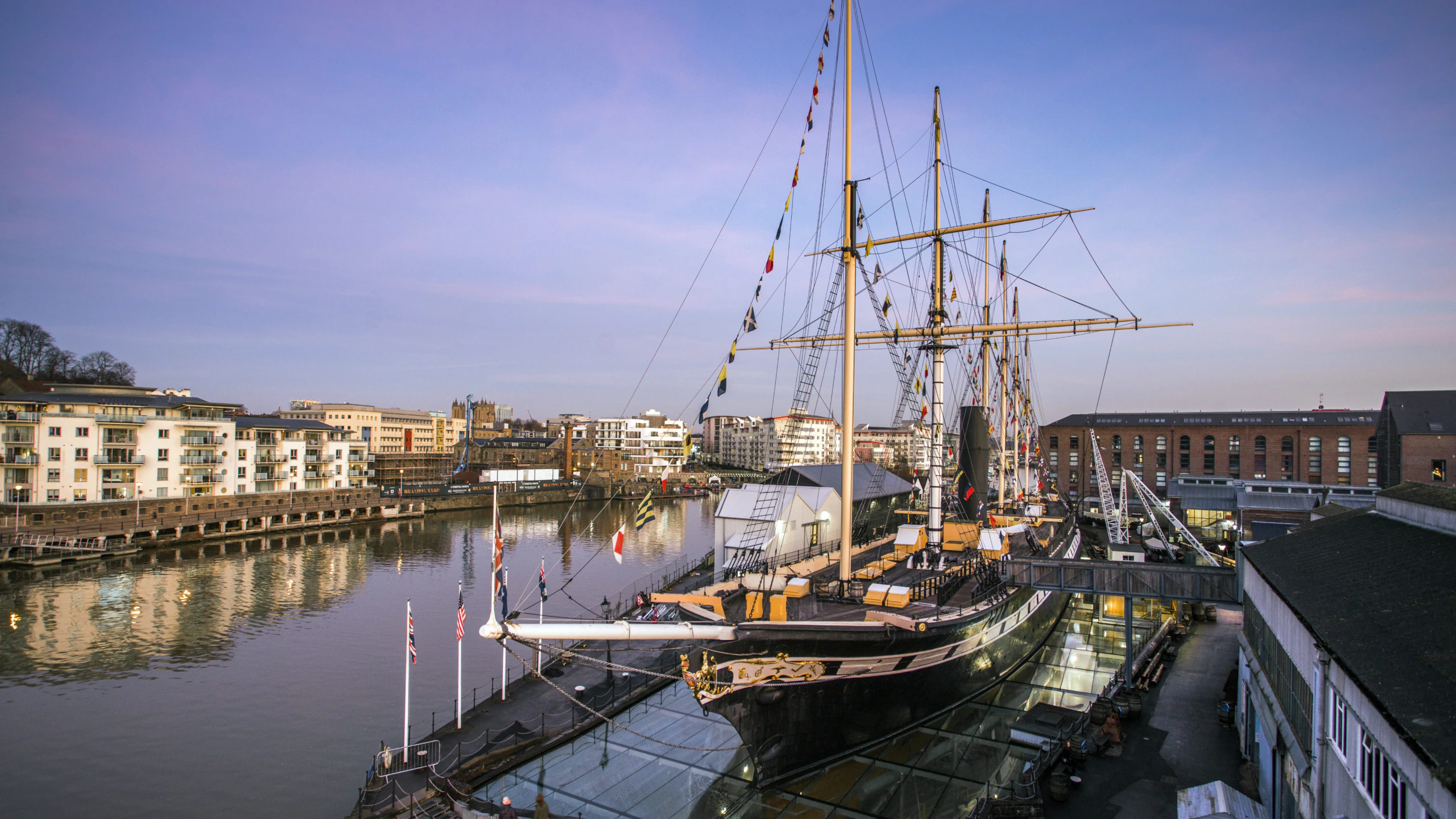
The Bristol site where the steamship (SS) Great Britain is docked will be rebranded as it prepares to unveil a major redevelopment this July.
Previously known as Brunel’s SS Great Britain, the destination is changing its name to Bristol Dockyards.
The new name is intended to reflect the long-term ambition of the SS Great Britain Trust, the charity that runs the site, to transform the attraction into a broader cultural and learning campus encompassing the adjacent Great Western and Albion dockyards.
The trust has hit back against misleading media reports that it changed the name of the ship itself in order to remove “Great Britain” from its title.
A statement from organisation this week said: “The steamship Great Britain remains at the heart of our charity's purpose and all the work that we deliver. The ship’s name is not changing – instead, our organisational name is changing to Bristol Dockyards. This name change allows us to grow as a heritage site and ensures we can remain taking care of the ship for years to come.
“The SS Great Britain’s name has not changed - nor will it ever change under our care – and her doors remain open to the city of Bristol and beyond.”
Advertisement
Made of metal and featuring engines and a propeller, the SS Great Britain is known as the world's first modern ship. The first phase of the site’s redevelopment will be a new museum opening on 18 July in the building that housed the former Dockyard Museum.
The reimagined venue, designed by Ralph Appelbaum Associates, will add 2,000 square feet of exhibition space and feature newly discovered material and interactive exhibits. Displays will explore the impact of the ship “on the world, on the lives of those on board, and on the places to which it travelled”.
The museum has conducted five years of community research with local researchers to inform its new curation and interpretation.
It promises to reveal “previously untold human stories” from its 75,000-strong archive, exploring the ship's 41 years of service from its construction in Bristol in the 1840s to its voyages to New York, Australia, India and San Francisco.
The displays will also act as a “conversation about revolutionary change in Bristol, remarkable life stories, and the extensive and sometimes challenging impact of British seafaring and the ship's capabilities on places across the globe”, according to the museum.
Different sections will tell stories about the ship’s construction crew, as well as exploring its impact on migration to Australia and how this changed the continent and the lives of its First Nations inhabitants.
Advertisement
Another section will examine the role the ship played in imperial conflicts, outlining its history as a troop carrier during the Crimean War and the Indian Rebellion of 1857.
A new space, the James W Jones room, will connect community groups and individuals through research and is named after a Black man who sailed aboard the ship.
“This reopening marks an important moment not only for the SS Great Britain Trust, but for the future of this historic site,” said Andrew Edwards, CEO of Bristol Dockyards and the SS Great Britain Trust.
“We are committed to safeguarding this extraordinary heritage while being ambitious about what it can become: a dynamic cultural campus rooted in community participation, learning and maritime heritage.
“In a city renowned for its creativity and cultural energy, Bristol Dockyards will be a place where more people can engage with the past, build skills for the future and help shape a shared civic story.”
Future phases of the redevelopment will focus on conservation work, reestablishing the Albion dock as a working dockyard for maritime skills training opportunities, and broadening its programming to “reflect the interests of a modern, diverse Bristol”.
The project is scheduled to complete in time to mark the 60th anniversary of the ship’s return to Bristol from the Falkland Islands in 2030.
The site previously underwent a redevelopment in 2005, before being named Museum of the Year the following year. That restoration project saw an innovative glass “sea” installed around the ship, allowing visitors to view the vessel from both above and below the waterline.