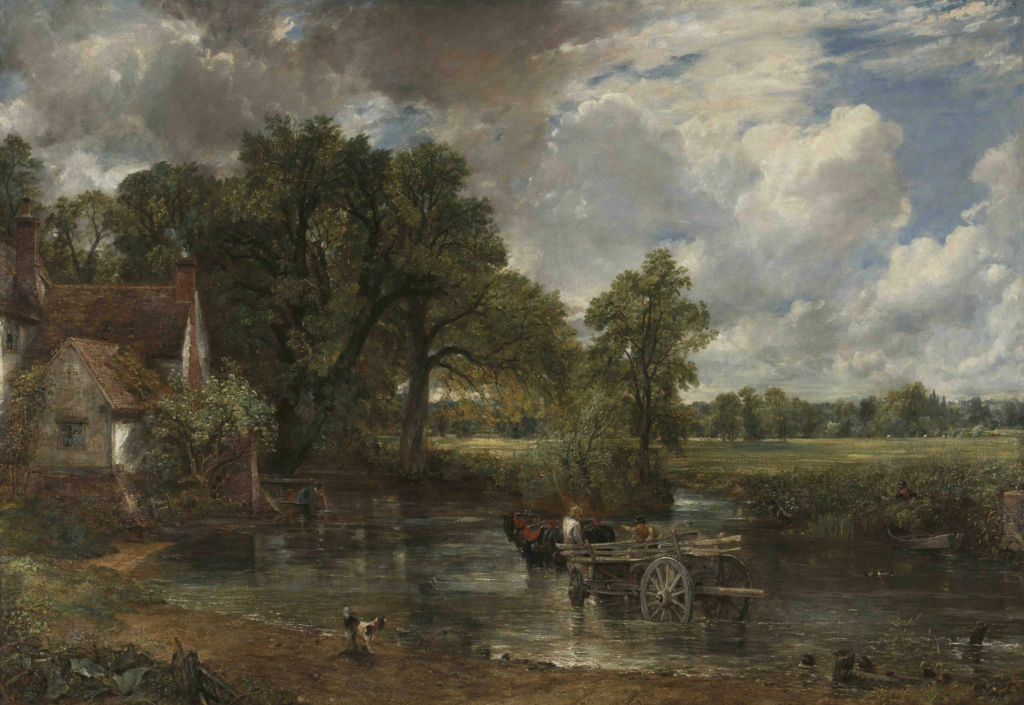
It’s a big moment for East Anglia. Norfolk has seen the grand unveiling of the redeveloped, and now much-acclaimed, Norwich Castle, and while Ipswich Museum in Suffolk is still undergoing a major redevelopment until it opens again in spring 2027, the masterpiece six-foot painting, The Hay Wain, by British painter John Constable (1776-1837) is being shown in the county that it depicts for the very first time.
It’s extraordinary to think that such a significant painting, famously of the Suffolk countryside and crafted by an artist who was born and bred in the area depicted, had not actually been on view in the county in its 200-year history – until now.
The Hay Wain is part of the National Gallery’s collection in London and is regularly on show as one of the cornerstones of British art history.
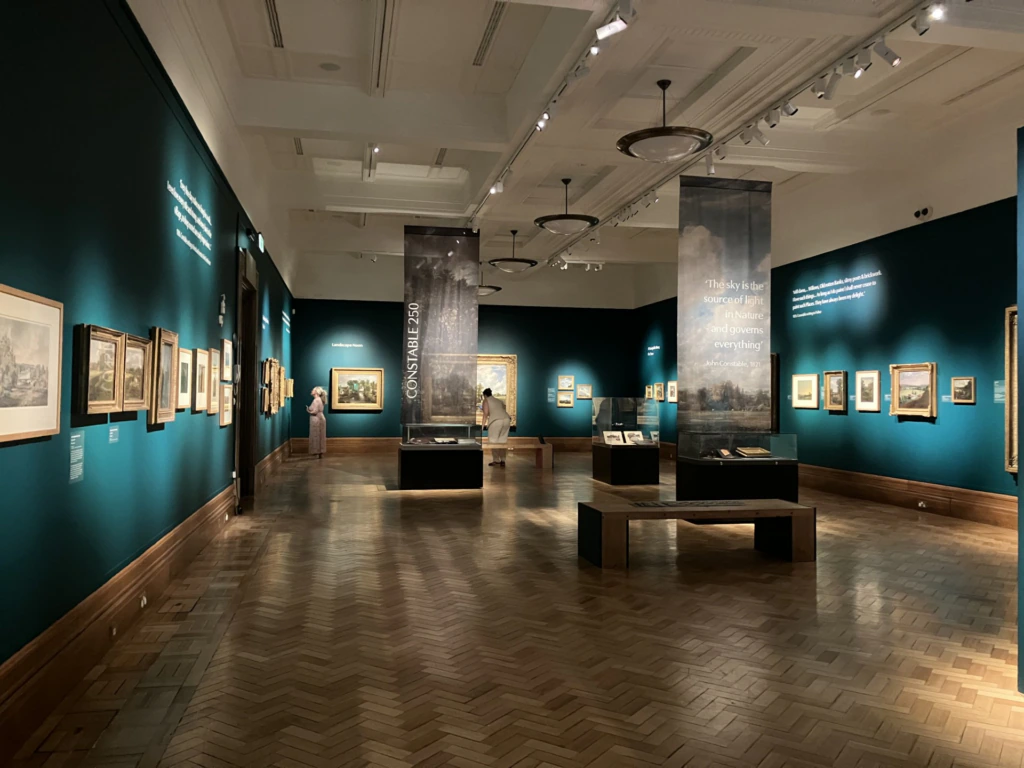
It is now, however, in its heartland of Suffolk at Ipswich’s 16th-century Tudor brick Christchurch Mansion, as part of Walking Constable’s Landscape (until 4 October). The Hay Wain is one of a few key loans from across UK museums that make up this long-awaited show.
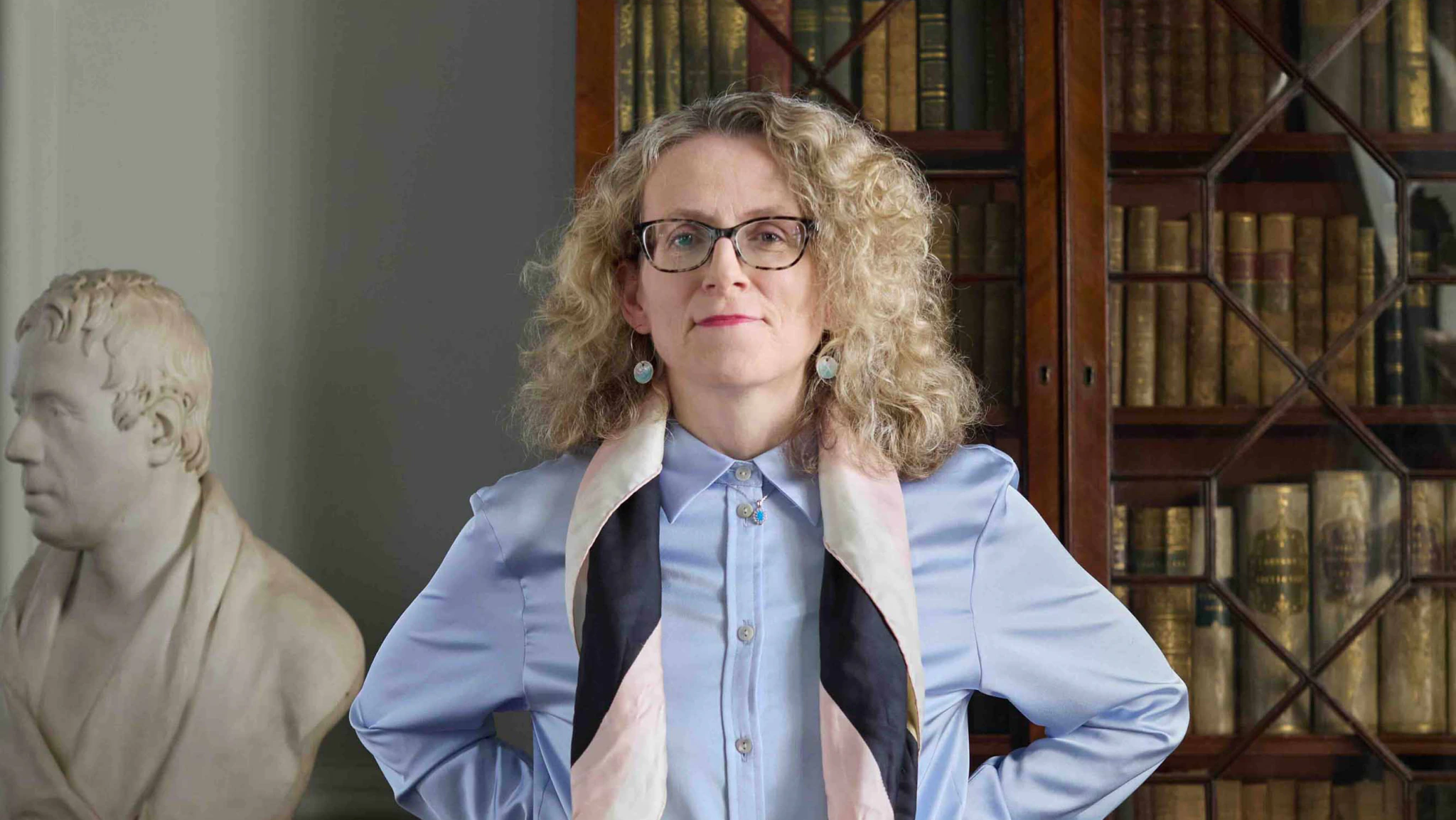
Museums Journal speaks to Emma Roodhouse, curator for Colchester and Ipswich Museums service, who has developed and curated the Constable exhibition.
How have the Constable 250 anniversary and this exhibition developed?
Emma Roodhouse: Our first exhibition, which started in March, was called “A Cast of Characters” and focused on Constable’s friends, family and portraits, and introduced those that meant the most to him, setting the scene.
Advertisement
This exhibition is all about Constable’s landscapes and being able to immerse yourself in the places that he loved. It takes you from his birthplace at East Bergholt, and then you can follow his very own walking routes down to Flatford and the working environment there at the mills, and then across to the River Stour and Dedham, Dedham Lock and mills.
The Hay Wain hasn’t been to Suffolk before…
It was painted in his studio in London, so no, it wasn't created here, and this is a really special, once-in-a-lifetime opportunity to see it so close to the place that Constable was inspired by.
The National Gallery have been amazing to work with. All due respect to Christine Riding, director of collections and research there, who has been tremendous. I don't think I ever thought we could ask to borrow The Hay Wain. Perhaps outside of London we sometimes don't think that we can be as confident to just go for such a massive loan.
It’s actually the V&A who are the biggest lender to this show, followed by the Tate, and then the Royal Academy of Arts and the National Galleries of Scotland in Edinburgh, with their amazing Dedham Vale painting – which, again, has never been on show here before. Everybody has been really supportive, and they recognised the significance of the anniversary and this opportunity.
Advertisement
Why is the cart in the water?
Well, that's a matter of debate. Is it a Suffolk cart? Or is it a cart he saw in Hampstead, where Constable was living at the time? The sides aren't very high, so how did it gather the hay? The wheels are metal rimmed and while making cartwheels, in order to get the metal rims to stick to the wood of the wheel, they would take the wheels into water so the wood expands to fit its new tyres. That's one answer.
The other answer is that they're in the water for the horses to cool off. Because originally Constable titled the painting Landscape: Noon, indicating that it was a landscape at noon. Think of the heat of the day. Maybe the horses needed cooling down and the farmers steered them in there for a refresh once they'd delivered the hay. That’s hard work, and they would need to go back again and collect more hay afterwards from all the workers you see in the background.
Was the Hay Wain always thought of as a keystone in British art history?
It went on display at the Royal Academy Summer Exhibition in 1821 as Landscape: Noon. It wasn't panned, but it didn't have a moment. It was his close friend, archdeacon John Fisher, who renamed it with its pithier title The Hay Wain. Then it goes on show at the Paris Salon in 1824, where the artist Eugene Delacroix couldn't get over the freshness, the light, the water and the sparkling reflections in the painting, and it's awarded the gold medal by the king. There is a replica of the medal cast in the bottom side of the frame, and the original is in the National Gallery archive.
Advertisement
It is donated by a collector to the National Gallery in 1886. It's not the first Constable picture in the national collection, which is The Cornfield [1826, acquired 1837]. But then you think about the advent of the railways, the increase in tourism, and once The Hay Wain is in the national collection it hooks into that idea of the countryside and visiting the newly nicknamed “Constable Country” – which it became known as during the artist’s lifetime, even. It starts to generate lots of reproductions on biscuit tins, chocolates and tea caddies, some of which we have on show in the hall here.
How will you attract diverse audiences?
We're funded by the National Heritage Lottery Fund, the Weston Loan Programme and the Friends of Ipswich Museums, and all this built up to three exhibitions throughout this year and five community partnerships. So, although The Hay Wain is here stealing everyone's thunder, there's actually a lot more going on throughout the year with lots of activity off-site happening with Suffolk Archives, Aspire Black Suffolk, and across Suffolk in general.
We've got a whole variety of different community programmes and events during the school holidays. We've got a mixed reality pop-up exhibition, where we have photos taken at and images of East Bergholt, and visitors can immerse themselves in a gallery-like experience. Suffolk Archives are out with their themed trailer, and they go to loads of different events and festivals, including Latitude.
Under 16s get free entry to the exhibition here too, which I think is really important. It's also free if you're an Art Fund member or if you're a Friend of Ipswich Museums. An adult ticket is £10, but it’s only £18 to become a Friend of Ipswich Museums for the year, and then you're free to visit everything. Our Friends membership has gone through the roof, and that’s had the unexpected but much appreciated effect of getting younger voices involved.
Top three paintings on show here apart from the Hay Wain?
Ann Constable’s Flower Garden and Golding Constable’s Kitchen Garden, both 1815
My first are in the Ipswich Borough Council Collection and it’s a bit of a cheat because it’s two. They are such significant paintings because they're views from the back of the house that Constable was born in, which no longer exists. So you, or we, will never be able to see this view again.
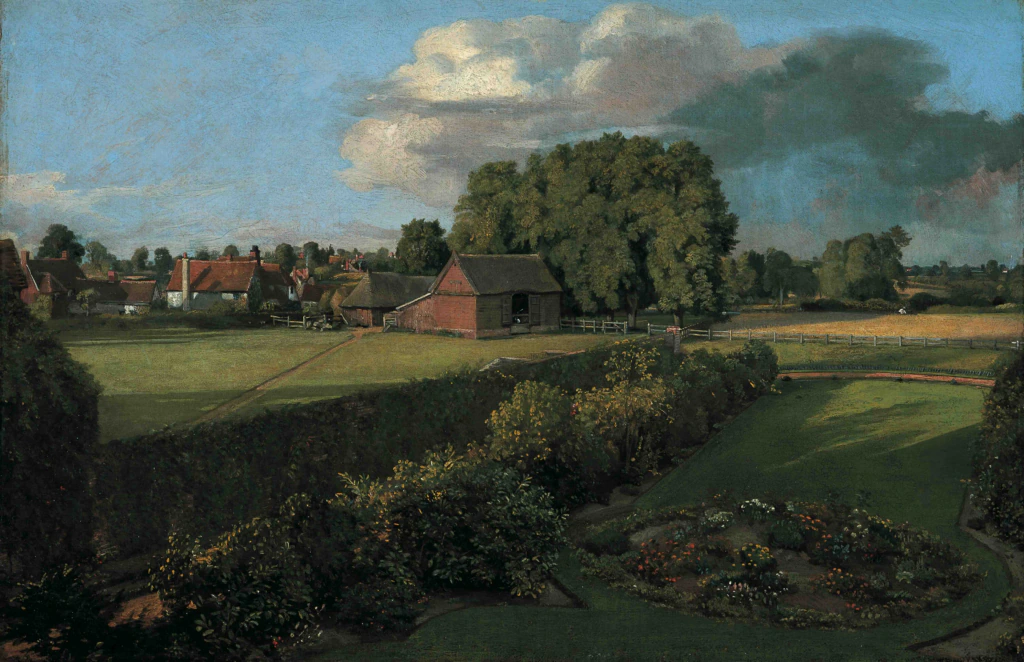
His mother Ann had died in 1815. She was great at putting him in contact with possible patrons because Constable himself was not that good at networking. She writes fantastic letters that have everything mother-related in them, like “have you got enough shirts?” She's a wonderful character, and she designs and plants this flower garden. She takes a fall in the garden early in 1815 and then unfortunately has a stroke and dies, and Constable is not able to get back for her funeral.
He does come back to look after his father, who becomes ill by the summer of 1815. And while he's there in the house, he spends time painting the views that he would have seen on a daily basis as a boy. The flower garden, the threshing barn in the background, the mill where he worked as a teenager, their gardener Prestney, and the rectory where his future wife would often stay with her grandfather.
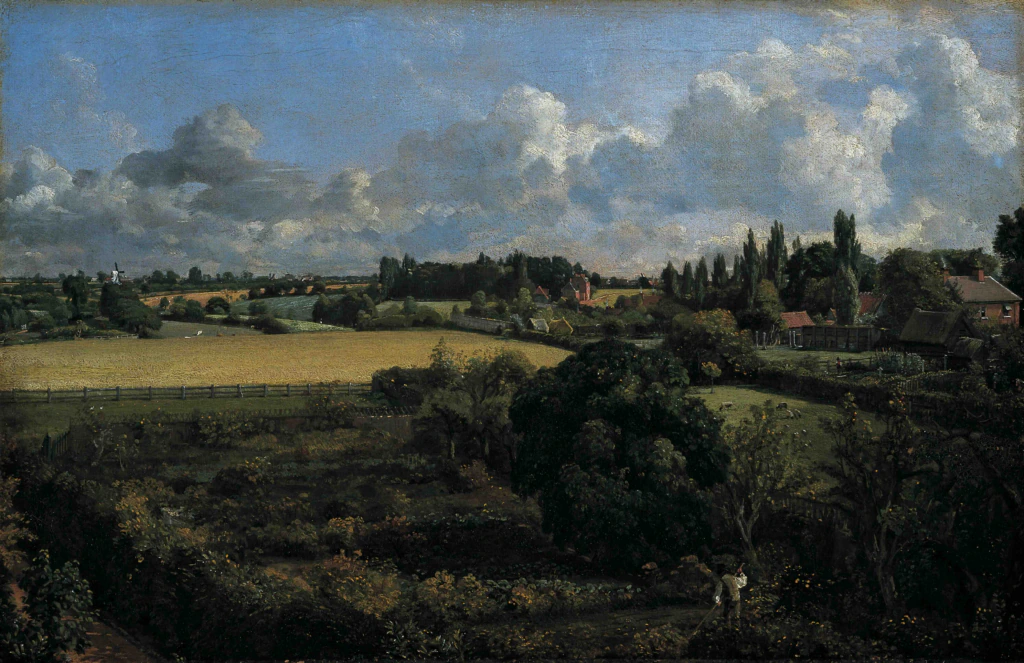
These two views he never sold, never exhibited. They were in his studio on his death, and I think they were really the most personal views he ever created, because they reflect his mother and his father, as well as that world he knew intimately.
A Boat passing a Lock, 1826, lent by the Royal Academy of Arts
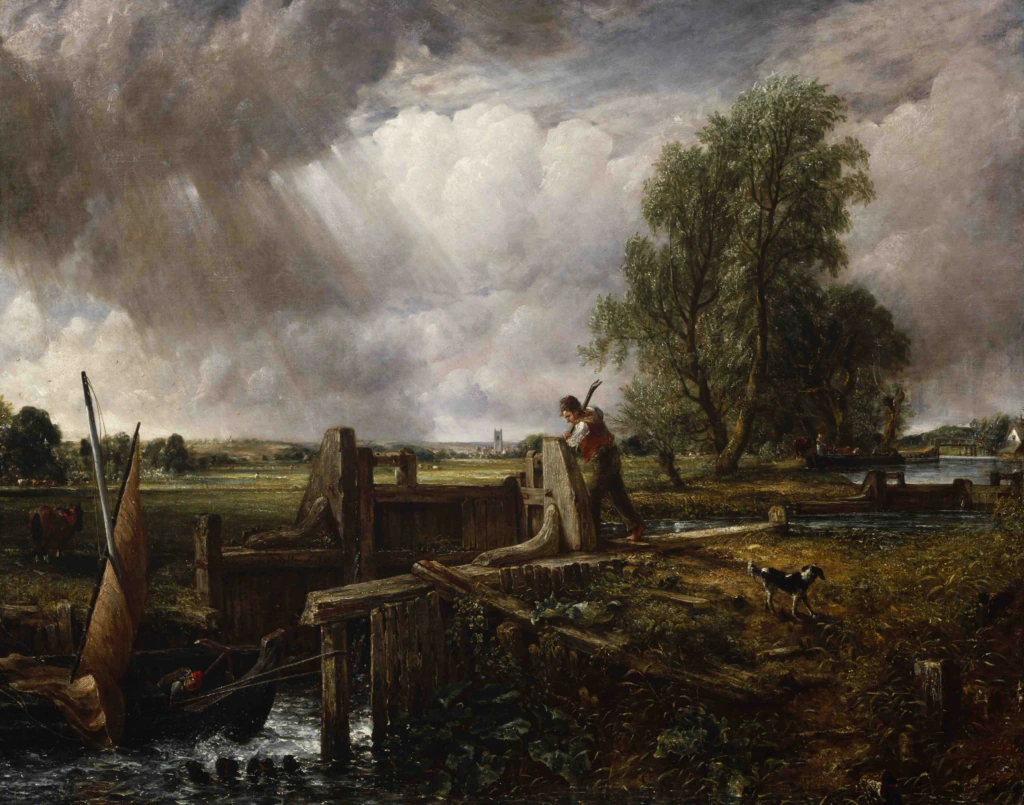
The lock is amazing. It’s his diploma piece that he submits to the Royal Academy when he is elected. It took him years to become a full academician. It was something he long aspired to be, and finally he's made an academician in 1829. But it's really mixed with grief because his wife Maria had died from tuberculosis in the November of 1828, and he's now a widow with seven young children to look after.
Constable decides to present this painting as his diploma work, but he had to buy it back because he'd already sold it. He could have chosen The Cornfield, or other pictures that were in his studio, but obviously this one meant a lot to him. And I think because it was painted when Maria was alive in 1826, it's got Dedham Church in the centre, the working landscape, the river, the sky and everything – it encompasses his attitude and approach to landscape painting.
Dedham Vale, 1828, lent by National Galleries Scotland
This painting shows a view across the river, down towards Dedham Church and out towards Harwich. The church is prominent, which is a motif that occurs because his Anglican faith is very important to him. It was important to his family, and it's something he refers to even when he's painting. If a painting was making him anxious, he would pray before the canvas to try and help it on its way.
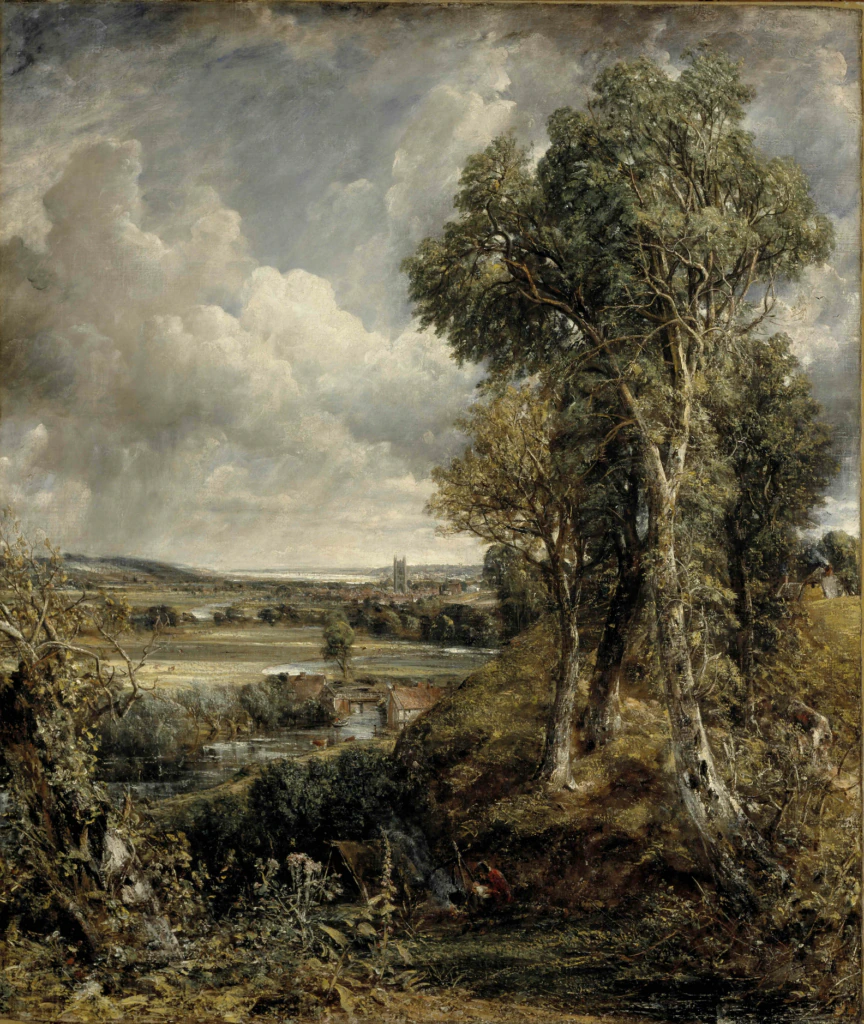
Then there’s the woman in the foreground holding a baby next to a lean-to tent, who were obviously placed there by Constable, but is it a now post-Enclosure Acts commentary about all the people who don't necessarily have a set piece of land? They're having to move on to the next area. Or is it to do with his appreciation of old masters like Thomas Gainsborough? Gainsborough always painted travellers and people in glades. It's hard to say, isn't it?
Family, church, nature. Constable’s paintings always seem to pack in all of those.