Profile | ‘This story gives people a reason to come to the region and see its beauty’
As a festival launches in Tees Valley to celebrate the bicentenary of the first public rail journey, the event's director Niccy Hallifax tells us about the railway's role in regeneration, revolution – and even the advent of universal time
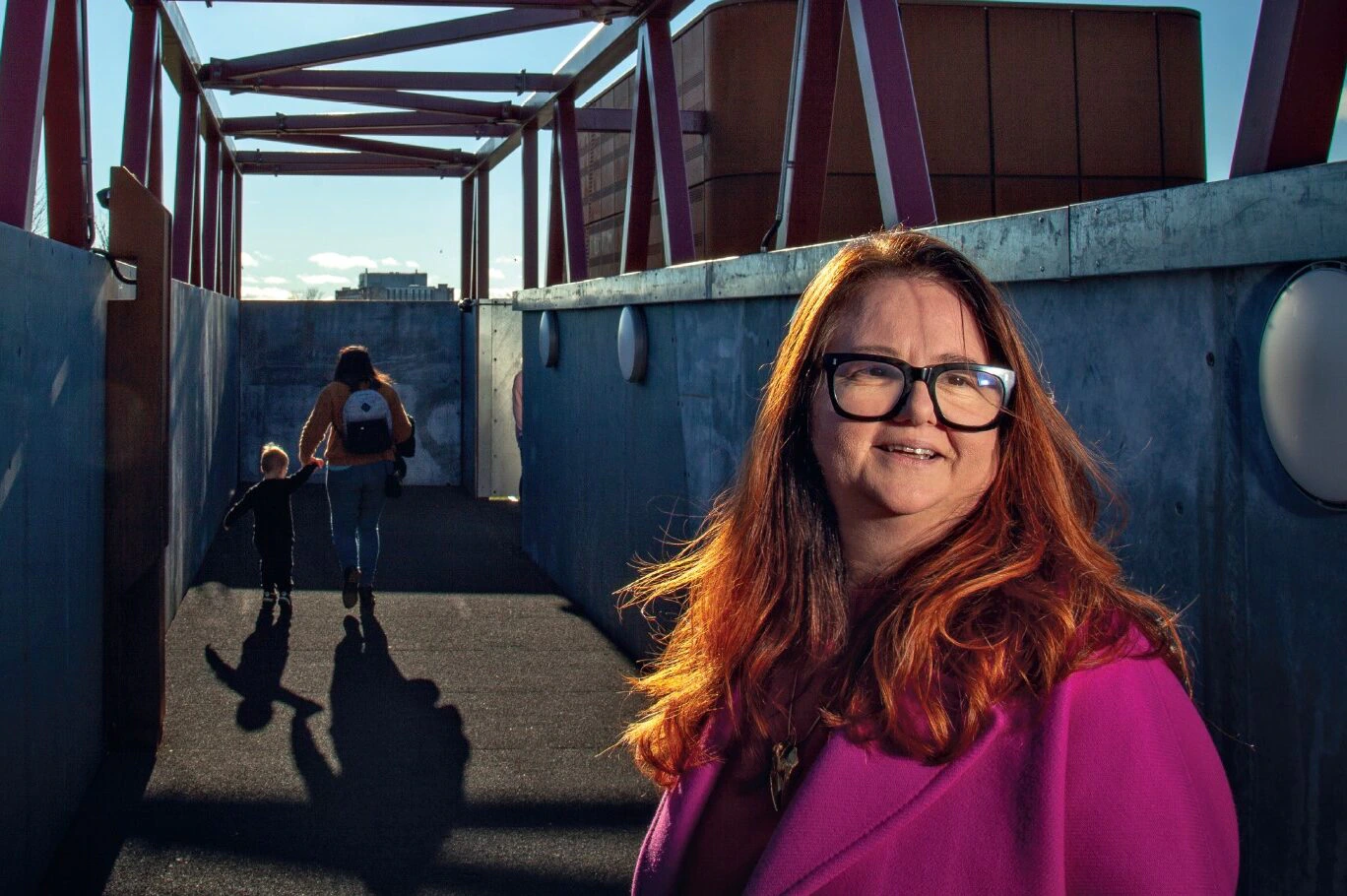
Niccy Hallifax is the director of the S&DR200 FestivalPhoto by Phil Sayer
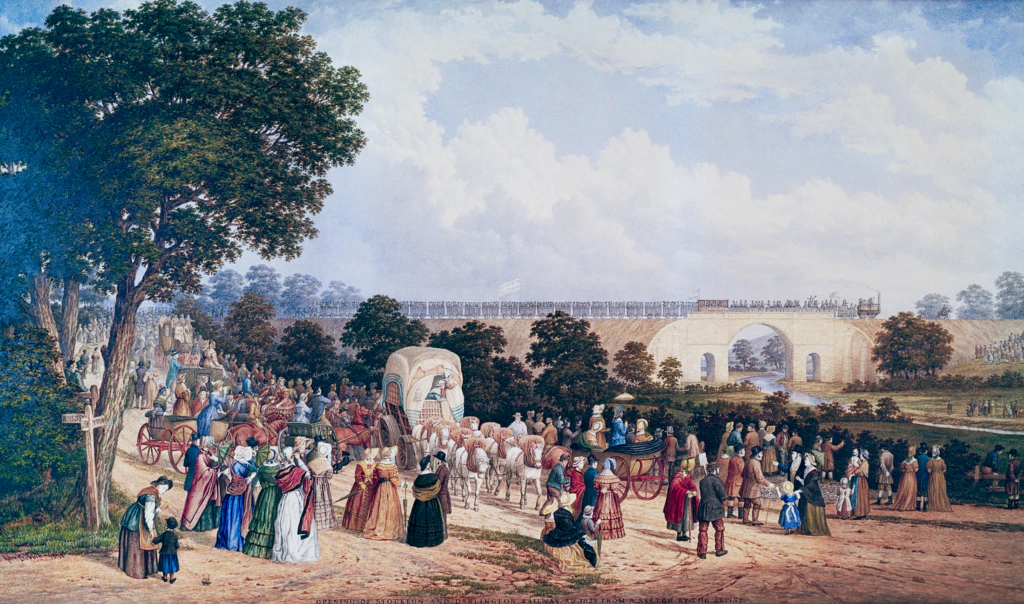
In September 1825, thousands of onlookers flocked along 26 miles of railway track to witness a never-before-seen spectacle – the first public passenger journey of a steam-powered locomotive.
Modern British trains may have a reputation for delays and overcrowding, but they don’t seem quite so bad compared with that first trip on the Stockton and Darlington Railway (S&DR) across Tees Valley in north-east England.
As many as 600 people crowded onto freight wagons converted to carry just half that number, leaving some passengers sitting on top of piles of coal. At one point, a man clinging to the outside of a wagon fell off and had his foot crushed.
The Opening of the Stockton and Darlington Railway, 1825, painted by John Dobbin
At the head of that rudimentary train was the legendary steam engine designed by George Stephenson, Locomotion No 1. Moving at about eight miles an hour, the locomotive had to stop several times along the way for repairs. But teething issues aside, the three-hour journey was a resounding success – and the era of modern railway travel was born.
The 2025 bicentenary of this event is a once-in-a-generation opportunity to spotlight the international significance of the region and its heritage.
Advertisement
The years since that first journey have not always been kind to Tees Valley; post-industrial decline and political neglect have left it one of the most deprived areas in the country, with stark inequalities in health and education.
Saturday 29 March sees the launch of S&DR200, a nine-month festival that, along with celebrating the bicentenary, hopes to usher in a cultural and economic renewal of the area. The project is an innovative collaboration between three local authorities that have been able to leverage support from national funders, including the National Lottery Heritage Fund.
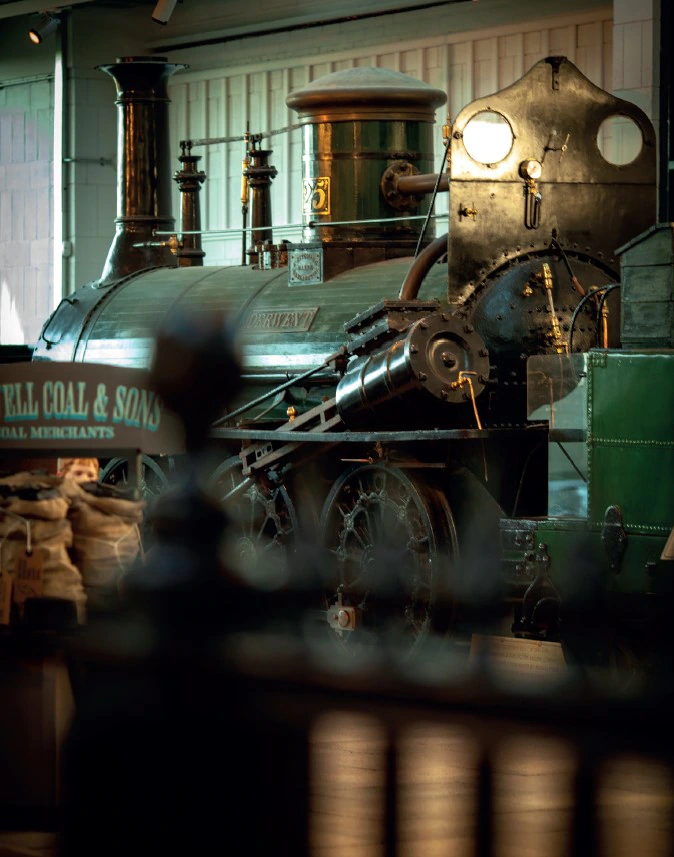
The museum at Hopetown Darlington, the site of the world’s first passenger train station
Cultural heritage is front and centre to the regeneration. Four partner museums near the railway line have been revamped to shape up for the bicentenary, while redevelopments are also taking place at other nearby venues, such as the Auckland Project in Bishop Auckland. The ultimate aim is to put north-east England on the tourist map.
The S&DR200 festival – itself the centrepiece of Railway 200, a year-long, UK-wide programme organised by Network Rail to mark the bicentenary – will culminate in a three-day event to celebrate the anniversary on 27 September.
With the eyes of the world on the region, there will be a lot riding on the festival, but S&DR200 director Niccy Hallifax relishes the challenge. Hallifax, whose background is in fine art and event production, has a long track record of creating occasions that combine public spectacle with culture and heritage-based regeneration.
Advertisement
Previous high-profile projects include producing the opening weekend of the Millennium Dome in London in 1999.
Heritage will be the star of the show at S&DR200, she says. “The public spectacle is just a tool to tell the stories, and I think that’s important. The heritage is the thing we are celebrating and pushing forward.”
To that end, the festival team has been busy researching untold stories about the first railway. “I’ve found out things I never knew – there’s weird, hilarious, fantastical stuff every day,” says Hallifax.
“The thing that surprised me most was that not only was it a technical revolution, it was also a communication revolution. It brought a surge in development and communication unrivalled until the internet.”
NICCY HALLIFAX
Niccy Hallifax has curated numerous award-winning projects in the global heritage and culture sector.
She oversaw the medal ceremonies for the 2012 London Olympics and Paralympics. More recently, she directed installations such as See Monster, a kinetic sculpture and garden created from a decommissioned oil rig, as well as the opening and closing events for Waltham Forest Borough of Culture festival in 2019.
Hallifax directed the opening and closing week of Hull City of Culture 2017. She has also worked on programming for Kew Gardens and the Hive in Colchester, as well as overseeing the opening of the Millennium Dome (now the O2 Arena) as director of special projects.
Favourite facts include the revelation that train travel ushered in universal time. Before that, in the earliest days of the railway, time could vary wildly from station to station. “You could leave Darlington at five o’clock and arrive in Stockton at quarter to five,” says Hallifax.
Advertisement
The S&DR company also played a role in the women’s rights movement. “Women were allowed to buy bonds, which was completely unheard of,” she says.
“They weren’t even allowed the vote in 1825, but because the Quakers started this movement, women were allowed to buy bonds and be self-funded for the first time. And a lot of those women went on to work really hard for workers’ rights and against the slave trade, so out of this movement came causes that were then taken up by others.”
The festival won’t shy away from some of the more complex legacies of rail travel, she adds. “Workers’ rights weren’t exactly great back then. You could also argue that it fuelled empire. But having those conversations is no bad thing, because nothing is black and white and that’s a really important story to tell.”
Environmental impact
The climate crisis, the origins of which can be traced to mass industrialisation accelerated by the birth of the railway, will also be reflected in the programming. While it is vital to explore that legacy, Hallifax believes the Victorians’ thirst for invention and creativity can also act as a template for solving today’s challenges.
“They just went ‘okay, blank piece of paper, what are we going to do?’. And I think that’s such an inspiring and universal story and so applicable to now.”
Hallifax is particularly excited about the role museums will play this year. Her tenure at Hull showed the impact a major festival can have in breaking down longstanding barriers and showing culture and heritage in a different light.
“We had 375,000 people come to an outdoor exhibition talking about the heritage of Hull,” she says.
“That’s where I got the bug to start looking at how museums can go outside of their roles, and how you can bring different audience profiles into museum spaces – because some people are genuinely in awe of museums and scared to walk through the door. The ability to get outside of your walls is important if we’re to get the next generation to find things in museums that are relevant to them.”
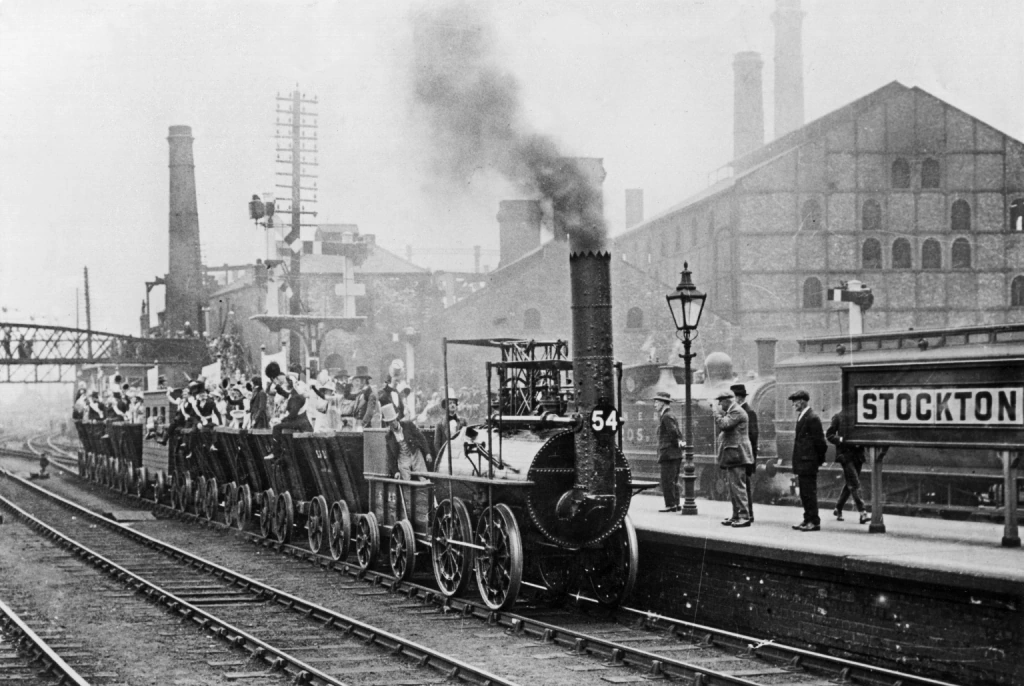
Previous S&DR commemorations have been a source of inspiration. The 150th anniversary in 1975 saw the opening of the National Railway Museum in York, as well as a cavalcade of early steam engines. At the centenary in 1925, the original Locomotion No 1 travelled along part of the track.
The centenary procession in 1925
Cost, sustainability and safety – not to mention modern standards of collections care – mean these options are off the table in 2025, but there will be nods to them on the programme.
Rail enthusiasts around the world will have the opportunity to travel the line and create their own cavalcade through a digital game. And a replica Locomotion No 1, built for the 150th anniversary, has been restored and will recreate the engine’s journey across Skerne Bridge in Darlington, the world’s first railway bridge over a public road.
With placemaking and regeneration at the centre of the festival, Hallifax is keen to ensure its legacy extends far beyond 2025.
“This is an international story. We have had people from Argentina, Canada, Australia, Japan, Belgium, France and Germany already engaging with us. The economic argument [for investment] is massive. Making sure we’ve got those permanent pieces on the ground and that our museums and galleries have been brought into the 21st century is really, really important. It gives people a reason to come to the region and just see the beauty of it.”
The ultimate goal is to ensure that local communities reap the benefits.
“People in Tees Valley are very proud of this piece of heritage, and rightly so. I think sometimes they feel others steal their thunder. So, this is a great opportunity for them to own it,” says Hallifax.
Stockton and Darlington Railway 200 Festival
Preston Park Museum and Grounds is opening an extension this year
From March to November 2025, the S&DR200 festival will feature a series of free large-scale outdoor events, exhibitions and new art commissions. Four museums on or near the original railway track are acting as key partners in the festival and shared a £57m investment ahead of the bicentenary.
Hopetown Darlington
The site of the world’s first passenger train station, opened as a museum last year following a major renovation of its heritage buildings and visitor facilities. It will feature an exhibition of early locomotives, including the original Locomotion No 1, as well as an immersive steam-inspired installation.
Locomotion
Based at Shildon, which is part of the Science Museum Group, Locomotion unveiled its new display shed, New Hall, in 2024. It will run an exhibition on Railway Firsts, as well as running events exploring the future of transport and skills.
The Story Opened last year in Durham. The institution houses five important collections of local and military history, and will run an exhibition exploring the transformation of the region that followed the opening of the S&DR.
Preston Park Museum and Grounds
Based in Stockton, the museum is due to unveil a new two-storey, modern extension this summer, making it possible to bring nationally significant touring exhibitions and objects to the region for the first time.
Share article
Comments (2)
The engine that hauled the first passenger train was “Locomotion No 1” not as written in the article, “Locomotive No 1”. Wikipedia and many railway publications will confirm.


The engine that hauled the first passenger train was “Locomotion No 1” not as written in the article, “Locomotive No 1”. Wikipedia and many railway publications will confirm.
Thanks Simon, this has been corrected now.