UK news
Thackray Museum of Medicine secures funding ahead of 30th anniversary
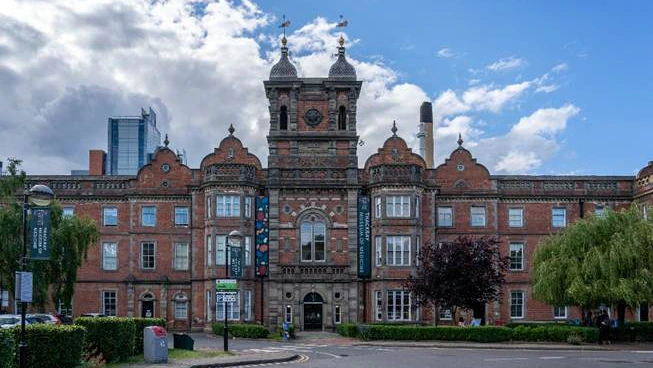
The Thackray Museum of Medicine in Leeds has been awarded more than £420,000 from grant bodies led by the National Lottery Heritage Fund, including £249,500 from the Heritage Fund itself. The money will support early-stage long-term planning, with community consultation, and a fundraising and enterprise plan. It will also fund an exploration of replacing the roof of the Grade II-listed former workhouse building, possibly adding an extra floor.
The museum marks its 30th anniversary in 2027, beginning with the exhibition Complexion, which opens in February and runs until June. The exhibition explores the experiences of people with melanin-rich skin. A new Collections CoLab opens in April. Chief executive Edward Appleyard said the funding gives the museum time to think ambitiously about the next three decades. Outgoing chair Professor Neil Kaiper-Holmes will hand over to Neil Clephan OBE.
Manchester Jewish Museum retains place in cultural portfolio
Advertisement
Manchester Jewish Museum has been included once again in the Greater Manchester Cultural Portfolio, with renewed core funding of £40,425 from the Greater Manchester Combined Authority. The museum says the support will help it continue bringing people together through creative and imaginative programmes. It believes cultural experiences can open up conversations that might not otherwise happen. They can also help people feel more connected to their own and other communities, and build a stronger sense of belonging. The museum said it is proud to work alongside other cultural organisations, communities and partners across the city region, and thanked the combined authority for its support.
Art Fund seeks host museums for curator leadership programme
Art Fund is recruiting host organisations for the second cohort of Empowering Curators, a programme for mid- and senior-career Global Majority curators. Run with peer funders and museum partners across the UK, it aims to increase the number of such curators moving into curatorial and executive leadership.
Ten fellows and 10 hosts will take part in fellowships of up to three years, running from 2027 to 2030. Hosts can create new curatorial roles or nominate existing curators as fellows.
They will also receive support and resources to undertake organisational change focused on inclusivity and equity, with commitment from senior leadership. The programme hopes to bring more innovative and representative experiences to museum audiences. Interested organisations can contact Amisha Karia at Art Fund. Applications close on 12 October.
Advertisement
Thinktank calls for 10-year lottery reset
The Cultural Policy Unit has called for a 10-year reset of the National Lottery to "remake Britain". Its report, Renewing the National Lottery, proposes raising the statutory shares for arts and heritage from 20-25% each for a decade. Sport would stay at 20%, and the National Lottery Community Fund's share would temporarily fall from 40 to 30%.
On 2024–25 figures, that could release about £135m a year, or £1.35bn over 10 years, to renew theatres, museums, libraries and high streets. The thinktank also proposes a National Lottery Talent and Opportunity Fund, financed by around £100m a year in unclaimed prizes, to support traineeships, bursaries and training. The report follows the closure of the government's Good Causes consultation on 23 September.
Ipswich Museum to reopen in spring 2027
Advertisement
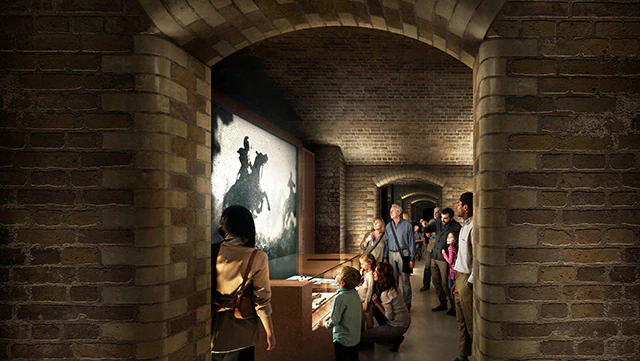
Ipswich Museum is entering the final stages of a £12 million redevelopment and will reopen in early 2027. The Grade II-listed building closed in October 2022 and now has eight new and upgraded galleries. Specialist teams have carried out extensive structural and conservation work, with the original Victorian features restored and enhanced.
Before work began, staff audited a collection of more than 200,000 objects, including the rare Viking Valkyrie pendant, the Boss Hill Saxon brooch, ancient Egyptian sculpture, a menagerie of taxidermy and the replica woolly mammoth, Wool-I-Am. The next phase will see those objects return to the galleries, informed by fresh research. Founded in 1847, the museum reopens in its 180th anniversary year.
Courtauld and National Portrait Gallery launch partnership
The Courtauld Institute has announced a partnership with the National Portrait Gallery to give students on its MA Curating programme experience inside leading cultural organisations. A new Working within Institutions teaching strand will be joined by potential dissertation co-supervision and future postgraduate research collaboration.
The programme has alumni in 83 countries, with graduates working at Tate, the Guggenheim and the National Gallery in London, among others. Earlier this year, students curated shows at the Nicoletta Fiorucci Foundation, St Mary le Strand Church and Strawberry Hill House & Garden.
The first cohort to benefit will join in 2027–28. Applications for 2027 entry open next month.
Project to test Wikidata as a heritage 'connective layer'
A new project under the National Research Infrastructure for Cultural Heritage (N-Rich) Prototype will explore whether Wikidata can link UK heritage data services and research infrastructures. Delivered with Wikimedia UK, it aims to go beyond using Wikidata to enrich individual collection records and tests it as a shared layer between whole systems.
Navino Evans, the co-founder of Histropedia, will lead the work with N-Rich senior researcher Anna-Maria Sichani and the Digitisation Capability Pilot team. Practical testing will use representative heritage data to identify where Wikidata offers reliable connections and where metadata, licensing or maintenance problems arise.
Outputs will include an interoperability blueprint, a Wikidata-compatible metadata framework and a guidance report on Linked Open Data, to be published through the Towards a National Collection Zenodo community. N-Rich is funded by the UKRI Infrastructure Fund via the Arts and Humanities Research Council.
DCMS updates ministerial responsibilities
The Department for Digital, Culture, Media and Sport has updated its website with ministerial titles and responsibilities. Labour peer Ruth Mackenzie has been confirmed as the minister for arts and museums, covering arts policy and the Arts Council England review, museums and cultural property, libraries and the National Archives.
Labour peer Fiona Twycross remains the minister for heritage, with responsibility for world and living heritage, appointments, arm's-length bodies and honours. MP Vicky Foxcroft, the minister for youth, gambling, digital inclusion, civil society and loneliness, now holds the National Lottery brief alongside youth, civil society and digital skills.
MP Stephanie Peacock is minister for sport, tourism, place and digital government. MP Ian Murray is minister for creative industries, media and online safety, and Labour peer Liz Lloyd is minister for space, cyber and regulatory reform.
Scottish museums invited to bid for Treasure Trove finds
Accredited museums in Scotland can apply to have Treasure Trove finds allocated to their collections. The Treasure Trove Unit's latest caselist is organised by local authority area and includes short descriptions of each object and where it was found. Museums are advised to check the list for finds that fit their collections development policies.
Applications must be emailed to the unit before the deadline on Wednesday 14 October 2026. The system is designed to let local finds stay in local museums. The Scottish Archaeological Finds Allocation Panel will meet in November to decide the outcomes.
Science Museum Group and Wellcome launch doctoral award
The Science Museum Group and Wellcome Collection are launching a Collaborative Doctoral Landscape Award. Funded by the Arts and Humanities Research Council, the scheme will support PhD projects developed and supervised jointly by museum staff and UK universities. Priority themes are human experiences of science, technology, engineering and medicine, civic and social interactions with STEM, and planetary and environmental sciences.
Proposals must come from a member of staff at one of the two organisations together with a colleague at a UK higher education institution. Academics without a museum partner are also invited to get in touch. There is a two-stage process, with the Stage 1 deadline on 1700 on Wednesday 21 October. The first projects will be selected this autumn, and students will start in autumn 2027.
National Heat Risk Commission seeks evidence
The National Heat Risk Commission is asking businesses, public bodies, institutions and voluntary organisations across the UK how extreme heat has affected them. The call for evidence asks what they have tried, what has got in the way and what would help. Submissions are open until 30 October 2026.
The call follows the commission's first report, A Heat Circuit Breaker for the UK, published earlier this month, which describes a risk that is growing more severe but remains poorly governed. Over the coming year the commission will examine practical routes to implementation and priorities for action across sectors. It is particularly keen to hear about practical experience, barriers and approaches that could be taken further.
Queer Up North digital archive launches online
A free digital archive documenting Queer Up North, the festival that helped shape queer culture in 1990s Manchester, launched on Friday 2 October. Running from 1992 to 2002, it was the first multi-artform LGBTQ+ festival in Europe and helped establish Manchester as an international destination for LGBTQ+ arts.
The archive brings together 1,420 images, 275 artefacts and 29 oral histories, selected by founders Tanja Farman and Gavin Barlow. Posters, flyers, tickets and billboards trace the festival's story, from its origins in the marches against Section 28 to performances by Diamanda Galás and David Hoyle.
It also features new work inspired by the festival's legacy, including visual art, creative writing and a documentary. Produced with Manchester Histories, it was funded by the National Lottery Heritage Fund, with additional support from the Granada Foundation.
International news
Athens contemporary art museum wins European award
EMΣT, the National Museum of Contemporary Art in Athens, has won the European Museum Academy's Art Museum Award 2026. The prize was presented in Alicante, Spain, on 26 September. EMΣT was chosen from six finalists, including Hastings Contemporary in the UK, the Rijksmuseum and Fenix Museum of Migration in the Netherlands, Museum Gugging in Austria, and the National Gallery of Slovenia.
The award recognises museums that engage with social justice, inclusion and sustainability. Jury chair Samuel Gallacher praised artistic director Katerina Gregos and her team for turning their vision into practice.
Since 2022 the museum's programme cycles have included Statecraft, What if Women Ruled the World? and Why Look at Animals?, and its current theme is The Cosmopolitans.
Rome launches design competition to expand Galleria Borghese
Galleria Borghese has launched an international architecture competition for a new museum pavilion, presented in Rome this week. The aim is to make one of Italy's most significant sites more accessible while respecting its heritage.
Promoters say the extension would allow more of the collection to be shown, as hundreds of works remain in storage. It would also help the around 100,000 visitors a year who cannot secure tickets, and visitors with reduced mobility. The project is sponsored by engineering firm Proger, with support from Rome's municipality.
The competition has two phases: architecture and engineering firms worldwide can apply first, and five finalists will then be invited to submit anonymous designs through the Order of Architects of Rome's CAN platform. The design must be approved by the city and Rome Superintendency.
Ten-year European partnership to protect heritage from climate change
The European Partnership for Resilient Cultural Heritage (RCH) launched in September at Mucem in Marseille. Co-funded by the EU, it brings together more than 90 partners from 30 countries for a 10-year effort on cultural heritage and climate change. Partners include universities, public authorities, research funders, heritage institutions and civil society organisations.
RCH will fund research projects, build capacity and encourage cross-border collaboration. It aims to help heritage withstand climate impacts such as floods and droughts, and to explore how heritage and its communities can contribute to more sustainable futures.
The launch event explored how science, local knowledge and communities can work together to inform policy. It was organised by the Fondation des sciences du patrimoine, which coordinates the partnership.