The Ulster Museum in Belfast hosted a public hearing this week on the life and death of an iron age woman whose remains were discovered in a bog in 2023 – the first time such proceedings have been held for a deceased ancient individual in the care of a museum.
Organised by National Museums NI (NMNI), the hearing followed the structure and methodology of a modern coroner’s investigation. It was conducted as an educational and investigative exercise rather than a formal inquest, an approach endorsed by lady chief justice Siobhan Keegan, head of the judiciary in Northern Ireland.
The hearing brought together archaeologists, forensic specialists, museum professionals and members of the public to examine the findings of an international research programme into the remains of the individual, who has been named Ballymacombs More Woman.
The investigation sought to answer three central questions: who the woman was, where and when she died, and how she met her death.
The evidence established that Ballymacombs More Woman was a female aged approximately 15 to 22 who died more than 2,000 years ago, during the iron age. Scientific analysis found that she had been deliberately decapitated, most likely from behind using a bladed weapon.
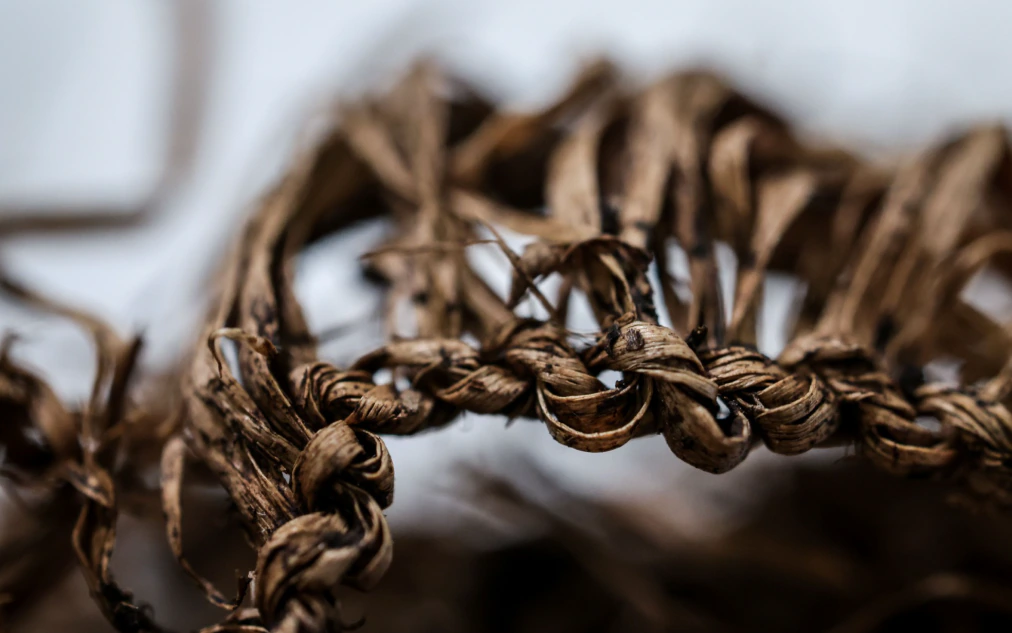
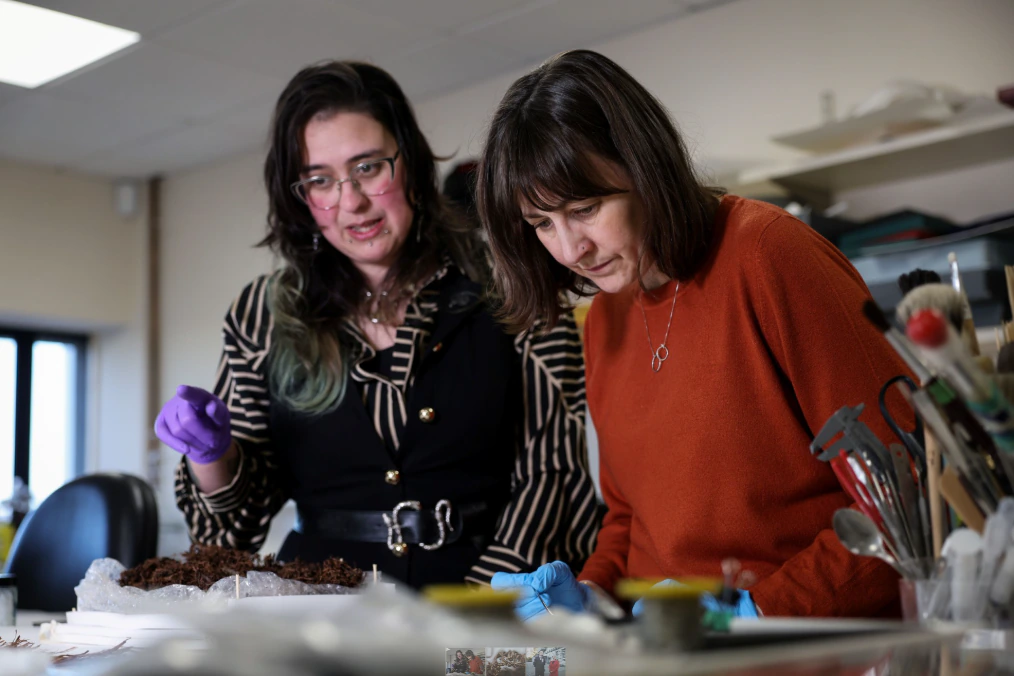
The multidisciplinary research programme used advanced scientific techniques to examine the remains, including micro-CT scanning, digital mapping, 3D imaging and specialist analyses of the bone, hair, skin, nails and a woven artefact found alongside the body.
Advertisement
According to NMNI, these methods provided “valuable evidence” of the woman's age, health, diet, appearance and the injuries that caused her death. The findings showed – among other details – that she had straight, dark hair.
While the precise circumstances of the woman’s death remain unknown, the evidence suggests that she may have been the victim of ritualised killing or sacrifice. This practice is associated with other bog body discoveries across iron age north-western Europe, including internationally known finds such as Tollund Man, Grauballe Man, and Ireland’s Clonycavan and Old Croghan Man.
In his concluding remarks, Northern Ireland’s coroner, Joe McCrisken, emphasised that the purpose of the exercise was not to “impose modern legal conclusions on the distant past”, but to use the investigative process to assess the available evidence and reconstruct the story of an individual who would otherwise remain largely unknown.
McCrisken said that, although the individual was separated from the present day by more than 20 centuries, she had once been “a living member of her community”, and that the investigation had sought to restore, as far as possible, “an understanding of her life, death and place in history”.
Significant discovery
Niamh Baker, the curator of archaeology at National Museums NI, said the museum had recognised the significance of the find from the outset.
Advertisement
“As the organisation with statutory responsibility for acquiring, preserving and interpreting significant archaeological finds in Northern Ireland, we immediately understood the magnitude of this discovery,” Baker said.
“We put in place a comprehensive, ethical research process to unlock as many details as possible about Ballymacombs More Woman and her story.
“She is one of the most important discoveries to have been found on the island of Ireland, and we are proud to have led this project alongside our partners.”
In a LinkedIn post following the event, Hannah Crowdy, the head of curatorial at National Museums NI, said the proceedings had helped to restore the woman’s humanity. She said the local Bellaghy community had embraced the individual as one of their own, giving her the name Áine.
“I am proud that the Ulster Museum National Museums NI has hosted the first coroner’s investigation of this kind, into a deceased ancient individual within the care of a museum,” Crowdy wrote.
Advertisement
“Throughout the day we heard from a range of experts providing evidence on her life and death. Movingly personal details included learning that she had straight, dark hair, and the coroner spoke powerfully about how the proceedings had helped to restore her humanity.”
Because of the violent nature of her death, and the institution’s evolving policy on human remains, NMNI previously confirmed that Ballymacombs More Woman is unlikely to ever go on public display.
Crowdy said the findings of the investigation would inform new interpretation planned for the Early Peoples gallery at the Ulster Museum.
“What we have learned from this detailed research has allowed us to share her story with clarity and confidence,” Crowdy said.
She said the discovery had provided “a significant insight into the Iron Age, and how we as a society have evolved over time”, and that its legacy would be an important resource for future research and learning.
Media representation
In the same LinkedIn post, however, Crowdy raised concerns about how the discovery had been represented in the media, particularly the use of photographs showing human remains.
She said she had “mixed feelings” about the coverage and was disappointed that many media outlets had chosen to lead with images of the remains rather than the findings of the investigation.
“These were taken before she came into our care and were not issued by us,” she said of the photographs.
“We feel strongly that no one should have to be confronted with images of human remains without making a choice to see them, and that such images should never be used to sensationalise and sell stories.”
The development comes amid a growing debate about the care and treatment of human remains in museum collections. The Department for Digital, Culture, Media and Sport (DCMS) recently announced a review of its UK-wide Guidance for the Care of Human Remains in Museums, which was published in 2005.
Crowdy said museums were operating in “greatly changed times” in relation to ethical best practice in the care of human remains, and were altering their practices and communications accordingly.
“We, as with many others, need to continue to evolve and improve but it seems there is also more we still need to do to bring the media and the public more widely along with us,” she wrote.
Crowdy added: “We believe we have a responsibility to advance this conversation and bring our audiences with us as we share Ballymacombs More Woman’s story in ways that are enlightening but fully respectful.”
The research programme was led by National Museums NI, working with partners including Queen’s University Belfast, the National Museum of Ireland, Trinity College Dublin, University College Dublin, the University of Copenhagen, the University of Glasgow, the University of Bradford and the University of Manchester.
The woman’s body was discovered near Bellaghy, County Derry-Londonderry, in 2023 by employees of Bulrush Horticulture. Representatives from the company gave evidence at the hearing, along with officers from the Police Service of Northern Ireland.
Museums Journal is working on a feature looking at evolving human remains practice, which will be published early next year. If you would like to speak to us for the article, please email geraldine@museumsassociation.org