A recent legal battle that saw an art collector blocked from selling a surrealist sculpture containing elephant tusk could see museums receiving more unsolicited ivory donations, experts have warned.
The case was brought by Devon-based art collector Victor Roy James after he failed to gain an exemption certificate under the Ivory Act 2018 to legally sell a sculpture by the artist Eileen Agar.
Known as The Obelisk of Satisfied Desire, the artwork is an assemblage of five objects, including a metal dish, a small colander, a model duck and elephant tusk that dates from the 1860s.
The 2018 Ivory Act makes it illegal to sell ivory from five species, but there are a a number of exceptions (see box at end), including “rare or important items, made before 1918 and of outstandingly high artistic, cultural or historical value”.
In his application for an exception, James argued that the tusk is pre-1918 and is part of an artwork, so should therefore be excluded from the act.
But in November 2025, the secretary of state for environment, food and rural affairs, Emma Reynolds, rejected his application, stating: “The Obelisk of Satisfied Desire is generally accepted to have been created by Eileen Agar in the mid to late 1930s and you have stated that it was made after 1918. The ivory in the item was added at the time the item was made and was not added to the item for the purposes of restoration.”
Advertisement
His appeal was heard – and ultimately rejected – by the first-tier tribunal, which deals with disputes including decisions made by government departments such as Department for the Environment, Food and Rural Affairs.
The judge Sophie Buckley said that allowing an exception for the artwork could make it easier for illegal ivory to effectively be “laundered” by positioning it within artworks or other modern settings.
James said the “surrealist assembly” consists of five separate objects, including the tusk, which he referred to as a piece of 19th century “African tribal art”.
But Buckley said: “The sculpture is more than a collection of separate objects. Eileen Agar has made a new object, as she states in her notes, the elements of which are all objects that she had in her studio: ‘I am now going to make an object called The Obelisk of Satisfied Desire… The elements are all objects which I had around the studio’.”
While the ruling has serious implications for collectors and dealers, it may also impact museums. Although many cultural institutions qualify for a separate exception for worked ivory under the 2018 Act and won't be directly affected, the more-stringent restrictions on ivory trade mean they are already receiving more unsolicited donations of ivory-based objects.
Advertisement
The latest ruling may accelerate such donations, according to experts from the law firm Wedlake Bell, who told Museums Journal that the ruling was a “clear illustration that the exceptions to the usual rule that dealing in ivory is prohibited are narrow and will be interpreted strictly”.
In a statement co-authored by employed barrister Matthew Shore, and partners Tim Maxwell and Rudy Capildeo, Wedlake Bell said: “It is expected that cases such as the present, which follows closely on the heels of another tribunal decision upholding the secretary of state's decision to refuse an exemption certificate for an ivory flywhisk, will increasingly leave collectors and dealers with items they cannot sell and little choice but to offer such items to museums.
“Museums themselves face potentially challenging decisions as to what ivory items are of sufficient historical, cultural or artistic interest to acquire and retain in their collections – especially in circumstances where the wider effect of the strict prohibition is to render the ownership of ivory items increasingly problematic in the public eye.”
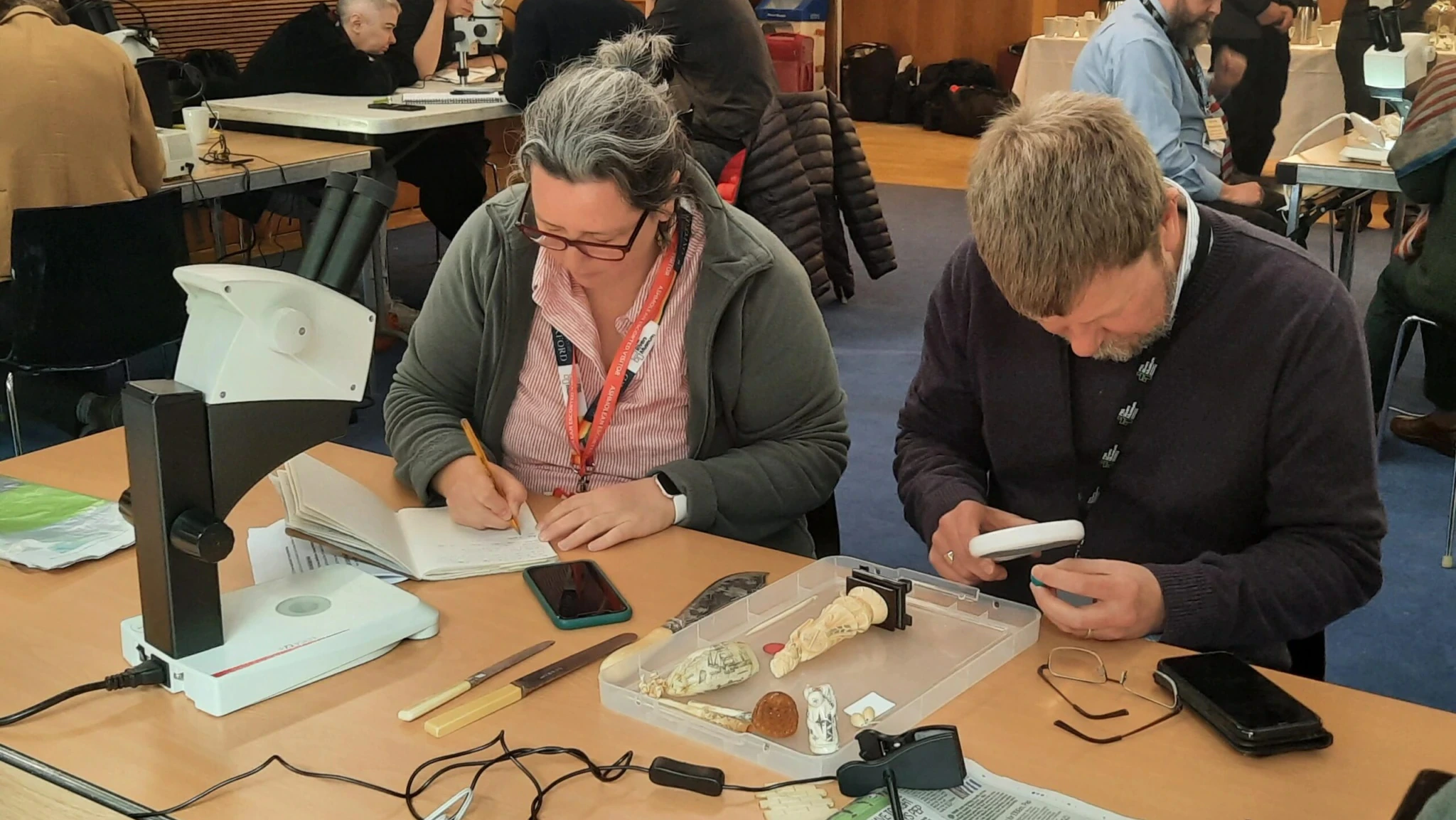
The circumstances and outcome of the case also have implications for assessments of ivory exemption certificates, which are currently carried out by 12 Prescribed Institutions across the UK (see below), including National Museums Scotland, National Museums NI, the Ashmolean Museum in Oxford and Museum Wales - Amgueddfa Cymru.
The statement from Wedlake Bell said: “These cases also serve as a reminder of the important role that prescribed institutions play when providing the secretary of state with advice on applications for exemption certificates: opinions of assessors nominated by such institutions will often prove decisive.
“These institutions should take note that any assurances by the secretary of state that the identity of their nominated assessors will remain confidential will not necessarily be respected should the refusal of an exemption certificate be appealed.”
Advertisement
Initially focused on elephant ivory, the Ivory Act was extended in January 2025 to cover ivory from four additional species: hippopotamus, killer whale, narwhal, and sperm whale.
Museums and the Ivory Act
The Ivory Act makes it illegal to deal in items containing or made of ivory from five species (elephants, hippopotamuses, killer whales, narwhals and sperm whales).
The legislation was designed to set a global standard against the ivory trade, as well as closing loopholes that enabled UK dealers to sell new ivory by passing it off as antique.
There are five exceptions:
- Sales to and between museums Accredited by or on behalf of Arts Council England, Scottish ministers, Northern Ireland Museums Council or the Welsh Government.
- Portrait miniatures made before 1918 with a surface area smaller than 320 square centimetres.
- Musical instruments made before 1975 with less than 20% ivory by volume.
- Items with low ivory content made before 3 March 1947 with less than 10% ivory by volume.
- Rare or important items, made before 1918 and of outstandingly high artistic, cultural or historical value.
Twelve Prescribed Institutions have the authority to recommend exemption certificates for ivory sales:
- Ashmolean Museum of Art and Archaeology
- Glasgow Museums
- Horniman Museum and Gardens
- Manchester Museum, the University of Manchester
- National Maritime Museum
- National Museums Scotland
- Royal Armouries Museum
- University of Cambridge Museums
- Victoria and Albert Museum
- National Museums NI (as of 2025)
- National Museums Liverpool (as of 2025)
- Amgueddfa Cymru – Museum Wales (as of 2025)