
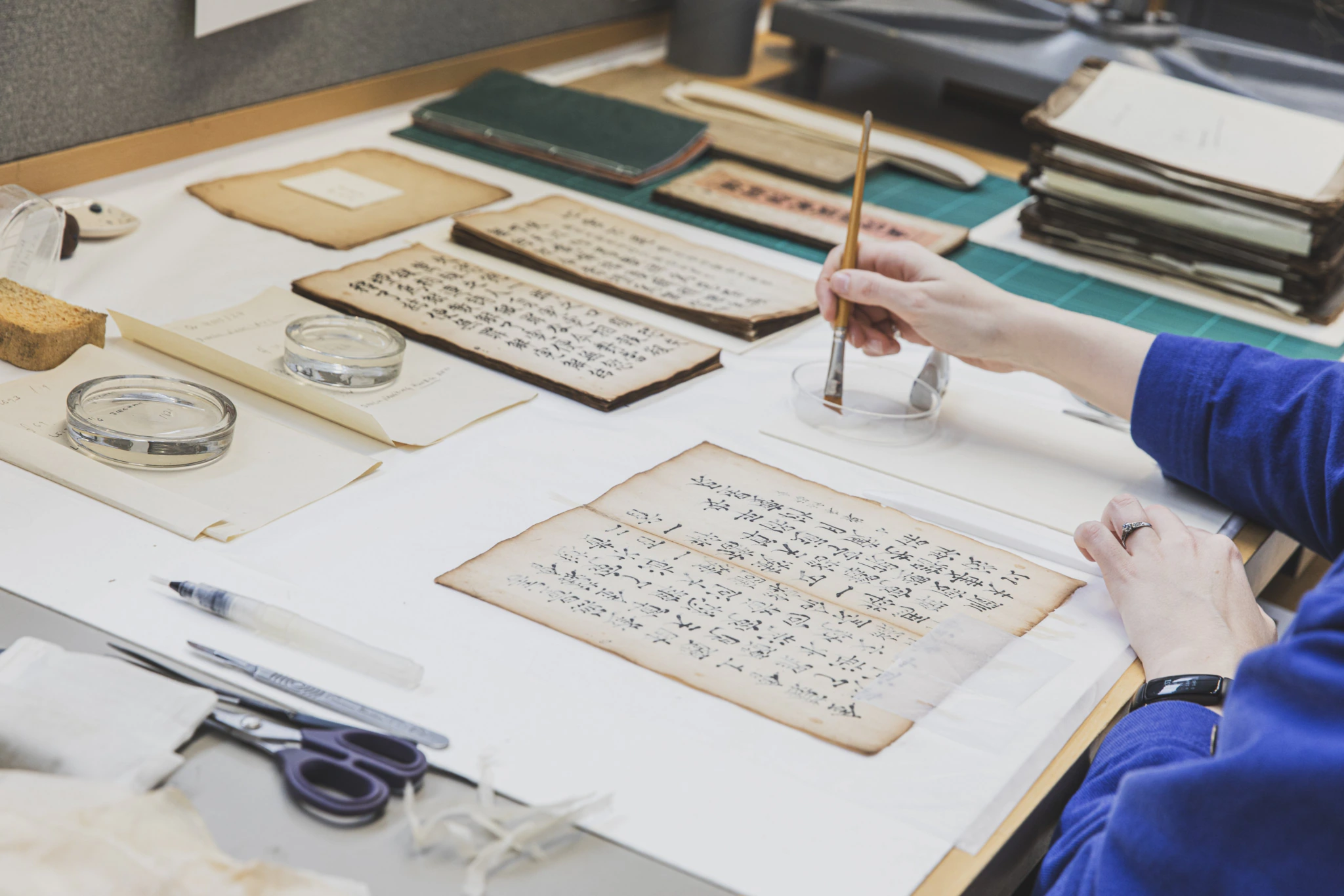
Workers at several museums and galleries are planning industrial action in disputes over pay.
Employees at the British Library voted overwhelmingly in favour of strike action this week.
A walkout of over 300 staff is planned from Monday 27 October until Sunday 9 November, after 98% of Public and Commercial Services (PCS) union members voted in favour of industrial action on a turnout of 75%.
PCS says the organisation has failed to offer an above-inflation pay award for a second consecutive year. In a recent survey of its British Library members, the union found that most workers struggle each month to make ends meet
According to PCS, the British Library initially proposed a pay award of 2%, with some workers due to receive as little as 1.6%. The union said the British Library had since increased the offer to 2.4%, and had u-turned on plans to offer £5,000 in annual bonuses to directors as part of a restructure.
PCS says this decision was announced after it went public about the proposed restructure, which the union says “would have seen the director team double, while offering workers a below-inflation pay award”.
Advertisement
The British Library disputes the union's claim that a £5,000 bonus was proposed for senior leaders. It confirmed that a senior management restructure is currently underway at the institution, but said the details of this would remain confidential while those affected are being consulted.
The strike will coincide with the opening of the library's major new exhibition, Secret Maps. It also marks the two-year anniversary of a devastating cyber attack that has had a long-lasting impact on the institution and its workforce.
In addition to staff members’ personal data being leaked on to the dark web, Museums Journal understands that many workers feel the attack has negatively affected the working environment at the library and the wellbeing of staff.
“A near unanimous vote for strike action is just a small glimpse into the strength of feeling among our members at the British Library,” said PCS general secretary Fran Heathcote.
“They are livid at yet another insulting pay offer that does little to alleviate the health problems that many suffer from because of low pay. Nor does it come close to ending the need for many to work second jobs and take out loans to pay their bills and meet their housing costs.
“The employer's well-paid executives need to take the blinkers off and understand that our hard-working members are what makes the British Library the vital cultural institution that it is.”
Advertisement
A British Library spokesperson said: “Following conversations with trade unions, the British Library has made a formal pay offer of 3% for the year 2025/26, which is weighted to enhance benefits for our lower pay bands. All staff would receive a minimum of a consolidated increase of 2.4% or £800 (whichever is the higher).
“The library has also reaffirmed its commitment to being a Living Wage Foundation Employer, under which our lower paid employees are likely to receive a substantially higher percentage increase.
“Separately, a restructure of senior management is underway, however details of this process remain confidential while those who are affected are consulted. However, the PCS statement contains inaccuracies, in particular the reference to a £5,000 bonus for senior leaders, which is not the case.”
Tate workers balloted
Meanwhile PCS members at Tate’s four gallery sites are currently being balloted for strike action.
A previous consultative ballot showed that more than 130 PCS members working at Tate Britain, Tate Modern, Tate Liverpool and Tate St Ives, who are among the lowest paid workers at the institution, would be prepared to take strike action over pay.
Advertisement
The institution initially offered a 2% pay increase for 2025/26, according to PCS. This has now been increased to 3% but is still lower than the Civil Service Pay Remit and does not address the issues of low pay at the institution, says the union.
Staff have already undergone a restructure this year – the second since 2020 – leading to redundancies across the whole organisation, as well as the closure of staff canteens at Tate Britain and Tate Modern, which included subsidised meals for staff.
The institution also withdrew access to the Civil Service Pension Scheme for new starters, replacing it with a plan offering significantly weaker terms, says PCS.
The postal ballot for strike action will close on 11 November at noon.
Culture group president Hannah David said: “Tate staff have shown incredible dedication in keeping Tate’s doors open, welcoming visitors, and caring for the nation’s art, at this internationally eminent gallery. Despite this, they have been subject to years of cuts, downgraded pensions, and below-inflation pay offers, which have left workers struggling day-to-day.
“Meanwhile, senior leaders continue to reward themselves handsomely, taking home total remuneration packages ranging from £195,000 to £320,000. This cannot continue. This ballot is a necessary step in showing senior management that Tate workers will no longer tolerate being treated as dispensable.”
A Tate spokesperson said “Tate has made careful savings this year in order to invest in staff pay and still achieve a balanced budget.
“This includes a 3% salary increase for the majority of roles - including all employees on the lowest three pay bands - while directors are taking a 0% increase to help balance the overall costs.
“It is only by creating and maintaining a sustainable financial model that we can continue to invest in our staff in the long term.”
PCS is one of three unions representing staff at Tate. The other two unions are not balloting for strike action.
Mine guide walkout continues
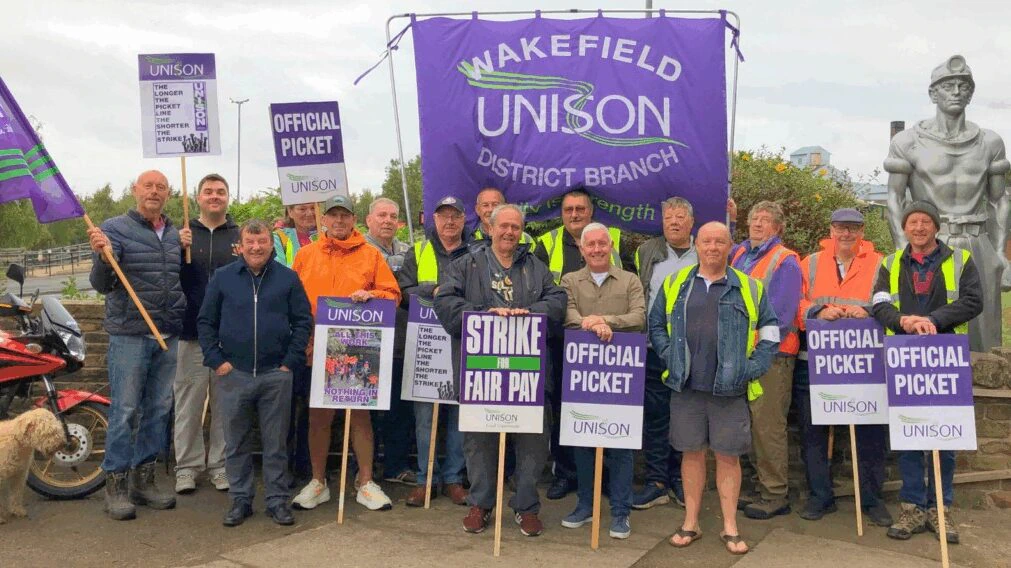
Industrial action is also ongoing at the National Coal Mining Museum in Wakefield. More than 40 workers, including mine guides who are veterans of the 1984 miners’ strike, have been taking part in a strike since 20 August after rejecting a pay offer from the museum.
The workers’ union, Unison, has asked for an increase of 5% or £1 per hour for all staff, whichever is greater, which it says the museum’s management agreed to recommend to the board of trustees.
The union says this agreement was subsequently withdrawn, and the museum is now offering an uplift of either 5% or 80p per hour, whichever is greater.
The museum disputes this, saying: “No offer of £1 per hour or 5%, whichever is greater, was ever agreed, by the executive team or the board of trustees. This is a misrepresentation of the pay negotiations by Unison.”
The Labour-run Wakefield Council recently passed a motion to withhold future culture grants from the National Coal Mining Museum in solidarity with the striking workers, in what councillors said was “an effort to get the employer back round the table”.
In a recent council meeting, several councillors criticised the museum’s management for employing private security and calling police to the picket line last month, with one describing the museum’s actions as “recalling the tactics of the '84 strike” and “[dishonouring] the very legacy that the museum is supposed to protect”.
In a statement, the National Coal Mining Museum said its chief executive and leadership team “have the full support of the board of trustees in seeking a fair and sustainable resolution”.
In response to the council motion, the museum said: “While not a major funder of the museum, we are disappointed by Wakefield Council’s recent decision to withhold future funding.
“The £15,000 received earlier this year through the culture grants programme is supporting local schools and young people and was awarded through a competitive application process.
“The project is aligned with the council’s heritage framework and priorities to support community wellbeing and opportunities for children and young people. Regardless of this funding, the museum will continue to engage with the local communities and foster important partnerships and support residents across the district.
“The charity was disappointed that the written corrections provided by the museum in advance of the meeting of the council where this decision was made were not raised and the museum was given no right to reply.”
The strike is planned to run until Sunday 9 November.

Please do not visit the Museums featured in this article until they improve low-paid staff
pay and conditions.