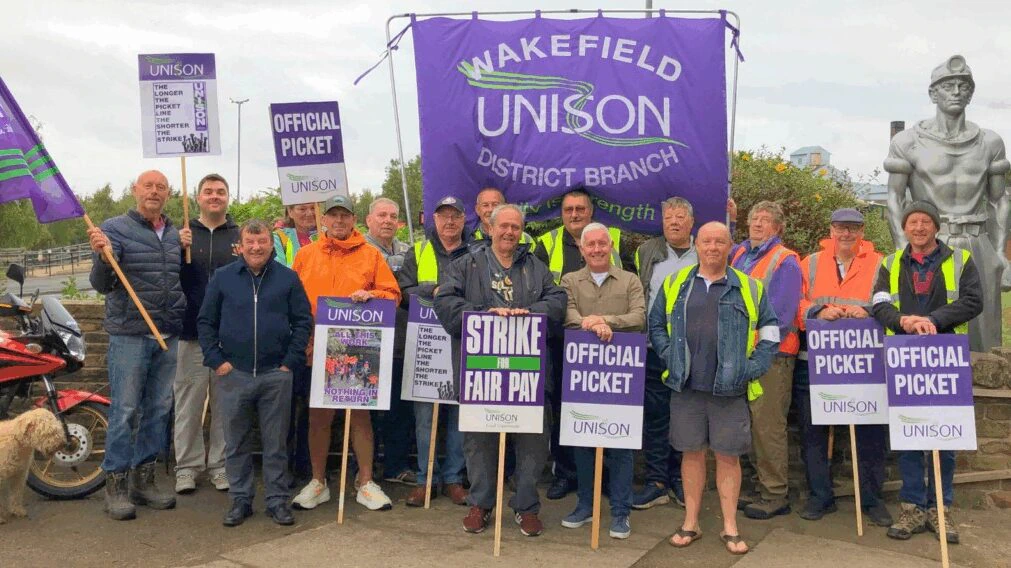
Police were called to a picket line at the National Coal Mining Museum in Wakefield, west Yorkshire, this week amid an ongoing strike over wages.
More than 40 workers, including mine guides who are veterans of the 1984 miners’ strike, have been taking industrial action since 20 August after rejecting a pay offer from the museum.
The workers' union, Unison, has accused the museum of attempting to disperse a lawful picket line after West Yorkshire Police attended the scene on Wednesday 3 September.
In a statement, the union said a private security company employed by the museum during the strike had called police to remove the picket line from outside the museum's main entrance, on what was claimed to be “museum land”.
Unison said it had provided museum management with documents from Wakefield Council showing the picket was held on public land. It said the officers who attended “confirmed to the private security firm employed by the museum that the picket line and actions of striking workers are perfectly legal”.
The museum disputes that this was the reason the police were called. It says that concerns had been “raised by an independent security company regarding ongoing behaviour on the picket line”.
Advertisement
Unison's Yorkshire and Humberside head of local government, Tony Pearson, said the museum’s move to call the police was “completely unnecessary”, and called on the chair of trustees to step in and help resolve the dispute.
“It shows either a complete ignorance towards a legal entitlement to picket or an effort to intimidate striking staff,” he said.
“Either way, it’s completely unacceptable. This dispute can easily be resolved if museum managers return to talks and get an acceptable offer on the table.
“The chair of trustees has the responsibility to make that happen, either by making the chief executive step up or step aside.
“Until then, staff have no option but to remain on the picket line.”
In a statement to Museums Journal, a spokesperson for the National Coal Mining Museum said: “On Wednesday, 3 September, police officers attended the museum following concerns raised by an independent security company regarding ongoing behaviour on the picket line.
Advertisement
“The museum would like to clarify that the police presence was not related to the legal request for pickets to refrain from demonstrating on private land.
“The museum’s priority continues to be the safety and wellbeing of everyone on site.
“The executive team continue to be available for open dialogue and constructive engagement with staff and union representatives.”
Dispute
The workers agreed last week to extend the strike, which was was due to finish in mid-September, for a further four weeks until 12 October. The union has accused the museum's chief executive Lynn Dunning of refusing to negotiate.
The dispute comes after the workers rejected a 5% pay offer for all staff in March. A second offer was made in June via the Advisory, Conciliation and Arbitration Service (Acas) of a £1 per hour uplift for mine guides and 5% for everyone else.
Advertisement
However, Unison believed this would potentially give a greater pay rise to men, who make up the team of mine guides, than women employed elsewhere at the museum.
The union then suggested an increase of 5% or £1 per hour for all staff, whichever was greater, which the museum’s management said it would put forward to the board of trustees with a recommendation for acceptance. This was subsequently withdrawn, and the museum is currently offering an uplift of either 5% or 80p per hour, whichever is greater.
Mine guides typically earn around £12.86 an hour, and many staff are on £12.60 per hour, just above the current national minimum wage of £12.21 over hour for those over 21. The union claims that the pay gap between the highest paid employee at the museum and the lowest is more than £120,000.
Unison claims the museum will spend almost £50,000 on private security and a land train over the course of the strike, money it says could have been used instead to settle the dispute.
The union says the museum has made an operating surplus of more than half a million pounds and has also been in surplus for the preceding four financial years, with £10m in reserves.
It claims the pay rise demanded by the workers would “only add approximately £150k to the existing pay bill, still leaving the museum with an operating surplus of more than £400k.”
Unison's Yorkshire and Humberside regional organiser, Rianne Hooley. said: “For staff at the coal mining museum, this isn’t just a job. It’s an opportunity to keep the area’s coal mining heritage alive through their storytelling.
“They’re desperate to be back doing what they love. But they want to be paid fairly, and treated with respect.
“If the chief executive continues to refuse to negotiate, staff have no choice but to continue their strike.”
Trustee response
In a statement last week, the museum's chair, Philip Marshall, said the charity’s trustees were “sorry for any inconvenience that visitors have experienced as a result of the current industrial action by members of Unison”.
Marshall said the trustees were “disappointed” by the decision to extend the industrial action, but “fully respect the right of employees to carry out industrial action if done in a peaceful and lawful manner”.
He said the majority of employees would continue working as usual during the strike, supported by the museum's team of volunteers, and the museum would remain open throughout, but would be unable to provide underground tours.
Marshall said: “The museum is committed to fair and ethical pay for all our staff and despite challenging economic times the trustees approved a budget for this year which allowed for an above-inflation pay increase of 5% for all employees.
“This is higher than for most other sectors, both private and public; and followed onto last year’s above-inflation pay increase. It would have meant a rise of around 14% over two years for many of our employees, including the museum guides who are taking industrial action.
“Whilst not within our budget, the trustees subsequently approved an increased offer of 5% or an additional 80p per hour, whichever is greater. This equates to an increase of more than 6%, or more than 15% over two years, for many employees including the museum guides.”
Marshall said the board does not “consider Unison’s pay claim to be reasonable or affordable in the current economic environment”.
He said the surplus cited by the union related to restricted funds that must be spent for their designated purposes and cannot be spent on pay claims.
He added that “contrary to information Unison has put in the public domain, our charity does not pay any ‘six-figure’ salaries; and whilst it is correct to say that the museum is incurring additional costs as a result of the industrial action, including extra security, which is necessary to ensure an enjoyable experience for visitors, this is not at the levels being suggested”.
Marshall said that Dunning and her leadership team “have the full support of the board of trustees to find a reasonable and affordable resolution to this dispute” and said the museum remains “fully open to constructive dialogue” with Unison.