An anti-oil campaign group has criticised the British Museum for “deepening ties” with the fossil fuel industry ahead of its inaugural ball next month.
Announced this week, the museum’s fundraising ball on 18 October aims to become a “new highlight on the international social calendar”, rivalling the star-studded Met Gala, the haute couture gathering that raises millions of dollars for New York’s Metropolitan Museum of Art every year.
Timed to coincide with the close of Frieze London art fair and the BFI London Film Festival, the British Museum Ball aims to “shine a spotlight on London as a global centre of creativity and culture”, bringing together “the world’s leading creatives, collectors, and cultural visionaries”.
The theme for 2025 is pink, inspired by the “colours and light of India” as seen in the museum’s temporary exhibition, Ancient India: Living Traditions, which will conclude the weekend of the ball.
A British Museum spokesman confirmed to Museums Journal that the event will host around 800 guests, with a table of 10 guests costing £20,000.
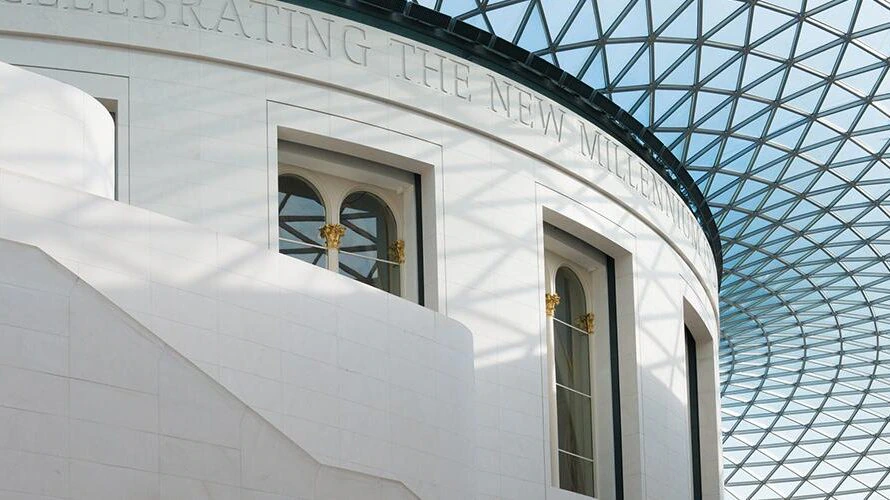
Already sold out, the fundraiser will feature a drinks reception and speeches in the Great Court, followed by dinner at tables set among some of the most spectacular objects in the collection.
Advertisement
A silent auction will run throughout the evening, along with music performances by the Grammy-nominated sitarist Anoushka Shankar and Grammy-winning conductor and composer Jules Buckley.
The funds raised will be used to support the museum’s international partnerships, such as its work with the Kumasi Palace in Ghana, the History Museum of Armenia and next year’s historic cultural exchange of the Bayeux Tapestry.
“We’d been talking about there being a gap for a sort of national flagship event,” British Museum director Nicholas Cullinan told The Telegraph this week.
“I’ve never been to the Met Gala – said without bitterness! You’re not going to replicate that – and I don’t think you would want to. It’s an incredible event for New York, but London is quite different. It’s important that our ball reflects the British Museum in terms of who’s on the committee and who comes – to make it feel very London.”
The ball committee is co-chaired by the Indian businesswoman Isha Ambani and made up of 100 high-profile figures from the worlds of business, culture, entertainment and fashion, including supermodel Naomi Campbell, author Zadie Smith, actor Idris Elba, designer Miuccia Prada and Al-Mayassa bint Hamad Al Thani, the founder of Qatar Museums.
“I am honoured to be the co-chair of the inaugural Pink Ball at the British Museum, set amidst the extraordinary exhibition Ancient India: living traditions illustrating how significantly early devotional art from India has influenced global, contemporary culture,” said Ambani.
Advertisement
“This incredible event celebrates the rich creative legacy of India and furthers cultural conversations globally, deepening mutual respect and understanding.”
Ethical concerns
However, the climate campaign group Culture Unstained said the event was evidence of the museum’s “deepening of ties to fossil fuel majors”.
The group pointed to the museum’s collaboration with Ambani, whose family owns Reliance Industries, an Indian oil, gas and petrochemical conglomerate.
“The British Museum’s decision to woo an oil and gas producer like Reliance with a billionaire ball shows just how out-of-touch it is,” said a spokesperson for Culture Unstained.
“It’s time Nick Cullinan brought the museum in line with the rest of the museums sector - and that does not come in the form of hosting a billionaire gala for climate criminals.
Advertisement
“Instead of a ball committee, set up an ethics committee. Instead of opening doors for billionaires, invite constructive dialogue with your staff and partners who are clamouring for accountability and for the museum to change course.”
It comes after the museum faced protests from its own staff earlier this year after hosting an evening reception for the Israeli embassy, with more than 250 workers reportedly writing to the institution to complain about the event.
The campaign group Energy Embargo for Palestine, which picketed the museum over the Israeli embassy event, said the launch of an annual ball showed that the museum was “shockingly out of touch with the 'public' it claims to open its doors for every day”.
'Chilling effect'
Asked for comment about the museum’s partnership arrangements, a British Museum spokesman pointed to comments made by Cullinan in the Financial Times earlier this year.
In the article, Cullinan warned that campaigns against sponsorship were having a “chilling effect and will have deeply regrettable consequences if left unquestioned and unchecked”, saying that the arts were being targeted by protesters as “collateral damage in the bid to gain attention for a cause”.
“The British Museum, like our peers, benefits from a blend of government funding, the ultimate source of which is the taxpayer, and the support of philanthropic individuals and corporations,” he added.
“Both are critical to keeping our doors open and taking care of the extraordinary collection we house. We are often urged to drop corporate sponsors for a variety of reasons, but who would truly benefit from that? And what would take its place?”
If protesters and activists have no answers to such questions, Cullinan said, “then their claim to be concerned about the future of the arts and culture will ring hollow.”
Culture Unstained said in response to those comments that its opposition to certain sponsors had been wrongly characterised “as a slippery slope towards rejecting all philanthropy, which just isn’t the case”.
The group said it advocates for a “values-based approach” to sponsorship, a position it said is supported by the majority of the museum sector.