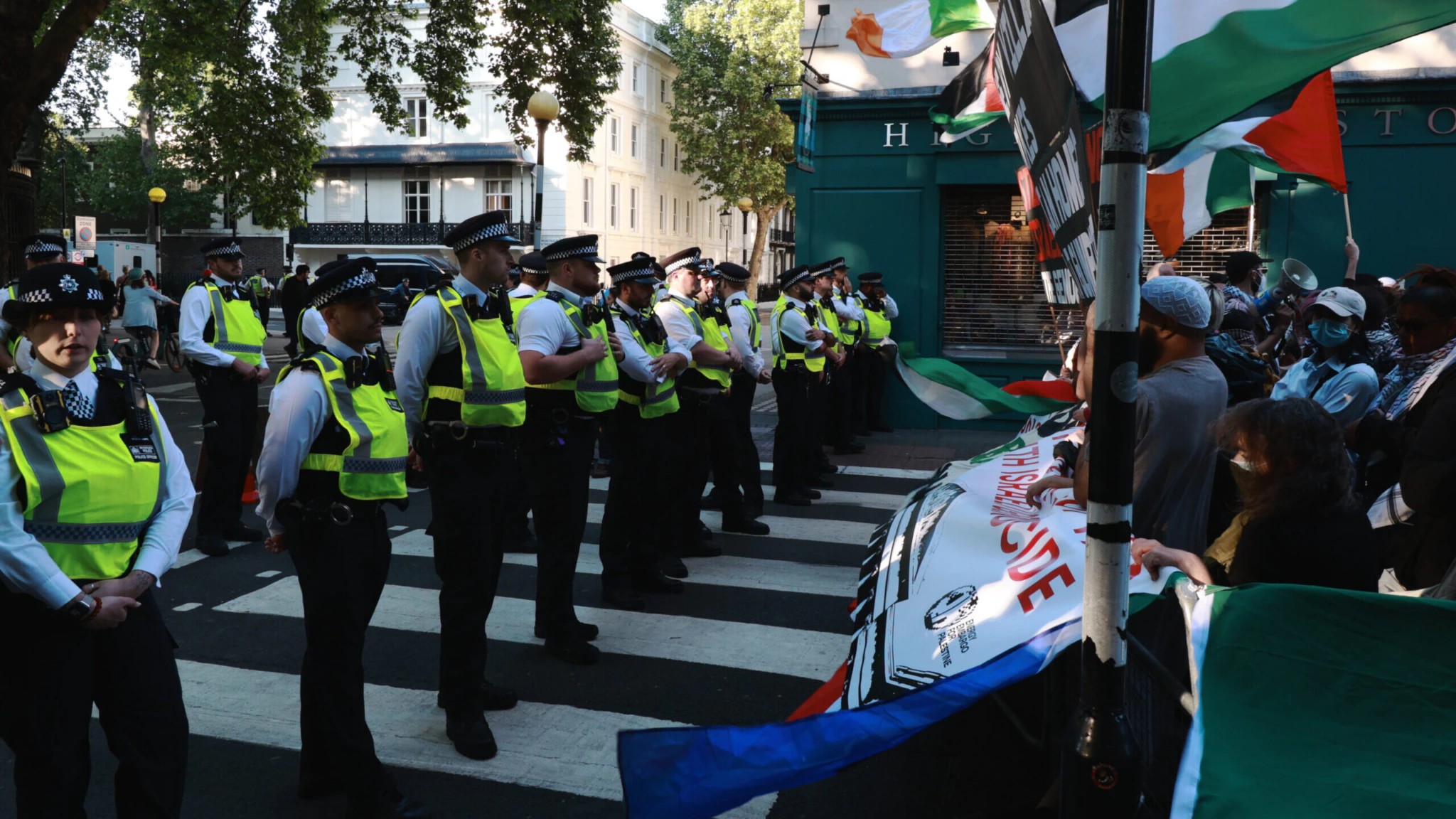
The British Museum is continuing to face controversy over its decision to host an event for the Israel embassy.
The gala on 13 May was held to mark Israel’s Independence Day, a holiday celebrating the establishment of the State of Israel on 14 May 1948.
In an open letter sent last week, more than 200 culture workers, including prominent figures such as historian William Dalrymple, curator Dan Hicks and actor Juliet Stevenson, called on the institution to formally apologise for hosting the event.
The letter said the event had taken place two days before Nakba Day, the day that commemorates the “ethnic cleansing and expulsion of over 750,000 Palestinians from their homes in 1948”.
It alleged that the British Museum had “concealed” the event from staff and the public, and that “information about the event was only revealed when it was leaked accidentally”.
More than 250 British Museum staff have already reportedly written to the institution demanding an explanation and apology over its decision to hold the event.
Advertisement
The keynote speech at the gala was delivered by Israel’s ambassador to the UK, Tzipi Hotovely. It was also reportedly attended by Maria Eagle, the UK minister for defence procurement and industry, Conservative leader Kemi Badenoch and Reform leader Richard Tice and MP Nigel Farage.
The event was picketed by pro-Palestine protesters, who afterwards alleged that they experienced “heavy police repression” outside the museum.
The letter said: “Israel is committing genocide and apartheid. Inviting Israeli representatives, guests, and British politicians to celebrate these crimes openly enables them to continue.”
The signatories called on the institution to make a formal apology, commit to not hosting Israeli events in future, end its BP and other fossil fuel sponsorships, and set up a committee to involve staff and union reps in “democratic decision-making” on future funding opportunities, public-private partnerships and political events at the museum.
Addressing the museum’s leadership team and board, the letter said: “We remind you that the choices you make today may define the legacy of the British Museum as an institution. We urge you to listen to your own staff and community, and choose to honour your moral obligations and core values above any temporary financial loss.”
The British Museum said the event was a commercial hire and the museum is not able to deviate from UK Government foreign policy. It has held similar events for other embassies in the past.
Advertisement
A spokesman for the British Museum told Museums Journal: “Fundamentally, this was a commercial event – and as such is different to activities or events the museum generates or hosts itself.
“All decisions about commercial events are taken on a non-political basis and the museum, as an arm’s length [body], can’t deviate from or undermine the UK Government’s foreign policy.
“We are aware of the strong feelings held, and respect people's rights to express their views.”
“All decisions about commercial events are taken on a non-political basis and the museum, as an arm’s length [body], can’t deviate from or undermine the UK Government’s foreign policy.”
Associating with Israel, or any other country, is a political decision. If the BM cannot deviate from UK government’s policy, it is not non-political and is joined at the hip with the Government.
So within one sentence, the BM has shown how very confused it is. We saw the same incoherence with exposure/ non-exposure of the recent thefts. Mr Williams assured us that “there was no suggestion of any wrongdoing” when items from the BM were being sold on ebay and he knew it.