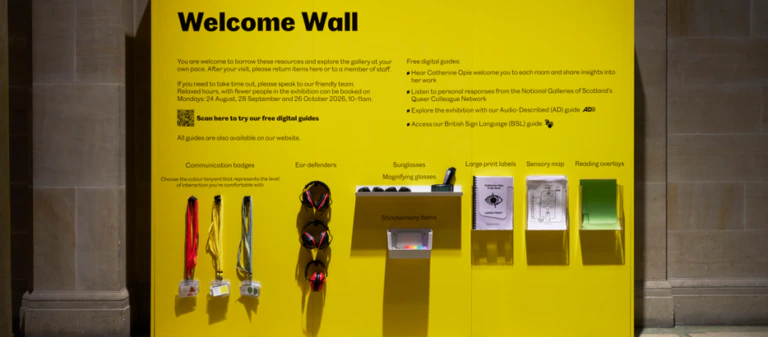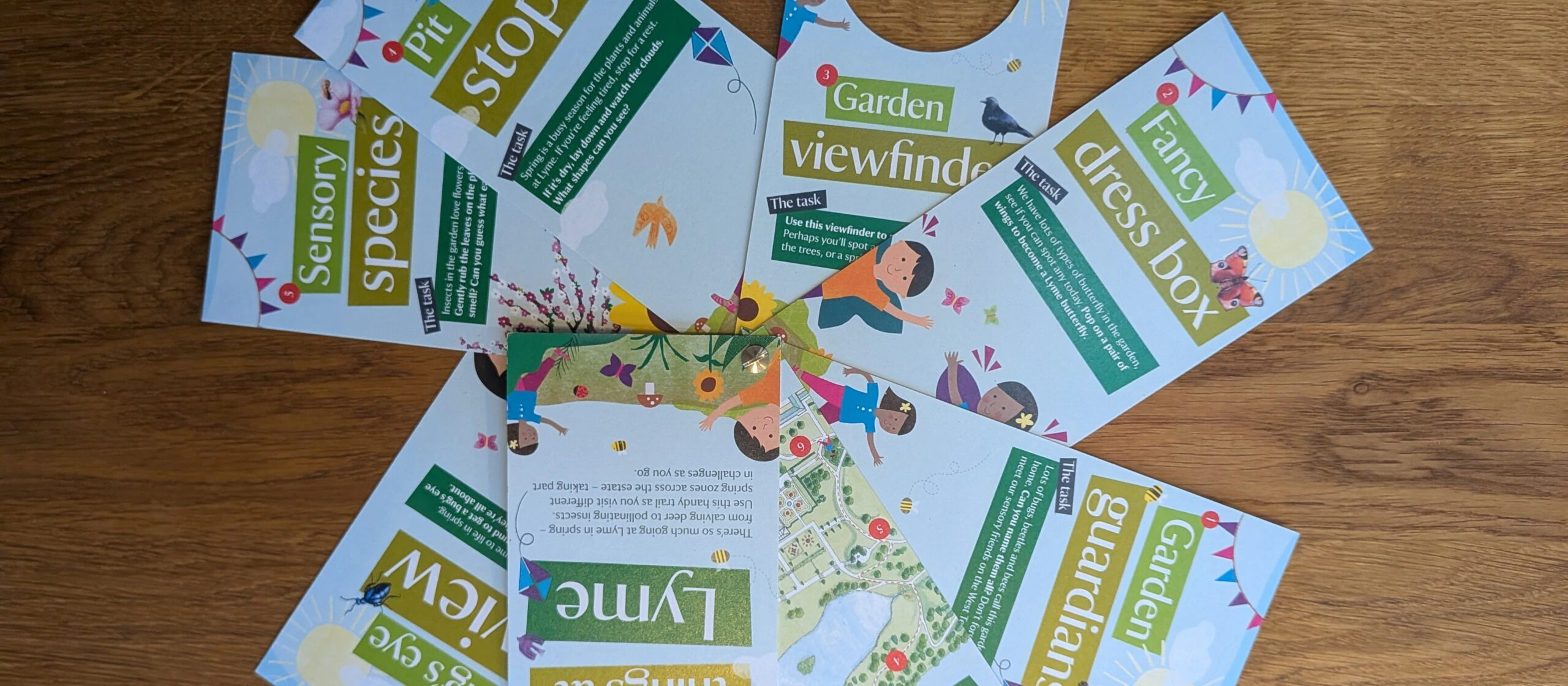
Accessibility for children and families with special educational needs and disabilities (Send) is an essential consideration when developing a trail or evaluating offerings. Trails that are simple and easily digestible are likely to prove popular with wider audiences, including visitors with dementia.
The organisation SEND in Museums has developed a range of free trail resources on its website, as well as guidance on building an inclusive offering. This includes signposting to Widgit – a platform that produces symbol-based communications – which is used by many schools.
Samantha Bowen, the founder of SEND in Museums, develops trails that are thematic and focused.
“I might make a colour, shape, sense or texture trail, or base it on a collection theme like animals or specific objects,” she says.
“Not all children with Send will be able to read or understand symbols – they fall further along the communication journey than objects or photos – so I’d recommend starting out by creating trails that use clear photographs of objects to find.”
Thinking beyond written and pictorial trails also makes for more-inclusive offerings. For example, asking children and their carers to spell a word is inaccessible to some individuals.
Advertisement
At London Museum Docklands, families can borrow a cardboard “shape finder” frame that enables them to frame various objects in different shapes. The museum’s learning manager, Cassandra Tavares Alen, says: “It is a great tool that is engaging and encourages visitors to search the museum.”
The introduction of a Tail Trail has also proved a huge success. Based on the character of Riley Ratcliffe (which takes the form of a toy rat), visitors can search for his soft toy compatriots, which are dressed in period costume and placed throughout the museum.
“We’ve got sailor rats and rats in bonnets, and a docker rat wearing a flat cap,” says Tavares Alen.
“The trail doesn’t require any written instructions and can be easily adapted and updated.”
Familiar forms of engagement
The tactility of the toys, particularly Riley – which is introduced to children on arrival and can be squeezed to produce a squeak – offer an important level of tangible connection that creates an immediate and familiar form of engagement.
Advertisement
These soft toys can also be included in sensory backpacks to supplement a child’s journey through the museum.
“I’ve witnessed some very powerful moments where a child with Send has been calmed and reassured by a soft toy character emerging from a sensory bag,” says Bowen. “If the image of the character is clear on a trail, this museum buddy link continues to work because it’s a reassuring figure.”
The mascot can even be sold in a museum shop, allowing children to take a part of their visit home.
“Maidstone Museum’s ‘Spike’ the dinosaur is a great example of a character that hops off the trails and interpretation panels into the shop and beyond,” says Bowen.
Characters can also be used for wayfinding, which is another key consideration in trail accessibility.
Questions to consider include:
- Does the route take into account bathroom stops and those using wheelchairs or buggies?
- Is there physical space for families to engage with objects at their own pace?
- Are quiet areas available nearby?
- Does the trail involve doubling back or entering spaces that might be frustrating or confusing?
Advertisement
Considering all of these elements allows a trail to enhance any museum-going experience, not just for visitors with Send.
“Museums need to see trails as high-quality resources that value the child visitor in their own right,” says Bowen. “For children with Send, that means creating trails that are visual, tactile and sensory, and communicated in accessible formats. These benefit everyone.”
Holly Black is a freelance journalist