Content warning: this article deals with suicide, mental illness and drug abuse.
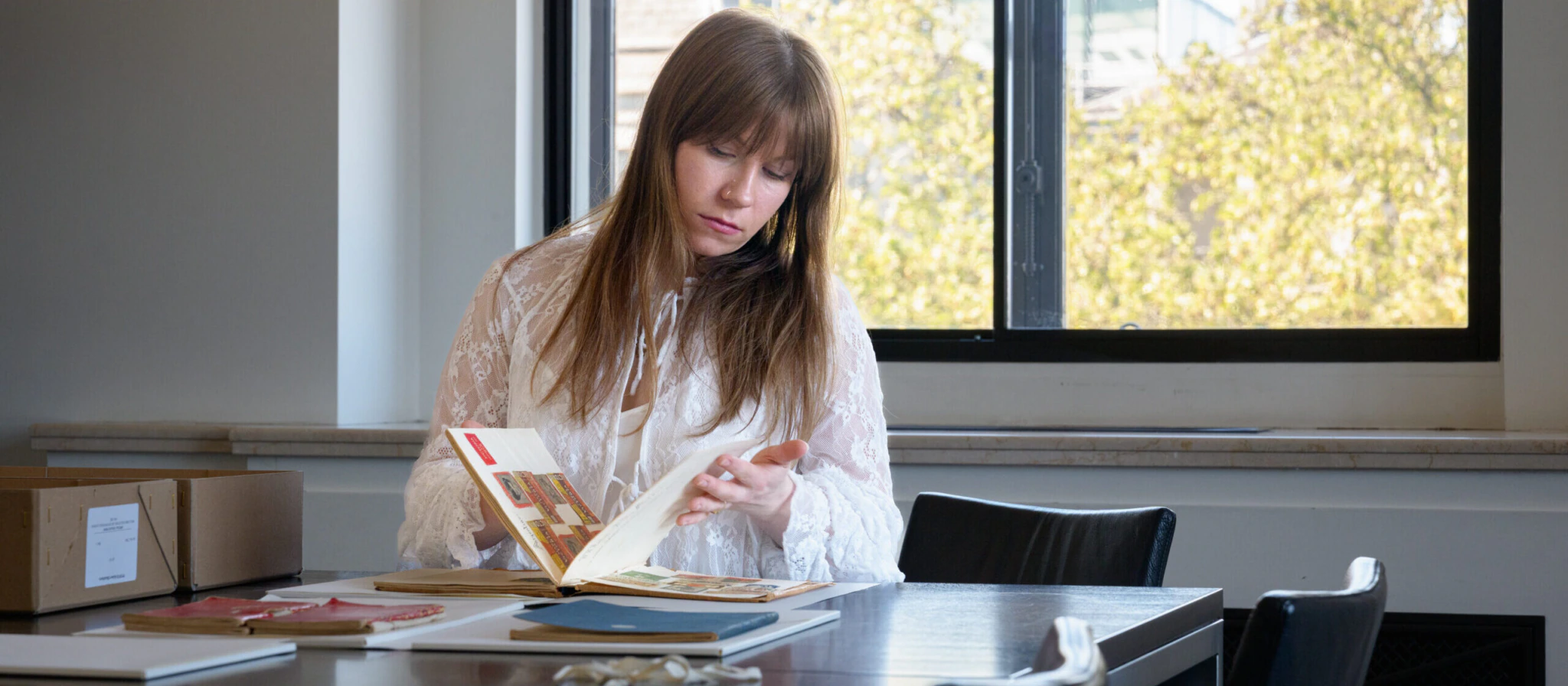
When Archives Make You Feel is a piece of research I’ve undertaken over the past three years after experiencing distressing side effects while cataloguing. Although this research did investigate vicarious trauma within the context of museums and archives, I wanted to acknowledge that “trauma” isn’t always the right word to use.
For most of us, archives simply make us feel. They can make us laugh and they can make us cry, and that’s something we need to start acknowledging.
After carrying out this research between 2023-2024, I joined the collections information team at the Wellcome Collection in London last year and have been given the opportunity to implement the results.
This research was distilled into the Working with Collections – A Mental Health First Aid Kit, designed to prevent vicarious trauma, outline best practice and give staff the tools to work with distressing material without becoming desensitised.
Join our free Members Together Online event on wellbeing
Online event takes place on 24 September and is free for MA members
Advertisement
My own experiences
I used the kit myself when I was asked to catalogue a small collection of diaries written by a man named Robert during the 1960s and 1970s that recorded his experiences of mental health services after being diagnosed with schizophrenia.
An interim cataloguing description, written by our collections development team, included a brief description of the diaries and (most importantly) that his final diary entry was written as he was dying after taking a fatal drug overdose.
I knew that the collection was likely to be upsetting and I decided to implement my Working with Collections- A Mental Health First Aid Kit.
I decided to read the last entry first and booked out time in my calendar to do this. I also went downstairs to the stacks where the collection was stored to do this as it was somewhere that offered me more privacy than my desk in an open plan office.
Reading this entry was upsetting, but what I hadn’t expected was being reminded of things from my own lived experience. I gave myself time to process what I was feeling and decided to go for a walk in the local park to give myself a clean break between what I’d just experienced and my next piece of work. I also decided I would work on other tasks for a week before I started cataloguing this collection.
Advertisement
Developing and using my mental health first aid kit became essential to helping me work with this collection in a way that did not harm me. It allowed me to maintain my vulnerability and to feel both the sadness and power of Robert’s words without becoming permanently affected by them.
In this article, I’ll outline how to work in a healthy way with distressing collections and the steps you can take to start building your own mental health first aid kit.
At a glance, your first aid kit should include:
- Your terms of working - how you’re going to work with the material safely.
- Your self-care kit - a list of things you’re going to do when you begin to feel negatively affected by the material.
- An aftercare kit - things you’re going to do if you continue to feel negatively impacted once away from work.
Reflect on your personal history and lived experience
Before you start, ask yourself what’s going on at home and in the wider world. How is your mental health? How is your physical health? These things can affect your bandwidth for working with distressing material.
Advertisement
Remember, this bandwidth will not remain fixed so it’s important to reflect on these questions regularly – for example, every month or before you start work on a particular collection.
Educate yourself on vicarious trauma and the side effects of working with distressing collections
Vicarious or second-hand trauma – defined by the British Medical Association as “a process of change resulting from empathetic engagement with trauma survivors” – is one of the most serious impacts of working with collections.
Familiarise yourself with the symptoms and keep a list at your desk to remind yourself.
Knowing what these are and when you’re feeling them can be key to preventing the development of vicarious trauma. It’s important to give yourself space and time to process them.
A list of side effects I’ve compiled together over the course of my research:
- Vicarious trauma
- Depression
- Anxiety
- Re-live and remember existing trauma e.g. via flashbacks
- Re-live or be forced to remember upsetting or difficult memories
- Experience nightmares
- Feel dirty or unclean
- Feel guilty
- Experience prolonged feelings of sadness and anger
- Alter your behaviour in and out of work
- Think about the material outside of work
- Experience horror or rescue fantasies
- Feel like you need to remember a person, group of people or event you’ve read about in a collection
- Feel pessimistic and hopeless. You may develop a negative outlook on life and the wider world.
- Distance yourself from colleagues, family and friends. You may feel a pressure or strain on these relationships
- Experience irritability, mood swings and emotional outbursts
- Feel unsafe or less safe
- Have difficulty concentrating, feel mentally drained or experience burnout
- Develop unhealthy coping mechanisms e.g. binge eating and/or increased alcohol consumption
Ask your employer about policies and procedures
Are there any health and safety procedures that are in place for staff if they display symptoms of vicarious trauma? What training is available to you? Is working with distressing material reflected in your job description? If not, what can be done to address these absences? Can you make your manager aware of vicarious trauma and/or creating a mental health toolkit to help you?
Vicarious trauma is treatable but a member of staff experiencing it in an unsupportive environment is a serious situation where they can feel they have no option but to leave their job.
Remind yourself that becoming desensitised should never be a goal
Once desensitised, you are only able to understand, catalogue and work with a version of the collection or item your brain can handle – not the real thing. This can prevent you from doing your job effectively.
Techniques to help identify your emotions include using an emotions wheel and keeping a diary while you catalogue. This can be a simple document where you answer the question “what am I feeling?”.
Learn what bad and best practice is
Before my research, I worked with distressing material and experienced some of the side effects listed above.
It’s key to develop a clear plan for how you’re going to work with the collection. You should build in time and space to avoid excessive or relentless exposure and to allow you to process what you’re feeling.
Examples of bad practice
- Working to a tight deadline
- Working with the material for extended periods of time
- Reading or using secondary resources excessively when not working directly with the material e.g. googling the subject matter
- Carrying out the work on your own
- Working on the project while working from home
- Working solely on this material
- Not telling your support network what you are working on
- Not having any tangible payoff to the work
Examples of good practice
- Restricting when and where you work on the collection and for how long
- Taking a clear break away from your desk before starting work on something else
- Talking to colleagues or your support network about what you’re working on
- Avoiding working to a deadline
- Developing a personalised self-care kit for when you feel upset or distressed
- Making sure there’s a tangible pay off at the end – for example, how can you measure the impact of the work you’re undertaking?
Aftercare
As well as writing up a self care kit for things you can do in work, it’s important you create an aftercare kit as well. Some suggestions include:
- Avoiding unhealthy coping mechanisms like binge drinking or binge eating.
- Exercise or meditation.
- Going for a walk, preferably to a park, garden or other “green” space.
- Taking a bath or shower as soon as you get home. This can help “wash” the day away and give you a mental reset.
Right now the first aid kit is geared towards cataloguing. But the collection information team at Wellcome interacts with the collection in multiple different ways including provenance research, working front-of-house, answering enquiries, cataloguing and inventory.
The next steps will be to expand the guidance for a wider range of activities.
Hannah Nagle is the collections information officer at the Wellcome Collection in London