There are some big cultural projects happening in Northern Ireland, particularly the building of the £15m DNA Museum in Derry-Londonderry and National Museums NI’s ambitious plans to develop its folk museum.
But away from the high-profile, high-budget schemes, much of the museum development activity has centred on community venues, which is having a real impact at a local level.
A key driver for this work is related to Northern Ireland’s complex past and a desire from people who have lived through turbulent and contested times to not only better understand their history, but also to have it represented and explored in museums.
Heritage really matters in Northern Ireland and people are keen to not only explore their identity, but also to have a direct say on how that is told.
“Power has shifted, enabling communities to tell their own stories rather than relying on others to speak for them,” says Stella Byrne, head of investment, Northern Ireland, at the National Lottery Heritage Fund.
Grants and guidance
The Heritage Fund is a primary player in lots of these community-led initiatives, supporting the development of many of the heritage projects through its grants. But it also acts as a crucial source of advice and guidance.
Advertisement
“Issues of identity and commemoration in the public space, as well as complex and contested heritage, are common debates in Northern Ireland,” says Byrne. “Almost all projects that we deal with require careful handling and sensitivity to the particularities of living and working here.
“The Heritage Fund has developed a reputation over the years for thoughtful engagement with the past,” Byrne continues. “Our approach as a funder provides space and support for groups to develop their thinking... Supported projects can demonstrate clear evidence of transition to new ways of thinking and report hope for a more positive future.
“Our work has grown out of the need to respond to people where they are on their journey of engaging in the past, and recognises the challenges of living in a divided society,” she adds.
In terms of how funders, community groups and others approach Northern Ireland’s past, a lot was learned from the Decade of Centenaries initiative, which took place from 2012 to 2022 and marked a series of events related to the creation of the Republic of Ireland, Northern Ireland and the UK.
The period covered the Home Rule Crisis and the Ulster Covenant Campaign in 1912 through to Partition and the establishment of two parliaments in Ireland in 1921/22, as well as taking in events related to world war one.
Collective remembrance
For the Decade of Centenaries, the Heritage Fund worked with Northern Ireland Community Relations Council – which was established to promote a peaceful and shared society based on reconciliation and mutual trust. Their aim was to develop an approach to dealing with the centenaries that might help better position society to explore the living memory anniversaries.
Advertisement
A round-table group was created that brought together parties such as Belfast City Council, cultural organisations and academics. The group went on to develop a set of principles for remembering in public spaces based on acceptance and inclusion, thinking ethically and the need to encompass all our stories within an understanding of history, wider context and evidence.
The Principles for Remembering, which are meant to be used in the context of an inclusive and accepting society, are:
- Start from the historical facts.
- Recognise the implications and consequences of what happened.
- Understand that different perceptions and interpretations exist.
- Show how events and activities can deepen understanding of the period.
The principles have been used by many organisations including government departments, local councils and museums.
Building a bigger picture
Other developments have flowed out of the Principles for Remembering, including the Conflict and Legacy Interpretative Network, which followed work that National Museums NI did on its own Troubles Gallery at Ulster Museum.
Advertisement
The organisation has joined with others to create a network of museums telling the distributed story of the Troubles, a recognition that multiple perspectives exist and no-one owns the whole story.
This work was supported by the Museums Association and a range of community museums’ exhibitions have come from this.
In addition, Byrne says there are also geographical clusters in north Belfast, Derry and west Belfast.
“Both Derry and North Belfast are working with long-established community museums and exhibitions to create a more sustainable approach to sharing archiving, cataloguing, digitisation and outreach costs across organisations – through collective procurement deals among other approaches.
“And West Belfast is pulling together a lot of reasonably new community museums and exhibitions to share resources from much earlier on in their development, thereby influencing operating models and capitalising on community tourism. All of this has an economic benefit for the locality, but there are still questions of sustainability to be addressed as these are mostly independent community-led spaces telling hyper-local stories.”
Two projects in Belfast, both supported by the Heritage Fund, demonstrate this grassroots approach to heritage.
One is the redevelopment of St Comgall’s on Divis Street in the Falls Road area. A £7.2m investment transformed this former school into a multi-use community hub, which includes an exhibition that tells the story of the local conflict.
St Comgall’s, Falls Community Council
St Comgall’s is a former school on Divis Street in the Falls Road area of Belfast that has been transformed into a multi-use community facility following a £7.2m investment.
The revamped site includes an exhibition that tells the story of the outbreak of conflict on the streets around the building. Local residents were deeply affected, and the exhibition, called The Falls: Where the Troubles Began, takes its lead from their experiences, supported by historical research.
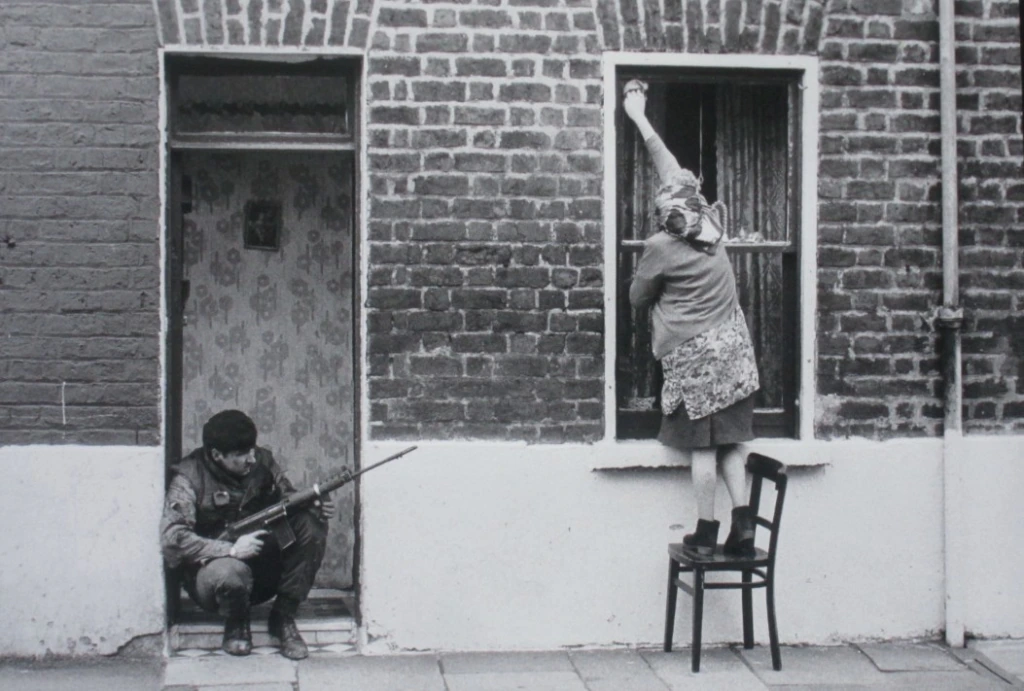
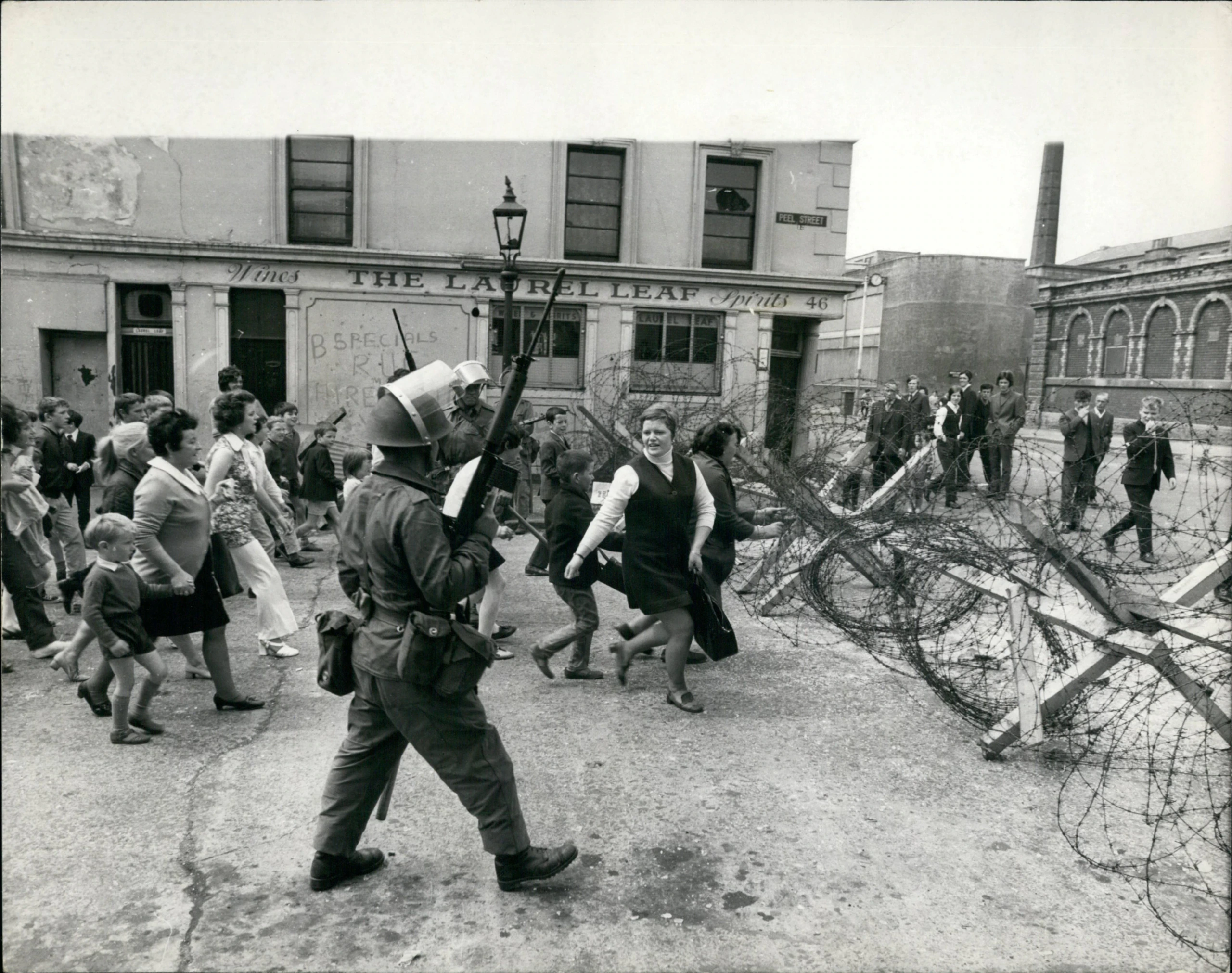
The story of the area is told throughout the building itself, as well as in the exhibition. It covers the outbreak of conflict around the former school, initially in 1964 and again in 1969 and 1970. Homes and businesses in the area were set alight by loyalists and the Royal Ulster Constabulary fired in the direction of the school and the nearby Divis Flats complex, since demolished.
Local people later faced further devastation when British soldiers, backed by armoured vehicles and helicopters, entered the Falls, ransacking homes and placing residents under military curfew.
The interpretation at St Comgall’s has been led by Redhead Exhibition, a design consultancy in Craigavon, County Armagh, with a strong track-record of working on community heritage projects in Northern Ireland.
Owner Michael Lyons says: “The principles we brought to the project, from an interpretation point of view, were that we were doing this for the community. And we wanted to leave a memorial to the history, because it’s a history that isn’t often told and is too easily left out.”
As well as working with the local community on the story and how it is told, Redhead Exhibition was guided by the Principles for Remembering, and advice from historians.
“It becomes a lot easier when you know that the project is built on solid foundations and that everybody has been involved in putting the story together,” Lyons says. “And even though it’s a politically sensitive and often challenging story, everybody is comfortable because it’s based on historical fact and is without political prejudice.
“This exhibition isn’t setting out to point fingers. It’s just saying ‘this is what happened’. We don’t tell anybody what to think. We just present the facts in a narrative-led way so that it’s accessible and easy to consume.
“After that, it’s entirely up to you, isn’t it?”
Another is on the Shankill Road where an existing exhibition about Northern Ireland’s history is being updated by the ACT Initiative.
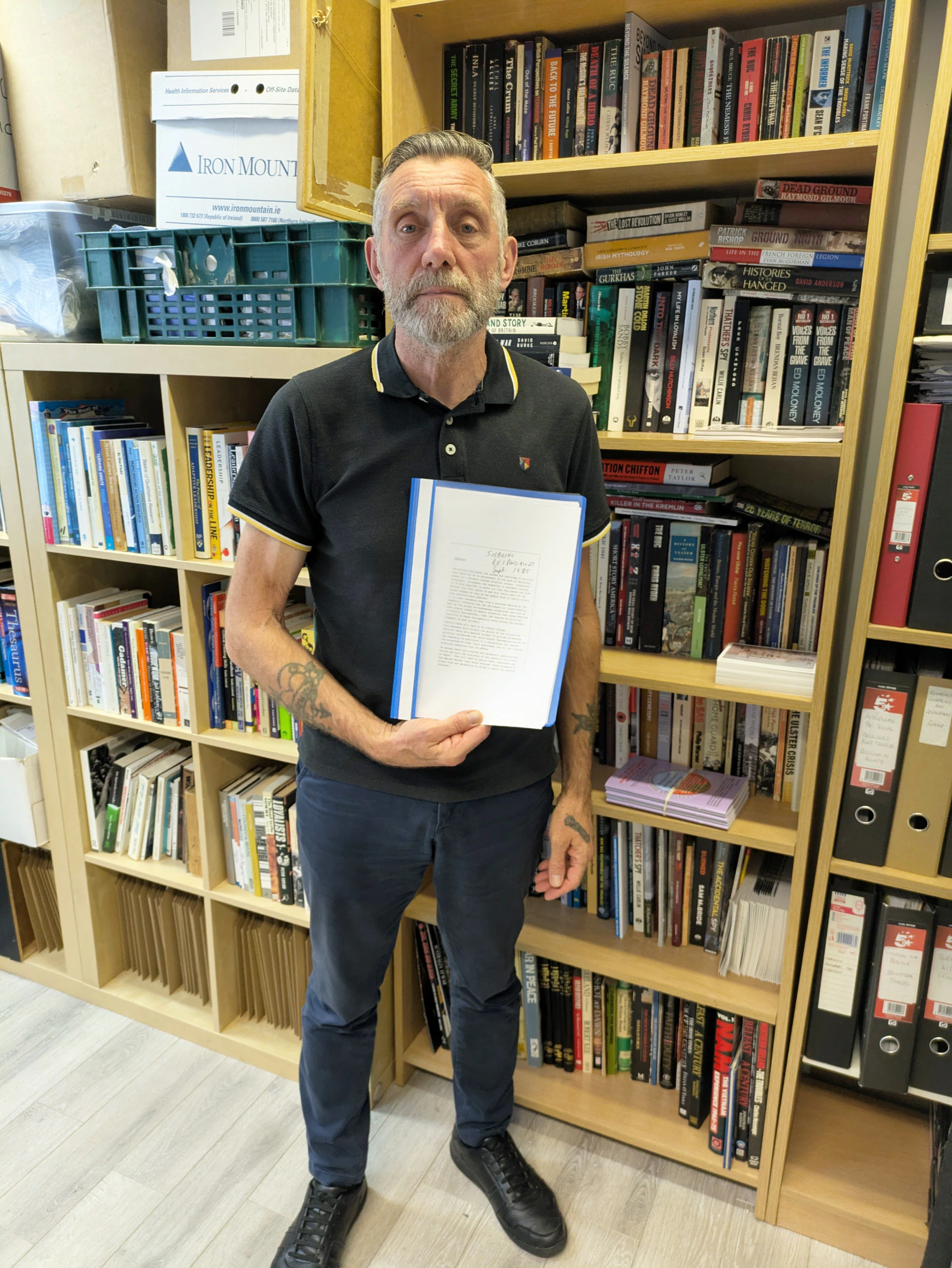
ACT Initiative
Like many heritage projects in Northern Ireland, the ACT Initiative exhibition in Belfast has its roots in a far wider community initiative, in this case a programme to foster peace and reconciliation by helping former political prisoners and combatants to rebuild their lives.
ACT (Action for Community Transformation) was set up in 2008. Located on the Shankill Road, it is led by William Mitchell, who was a loyalist inmate in Long Kesh prison in the 1970s and 1980s.
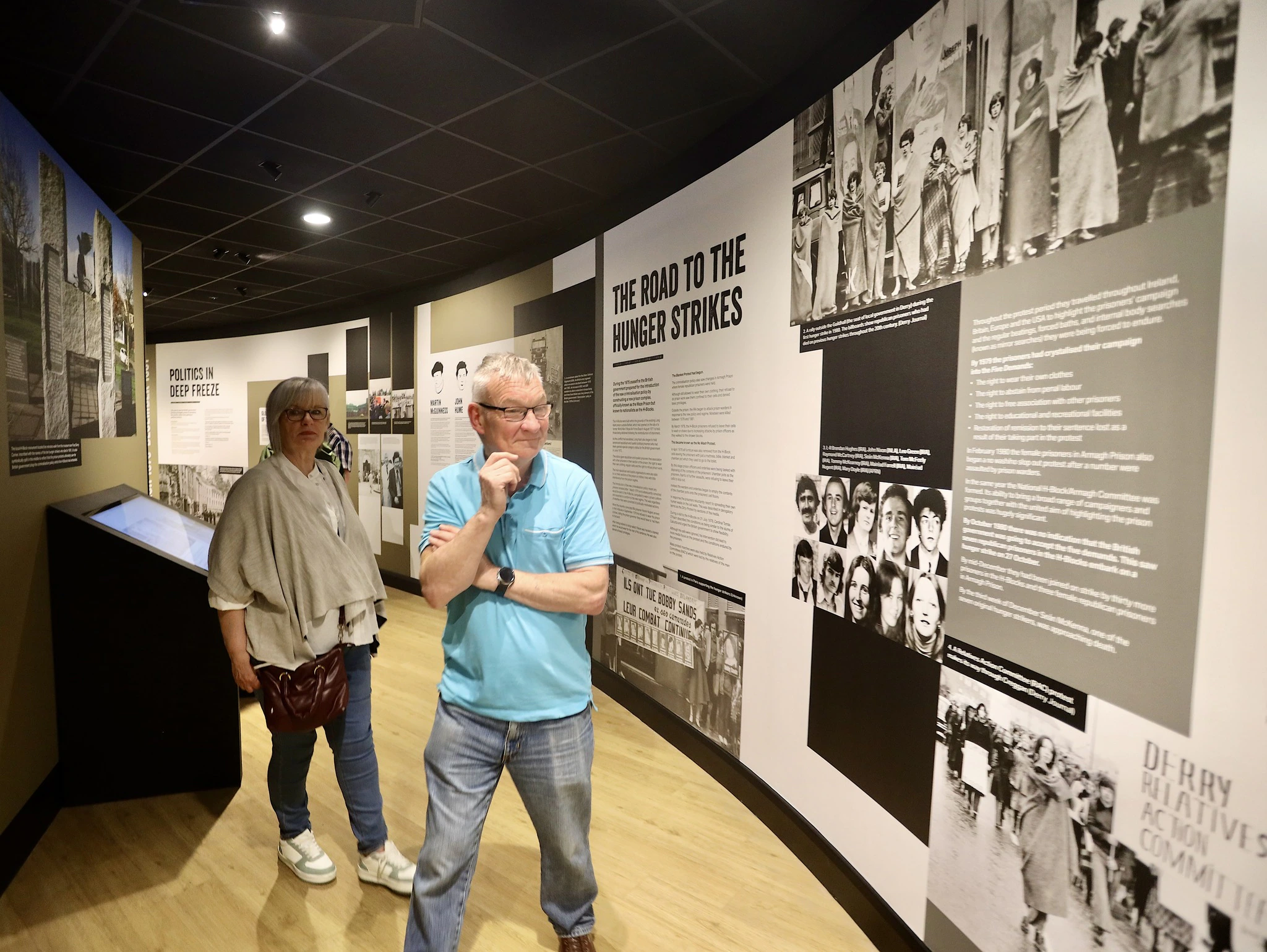
This exhibition charts the major political developments that led to the creation of the Northern Ireland state, the social and political unrest that followed and the events that secured peace in the province.
It also provides an insight into the journey of former political prisoners and combatants, and their efforts to transform themselves in the post-ceasefire climate.
“We don’t refer to it as a museum – we prefer to call it an exhibition for a number of reasons, the most significant being that museums, to me, conjure up an image of sanitised, stuffy places,” says Mitchell, speaking to Museums Association director Sharon Heal for the Radical Museums podcast.
“This is a hands-on interactive narrative that tells a story of the conflict-related era in Northern Ireland, from opposition to home rule in 1912, round to the signing of the Good Friday Agreement.”
Mitchell says the work of Act fills a gap in supporting former loyalist combatants. “What we are attempting to do is help support them to play a positive role in the communities where they were previously active in a different way.”
Former political prisoners are represented in the exhibition in a number of ways, including the replica prison cells that special category inmates were held in at Long Kesh prison in the mid-1970s.
“People can come in, sit on the bed, handle the objects and take as many pictures as they want,” says Mitchell.
Important documents include Sharing Responsibility which was created in 1985 by the Progressive Unionist Party to address the political problems that Northern Ireland faced at the time.
Derry-Londonderry is also home to community-led heritage projects. These include the longstanding Museum of Free Derry, which tells a story of the struggle for civil rights, the descent into conflict, and the Bloody Sunday massacre.
In recent years, other museums have sprung up, including the Siege Museum, with displays on the history of the Siege of Londonderry and of the Associated Clubs of the Apprentice Boys of Derry.
Living with peace
Most recently, the Peacemakers Museum opened in Derry-Londonderry, which is part of a wider £2.8m project that also offers spaces for the local Bogside community.
The museum itself gives visitors a chance to learn about what life was like in this area during years of armed conflict, combined with the efforts of local figures to resolve it.
Despite the growth of community-led museum projects in Northern Ireland, no one pretends this work is easy and without risk. The are many political and historic sensitivities to deal with, which is why initiatives such as the Principles for Remembering are so important.
But because there has been so much work done to tackle these challenges, those involved in community heritage projects in Northern Ireland feel other post-conflict societies could learn from their experiences.
“While the issues may be different, this complexity of identity is not unique,” says Byrne. “And we believe there is learning from what we’re doing in Northern Ireland that could be helpful in the work that others are doing in different places.”