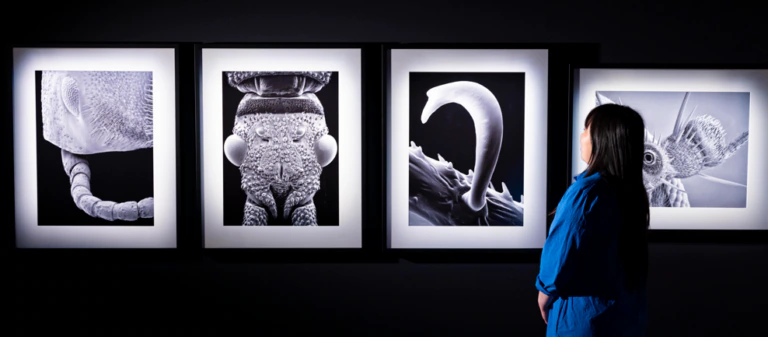
Public enthusiasm for contemporary craft is growing, but while some museums are using this interest as a way of engaging and expanding their audiences, other venues are less interested, perhaps finding it too daunting or challenging.
As one senior curator in a national museum, who wants to remain anonymous, puts it: “Dealing with old objects is much less trouble than dealing with living artists.”
While that may be true, it means that curators and the public miss out on exciting engagement opportunities. Craft has assumed an increasing importance at a time when making has been largely removed from most people’s daily lives.
They regret not knowing how things are made and as more people’s experience of touch is confined to tapping a screen or moving a mouse, they miss connecting to the world through the feel of objects.
“Everything a museum has touches on artisanal skill and craft in some form or other”
Advertisement
“Understanding how things are made is fundamental to curatorial interpretation,” says Hazel Forsyth, senior curator of early modern at the London Museum.
“It’s what museums are about. From pre-history onwards, it’s all about craft and skill, and everything a museum has touches on artisanal skill and craft in some form or other. We’re not divorced from it, and we have to celebrate it. It’s part and parcel of the creative work to embrace craft, skill and trade.”
Forsyth recalls running a handling session for jewellers about to make work for a contemporary jewellery show, Bloomin’ Jewels, 2017, at Contemporary Applied Arts in London. She and a colleague learnt as much from the makers about the museum’s treasures as the jewellers learnt from them.
“I love meeting craftspeople, to hear what they have to say and the way they handle and look at things,” Forsyth says.
“Very often, it opens my eyes or makes me think about an object in a different way. I love the physicality of things, and I like thinking about how pieces were made and who made them. To me that’s as important as anything, because no amount of book reading accounts for hands-on experience. I benefit from their insights.”
That’s a point endorsed by Adrián Maldonado, project curator at National Museums Scotland. He worked on the Glenmorangie Commission in which metalsmith Simone Ten Hompel created a contemporary work, Coordinate, 2020, which was based on her research into silver artefacts from early medieval (around AD 300-1100) Scotland.
Advertisement
The work represents places in the museum and in Scotland and was intended to link the Craft and Design Gallery and the Archaeological Gallery at the National Museum of Scotland, Edinburgh, establishing that making and creativity are nothing new.
Ten Hompel involved staff from different departments in the museum in a day of making. Her project led them to think about new connections, things they never suspected were there to investigate, which they took back into their own specialisms.
“Almost right away I was seeing the artefacts completely differently,” says Maldonado.
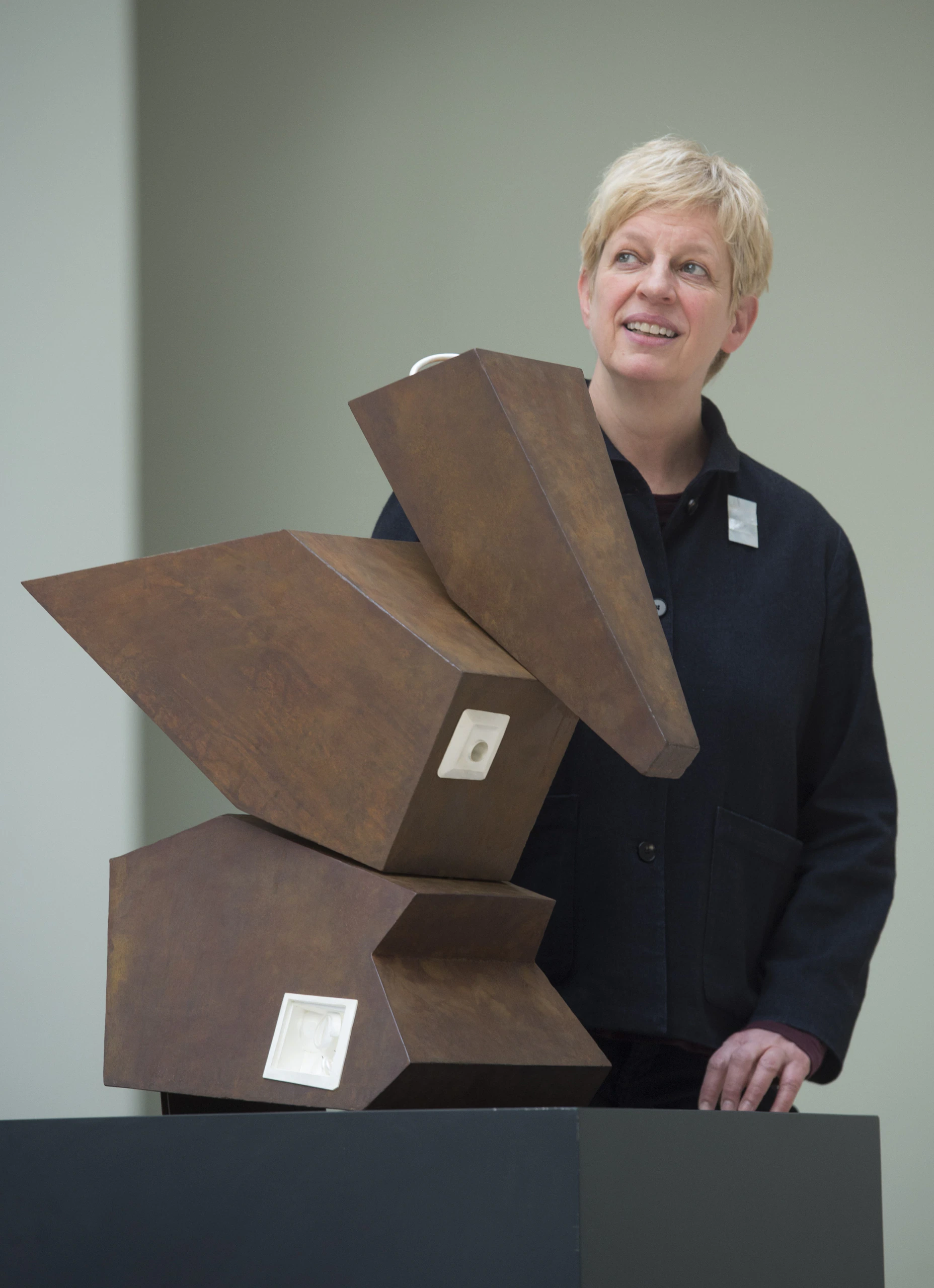
“It allowed me to see the experience of making those objects, the process by which they come to us, and that has been invaluable. It put the humanity back into the objects that I was looking at. Working with Simone was transformative for me and the direction I took on my own research and the exhibition I created.”
New realms of understanding
Sarah Rothwell, senior curator of modern and contemporary design at National Museums Scotland, says: “If people haven’t had the opportunity to have a conversation with a contemporary maker, they don’t understand the wealth of knowledge those makers have for their materiality.
Advertisement
“Working with them opens so many doors about understanding our decorative past, because they know how things would have been formed.
“The sharing of knowledge between curators and practitioners can be more than just finding out how something was made, it can also reveal why it may have been created and by whom. Understanding the making also gives curators insights into the economics and supply chains of the period.
“It helps to understand the networks of exchange, the transmission of skills, how work might have been outsourced – it gives you a lot of insight,” Forsyth says. “For me, it is a way into the past and trying to unravel the complexities.”
To forge new connections, existing contemporary craft can be placed alongside objects in a collection. But it is often more effective to commission a maker to respond directly to a valued piece.
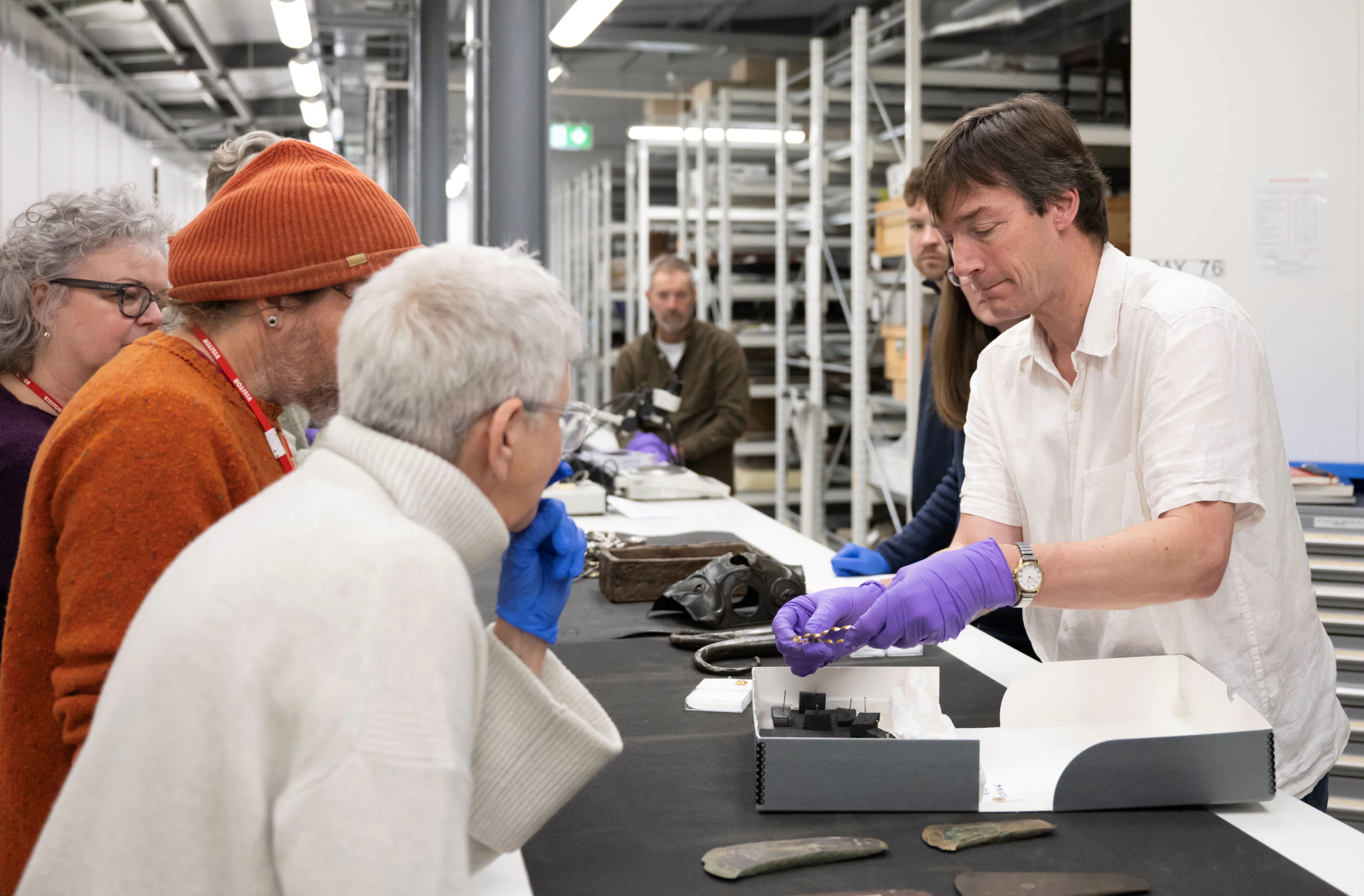
Metalsmith Adi Toch has just finished a project for Reading Museum, Berkshire, based on the Ogham stone, a sandstone column inscribed with the easternmost known example of Ogham, the early Irish form of Celtic writing.
The column was discovered at the archaeological site of Silchester – the iron age and Roman town of Calleva Atrebatum – and the inscription testifies to continuity beyond the Roman period, hinting at cultural movement, migration, and the diversity of communities in late antiquity.
Beneath the stone, found at the bottom of a well, was a crushed pewter flagon labelled “Flagon beneath Ogham”. For Toch this elevated its status from other similar vessels in the collection.
“It became compelling precisely because of this accident of association,” Toch says. “It is an object crushed into significance, bearing the literal and metaphorical weight of this special stone. Metal traditionally frames and sets stone as a means of protection and display, yet here that order is unsettled.
“Hierarchies of hardness and softness, control and vulnerability shift unexpectedly. One element shapes while the other sustains. The flagon now carries memory rather than content, its surface has become a record; the stone impressed, and the flagon in turn protected it, holding the encounter within its altered form. The stone and vessel became companions through coincidence.”
Her response is the series titled By Association, which features items made with pewter, which is a tin smelted from cassiterite, and mineral fragments from Cornish tin mines.
“By Association reflects on the agency of materials and objects, how matter records time, how accident can embody significance, and how form may arise from circumstance and serendipity as much as from intention,” Toch says. “It situates contemporary making within a continuum of geological and cultural histories.”
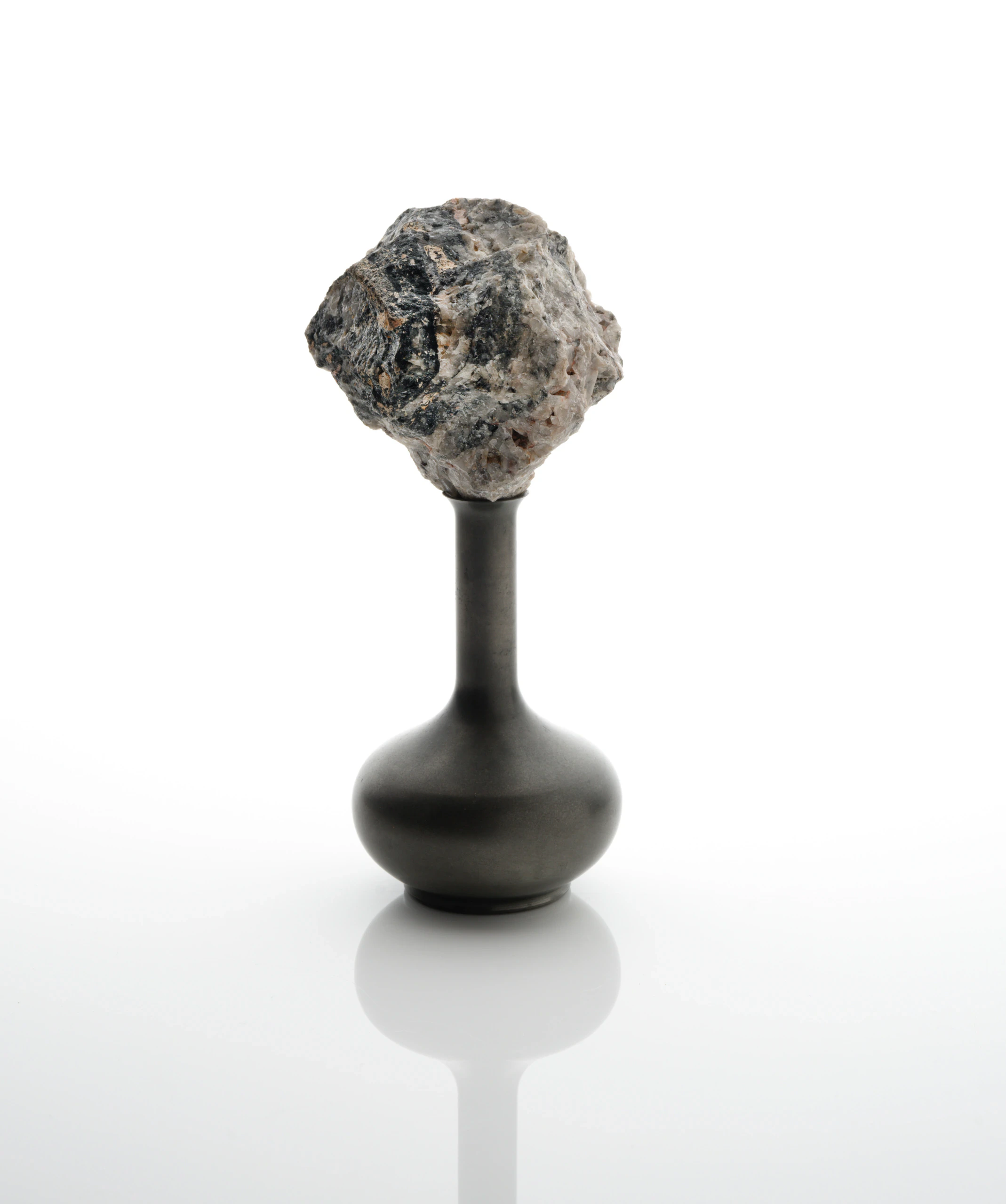
Toch also worked on a project for the Gilbert Collection at the V&A, where she often took her students to handle a 4,200-year-old gold ewer. When it was no longer available to look at, she discovered that its provenance was being investigated.
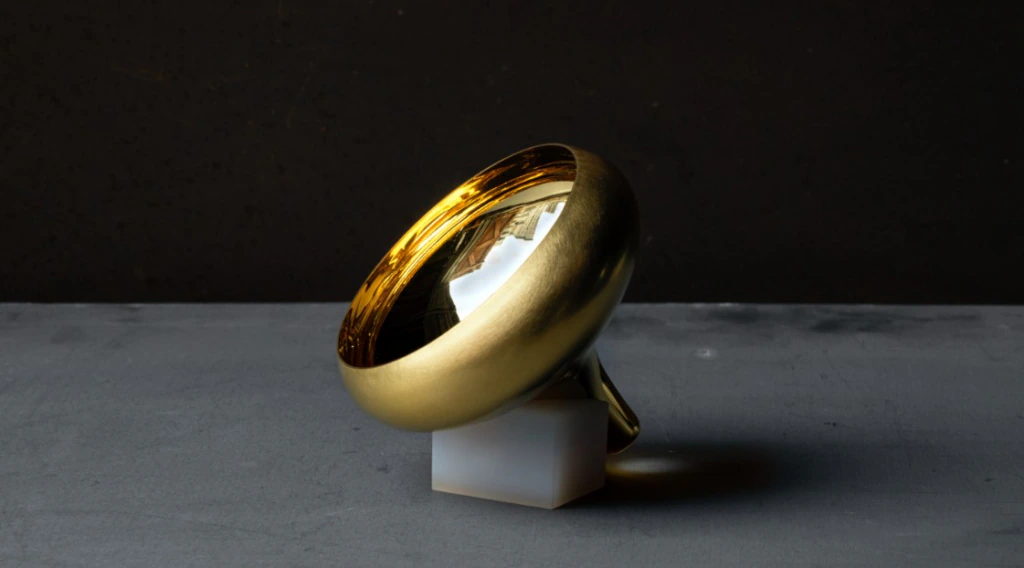
Out of this came Toch’s work Place to Place, in which she created a funnel taking the ewer’s broken spout as a metaphor for loss of direction, emblematic of its return to its homeland; the funnel symbolising a connection between objects.
Toch made the funnel, using historic techniques, from a sheet of gold matching the original alloy. The work provokes visitors to ask questions and engage with artefacts.
“Her piece prompts us to consider the movements of objects through time and how they continue to fascinate, inspire and connect us,” says Jacques Schuhmacher, who was the provenance curator at the Rosalinde and Arthur Gilbert Collection.
One of the other interesting ways that museums work with makers is by asking them to create site-specific responses, such as ceramicist Frances Priest’s project at Blackwell – the Arts & Crafts House, in the Lake District. Her designs, which were on show until 11 April, were inspired by watercolours by the architect of the house, Mackay Hugh Baillie Scott.
Priest’s ceramics respond to the White Room, a white-painted period drawing room at Blackwell, reflecting the passing clouds and how the light hits the water seen through the room’s large windows. She placed her works with great care – key in a project of this nature – to emphasise the connections between past and present.
“At Blackwell, you get the sense of the ornament growing and moving through the spaces,” Priest says.

Contemporary craft also gives museums the chance to run engaging educational programmes. The Hepworth Wakefeld in West Yorkshire offers workshops and outreach education programmes that draw in people from diverse backgrounds and communities. These events often involve making activities based on the gallery’s programme, helped by the diverse range of artists that the gallery works with.
“We look at artists who are a bit more experimental,” says Laura Smith, the artistic director. “What we find interesting is when the craft technique or the medium is pulled out of its original context.”
Smith points to the Yorkshire gallery’s upcoming Mrinalini Mukherjee exhibition (23 May-1 November), where the artist uses craft techniques to make huge sculptural forms. One of its most successful shows was a 2019 Magdalene Odundo exhibition, in which the ceramicist’s pots were displayed with objects that had inspired her.
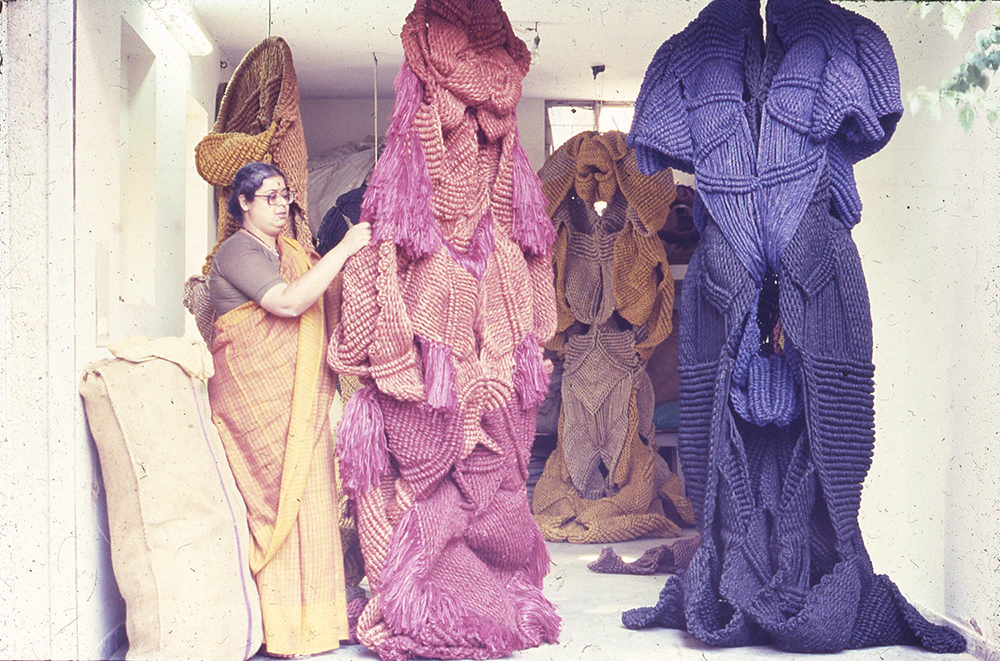
“Wakefield has got a high community of refugees and migrants,” says Hepworth executive director Olivia Colling.
“They found it amazing, because they recognised things from home and they went on and made their own exhibition, and it was a way of showing that they were welcome.”
One issue related to the willingness of museums and galleries to show contemporary craft is that some don’t understand its power to tell stories and handle political and social themes.
A 2025 project at London’s Victoria and Albert Museum saw Polish ceramicist Alicja Patanowska’s install The Ripple Effect.
The seating installation, embedded with a fountain, addressed the circulation of water and matter. Partly made from mining waste from Poland, it invited people to think about our contested relationship with natural resources.
The Ripple Effect referred to the knock-on impact of our daily consumption, raising questions over its long-term effect of natural resource extraction on our ecology as well as social relations.
The installation was covered with 2,000 handmade ceramic tiles, eight of which are coated with copper. This ratio poetically visualises the complex relationship between extracted waste and the material yield in mining.
Patanowska’s installation hoped to – provoked by beauty – make visitors consider the environmental consequences of human consumption of natural resources. It is one of many works by artists that demonstrate how craft can respond to contemporary issues in thoughtful and engaging ways.
Corinne Julius is a visual arts journalist, critic and curator, and president of The Critics’ Circle
Craft work challenge
In 2025, the National Museums Scotland (NMS) and National Museums NI, with associate partners, Design Nation, Craft Scotland and Craft Northern Ireland, invited 16 makers to create works inspired by their collections and by research into decorative and making heritage from the Mesolithic (c.10,000-4,000 BC) to the medieval period.
“We will be linking the makers to our archaeological and historic collections, and showing the legacy of creativity that these makers sit within,” says Sarah Rothwell, senior curator of modern and contemporary design at NMS, who is the co-curator of the project with Kim Mahwinney, senior curator of art at National Museums NI.
“It is a lineage of making that is pertinent to their geographic regions, inspired by their history, their culture, their people, but also the land itself and where they sit within it.”
The curators want the makers to understand the development of decoration and decorative form that was created in Ireland and Scotland during the Mesolithic to the late medieval period, and how symbols and forms were repeated.
They hope the works created will inspire a new generation of makers who may see themselves as part of that lineage.
The results of the initiative will be displayed in a collaborative exhibition, opening at the National Museum of Scotland in summer 2027, then at the Ulster Museum, National Museums NI in early 2028.