The peace process in Northern Ireland is held up worldwide as a model for conflict resolution. The extraordinary story of how the nation – or six counties, depending on your politics – moved from a bitter war, known as the Troubles, to the fragile yet enduring peace of today is one that needs to be widely taught.
It is not a story that can be told by just one museum, and it is certainly not an easy story to tell. It is unsurprising, therefore, that the Peacemakers Museum in Derry-Londonderry, which opened last year in the city’s Gasyard community centre, had a difficult genesis.
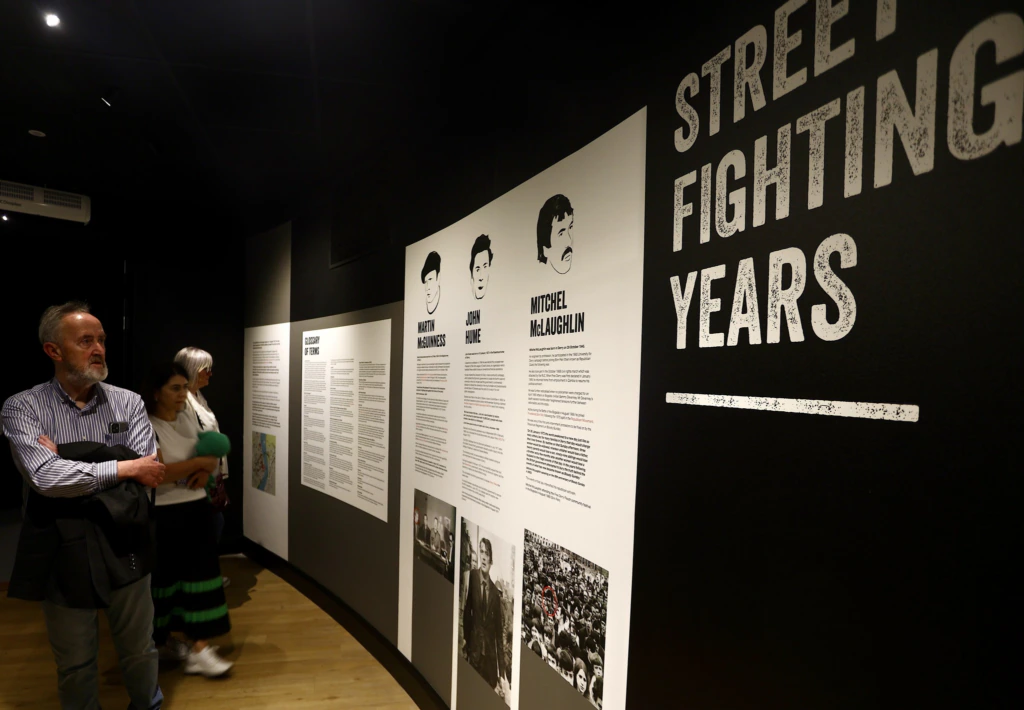
During its development, the museum was publicly criticised by the family of the late politician John Hume – one of the three nationalist “peacemakers” referred to in the title – who said the proposed content failed to represent the wide range of people on all sides who had worked to achieve peace, and felt the Nobel Peace Prize laureate would not have given his blessing to it.
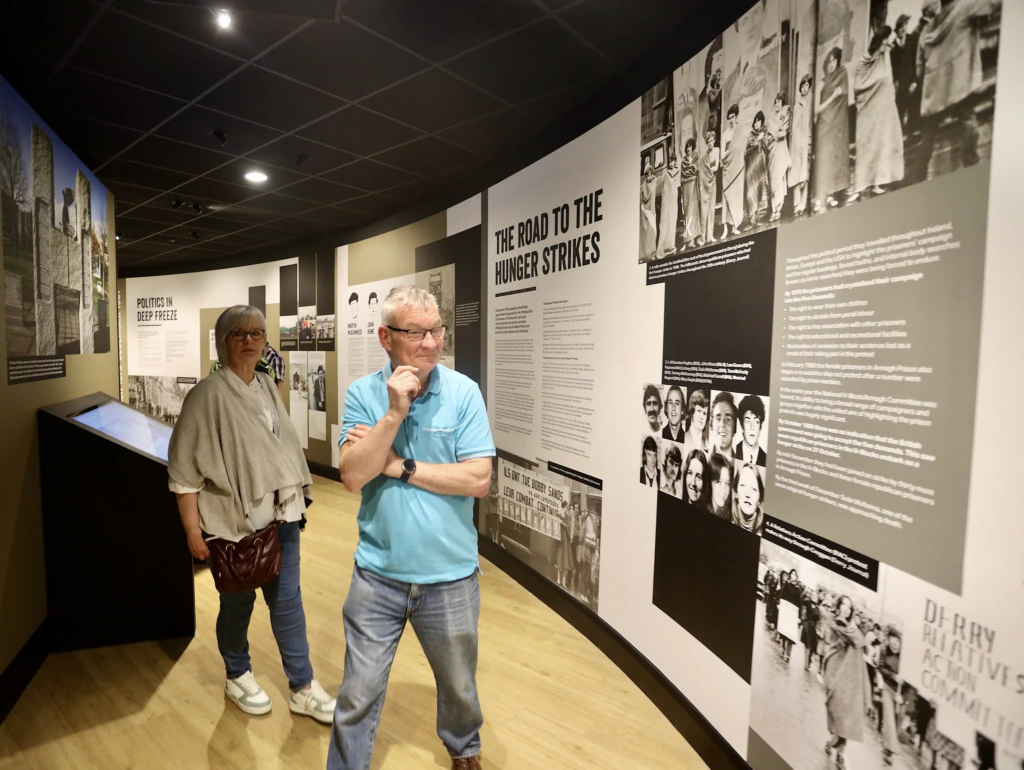
The museum’s developers have defended the inclusion of Hume’s story in the exhibition without the consent of his family, saying it would have been impossible to recount the history of the peace process without one of its key architects.
With this context in mind, a print-out on the museum wall tells visitors from the outset that the “peace process involved many sections of this society” and that the exhibition we are about to see “tells the story through the eyes of the people of the Bogside”, the Catholic neighbourhood in Derry that bore witness to some of the most brutal events of the Troubles.
Advertisement
The opening panel also explains that the content was developed using the Principles for Remembering in a Public Space (see box), a groundbreaking set of guidelines on telling contested histories developed for Ireland’s recent Decade of Centenaries.
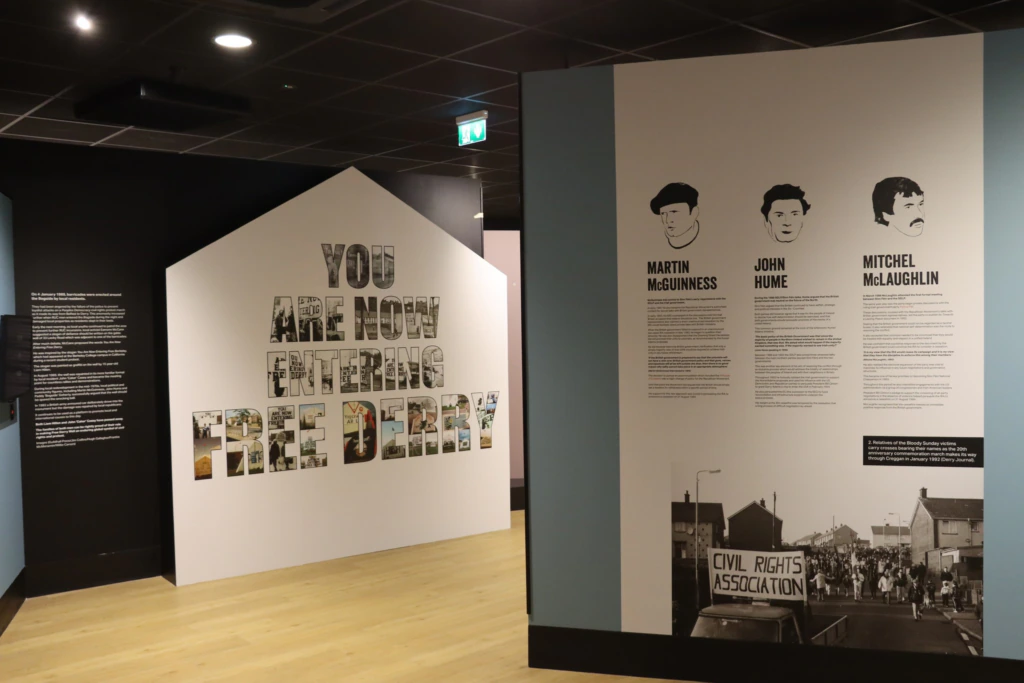
The museum’s narrative picks up in the dark months after Bloody Sunday, the horrific day in January 1972 when British troops opened fire on unarmed civil rights marchers in the Bogside, killing 13 people (before visiting this museum, a trip to the nearby Museum of Free Derry, which tells the story of the lead-up to the massacre, is highly recommended).
Principles for Remembering in a Public Space
- Start from the historical facts
- Recognise the implications and consequences of what happened
- Understand that different perceptions and interpretations exist
- Show how events and activities can deepen understanding of the period
- All to be seen in the context of an “inclusive and accepting society”
This period of the early 1970s saw the IRA scale up its armed campaign and British military involvement in the six counties reach its height. What had started out as civil rights protests and local skirmishes escalated into riots, shootings and bombings.
It is here that we are introduced to the museum’s three protagonists, all of whom hailed from the Bogside: the aforementioned John Hume, a lifelong advocate for non-violent nationalism; Martin McGuinness the former IRA man who turned to politics; and Mitchel McLaughlin, the activist who was at the Battle of the Bogside and later became the first republican speaker at the Northern Ireland Assembly.
There is also a helpful glossary – the first of many – explaining the bewildering web of esoteric terms, acronyms, groups and factions within factions that all played a role in the Troubles and the peace process.
Advertisement
Clarity on complex events
This is not an exhibition to dip in and out of at will. The narrative follows a tight chronology and the museum encourages visitors to follow numbered arrows on the floor to navigate their way through these complex events.
A powerful film shown in a small alcove grounds us in the violence and chaos of the era, all the more shocking because of how quickly it seemed to become a mundane aspect of everyday life.
Footage shows clashes between rioters and British troops on the streets of Derry – a young child picks up a rock and throws it at heavily armed soldiers, before his mother grabs his arm and pulls him away. In another life he could have been throwing a ball at the park.
The exhibition is not object-rich, but the items on display are well chosen and pack a heavy emotional punch. We see the huge rubber bullets used by soldiers against civilians – often children – which caused blindness and several deaths, alongside a makeshift Molotov cocktail (a hand-thrown incendiary weapon) similar to those that were used by nationalist rioters.
There is a striking visual model of the Rossville Flats, the high-rise tower blocks at the heart of the Bogside that were occupied by British troops after the army’s operation to retake the “no-go” republican area of Free Derry and that, in typical dry Derry wit, became known as HMP Rossville.
Advertisement
Unsung heroes
As we move through the years, the exhibition checks back in with the three protagonists every so often, but its focus is much broader.
Perhaps mindful of the Hume family’s remarks on representation, there are some welcome panels on the many Derry women who played a key role in the peace process, including Kathleen Gallagher and Bernadette Devlin, who fought for the rights of political prisoners, and the late feminist and lesbian icon Nell McCafferty, founder of the Irish Women’s Liberation Movement.
Derry man Sean Morris, who co-founded the Rainbow Project gay rights organisation and Foyle Pride, is also mentioned.
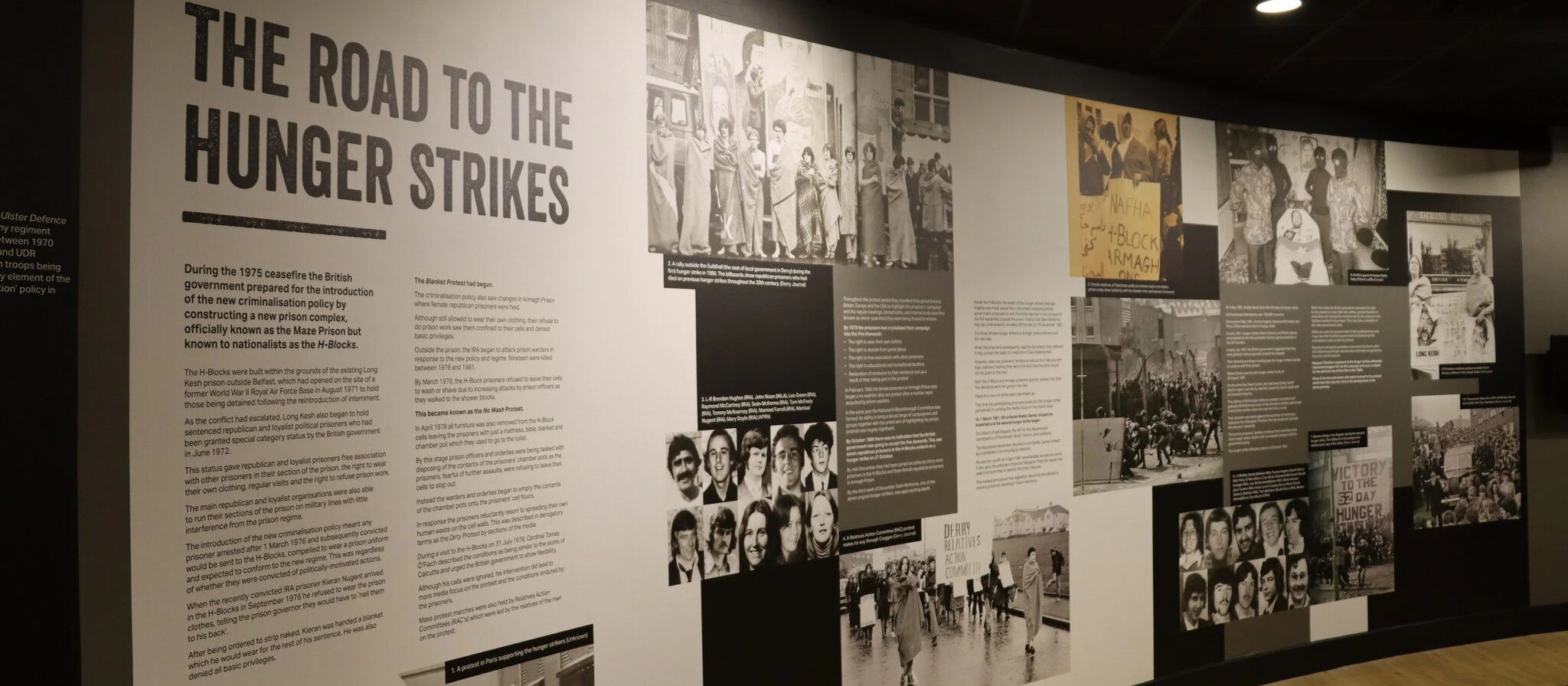
At the end of the 1970s we come to what, for me, was the most upsetting part of the exhibition: the hunger strikes of 1980-81, in which 10 Irish republican prisoners starved themselves to death in protest at their treatment by the British government.
As someone who grew up in Ireland, I’m familiar with their story, but the exhibition succeeds in capturing both complex background detail and the very visceral horror of the strikes themselves.
Visitors learn about the British Government’s criminalisation policy, which sought to define the civil unrest as an issue of law and order rather than a political conflict and stripped inmates of “prisoner of war” status.
Nationalists were interned in the newly constructed H-Blocks at Long Kesh prison, known more infamously as the Maze, compelled to wear prison uniforms and denied free association with other prisoners. Beatings, forced baths and internal body searches were common.
Protests over the loss of status and inhumane conditions escalated. When prison guards began emptying chamber pots on cell floors, the inmates began a “no-wash protest”, smearing excrement on their cell walls.
These are difficult details to convey, and the exhibition does not shy away from them. A recreated prison cell shows visitors what the no-wash protest looked like, and powerfully captures the mental and physical torment experienced by the inmates.
This section gives vital context as to why the conflict intensified in the 1980s, when the IRA increased its bombing campaign in mainland Britain, targeting military and civilian locations.
These events are mentioned in the exhibition, though I would have liked to see more exploration of how atrocities against civilians, including the deaths of several children, turned public opinion across Ireland against the IRA’s armed campaign.
By the late 1980s, the conflict had become trapped in a never-ending cycle of death and violence. Video testimony from those people who lived through it shows how unthinkable the prospect of peace once seemed. But as both sides recognised they were in a military stalemate, calls for a peaceful political solution began to grow.
Here, the role of the museum’s three protagonists comes to the fore. There are some fascinating details and testimonies in the exhibition of clandestine talks and secret emissaries between republicans and the British and Irish governments, even at the height of the Troubles.
The road to peace
The latter part of the exhibition focuses on the nitty gritty of political negotiations and loses some of the human story, but it gives a valuable insight into the long and difficult road, strewn with setbacks, towards IRA decommissioning and the 1994 ceasefire.
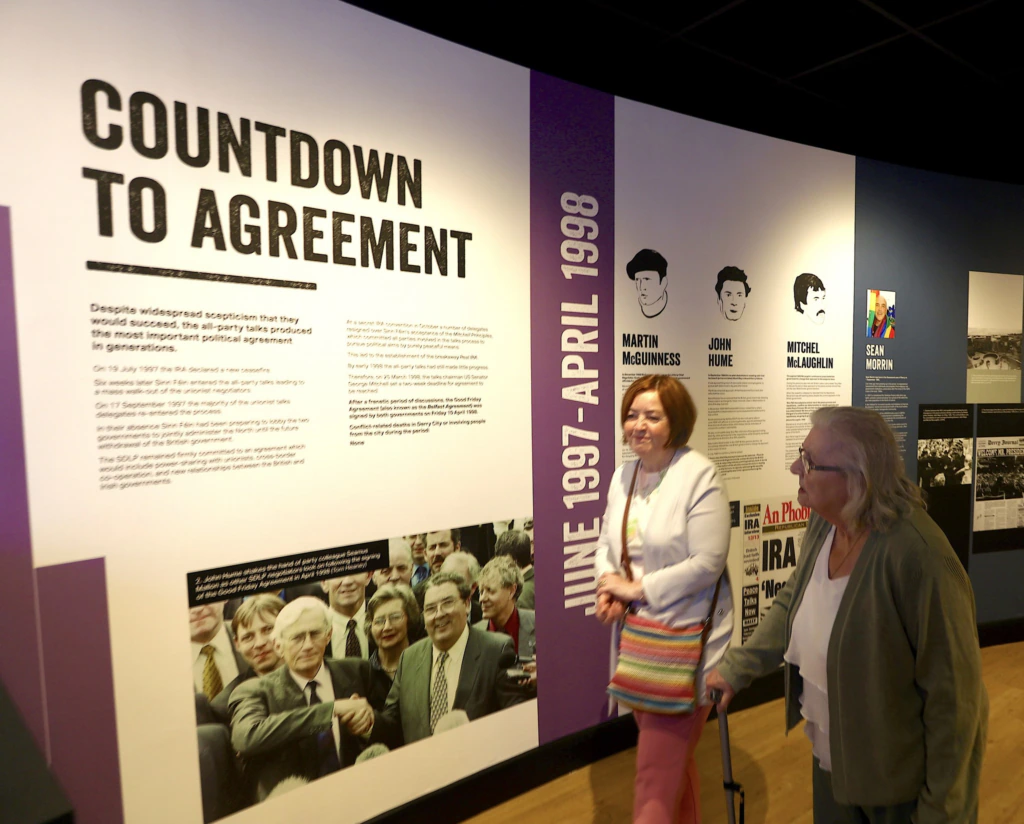
We eventually end up at the groundbreaking Good Friday Agreement of 1998, which reflected Hume’s visionary model for a power-sharing government.
The museum is heavy on text – I’ve heard it described as a “book on a wall” – and while I appreciated the level of detail, I did wonder if a more accessible narrative route could be provided for people who have difficulty with dense text, or those for whom English isn’t a first language. I also struggled a little with wayfinding, at one point ending up back in 1994 after passing 1998.
In the final section, we hear from the three protagonists and their families through video testimonials, putting a more human face to their place in the history books. It is a hopeful and moving note to end on after what may have been a gruelling visit for some people.
As the Troubles move further into the past, it’s easy to forget just how quickly extreme violence exploded in this small corner of the world, and how long it took to journey out of conflict.
The Peacemakers Museum is a vital addition to Northern Ireland’s heritage sector, offering a ray of hope in a world where peace seems increasingly fragile.
Project data
Cost £2.8m
Main funder National Lottery Heritage Fund
Architect
Gravity Architects
Construction
JPM
Design
Design Map
Curator
Michael Cooper
Cell design
JP and Paul McConomy
Admission
Adult, £8; concessions, £7