One year after Donald Trump’s second inauguration, far-right nationalism continues to grow on both sides of the Atlantic.
As politicians across America and Europe double down on the promise to make their nations “great again”, the sense of perceived historic glory at the heart of this movement is profoundly significant for heritage custodians.
As cultural leaders, we wield enormous power as we shape which elements of our heritage are celebrated and which forgotten. What are the areas of greatness in our nation’s past? Who has defined them before us and who gets to define them today?
At a time in which trust in British political institutions continues to decline, trust in our nation’s museums and heritage organisations remains extraordinarily high. How can we face fully into the legacy of collective forgetting that we have inherited?
As we begin another election year in the UK, can we be bolder in acknowledging the power of the stories of the past that we package up and offer to the world today?
Advertisement
A mythic past
As we look across the Atlantic at efforts to restore “truth and sanity to American history” (part of the title of a presidential executive order aimed largely at the Smithsonian Institution), the Trump administration’s conspicuous targeting of the museum world remains troubling.
Efforts to eradicate “improper ideology” from American museums and to redefine national history along politically convenient lines have manifested as the blatant suppression of histories based on race, gender and sexuality.
The echoes between these interventions and modern fascist movements have been widely highlighted and explored. Kimberlé Crenshaw and Jason Stanley, writing in the Guardian newspaper last year, reminded us that “fascism always has a central cultural component, because it relies on the construction of a mythic past”.
In this troubling international context, we must be mindful that, for so many of us in the UK’s museums and heritage organisations, it is a mythic past that we have inherited.
Advertisement
Private interests, public propaganda, exclusionary values, misrepresentation, and active censorship have all been woven into our collections and tangible heritage, century after century, year after year.
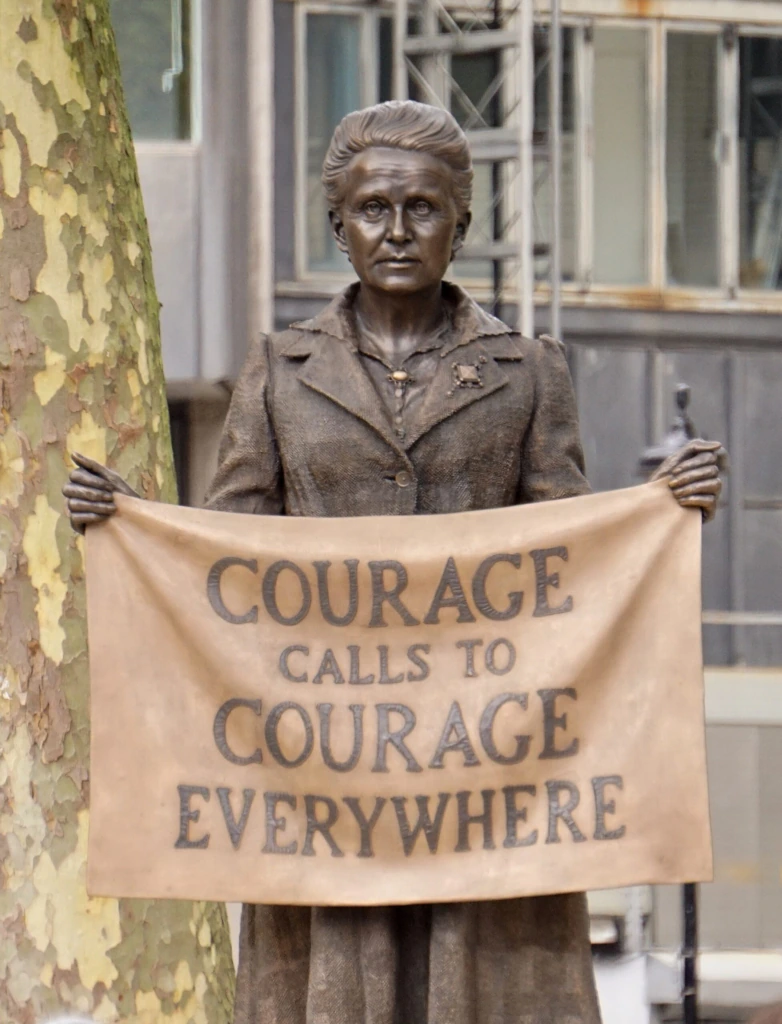
Often this has been done deliberately. From collections built on colonial looting to the legacy shopping of history’s exploitative industrialists, from the recent criminalisation of education relating to LGBTQIA+ lives to national public monuments that represent fewer non-royal women than men called John, the partial nature of our heritage is widely understood and accepted. Given historic oppressions, it is hardly a surprise.
But the temptation to perpetuate a familiar, saleable, mythical past remains undeniably real for our sector. As commercial needs align with political pressures, it is not always clear that we have faced up to the scale of the work needed to unpick this inheritance – work that is both deep and increasingly urgent.
Great for whom?
A decade since Trump’s first presidential victory and the UK’s Brexit referendum, the idea that our nations might be made great again pervades political discourse. But details around the greatness to which we should return continue to remain hazy.
If we work to make Britain great again, to what era should we look? To the iconic elegance of Jane Austen’s Georgian England? This would mean placing less emphasis, as Trump has suggested, on histories of slavery and overlooking the violent white supremacy on which the economy was built.
Advertisement
What about Queen Victoria’s industrial empire, when the sun didn’t set on the life-shortening labour of half-starved men, women and children without worker’s rights, and the age of sexual consent for girls was 10-12 years old?
“For so many of us, particularly in minoritised communities, a loudly expressed, vaguely articulated desire to go backwards feels like a threat”
The ambiguity at the heart of Make America Great Again and Make Britain Great Again movements thrives on both the inherited forgetting that the late cultural theorist Stuart Hall called selective historic amnesia, and the active preservation of a mythic past.
As the US’s “tradwife” movement spreads into Europe, what do we choose to learn from the mid-20th century, when corseted women, strongly discouraged from working, were deliberately prevented access to financial or bodily autonomy?
Or the 1990s, when Britpop thrived, racism ran largely unchecked through public life and men could legally rape their wives? Or just over a decade ago, when my marriage to my wife could be legally denied as a marriage?
For so many of us, particularly in minoritised communities, a loudly expressed, vaguely articulated desire to go backwards feels like a threat. Sometimes the threat is hidden, sometimes thinly veiled and sometimes not veiled at all.
An industrial problem
This year marks 10 years since I launched the National Trust’s first national inclusive histories programme with Prejudice and Pride, an exploration of LGBTQIA+ stories and collections.
As the programme got underway, membership boomed, support grew, and I found myself splashed across right-wing press alongside a barrage of accusations of “political correctness gone mad”.
In the years that followed, we saw opposition evolve from the accusation that we were implementing a “politically correct” agenda to a “woke” one. The message remained the same – any effort to challenge inherited bias represented a deviation from a static, proud and righteous truth.
Over the past decade, this conflict has escalated into one that the trust’s current director of communications, Celia Richardson, has described as “an industrial problem”.
Suspiciously well-funded cultural pressure groups such as Restore Trust form part of a wider web of lobbyists and thinktanks that pursue an international “anti-woke” and “anti-EDI” agenda within our cultural and political bodies.
Pride and hope
Last year, in my home of County Durham, Reform UK became the first party other than Labour to take overall control of the local authority in more than a century.
Candidates and communities celebrated with t-shirts, stickers and hats adorned with the Make Britain Great Again slogan and the rainbow flag was immediately removed from County Hall.
Conversations began around which, if any, inclusive heritage events and displays would be allowed to take place in council-run museums and libraries. Funding was cut for Durham’s LGBTQ+ Pride festival.
Throughout the autumn, my regular commute featured countless Union Jacks and St George’s Crosses flying from lampposts and bridges and painted on zebra crossings. They remained for months, the backdrop to anti-immigration protests and conflicts throughout the region – and country.
It still feels unclear how our sector might best support colleagues and communities in these divisive times. But the compelling and vague nostalgia that continues to be evoked at the heart of this division is a call for us to look again at the stories we tell ourselves about who we are as a nation.
Museums are in the story business. Writer Ella Saltmarche’s work on narrative change reminds us that: “Story creates meaning out of patterns. It coheres communities. It engenders empathy across difference. It enables the possible to feel probable in ways our rational minds can’t comprehend.”
Stories underpin the structures we live with today, and are an essential component to any deep systemic and social change. Shortly after public funding was cut for Durham’s LGBTQ+ Pride festival, I sat in the Pitman’s Parliament at Redhills Miners’ Hall for a screening of the 2014 movie Pride.
As mining leaders and the Durham Pride team came together to acknowledge the Lesbians and Gays Support the Miners movement, and to fundraise for the festival, the feeling of solidarity in the room was palpable.
Through shared cultural experience, conversation and debate, diverse working-class communities explored what lessons could be learned from the deep histories of solidarity that run through the region like the coal seam. The story we started to tell ourselves about our past, present and possible future began to feel very different in that space.
Over the past year, thought leaders have begun to explore what it might mean to see the past in a rooted and hopeful way.
Consultant Ruth Taylor defined the idea of “composting Englishness” as sitting with the “grief in our national identity, but also recognising the nourishment buried there”.
Similarly, climate justice activist Daze Aghaji has called for a new balance “that doesn’t fear the past, nor ignore it, but gathers it up and makes compost of it to grow something new”.
An article published by the Joseph Rowntree Foundation in autumn last year, Beyond the Past: Grief, Polarisation and the Work of Repair, highlighted a profound need for people to “reconnect … with pride, possibility, and hope”.
As the Trump administration seeks to erase “shame” from America’s national museums, our sector in the UK can find other ways of growing collective pride, rooted in both the past and present.
We can make the choice to grow cohesion, not through censorship and exclusion, but by confidently making space for multiple perspectives as we tend the nation’s rich cultural soil today. We have the power to seed hope and possibility through stories of radical empathy.
Avoiding complicity and embracing power
There is no neutral course for heritage leaders to chart through these challenging times. Public history continues to be weaponised – through omission, through memorialisation and through inertia-driving nostalgia.
As the call to return to an ambiguous past threatens our communities, we must be wary of complicity in the injustices, oppressions and exclusions of the past being celebrated, repeated or amplified in the present.
If a return to the past remains on the ballot, the act of engaging the electorate in our nation’s history is an unavoidably political one. And increasingly urgent. As custodians of the nation’s heritage, we cannot shy away from our place in this landscape.
Rachael Lennon is a curator, writer and a 2024-2025 Clore Cultural Leadership Fellow. She is head of story at Beamish Museum, County Durham, and the chair and co-founder of the UK’s Queer Heritage and Collections Network. She led high-profile national inclusion programmes at the National Trust and was recently co-director of the Centre for Heritage at Newcastle University. Lennon is a trustee of Redhills Miners’ Hall in Durham, where she lives with her wife and children.