
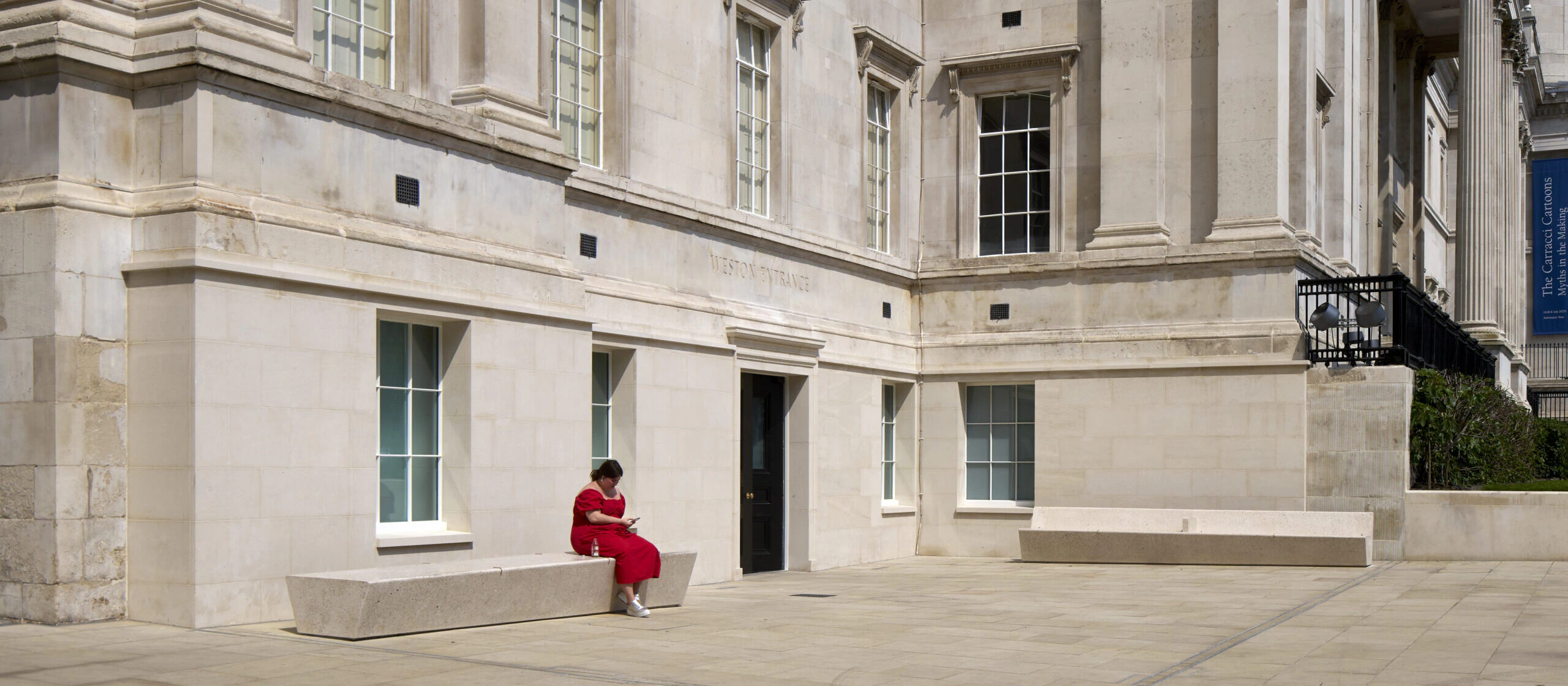
How does it feel to secure an enormous financial gift for a charitable cause? Fundraising staff at London’s National Gallery know, having received a huge donation from the Julia Rausing Trust in September.
At the time, the £150m gift, which is being used to create a new wing, was the largest-ever single cash donation to a museum anywhere in the world.
But the record was equalled the same month, when the gallery announced that it had also received a £150m gift from the Crankstart charitable foundation.
The National Gallery is understandably overjoyed at its success. UK prime minister Keir Starmer even got in on the act, saying that “the government values the role of philanthropists and institutions like the National Gallery in creating a better, fairer future for all”.
The scheme to build the new wing, Project Domani, has now attracted £375m of cash pledges.
But how did the gallery attract two such enormous donations, particularly at a time when there is such fierce competition to secure philanthropic support for not only culture, but other areas of public life?

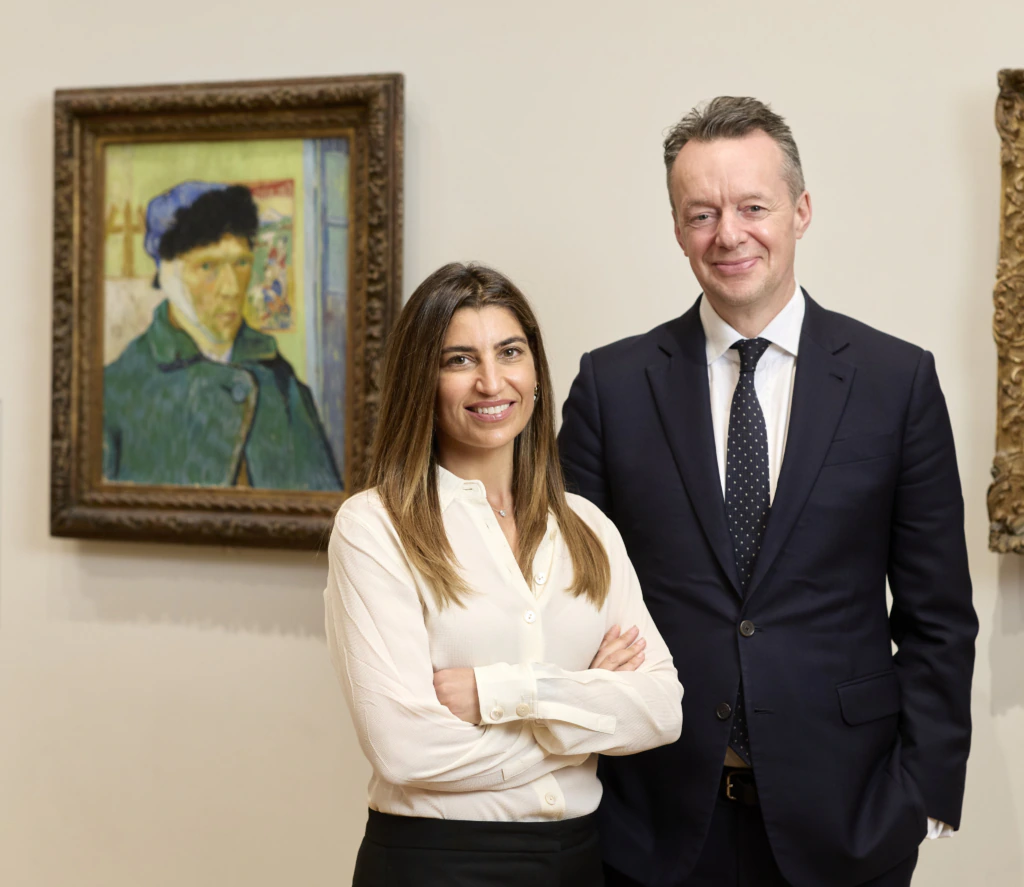
The National Gallery’s director of development, Anh Nguyen, says: “Donors are ultimately motivated by a transformative vision – the impact that it has on the organisation and society at large. Project Domani captured the donors’ imagination because it will leave a lasting legacy.
Advertisement
“When completed, the National Gallery will be the only public gallery in the world that tells the complete story of paintings in the Western European tradition from 1250 until the present day. This is really exciting.”
Nguyen continues: “We know that for the Julia Rausing Trust, a key motivation in supporting, apart from being in memory of Julia Rausing to an institution that she loved so much, was the importance of investing in the UK’s leading cultural institutions to sustain our global leadership in the creative industries.
“For Michael Moritz [Crankstart], it was about wanting to transform the landscape of philanthropy in the UK and that the National Gallery, which he deems to ‘rank at the top of the global pecking order’, to receive the similar levels of philanthropic support like our counterparts in the US.”
One of the key questions that arises from this is whether this is a trend that might benefit other UK museums, or is something specific to the National Gallery and the two donors.
“Donors don’t give because of trends, especially at the substantial levels that we have seen at the National Gallery,” says Nguyen. “Donors give because they have a deep affiliation and relationship with an organisation, and believe in its mission and vision, and the impact that their giving will have. Donors like ambition, boldness, creativity, innovation and agility.”
Despite Nguyen’s views, it does feel like museums are on a roll with big-ticket donations.
Advertisement
The month after the National Gallery donations were unveiled, the Science Museum revealed that it had received an eight-figure donation from the Serum Institute of India.
Led by chief executive Adar Poonawalla, the Serum Institute is the world’s largest vaccine manufacturer and part of the Cyrus Poonawalla Group. The gift, the largest international donation in the museum’s history, will support the revamp of the 20-year-old Making the Modern World gallery, which will reopen in 2028 as Ages of Invention: The Serum Institute Gallery.
Next came the Courtauld, which announced in October that it had secured its largest-ever donation – £30m from the Reuben Foundation. The money will help the London institute, which combines the teaching and research of art history with a public gallery, to develop a campus on the Strand, which is expected to open in 2029.
“Donors are ultimately motivated by a transformative vision – the impact it has on the organisation and society at large”
Michelle Wright, the chief executive of charity fundraising and income generation specialist Cause4, believes that this does point to a trend, albeit one confined to large London-based organisations. And this is because they have invested heavily in this area for many years.
“Large donations have become a critical and increasingly prominent feature of the funding landscape for major UK museums and galleries as they adapt to a new era of mixed-funding models,” she says.
Advertisement
“Given the decline in public funding, it isn’t surprising that major institutions have adopted American-style philanthropy models to ensure financial survival and to fund major projects.”
Wright also identifies another philanthropic trend from the US. “The real trend being adopted from the US is one of solutions focused asks,” she says. “As funders such as Bill Gates and Mark Zuckerberg have entered the philanthropic market, it has led to what I term ‘fix-it’ style philanthropy – the drive to solve things, such as eradicating malaria or disease.
“This approach can be difficult for the arts to emulate. We’re not in the market to ‘fix or solve’, but we can replicate the sentiment via bold asks, ambitious targets and large-scale networking, including reaching into international markets, such as the recent donation from India secured by the Science Museum.”
Limited to London?
Another issue is whether museums outside London can benefit from large donations.
Leslie Ramos, the co-founder of The Twentieth, an international arts philanthropy agency, says: “The fact is that it takes effort to persuade the quite London-oriented, international high-net-worth individuals to focus outside of London. They have no connection to those communities. Unless they are encouraged to build those connections, and the people around them encourage them to, they won’t.”
But Ramos is not entirely pessimistic, pointing to some success for organisations such as Nottingham Contemporary and the Baltic in Gateshead.
“Like many things in life, philanthropy can be given impetus via social connections,” he says. “Persuade two or three people to leave London and support somewhere, and that will encourage others to follow suit.”
Wright also feels that it is a big ask for regional museums and galleries to replicate even some of the philanthropic success of the London nationals. “For smaller or regionally based institutions wanting to develop this area of giving, it requires many aspects of organisational ambition to coalesce – a strong reputation, visibility, time, networks, infrastructure, transparency and effective governance,” she says.
“Large gifts carry major expectations in areas such as transformational impact and public benefit, visibility, naming and long-term stability, as well as a forgiving and supportive tax and legal environment. Gifts of this magnitude are high risk and donors will often perceive smaller organisations as carrying higher risks in terms of governance, capacity and visibility.
But like Ramos, Wright is not entirely pessimistic. “That’s not to say that large-scale philanthropic investment in our smaller museums can’t be achieved, but it requires organisational development over years and those institutions without such infrastructure in place will need support to develop the framework, thinking and strategies to achieve similar success,” she says.
The Julia Rausing Trust, while referring to the benefits of supporting an organisation in central London with its £150m donation to the National Gallery, also hinted at wider opportunities when announcing the gift.
Simon Fourmy, the trust’s chief executive, said: “As major cultural institutions face growing funding pressures, we hope this generous act inspires others to make bold, transformative contributions to sustain the UK’s cultural life.”
Whether this happens remains to be seen, but it does point to the benefits of a mixed economy model, which combines public funding, private investment and earned income. But it is a delicate balance and one that needs the sustained support of public funding across the UK.
Firm foundations
Julia Rausing Trust
The Julia Rausing Trust is a charitable fund established in 2024 to honour the memory of Julia Rausing and make grants in her name. The trust aims to give away £100m each year to UK charities. Overall, 2,000-plus grants have been made totalling more than £500m. The trust funds the Museums Association’s Health and Wellbeing in Museums Fund.
Crankstart
Crankstart is a San Francisco-based foundation founded by Welsh venture capitalist Michael Moritz and his wife, Harriet Heyman. Its areas of interest include education, job and housing security, social welfare and the protection of civil rights. Crankstart also supports the arts. About 60% of its grants go to groups in the San Francisco Bay Area, although it occasionally supports projects elsewhere – particularly in Chicago and the UK.
Reuben Foundation
The Reuben Foundation is a UK charitable foundation that focuses on the advancement of healthcare, education and the community. The foundation was created in 2002 to channel the charitable giving of the Reuben family, which David and Simon Reuben, whose interests include property and technology. They were named the UK’s third-richest family by the Sunday Times Rich List, with a net worth of £24.9bn in 2024.


A bit ironic that the National Gallery is celebrating this large donation at the same time that it is restructuring and may even lay staff off to manage a £6.2M deficit.https://www.museumsassociation.org/museums-journal/news/2026/02/national-gallery-restructure-shows-sectors-dire-financial-position/ Who will clean, invigilate, curate this new space?