May’s American Alliance of Museums’ (AAM) conference took place in Los Angeles against the backdrop of relentless upheaval in the US cultural sector caused by president Donald Trump’s administration.
How to respond to the flurry of presidential executive orders and grant cuts that have hit museums, galleries and other cultural organisations was uppermost in the minds of the 4,000 delegates who gathered in California.
The theme of the conference was Museums and Trust, but trust in the US government seemed in extremely short supply during the four-day event.
AAM president and chief executive Marilyn Jackson – who was president and chief executive of the Muhammad Ali Center in Louisville before joining the AAM in April 2024 – outlined the scale of upheaval during her opening address.
“Since last May, the challenges we are facing have grown exponentially, with attacks on our field and the dismantling of federal agencies that support our sector,” she said.
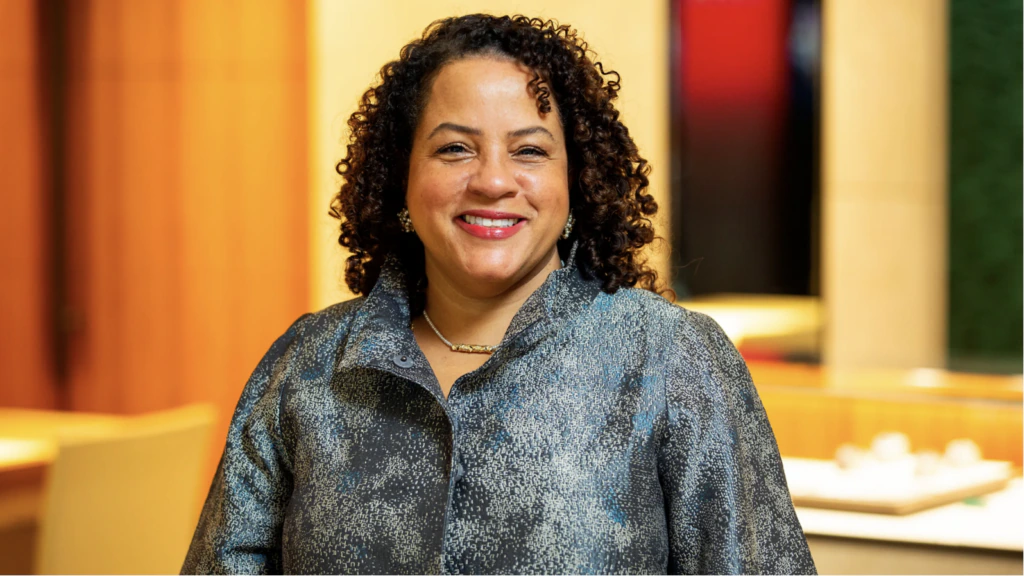
“The series of executive orders released by the White House has attempted to censor us and tell us what we can say, and what history we can celebrate. These executive orders have also attempted to tell us who we can hire, who we can honour and how we should behave in our communities.
Advertisement
“And the executive orders have slashed federal funding. Hundreds of millions of dollars have been lost in a variety of agencies, and we’re now also facing state and local funding cuts.”
But Jackson did end on a more positive note, highlighting how the sector can work together and the support that AAM can provide. She cited advocacy work and helping museums understand how the executive orders might impact them, including what might be done to challenge and possibly reverse some of the decisions.
The three federal agencies supporting the cultural sector that have been targeted by Trump’s executive orders are the Institute of Museum and Library Services (IMLS), National Endowment for the Arts (NEA) and National Endowment for the Humanities (NEH).
On 2 May, a few days before the AAM conference started, the NEA began terminating grant awards to museums and other cultural organisations. This was similar to earlier actions by IMLS and NEH. Staff numbers have also been slashed at these agencies.
Cancellation of grants has hit the US sector hard. Museum Hue – which supports Black, Indigenous, Latino, Asian and all people of colour in the arts – is among the many that have lost its IMLS grant.
In a letter to supporters, executive director Stephanie Johnson-Cunningham wrote: “While not entirely unexpected, given the direction of the current administration, it is still devastating. In 2023, Museum Hue was awarded one of the most competitive federal opportunities in our field – an IMLS National Leadership Grant for HueCultures National: Northeast.
Advertisement
“This $545,896 grant, awarded over three years, was designed to support research on the impact and needs of museums founded and led by Black, Indigenous, Latino, Asian and all people of colour.
“The irony is not lost on me: the very research we were conducting about the challenges, and systemic underfunding of culturally specific institutions – is now being interrupted by the same forces we’ve been naming and working to change.
“In a painful yet powerful full-circle moment, the termination of our grant confirms the urgency of the work we’ve committed ourselves to.”
Starting to fight back
The bewildering number of executive orders (directives issued by the US president over the management of federal government) and other actions taken by Trump since taking office on 20 January has made it difficult for the museum sector to respond. But there are signs that cultural organisations are beginning to fight back.
The AAM conference coincided with an announcement that the Andy Warhol Foundation for the Visual Arts and the Helen Frankenthaler Foundation are providing $800,000 to support 80 small and mid-sized cultural organisations across the US to continue with community-based visual arts programmes that were in danger of being cancelled due to financial uncertainties.
Advertisement
All the programmes had been receiving grants through Challenge America, a longstanding NEA initiative designed to extend the arts to underserved communities, which was abruptly suspended in February. NEA-supported initiatives have since been threatened further with the federal administration’s recent proposal to axe the NEA in 2026.
The news of this support followed an announcement by the Mellon Foundation on 28 April that it was providing $15m of emergency funding to the Federation of State Humanities Councils to address the impact of federal funding cuts for state humanities councils. This money will help provide support to all 56 of the US’s state and jurisdictional humanities councils.
Mellon Foundation president Elizabeth Alexander said: “The places where communities come together to read, learn and engage with the humanities’ vast and varied forms of knowledge and creativity are often those supported by these councils.
“At stake are the operational integrity of organisations like museums, libraries and historical societies in every single state, as well as the mechanisms to participate in the cultural dynamism and exchange that is a fundamental part of American civic life.
“While Mellon’s grant-making will not cover the entirety of these cuts, we stand side by side with the 56 humanities councils across the US and remain deeply committed to the work they lead on behalf of us all.”
Some museum leaders have issued bold statements criticising Trump’s decisions (see box), including his executive order, Restoring Truth and Sanity to American History, which critics say aims to alter how the US
story is told at the Smithsonian Institution and at Department of Interior monuments, memorials and statues.
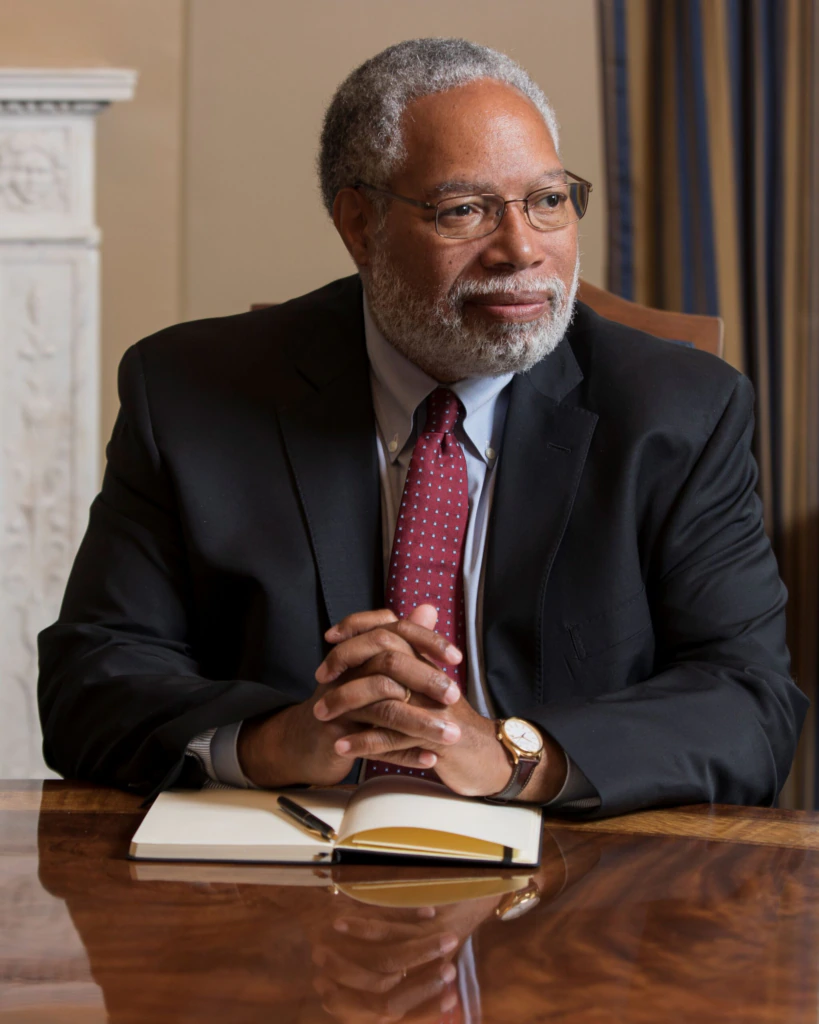
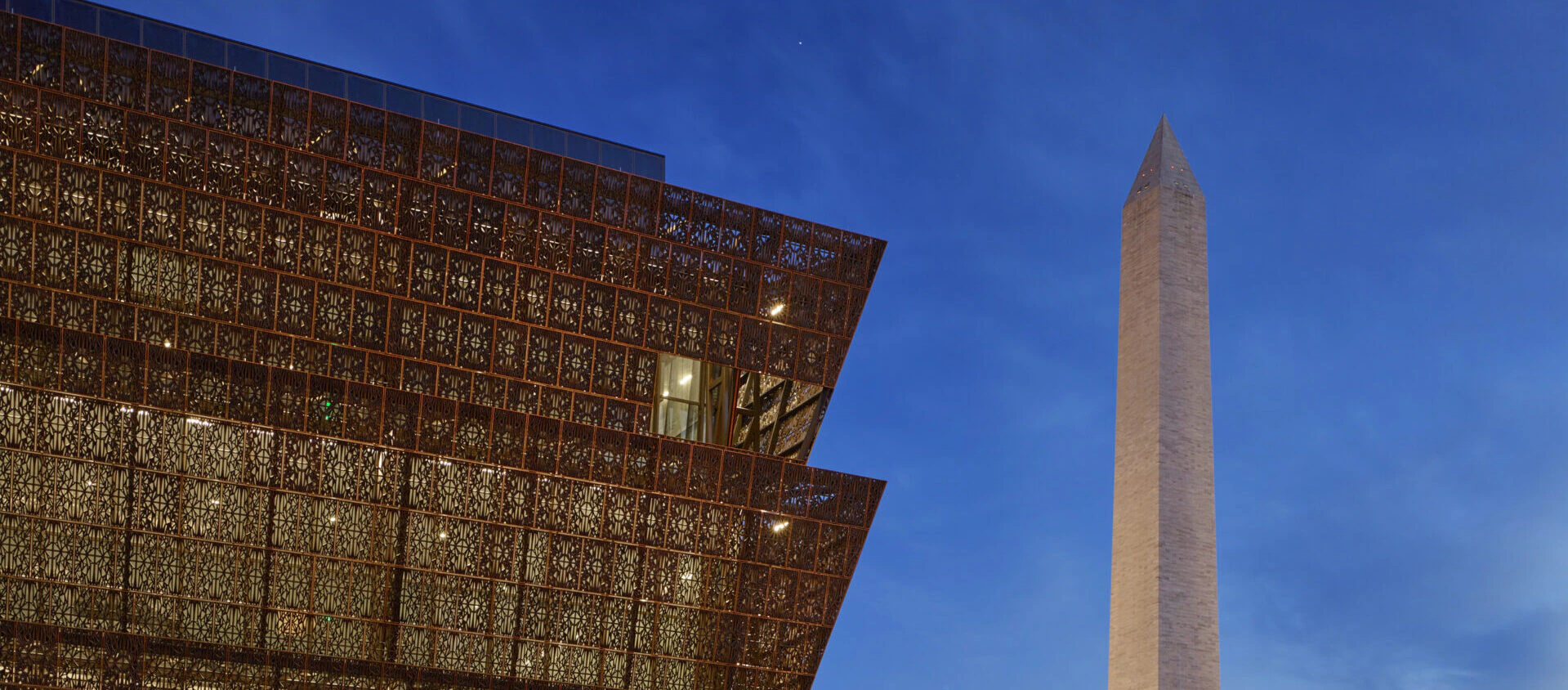
Lonnie Bunch, the secretary of the Smithsonian Institution, has affirmed the organisation’s commitment to scholarship and research, following the executive order that directed the removal of “improper, divisive or anti-American ideology” from Smithsonian sites.
In a message to Smithsonian staff following the order, Bunch said: “We remain steadfast in our mission to bring history, science, education, research and the arts to all Americans. We will continue to showcase world-class exhibits, collections and objects, rooted in expertise and accuracy.
“We will continue to employ our internal review processes, which keep us accountable to the public. When we err, we adjust, pivot and learn, as needed. As always, our work will be shaped by the best scholarship, free of partisanship, to help the American public better understand our nation’s history, challenges and triumphs.”
Fluid situation
But the relentless nature of the upheaval in the US cultural sector was further demonstrated on the last day of the AAM conference with the news that Trump had fired the head of the Library of Congress in Washington DC. News agency Reuters reported that the White House said Carla Hayden lost her job partly over her commitment to diversity.
Hayden was the first women and first African American to be the head of the Library of Congress. The library is the main research arm of the US Congress.
More recently, Kim Sajet, director of the Smithsonian’s National Portrait Gallery, resigned. This happened two weeks after Donald Trump tried to fire her and accused her of being “highly partisan and a strong supporter of DEI”.
Back in Los Angeles, some arts organisations have responded to the city’s anti-Trump protests.
In a statement to its community issued in mid-June, the Institute of Contemporary Art (ICA) said: “ICA LA’s mission is to upend hierarchies of race, class, gender, and culture; foster empathy with the different; and be a safe space for people to gather, learn, and transform. We stand in solidarity with those peacefully protesting the unjust deportation of undocumented immigrants and the unconstitutional military presence in our city.”
In such a fluid situation, the long-term impact of the Trump administration’s decision over culture is difficult to predict. The funding that supports museums in the US is complex, with government support coming from local, state and federal sources.
Overall, government support as a percentage of total income has been falling over the past 20 years, according to AAM figures. Revenue from investments and private sources is far higher than in many countries, although this does vary hugely by museum.
But the future of museums in the US feels deeply precarious, particularly their diversity, equality and inclusion work. And Trump’s administration is only six months into a four-year term.
‘We need a more just America’
Ann Burroughs
Chief executive and president of the Japanese American National Museum
The mission of the Japanese American National Museum (JANM) is to “promote understanding and appreciation of America’s ethnic and cultural diversity by sharing the Japanese American experience”.
As one of many US museums that reflects the fact the country is a nation built on immigration, the organisation said it was “deeply concerned by efforts to erase the contributions of people of colour, women, LGBTQIA+ people, and other marginalised communities”.
Ann Burroughs, its chief executive and president, has been among the US museum leaders to sharply criticise the Trump administration’s policies on museums.
Burroughs’ commitment to racial and social justice was shaped by her experience as a young activist in her native South Africa, when she was jailed as a political prisoner for her opposition to apartheid.
“We cannot reverse course on our nation’s journey towards a more just and equitable future,” wrote Burroughs in a statement issued in early April.
“Museums like JANM create educational opportunities for younger generations to grapple with complexity. They invoke a sense of social obligation, and encourage action to protect democracy and foster empathy.
“When the 14th secretary of the Smithsonian, Lonnie Bunch, spoke at JANM, he reminded us that ‘the great strength of a nation is looking at its past, learning from that past and using that past to point us toward a different future’.
“Widespread dismantling of federal agencies that support our work and the attempts at the wholesale erasure of history will not help us achieve a more just America.
“History does not yield to censorship or political ideologies. It thrives on critical thinking and depends on new evidence and interpretation.
“It demands honest, open conversations – and a commitment to having an evolving understanding of how the past shapes the present and the future.
“We must continue to embody our mission, carry the lessons of history forward and celebrate the richly diverse stories and untold histories.”