
Sometimes you can wait forever for things to change and then, suddenly, everything happens all at once. After many long years of what often felt like stagnation, that’s the feeling among England’s museum leaders at present.
The sector is waiting to see what will emerge from the Arts Council England (ACE) review and the proposed unitary reorganisation and devolution of local government, two major developments that could together change the way in which regional and local museums are supported in England.
There is also the UK Government’s Spending Review, which saw the Department for Culture, Media and Sport get a 1.4% cut, although rumours of its demise turned out to have been exaggerated. And there is the ongoing, UK-wide Accreditation review to contend with (see box), which could affect day-to-day working processes in museums at a more granular level.
What is the scope of the Accreditation review?
- Reviewing and updating the outcomes for Accreditation
What does the sector want to achieve from Accreditation, what is its unique purpose and how does ACE focus the scheme on this?- Updating the Accreditation Standard
The Standard has not been updated since 2018, with the intervening period seeing huge changes for museums, the wider cultural sector and society. Work to collaboratively review and update the Standard will follow on from an initial discovery phase.- Redesigning the process for application and assessment
Listening to user experiences to understand how to make the processes for application, assessment and award less onerous will be a top priority.- Improving use of data
Improving data capture, quality and insights for participating museums, UK Accreditation partners and other stakeholders.
In March, the arts council announced that, in light of these various changes, its planned timeline for the National Portfolio would be pushed back a year, with the next round of investment not beginning until 2028. Meanwhile the consultation period for the review itself has been extended until 30 June.
Arm’s length principle
The review of the arts council has shifted shape since it was first announced in 2024 under the previous government, with Conservative peer Mary Archer as chair.
Advertisement
The review was initially prompted by lobbying from a number of large cultural organisations unhappy with some of the changes introduced in the current National Portfolio. It had been tasked with examining whether the arm’s-length body was fit for purpose.
Following last year’s general election, the new government vacillated for a while on whether to proceed with the review, before eventually announcing a new chair, Labour peer Margaret Hodge, last December.
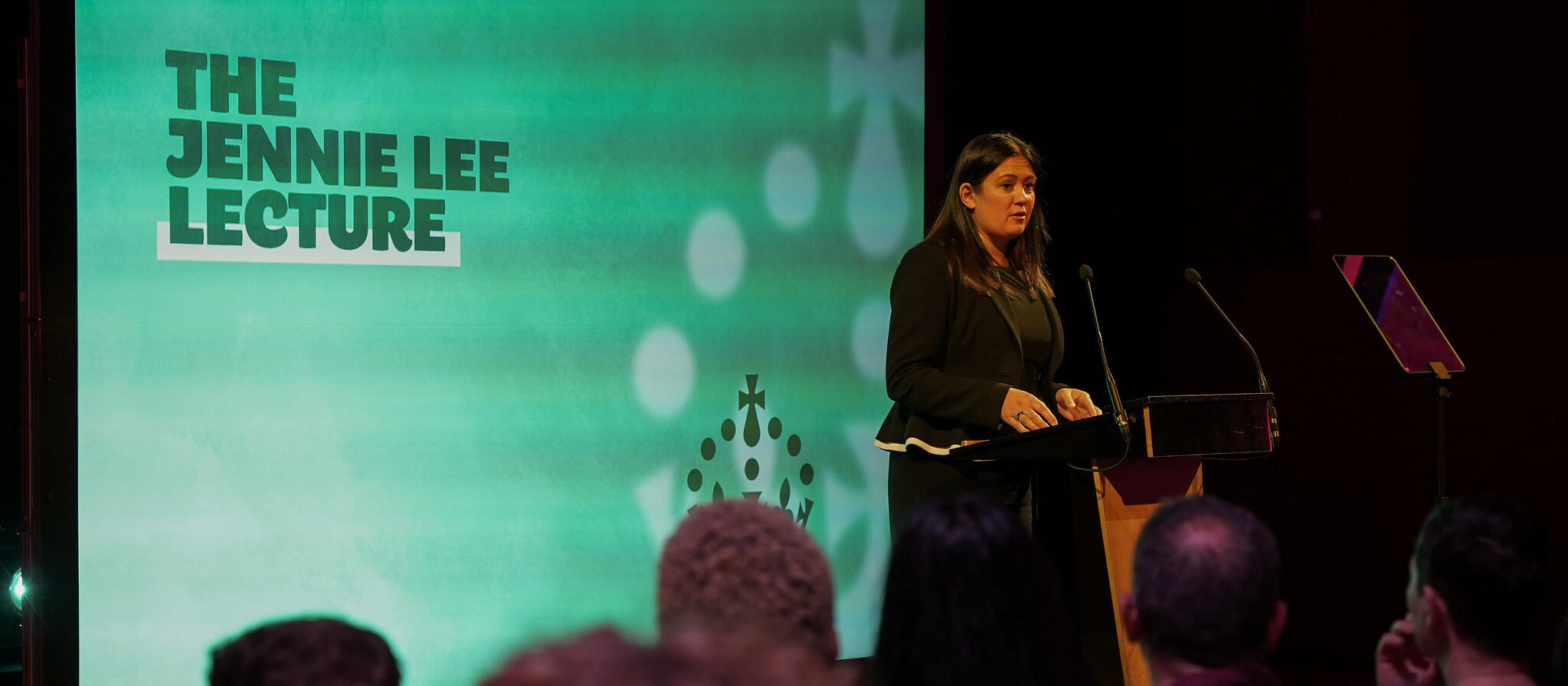
Hodge is leading an advisory panel of seven other members, which includes National Museums Liverpool director Laura Pye, and has been given a remit to explore the purpose and structure of ACE.
Unlike its previous iteration under the Tories, the review has not been tasked with looking at the “question of whether ACE should exist”. However, it will examine how well the arm’s-length principle is working, focusing in particular on “how decisions about arts and culture funding can be protected from short-term political expediency”.
Along with ACE’s purpose and structure, the review will consider the body’s activity and decision-making; working relationships and partnerships; and the relationship between the arts council and government.
It will examine questions such as the role of ACE in the wider cultural ecosystem, whether the principle of delivering excellence and access is embedded in its work, and whether regional intelligence and expertise are sufficiently integrated into its structures and processes.
Advertisement
The panel will also consider how ACE defines and fulfils its role as a development agency and advocate for creativity and culture, including museums, and how it leads the sector in relation to the update of new technologies and innovative approaches, as well as taking risks.
There is no doubt that the panel will be hearing some strong views on these matters during the ongoing consultation. But in the museum sector, at least, there is generally a positive feeling towards the arm’s length body, particularly the role it played in securing the £20m Museum Renewal Fund announced by culture secretary Lisa Nandy in February.
Aimed at civic museums in financial difficulty, the scheme is the arts council’s first revenue funding package specifically for museums.
“The arts council’s museum team have done a really good job over the last couple of months,” says Tony Butler, the head of Derby Museums Trust, who led on calls for the rescue package ahead of last year’s budget.
“They have been really proactive in building a head of steam for the renewal fund and did a lot of sterling work to get it over the line.”
Radical redistribution
The current National Portfolio round may have proved controversial, with its radical redistribution of funding away from London and decision to spread investment more broadly but thinly across organisations, but there is no doubt that museums mostly benefited from these changes.
Advertisement
The Yorkshire Moors Railway in Pickering and the National Football Museum in Manchester were among the new organisations welcomed into the portfolio. The funding has made a big difference in areas where there is scant cultural provision. There is also a feeling that the arts council’s 10-year strategy, Let’s Create, aligns well with the work of museums.
That’s not to say there aren’t areas that could improve in the funding body’s relationship with the sector. Some museum leaders feel that the arts council still lacks understanding of how best to support and get the most from collections, having been mainly tasked with supporting performance and buildings before it took over the remit for museums in 2011.
“They get that we’re running exhibitions and public facing work, but the fact that we’ve got collections and need to abide by a whole lot of other complicated regulations – they haven’t quite got that yet,” says one museum director.
The director would also like to see the arts council take a “more dynamic” approach to its role as the national development agency for museums, with extensions to the successful schemes it runs such as the Cultural Gifts Scheme and Acceptance in Lieu.
There is also a question mark over how profound the questions asked in the review really are, and whether it will be radical enough to really transform how cultural provision is supported by central government.
Local government
One of the biggest questions for the arts council will be how it operates in a drastically changed local government landscape. The reorganisation of two-tiered local authorities into much larger unitary councils, with a wider range of devolved spending powers, could be the biggest transformation to local cultural provision in decades.
The government estimates that the 59 new unitary authorities being proposed, which would replace 185 smaller two-tier councils, could save £1.8bn over five years.
Splitting cultural provision between multiple smaller councils often puts museums at a disadvantage – for example, a large museum serving a wide population may only receive funding from a second-tier authority – and there are hopes that the move could unlock greater and more streamlined investment in local culture.
“It’s going to have a big impact on how culture is funded and it will be important to ensure ACE is aligned to these new changes,” says the museum director.
It’s only natural that there is some apprehension in the museum sector about what lies ahead, and there is no doubt that the difficulties of the past decade have left behind a lingering sense of pessimism. But change is in the air. Could it be that, this time, it might just make things better?
Challenges and opportunities
“Throughout the coming year, we are looking ahead to a mixture of opportunities and challenges. Our country’s diverse and brilliant museums are as important now as ever and our work in 2025 will continue to champion and support the value and impact of museums and collections.
In the coming months, much of our work is focused on ensuring our support is relevant and responsive to the changing environment museums are operating in.
We are offering an additional £45m of financial support to museums (on behalf of the Department for Culture, Media and Sport) through the recently announced Museum Renewal Fund and a new round of the Museum Estates and Development fund. We are committed to improving the user experience of the schemes for Government Indemnity and Museum Accreditation.
This changing environment for museums, coupled with the Government’s spending review and the independent review of the arts council, means many of our museum colleagues will understandably be experiencing uncertainty.
We are working with our partners to support them through this wherever possible. We know that when museums up and down the country flourish, so do the creative and cultural lives of all those who enjoy them.
That’s why, while our work is often complex, the drive behind it is remarkably simple: to support museums doing what they do best – bringing unique cultural experiences and collections to the heart of communities they serve.”
Liz Johnson is the director, museums and collections, at Arts Council England


Would ACE not be better to focus on supporting museums through the uncertain minefield of local authority proposed unitary reorganisation / devolution of local government where no exit strategy has been prepared for some museums, rather than spending the time in another Accreditation review and update, which will then have to be reviewed again once the local government chaos has been achieved, or failed?