It’s a big story in a tiny space, and one that completely transformed the constitution of the UK.
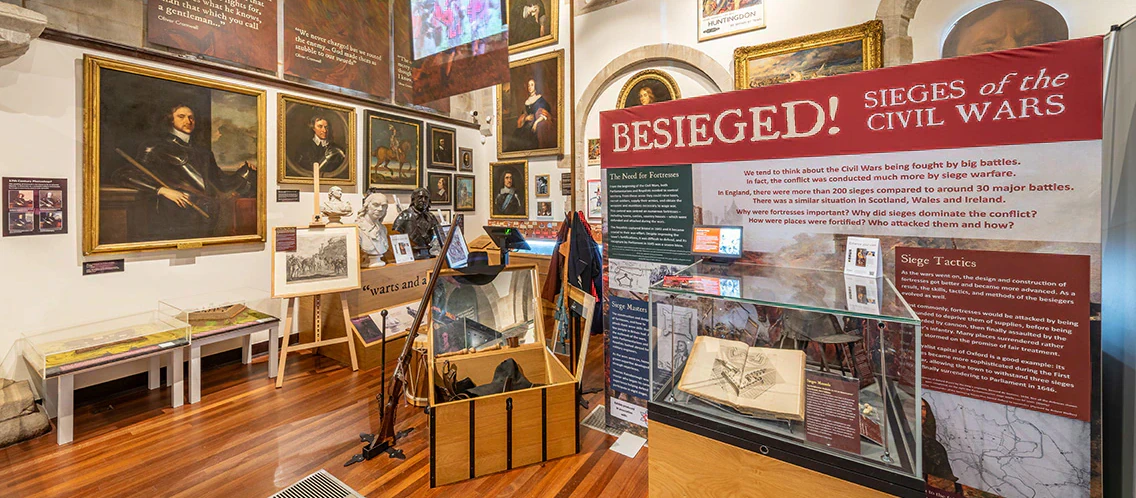
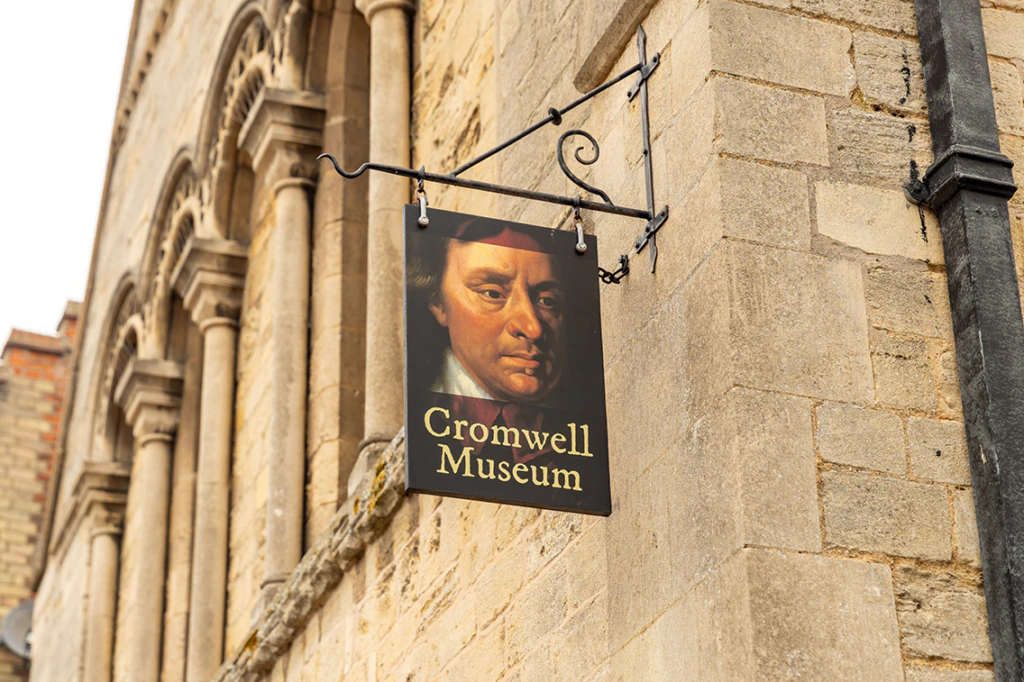
The Cromwell Museum in Huntingdon, Cambridgeshire, has to fit a lot into a small footprint. It is just 17-sq m and is packed with historic 17th-century items telling the story of the political and military leader Oliver Cromwell (1599-1658).
The museum is already focused on the man himself, so a temporary exhibition like Besieged (on until 4 April 2027) must slot in among the permanent displays, splicing in extra information to create layered interpretation.
Visitors are met with a large panel showing the exhibition title, in-depth interpretation in large type, and a QR code to access the Bloomberg Connects platform, which the Cromwell Museum joined in February this year. The Besieged exhibition will be added to the digital offer soon but is not there yet.
If visitors choose to maintain the non-digital experience, the Besieged interpretation is clearly identifiable among the permanent displays, meaning that visitors familiar with the museum can easily select what’s new to read.
The complex nature of the subject matter is drawn out sensitively, with broader information at the top and plenty more detail in smaller panels underneath, followed by wonderfully rich interpretation next to the objects on show.
Advertisement
To demonstrate, the first panel begins thus: “We tend to think about the Civil Wars being fought by big battles. In fact, the conflict was conducted much more by siege warfare. In England, there were more than 200 sieges compared to around 30 major battles. There was a similar situation in Scotland, Wales and Ireland.”
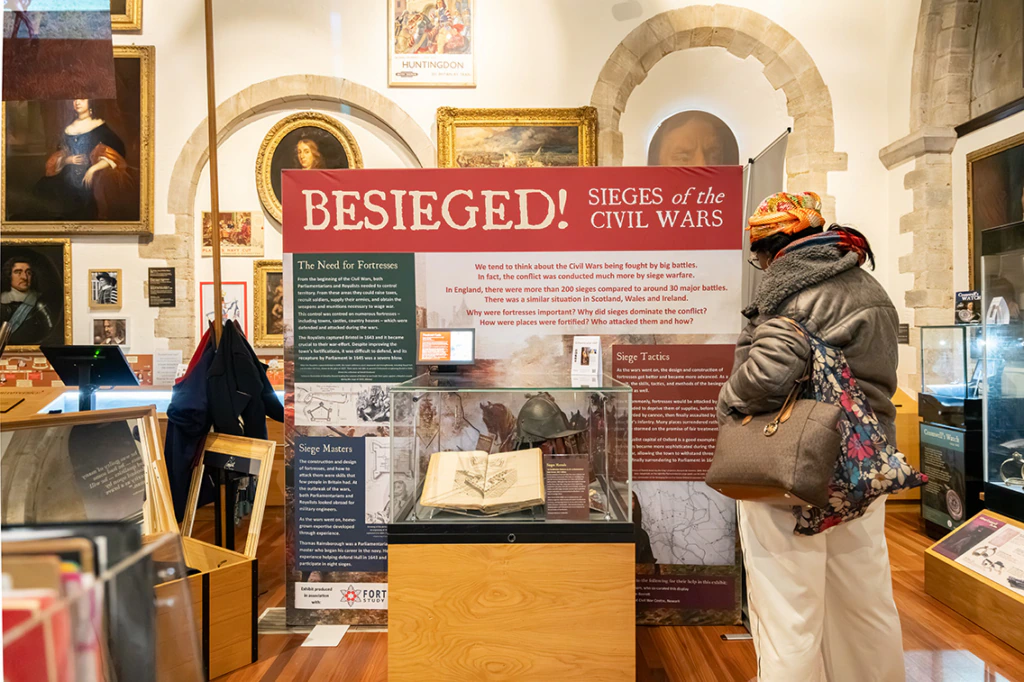
Then you can delve into the iPad detailing geographic locations and sieges that took place there or move onto a bigger hard copy panel explaining siege tactics, or one on fortress construction.
Treasure trove
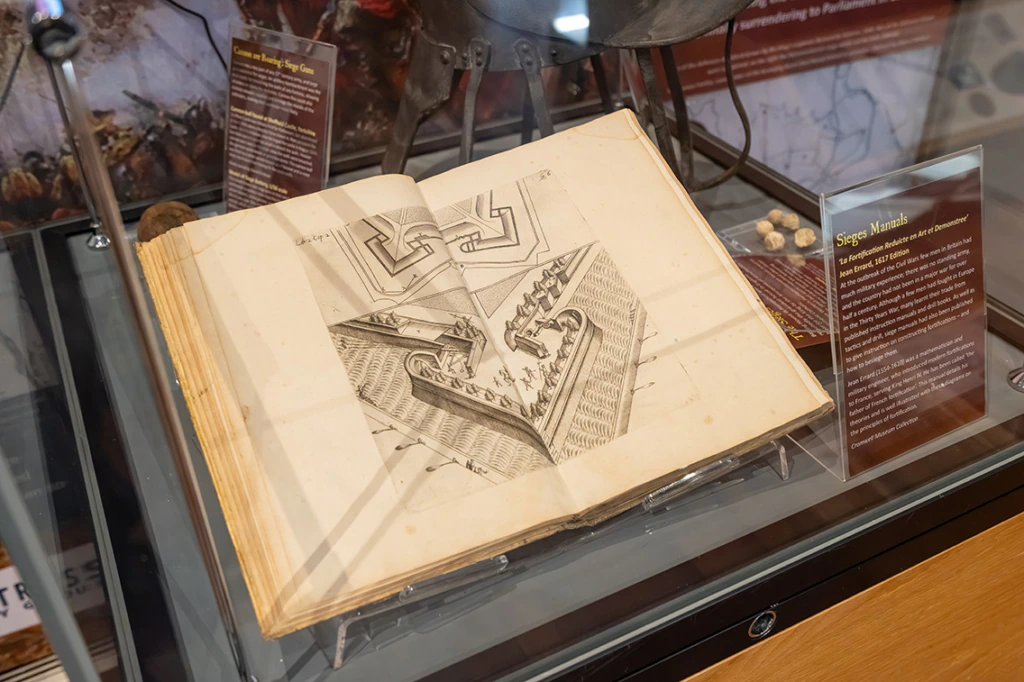
The display case that sits in front of the main introductory panel holds a small trove of fascinating objects, including a 17th-century book by mathematician and military engineer Jean Errard showing a large, illustrated example of a fort with soldiers shooting from behind fortifications.
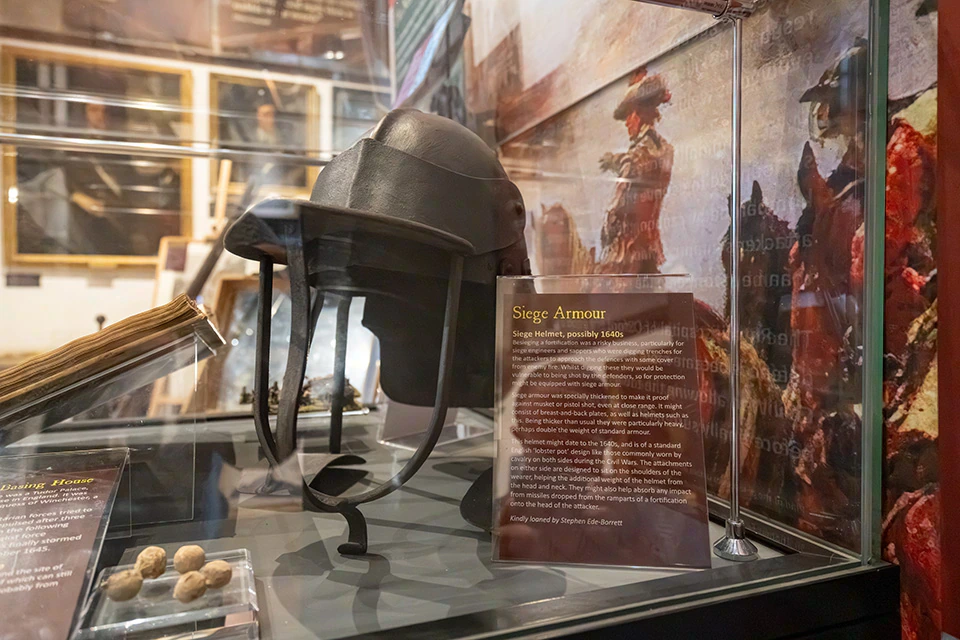
The amount of research into the machinations of siege warfare is evident from the volume of in-depth information this exhibition presents. Also in the same case is a sturdy iron siege warfare helmet, as well as some musket shots, and more.
The iPad goes further into detail on royalist and parliamentarian strongholds, and siege geographical locations and dates. From Skipton Castle to Plymouth, Corfe Castle, Newark, Oxford and more, this small screen delivers an incredibly stark reminder that the civil war really was nationwide, and across all four nations.
Advertisement
It was a war of ideologies, not just the a dynastic struggle of the kind the British Isles had seen many times before. This was about the rights of the common man, 150 years before The Rights of Man by Thomas Paine came out in 1791.
War of attrition
It is a matter of debate among historians whether the English Civil War could actually be thought of as an English Revolution.
After all, it has all the trappings of a revolution: a commonly felt anger, an uprising, ideological enemies, a regicide and the instalment of a new leader – a military strongman – at the head of the new governing power.
In this vein, it is interesting to note that the American Revolution embarked on its split from the ruling power of the British monarchy just over 100 years later, from 1765-1783, and the French Revolution just after that, in 1789-99, all following extremely similar patterns. Those countries have no trouble using the word "revolution".
Anyway, King Charles I believed in the divine right of the monarch and had been ruling for 11 years without the help of parliament. It has been dubbed the “Eleven Year Tyranny”.
Advertisement
During this time, the king instituted ancient and contentious taxes (such as Ship Money), which angered many of the newly growing and upwardly mobile middle class of landowners and merchants.
He also enjoyed a high church version of Anglican religion, which had led many citizens to think he had papal sympathies and eventually wanted to rejoin Rome’s Catholic church. Presbytarian Scotland became particularly inflamed with a rebellion leading to the so-called Bishops’ Wars of 1639-40.
Charles had led the country into a downward spiral of taxes, aggressive religious reforms and suppression of political dissent, with just one man at the top. He finally recalled parliament, much to his regret, as they executed all the king’s advisors and ruled that his divine right was not so divine any more. Parliament, in fact, had power over him.
The king made a run for it, raised his flag in Nottingham while Cromwell raised his first band of troops and the first siege of the war began soon after. Many of Charles’s Royalist strongholds were to the north and west of England, while parliamentarian territory was generally to the east and south.
The museum describes Oxford as a particularly belligerent Royalist stronghold, managing to withstand three sieges before it surrendered in 1646. The interpretation also explains that many towns and cities surrendered to the Parliamentarians, rather than be stormed, on the promise of fair treatment.
Fire power
The exhibition also explores siege explosives – fire pots, “grenadoes” and petards – which were generally different shaped clay pots with gunpowder or flammable liquid inside, sealed shut and slung at the enemy.
There is ambient soft noise that comes from a projection on a high up banner with military instructions going to reenactors of the civil war. I enjoyed having a bit of contextual background noise, but others might less so.
Interpretation panels are large and very readable, and the smaller panels in display cases are perfect height for wheelchair users. However, for an average woman of 5”5’ height I found myself bending, crouching and then sitting on the floor to read them. I must say that this is not something I mind doing in the slightest, but could prove difficult for some.
And it was great to see that my black boots were not the tiniest bit dusty from the wooden floor on standing up (which can too many times be the case when you're a serial sitter-downer). The museum is obviously in extremely good nick and kept beautifully clean.
Sitting on the floor or not, I was rapt in this exhibition for over an hour. Small but mighty. And the English Civil War is much the same – educationally speaking, it remains a poor cousin to the world wars of the 20th century and does not major on any school curriculum.
So, in essence, I urge you to visit this wonderful, small show at the Cromwell Museum. It details the beginning of the English constitution, and gives an important insight into a war that involved all four nations and may even be seen as a forerunner to the American and French revolutions.
The exhibition engages visitors thoroughly with a different time – and it has some really cool objects on display too.
Project data
Cost
£1,200
Main funder
Cromwell Museum
Exhibition design
Stuart Orme, director of the Cromwell Museum
Display cases
Existing museum cases, originally Showguard
Digital screen
Beetronics
Co curators
David Flintham; Stuart Orme
Lenders
National Civil War Centre, Newark; Stephen Ede-Barrett
App and digital guide
Bloomberg Connects
Admission
Free