Twentieth-century Scottish painters Francis Campbell Boileau Cadell, John Duncan Fergusson, Samuel John Peploe and George Leslie Hunter were great friends. Deeply influencing one another’s lives and artistic practices, as a quartet they changed the trajectory of Scottish art. Surprisingly, however, they exhibited together only three times while they were alive.
In 1948, for one of their collective exhibitions in Glasgow, they were dubbed the “Scottish Colourists” for the first time. In another first, Perth Art Gallery’s current exhibition, The Scottish Colourists Revealed (until 26 October), displays works from the four men that have been tucked away for years, if exhibited at all.
Already aware of their vibrant, groundbreaking approach to art, I was curious about their lives and personalities. For this reason, I would have liked to have seen portraits of the four artists alongside their short biographies displayed at the entrance to the exhibition. This would have helped me to have distinguished one from another while observing their artworks. However, the curator makes up for it by offering the viewers various tantalising glimpses into their lives.
An African palette
The colourists’ techniques were considered shocking by contemporaries, as they broke with previous conventions by using bold brush strokes and non-naturalistic, intense colours and contrasts. The influence of African abstraction on Spanish artist Pablo Picasso, based in Paris at the turn of the 20th century, has been well documented. Although it was not mentioned in the exhibition, African sculpture and masks directly influenced the French art movement of Fauvism, and the Scottish Colourists indirectly, in turn.
The Fauvists collected African masks and studied their techniques of abstraction. The term Fauvism, derived from “fauve” (meaning wild beast), referred to the artists’ use of pure, unmixed pigments to convey emotional intensity, and was popularised by French artists Henri Matisse, André Derain and Maurice de Vlaminck.
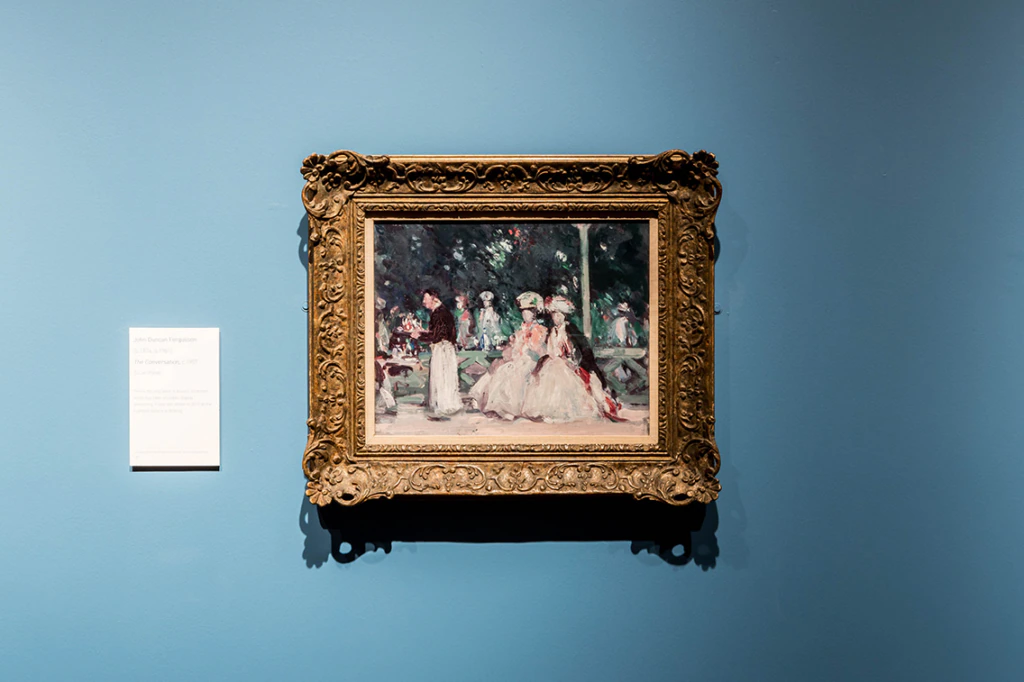
The four Scottish Colourists all spent time in Paris at the time Fauvism was developing. The artworks showcase the influence of the Fauvists on the Colourists’ practice, and a displayed quote from Fergusson showed his appreciation of Paris as a non-judgemental environment that allowed them intellectual and artistic freedom.
Advertisement
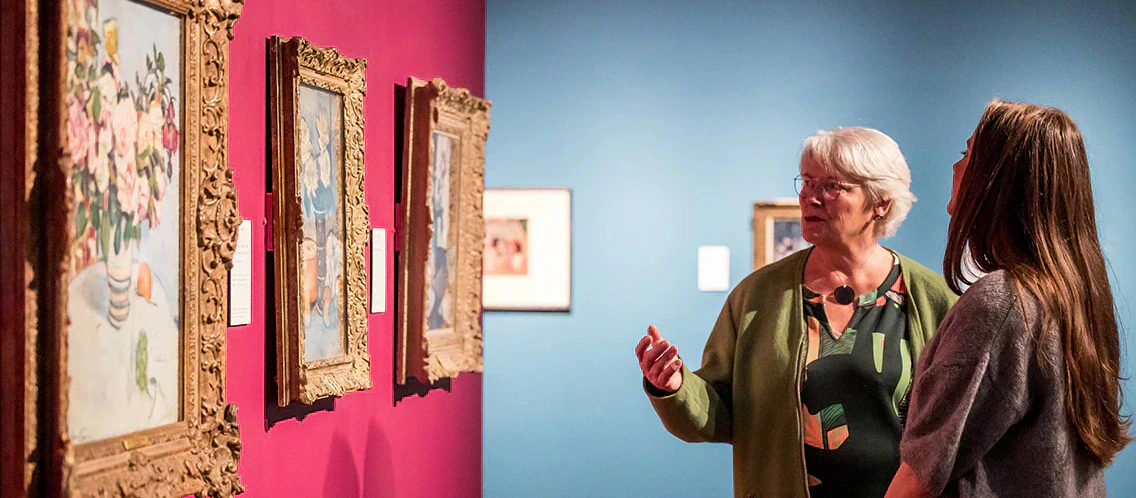
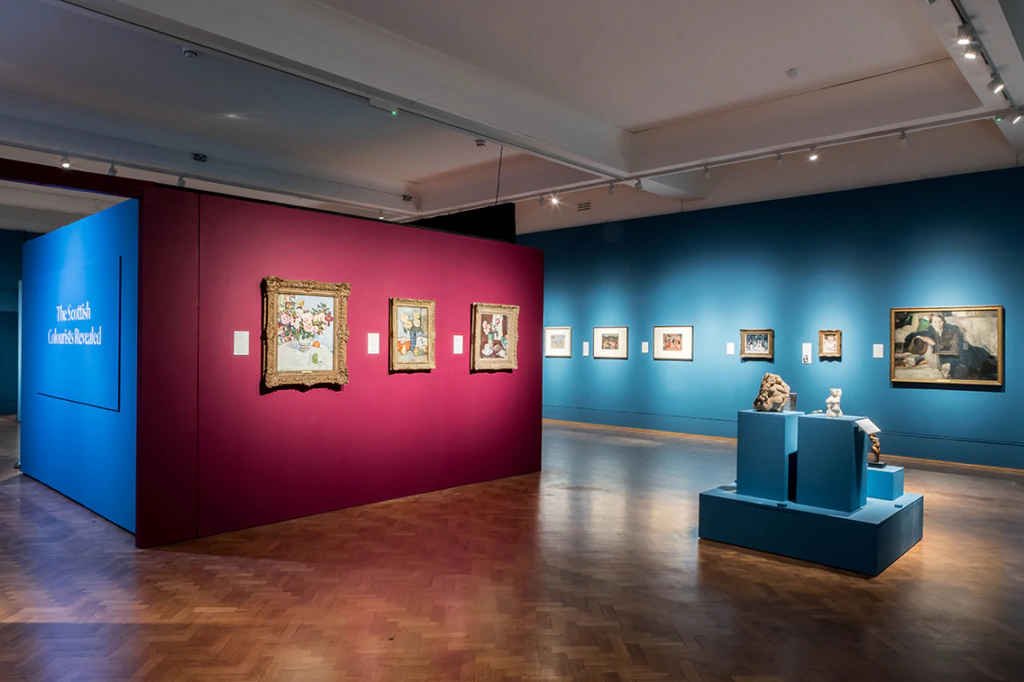
The soft lighting not only displays the paintings at their best, but creates a calming atmosphere for viewers. The dark turquoise walls evoke the sea in the south of France or a sunny day in Scotland’s Western Isles. As my visit took place at midday on a Thursday, away from the better-known tourist traps of Scotland, there was only a handful of other visitors and they were clearly Colourist enthusiasts.
White Scottish, middle-class and of retirement age – the expected audience for a provincial Scottish gallery – they were taking their time to absorb, enjoy and discuss their favourites as they walked around. The panels are placed at an accessible height for all, but the fonts could do with being a little bigger to accommodate older visitors and those with minor visual access needs.
Intimate portraits
Fergusson was the only sculptor in the group, and I enjoyed coming across an intriguing collection of his works, mainly of the female form. The small collection was artfully placed in conversation with paintings of glamorous women enjoying life in Paris by Fergusson and more intimate, reflective portraits in Cadell’s studio in the upscale New Town of Edinburgh.
The paintings are surprisingly effective at conveying a range of feelings, and their use of colour even manages to depict Scottish landscapes from a century ago as bright, cheerful and modern looking. Peploe’s Kirkcudbright is one such example, clearly influenced by post-Impressionist artist Paul Cézanne while in Paris.
There are landscapes from across Scotland at a time when travel was not so easy. Fergusson, however, was one of the first people to own and drive a motorcar. This allowed him the unusual freedom to travel easily and quickly around the Highlands in 1922 and 1928, leading to his first solo exhibition.
Advertisement
It struck me that middle-class men with leisure time and the ability to spend months away following their artistic pursuits would have enjoyed the kind of freedom that others still find difficult. However, even middle-class men had struggles to face in the 20th century. Cadell was said to have been forced to hide his homosexuality and ended his life in a state of penury. Three of the four artists also fought in the first world war.
Fergusson’s striking and symbolic Three Submarines is emblematic of the time. As a critic of patriotism, he was lucky to escape the draft – ironically by creating propaganda for the War Office in 1918. A humorous ink and watercolour painting showing naval and military fraternity was part of a series sold to raise money for the Red Cross.
The others who served must have been scarred by what they saw. Cadell wrote to Peploe during their service to plan their own emotional recovery from war with a trip to Iona in the Western Isles. They followed through with their idea on many occasions, and there’s a beautifully curated wall that pulls together island landscapes from all four artists.
A short film serves as a succinct introduction to the significance of their work. The overview is narrated by art historian and curator Alice Strang, whose upcoming publication on the Scottish Colourists is eagerly anticipated. It’s on a loop and makes sense at whatever point you catch it, and you can choose to watch it at any point during the experience of the exhibition.
A map of Scotland would have been a useful addition, however, especially for visitors who might struggle to locate the places where the men were born, lived and painted.
Advertisement
If you arrive in Perth by train, it’s a 15-minute walk to the gallery. There are just a few steps at the main entrance and a ramp for wheelchairs. It’s a small exhibition, but if you need a rest, there’s a bench in the first corner of the room and another where you can watch the film in comfort. The gallery is closed on Tuesdays and Wednesdays, so be warned if you plan to visit Perth midweek.
It’s a lovely wee exhibition, and well worth a visit to the gallery as part of a trip to the city. I came away with a great appreciation of the Colourists’ influence on Scotland and the wider art world, a peek into their lives and friendships, and even how to pronounce “Cadell” properly.
Lisa Williams is the founder of the Edinburgh Caribbean Association, promoting the shared heritage between Scotland and the Caribbean. She is a research associate at the Royal Botanic Gardens Edinburgh and an honorary fellow in the School of History, Classics and Archaeology at the University of Edinburgh
Project data
Cost
£10,600
Main funders
Perth & Kinross Council; Aviva Insurance; Lyon & Turnbull Fine Art Auctioneers
Concept
Amy Fairley, Culture Perth & Kinross
Exhibition design
Niamh Finlay, Culture Perth & Kinross
Production and build
David Freeburn, Culture Perth & Kinross
Graphic design
Paul Ritchie, Culture Perth & Kinross
Interpretation
Alice Strang, Lyon & Turnbull
Conservation
Anna Zwagerman, Culture Perth & Kinross; Sylvia Krauss, Sylvia Krauss Paintings Conservation
Project management
Paul Adair and Rhona Corbett, Culture Perth & Kinross
Transport
Constantine
Exhibition ends
26 October
Admission
Adult £6; Concessions £4.50