We humans have always had a need to understand the complexities of our bodies and how to treat what ails us. But we are not infallible and throughout history there have been hits and misses. Societal norms, religion, racism and fear of the unknown have shaped our interactions and thoughts around blood. Rag: A History of Blood tackles these themes.
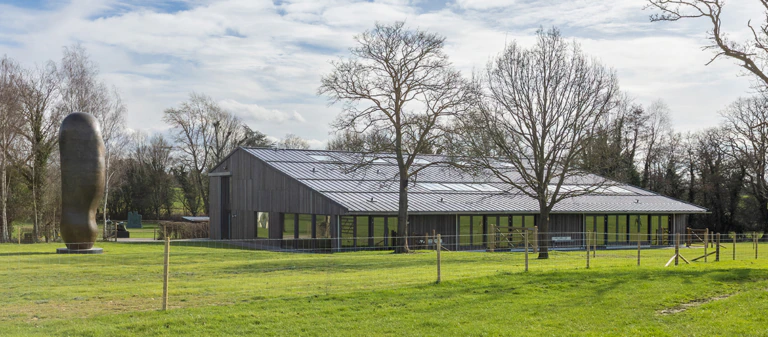
The Physicians’ Gallery is in the Royal College of Physicians of Edinburgh on Queen Street. The building is striking, with a facade resembling a Greek temple with Corinthian columns and carved statues of Hippocrates (the “Father of Medicine”), Asclepius (the Greek god of medicine) and Hygeia (the Greek goddess of health). Fitting for the profession that it houses.
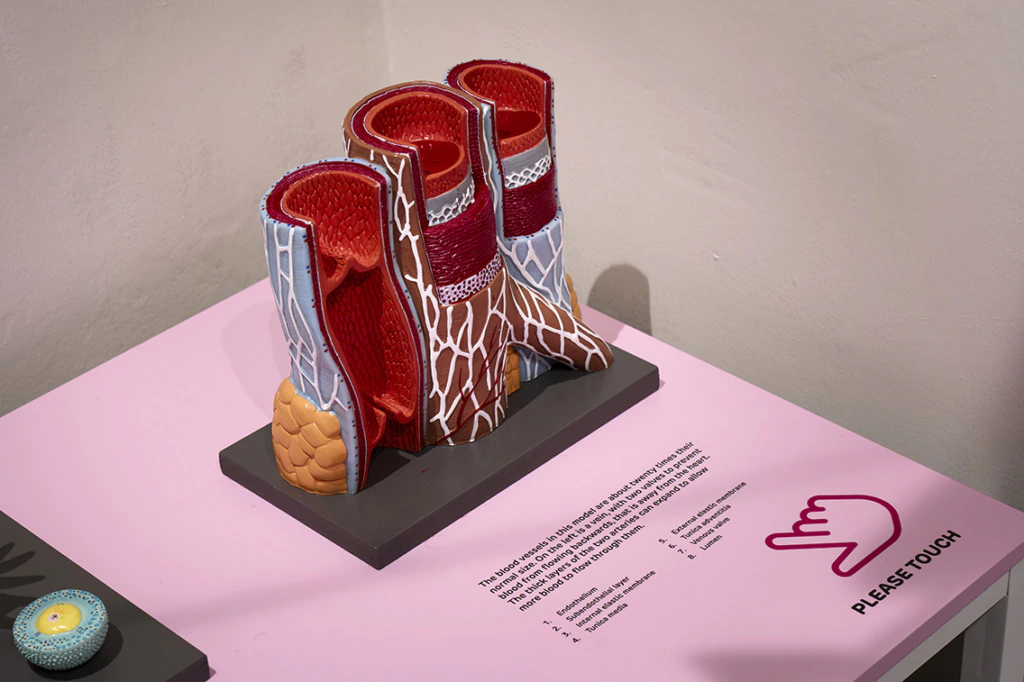
As you walk into the exhibition, you are greeted by a bright-pink poster that reads “Rag: A History of Blood” with a blood-stained rag on top, as if it were casually tossed there. If you look on the floor, you’ll see wording and an arrow telling you to go left. I didn’t look down and went the “wrong” way. I noticed most visitors also turned right because they were attracted to the tactile displays, including organ models and textiles.
I am glad that I took the detour because one of the first panels I encountered discussed blood transfusions and illnesses transferred through medical practice. The exhibition discusses how the transfusion of contaminated blood in the 1980s saw patients infected with HIV. It wasn’t something I knew much about, so I appreciated the audiovisual displays on the other side of the gallery where visitors can hear first-hand accounts from people who contracted HIV. It was moving and I found myself listening to them all. One Edinburgh-based doctor spoke about the stigma around working with children with HIV and how even medical professionals reacted with fear.
The exhibition highlights the lasting stigma around HIV and the importance of speaking openly about it. Without going the “wrong way” and reading the blood transfusion panel first though, the audio section may have felt disconnected; sitting between displays about blood circulation and menstruation, it was not a natural stopping point between those topics.
International perspective
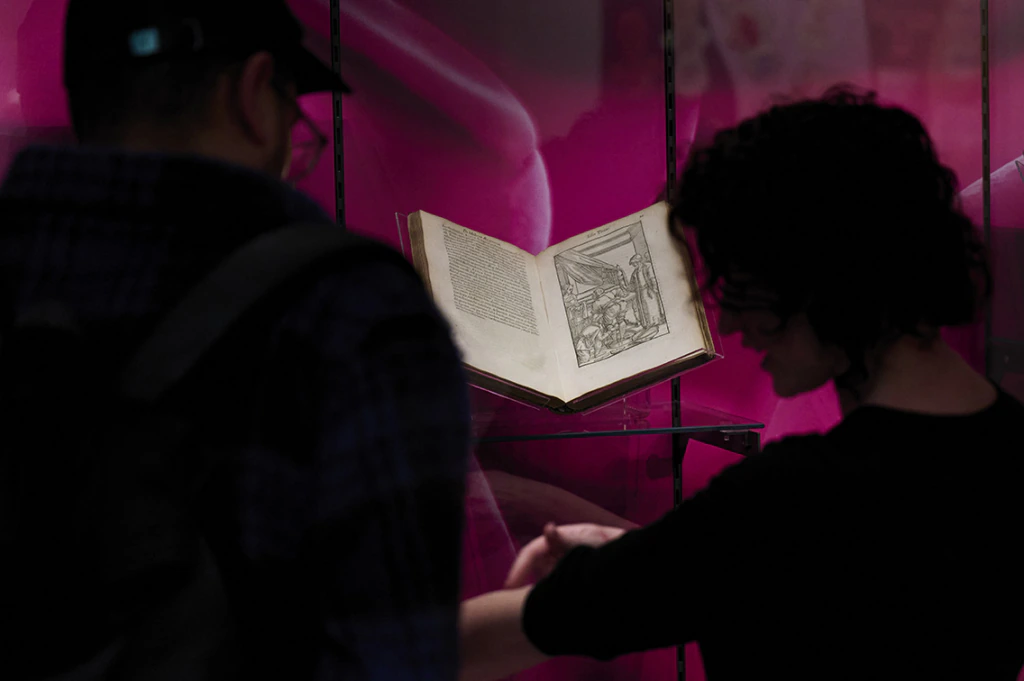
Once I realised the route, I corrected my course and explored the section about historical understandings of circulation, anatomy and cadavers, showing how physicians tried to understand the body through experimentation and dissection. I enjoyed the exhibition’s international focus and its showcasing of advancements around the world. I found it interesting that one of the earliest known discoveries of blood circulation came from an Arabic physician in 1200 and that another physician publishing work on circulation in 1553 was accused of heresy and his books were burned.
Then I moved into the Rivers of Blood section, which looked at how blood was, and still is, used to justify racism through ideas of racial purity. An example given was the “one-drop rule” in the US. The “one-drop rule” was a social and legal principle in the US asserting that any person with even one ancestor of Black African ancestry (“one drop” of “black blood”) would be classified as Black. Rooted in the era of slavery, it was later codified by various US states (such as Virginia in the 1924 Racial Integrity Act) to enforce segregation and uphold white supremacy. It was officially outlawed by the Supreme Court in June 1967.
Advertisement
Personal connection
As a Black American woman, I really connected with this section. I brought my own knowledge and familial understanding of the Tuskegee Experiment to fill in some of the gaps around what the exhibition says about medical practice in spaces where representation does not look like you and unethical practices were allowed to flourish.
(The Tuskegee Experiment was a racist biomedical study conducted between 1932 and 1972 in the US on a group of nearly 400 African American men with syphilis to observe the effects of the disease when left untreated, even when penicillin was used for treating patients from 1945. One hundred men died as a result of the experiment.)
I was glad this material was included and I overheard some young adults discussing race and saying they did not know about this history. It was good to see the exhibition prompting conversation.
Next up was Code Red, which explores menstruation and historical ideas around women’s bodies, noting that it was often viewed as unclean, sinful and something to be ashamed of. The exhibition is supported by objects on loan, including a tapestry produced through a community project tackling menstruation stigma. I found myself nodding while reading what the women and young girls expressed about it, how something so natural has been misunderstood, demonised and has left people ashamed to talk about it. It was a strong display that tied historical perceptions of menstruation into the present day, by showing how those who menstruate can internalise harmful ideas about their own bodies.
Intriguing exhibits
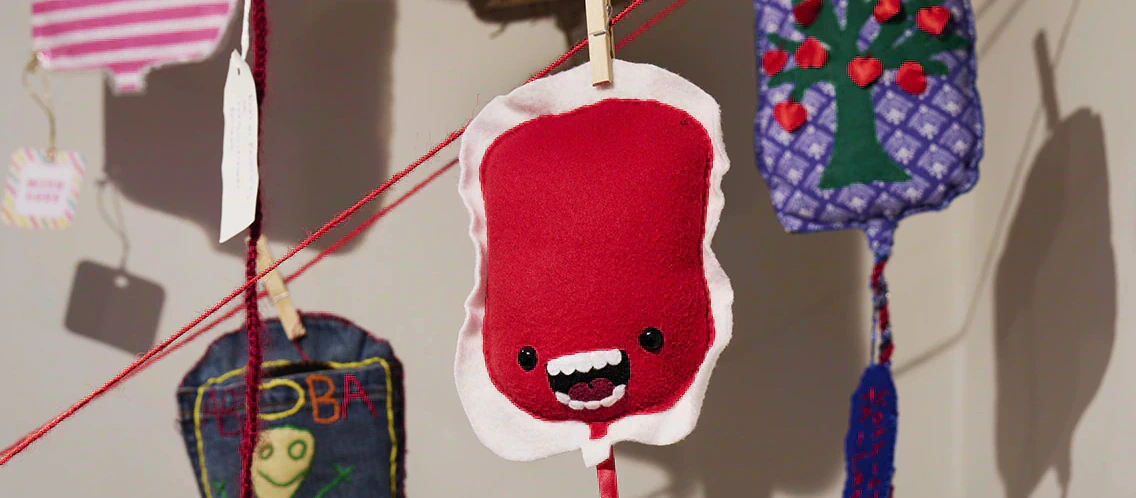
The exhibition finishes by returning to the present day with the Blood Bag Project. Knitted blood bags suspended from the ceiling make visitors look up and consider the importance of blood. Despite the trauma explored in the exhibition, people still rely on blood transfusions to survive and the project encourages people to donate blood.
The exhibition content is well written, but accessible only to its target audiences of older children and adults. It’s a compact space, and with so much history attached to blood, some sections inevitably feel brief. The exhibition succeeds, however, in prompting conversations about medicine, stigma and the ways in which blood has shaped human history.
Advertisement
I did feel, however, that it could have included more comparisons with UK or Scottish practices around race and blood. By focusing on examples in other countries, it allows visitors to walk away with the feeling that these issues are not British ones. Given how intrigued fellow visitors were, there was an opportunity for more exploration.
Overall, the exhibition handled a complicated subject well within the gallery’s physical constraints. As with any exhibition, what you take from it depends on your own circumstances. This one encourages visitors to reflect on how medicine, history and social attitudes have shaped our understanding of the body and the blood that flows through it.
Quonya Huff is the visitor experience team leader at the Museum of Scottish Fire Heritage in Edinburgh
Project data
Cost
£8,500
Main funder
Fellows of the Royal College of Physicians
Loan organisations
Lothian Health Services Archive; Edinburgh University Library; National HIV Story Trust; Royal Pharmaceutical Society; Thackray Museum of Medicine; The Blood Bag Project
Graphic design
Nomad Exhibitions
Print/installation
MacKinnon Slater
Lighting design
Lex Burnhams
Display cases (made in 2018 and reused for all exhibitions)
Old School Fabrications
Object mounts
LightlyWest
Exhibition ends
16 October
Admission
Free entry for Museums Association members