The first thing I see as I make my way towards the British Museum is a man in medieval attire wearing a large placard that cheekily directs tourists to the “Beer Tapestry” across the road.
The enterprising pub, normally known as the Museum Tavern, is currently displaying its own version of the legendary embroidery and is buzzing with excited museum-goers. There can’t be many drinking establishments that have ever changed their names in honour of a museum artefact, so it's a sure sign that the Bayeux Tapestry is having a moment.
But after the years of cross-channel intrigue it took to get it here (a saga that's almost due a tapestry of its own), is the exhibition itself worth the wait?
In the fortnight since it opened to the public, I’ve seen a few gripes on social media about the experience, particularly the queue bottlenecks and the new ban on taking photos, brought in to speed things along.
Managing the crowds in a show centred around one star artefact, even if it’s a very long artefact, was always going to be tricky. In my experience, though, these elements only add to the sense of anticipation; the feeling that we, as visitors, are participating in a rare and unifying cultural moment.
The expectation and excitement build as I wind my way through the museum’s Great Court. Bayeux-related imagery is everywhere, from the redecorated reception desk to the new stone plaque commemorating the historic summit between Britain and France that marked the exhibition’s opening earlier this month.
Advertisement
The front-of-house staff are wonderfully welcoming and seem genuinely excited to be part of the experience.
The display has been billed as a pared-down show, unlike the British Museum’s usual artefact-rich exhibitions. After all, there’s more than enough going on in the artwork itself. But the curatorial team does an excellent job of grounding us in time and place with a few well-chosen images and objects.
Visitors are greeted with a series of projections showing the deceptively peaceful-looking field in Hastings that, we are told, once witnessed a "monumental battle" for the future of England. We meet our animated tour guide, a little bird that flits from one section to the next chasing grains in the wind, which is a neat little touch that helps to drive the narrative and keep people moving along.
Up we then go to a newly constructed mezzanine level, where the show’s other objects sit in immersive darkness. These would not normally be the supporting characters in any exhibition: the exquisite Junius II manuscript on loan from Oxford’s Bodleian Library, whose illustrations clearly inspired some of the tapestry’s vivid scenes; the 1060 Wheathampstead charter of Edward the Confessor from Hertfordshire Archives; and a 1067 Royal Writ issued by the newly crowned William the Conqueror, on loan from the London Archives.
There’s also a pile of medieval silver pennies from the Chew Valley Hoard, the highest-value treasure find ever recorded in England and Wales, thought to have been buried in haste amid the chaos of the conquest. These are powerful pieces that reach out across the centuries and pull visitors back in time, to a world on the edge of a precipice.
Through digital projections, we learn about the key players we’re about to meet in the artwork. There’s a welcome section highlighting the incredible skill of the “highly distinguished” English needlewomen thought to have created the artwork.
Advertisement
Seen from above
Then there’s that special moment when we get our first glimpse of the tapestry from above, stretched out so long that it almost seems to disappear over the horizon. I wasn’t prepared for how much this sight would move me: it genuinely took my breath away, and I could see it did the same to other visitors. In terms of pacing, this overhead view is a masterstroke of suspense-building and payoff.
After this, we’re funnelled into a holding area on the stairs as we wait for the visitors before us to move on. It’s clear why the British Museum took the decision to ban up-close photography, as people do get stuck on the first few panels and need a little encouragement to keep going. Queuing is never that much fun, but the darkness and soundscape ensure visitors stay immersed in the meditative environment, and no one seems to mind the wait.
And then, finally, we’re pressing our noses against the glass of the longest display case in the world, seeing those mesmerising, iconic stitches up close. Digital projections on the back wall overlooking the tapestry really make a difference here; these are simply done, but very effective at drawing out and explaining key moments in the narrative.
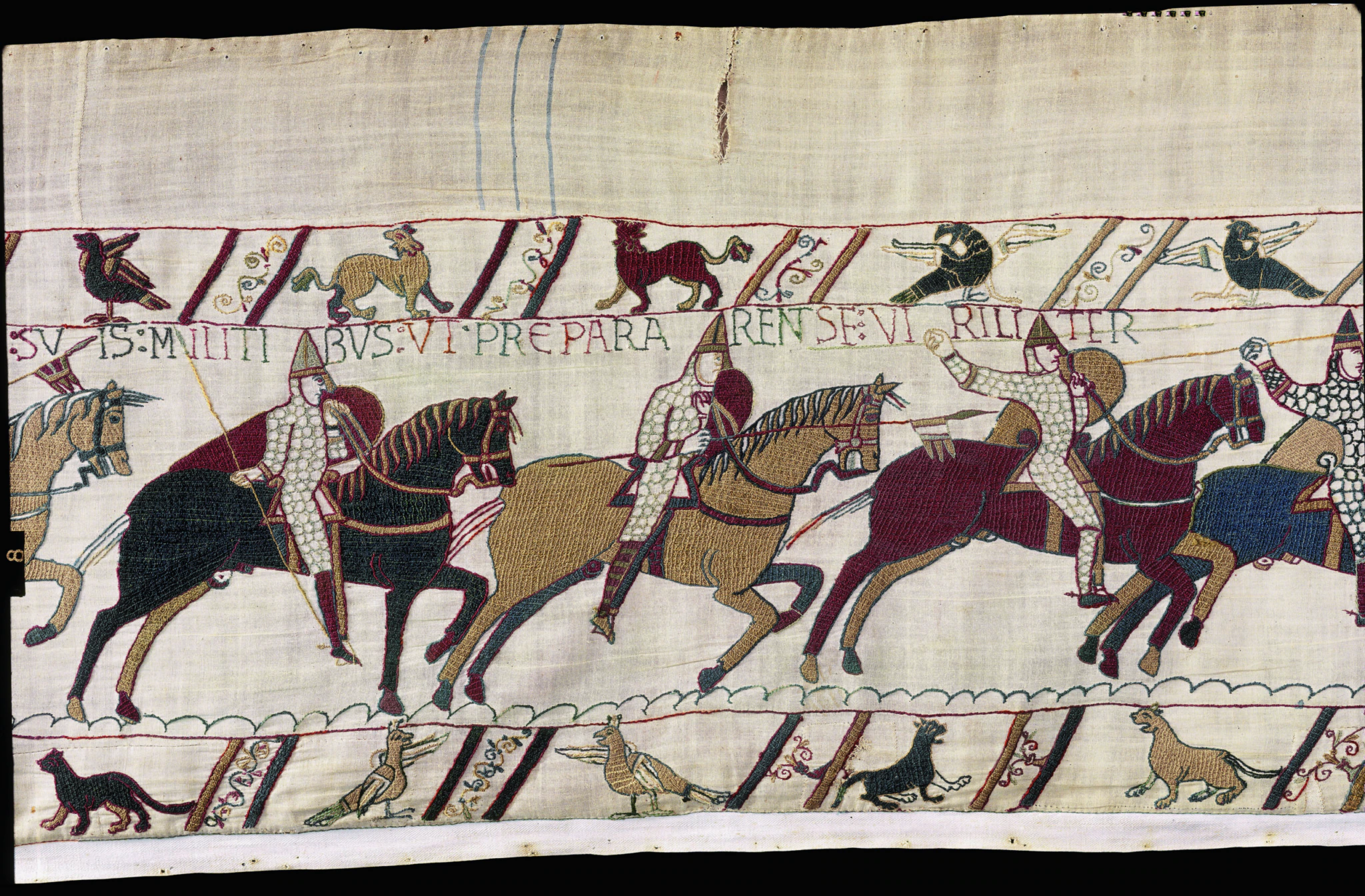
What can be written about the tapestry itself that hasn’t already been said? It’s everything you could imagine – enigmatic, complex, yet relatable and achingly human. Above all, it’s a masterpiece of storytelling; the original game of thrones, a thrilling epic of oaths, betrayals, honour and revenge that is better than anything captured on screen.
I wasn’t expecting the humour and absurdity in the margins. There are strangely poignant little errors, like the gap in stitching where, a thousand years ago, needleworkers got the alignment of two panels slightly wrong. Laid out flat and in one continuous length for the first time, some of these details seem to leap out at the viewer.
Advertisement
Devastation
Though some scenes have an almost mythical quality, as the story moves on, we are reminded that what happened was brutally real. The previously whimsical margins become a scene of horror: mangled corpses and body parts, horses contorted grotesquely. It feels personal and even subversive, as though the English needlewomen, working for their new Norman overlords, wanted to convey the true devastation and human scale of the loss.
The artefacts we saw in the mezzanine gallery give context to that defeat in a way that would be impossible to replicate in the tapestry's permanent home in Bayeux.
I would have loved more time to pore over every detail, to move freely back and forth to explore the complexity of each scene. And although I was lucky enough not to pay, if I had, I might have felt the experience was a little rushed to justify the £33 full-price entry charge, which has surely set a new benchmark in admission fees at the nationals.
But with tickets in such high demand, we visitors are well aware that we can only have so much time with the tapestry before it must be shared with the person next to us. Not everyone can travel, and when this artwork returns to France, there are many people in this country who won’t have another opportunity to see it in their lifetime.
It’s a huge triumph for the museum sector to have this moment in the national spotlight and to showcase the unique magic that art, history and heritage can weave on the public.
I emerged into the brightness of the gift shop blinking and slightly reverent, aware that I’d just experienced something that will stay with me forever. Does this once-in-a-millennium exhibition hit its mark? Like an arrow in the eye.
Project data
Showcase
Meyvaert NV
Lighting
Beam Lighting Design
AV projections
Pixel Sharp
Sponsor
WorldQuant
Admission
£33 peak; £27 standard off-peak; £25 super off-peak; under 16s free