When my grandfather, in his eighties and living with dementia, suddenly recalled a poem he had written at 18, he was overcome with emotion; a friend, on discovering his first grey hair, examined it with morbid, if amused, fascination. Experiences of ageing can be hard to predict; they can be baffling, difficult, and sometimes beautiful.
Running 26 March to 29 November 2026, The Coming of Age exhibition at the Wellcome Collection seeks to explore perceptions and experiences of ageing. At the entrance, a large display board asks, “Is age really just a number?”, inviting visitors to answer questions on small cards.
From the outset, the exhibition demands personal engagement, which is among its greatest successes.
The Coming of Age is also highly accessible, with step-free access, large-print guides, audio description and British Sign Language videos available.
Unfolding along a dimly lit, zigzagging path, the exhibition’s metaphorical allusions to life are hard to miss.
Early on, a display of silver sake cups – presented to Japanese citizens turning 100 since 1963 – introduce questions of how longevity is valued as it becomes more common. As the Japanese population started living longer and the cost of silver cups made a more significant dent in government funds, the cups were downgraded to a cheaper nickel alloy.
Advertisement
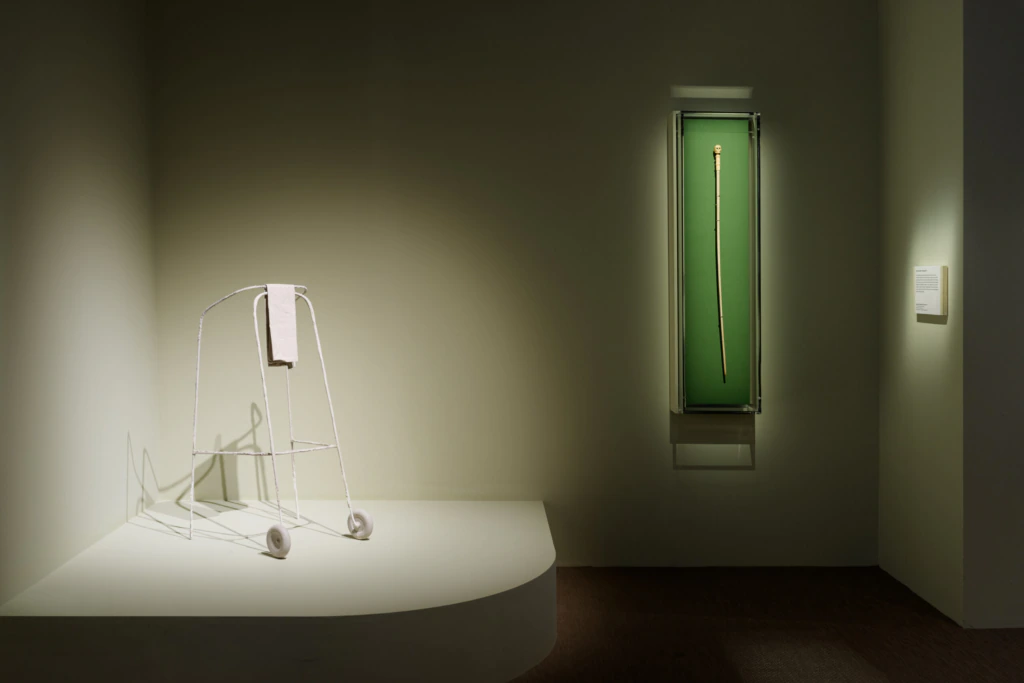
Further into the exhibition, Charles Darwin’s walking stick and Daphne Wright’s sculpture Zimmer – a powerful meditation on frailty in the form of a Zimmer-frame coated in unfired clay – begin to establish a sense of the exhibition’s emotional core.
Visitor interactions form part of the experience. While wandering the exhibition I watched an elderly couple struggling to operate an iPad offering life expectancy readings.
Nearby, a man watching a video of decaying apples pointed to the grey fuzz of mould on the screen and remarked, “We all have one thing in common: grey!”, prompting his companion to respond: “I’m proud of my grey hair.”
When I tried the life expectancy calculator myself, I discovered that the couple had entered one of their ages as 802. I, apparently, am only likely to make it to 85.
While exhibitions often thrive on specificity, The Coming of Age finds its power in turning visitors’ attention outward. It fosters a subtle sensitivity to the individual differences and shared sublimities of being human.
Advertisement
But not all displays are so enlightening. In a particularly macabre case, medical jewellery worn by a person indicating their desire to be cryonically preserved after death is laid out next to a flask for cryonic neuro-suspension – a tank not unlike a beer keg, designed to freeze the human head.
AI collaborative artworks by the Singapore-based artist Wenhui Lim, also known as Niceaunties, have a diminishing effect on the exhibition’s overall sense of humanity.
The works, which represent the Asian societal archetype of the ‘auntie’ as a transitional, modern figure by placing her in surrealist digital worlds, feel incongruous within an otherwise tangible, human-focused exhibition.
Inclusivity is one of the exhibition’s clear strengths. Within the few metres of corridor that The Coming of Age occupies, the breadth of representation is vast and sensitively handled.
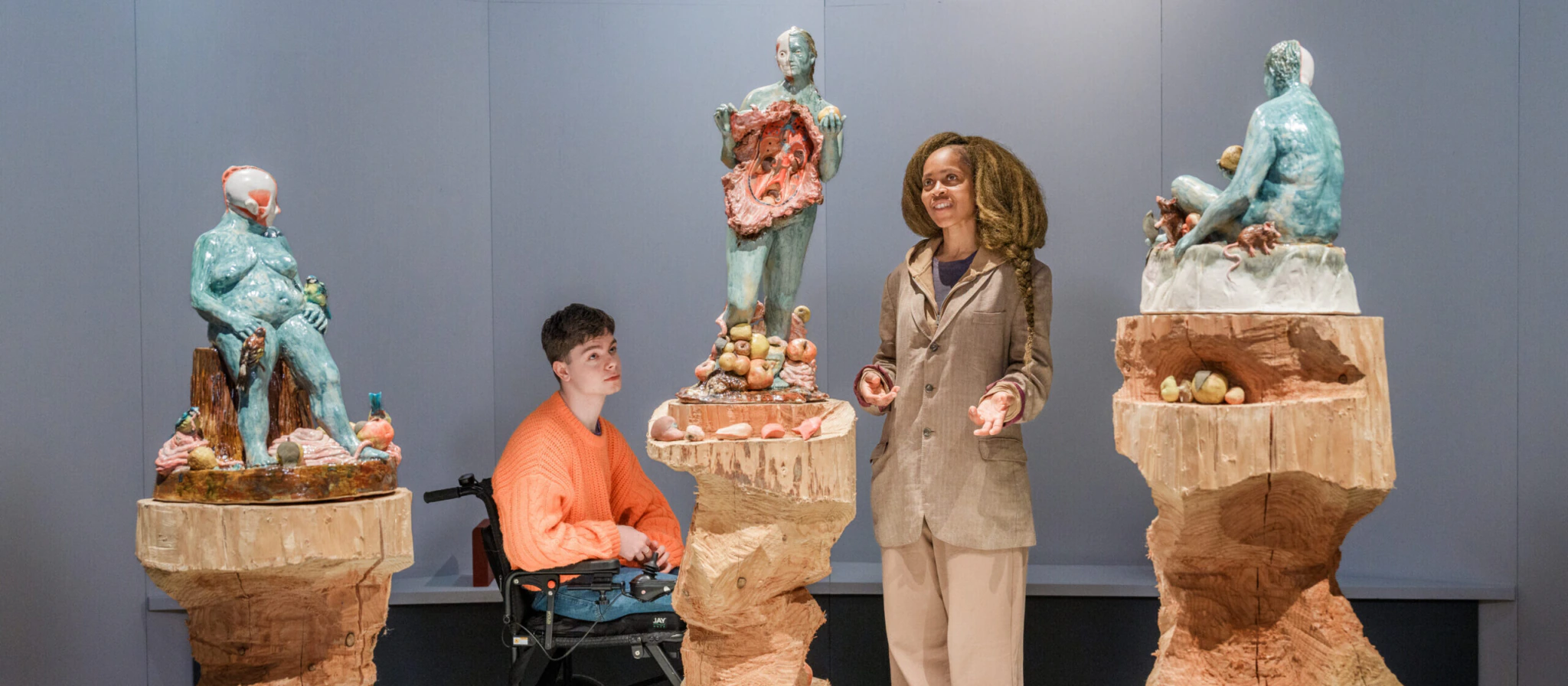
Towards the gallery’s midpoint, Serena Korda’s Wild Apples sculptures reinterpret crone figures as real women from the West Country, reframing menopause as a time of positive transformation.
Advertisement
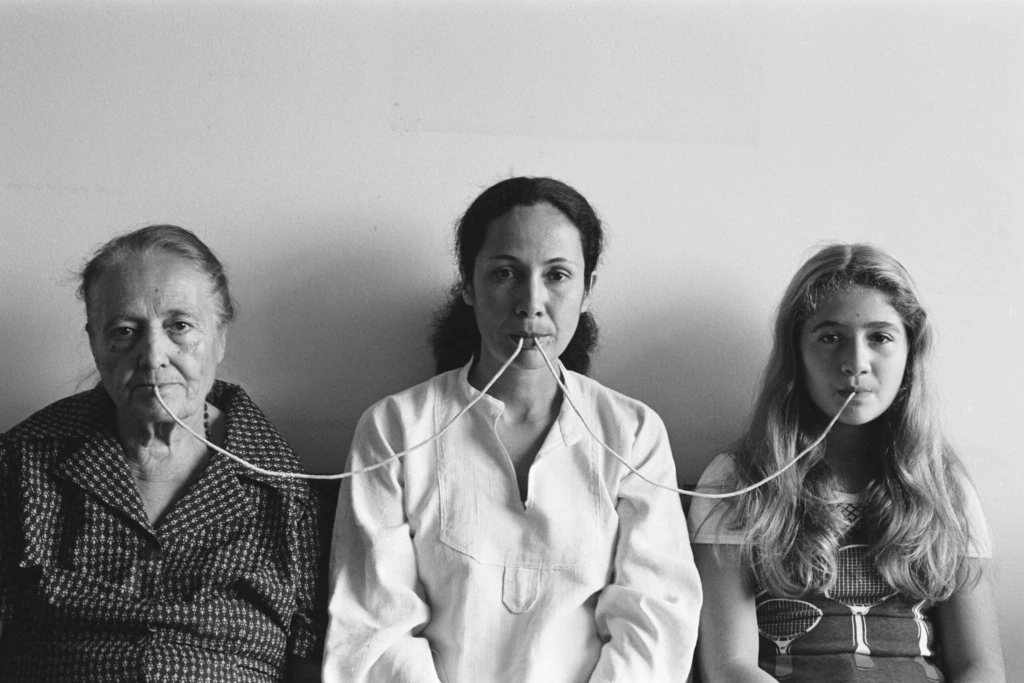
Elsewhere, age is analysed through the lens of illness, disability and grief. A series of portraits painted by William Utermohlen trace the dissolution of form and familiarity following his diagnosis with Alzheimer’s disease, and a series of etchings by Louise Bourgeois explore memories of her mother, who died when she was just 21.
The exhibition also examines care solutions in the face of an ageing global population. A particularly amusing display shows the Pepper robot, a robotic care assistant trialled by the Japanese government and halted in 2021 due to low demand, switched off and alone in the corner of a blank display area.
A less hi-tech care solution comes in the form of a 1960 poster from the Welsh Board of Health. Its slogan, designed to recruit volunteers to help elderly community members, reads: “Old folk need… a friend. Will you help?”
For the most part, The Coming of Age is a heartening showcase of what it means to grow older. Its demographic focus, like age itself, is indiscriminate, and its gentle sentimentality instils a lingering awe at the simple fact of being human.
Leaving, I felt a keen desire for presence. As the cars queued and beeped their horns on Euston Road, and hundreds of people made their way to who knows where, I watched in quiet wonder. It was raining, but I didn’t mind.
The Coming of Age is at the Wellcome Collection, London, from 26 March to 29 November 2026