It’s not often that you find yourself in an exhibition gallery debating the merits of pink custard with other museum visitors. Welcome to the fascinating world of School Dinners at the Food Museum in Stowmarket.
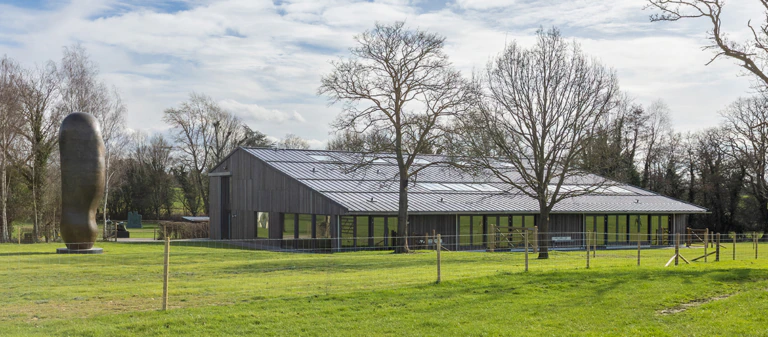
This engaging exhibition is housed in the Bone Building at the centre of the 84-acre site, formerly known as the Museum of East Anglian Life before its 2022 rebranding. The exhibition topic is clearly a strong fit with the stories the museum seeks to tell around food production and consumption.
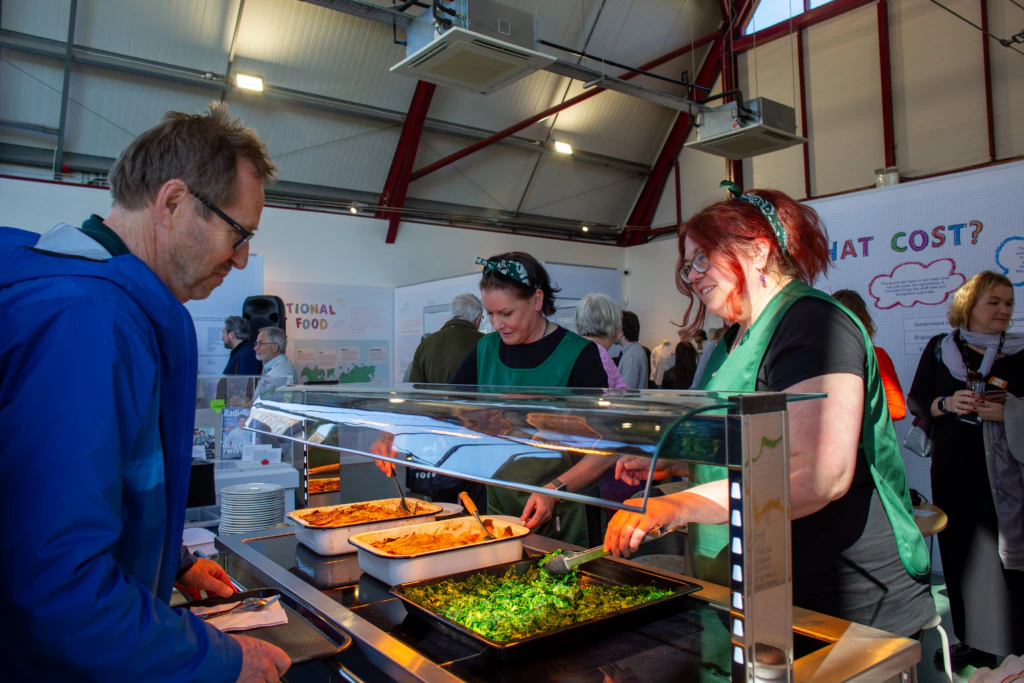
As with any exhibition visit, it’s so often the engagement with staff that makes or breaks the experience. All of the Food Museum staff we met were great, from those who provided a cheerful welcome, to the learning team member in the demonstration kitchen who engaged us as soon as we entered, encouraging us to sample a tasting menu from a 1940s Norfolk school. Tasters included green beans picked at the museum that morning and pieces of tasty chocolate sponge.
As a child of the 1970s, my recollections of primary school dinners are somewhat traumatic. They include boiled potatoes tinged with green, curling and grainy liver in gravy, chocolate concrete that shattered on contact and distressingly lurid green custard.
What this fascinating exhibition showed me was that these memories of school dinners – the good and the bad – represent a shared experience, one that encouraged conversation and reminiscence within the gallery spaces.
Advertisement
As is only right for an exhibition on this topic, food is at the heart of the show. The permanent open-plan demonstration kitchen in the centre of the Bone Building offers tasting menus from school dinners from different decades each day. The kitchen also supports the linked school and event programmes.
The in-house curated exhibition is spread across the building’s ground floor, with the most coherent area based around a timeline of school dinners. This charts their history from 19th-century origins, through to the recent campaigns of chef Jamie Oliver and footballer Marcus Rashford.
En route, visitors are reminded about former UK prime minister Margaret Thatcher, who was dubbed the “milk snatcher” after ending free school milk, and the negative nutritional impact created by the increasing commercialisation of school dinners from the 1980s onwards.
Spam-a-lot
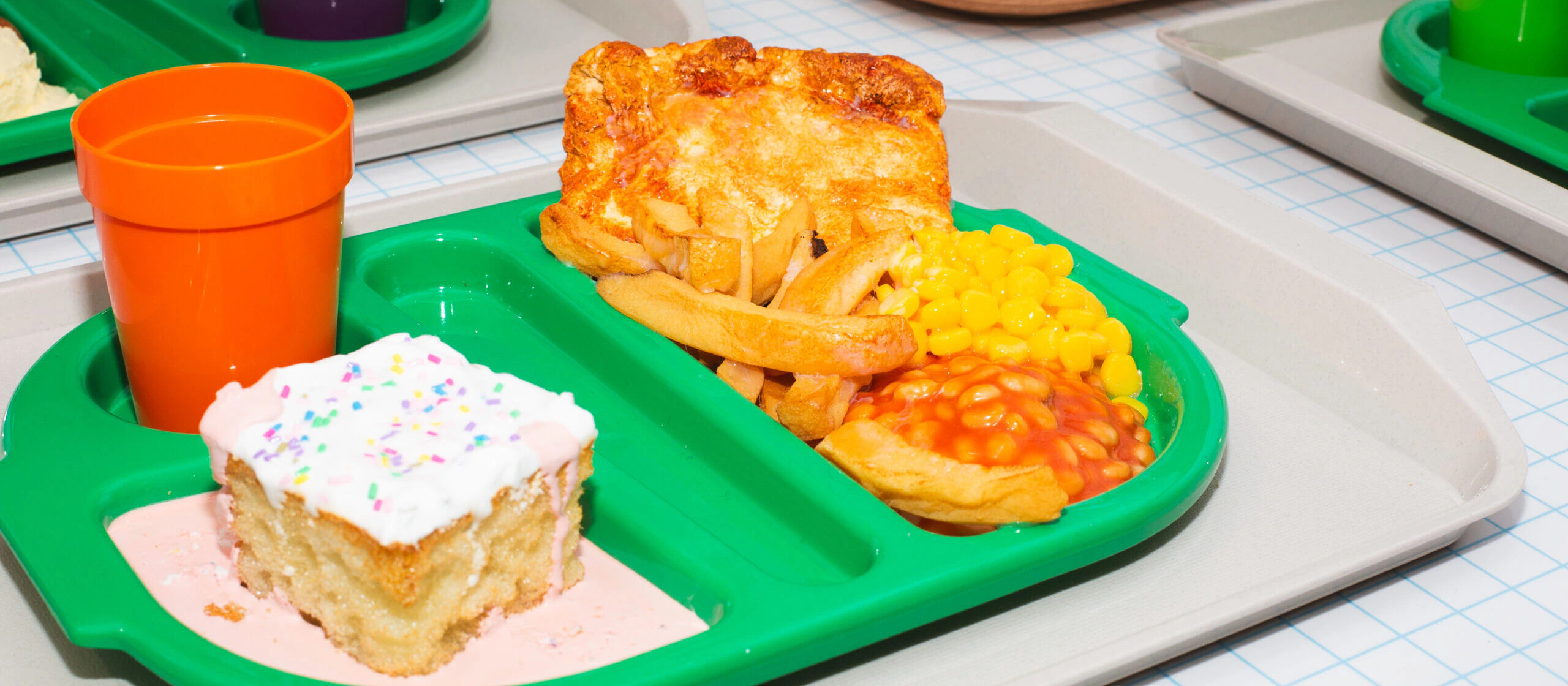
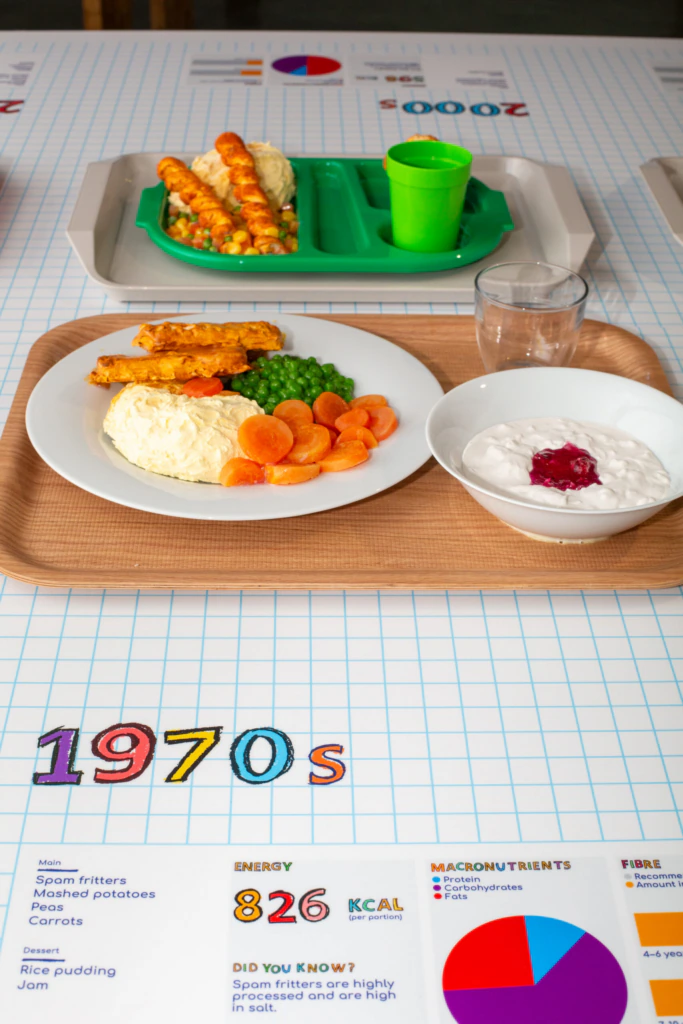
The star installation in the show – and the one clearly attracting the attention of visitors of all ages – is a table display featuring recreated plates of school dinners from the 1940s to the 2020s. Alongside each plate of convincing replica food is a simple graphic showing the average protein, fat and carbohydrate content of meals in that decade. Surprisingly to me, the 1970s were not too bad, despite the spam fritters. Unsurprisingly, the 1990s and 2000s – the age of chips, pizza and the infamous Turkey Twizzler – were nutritionally grim.
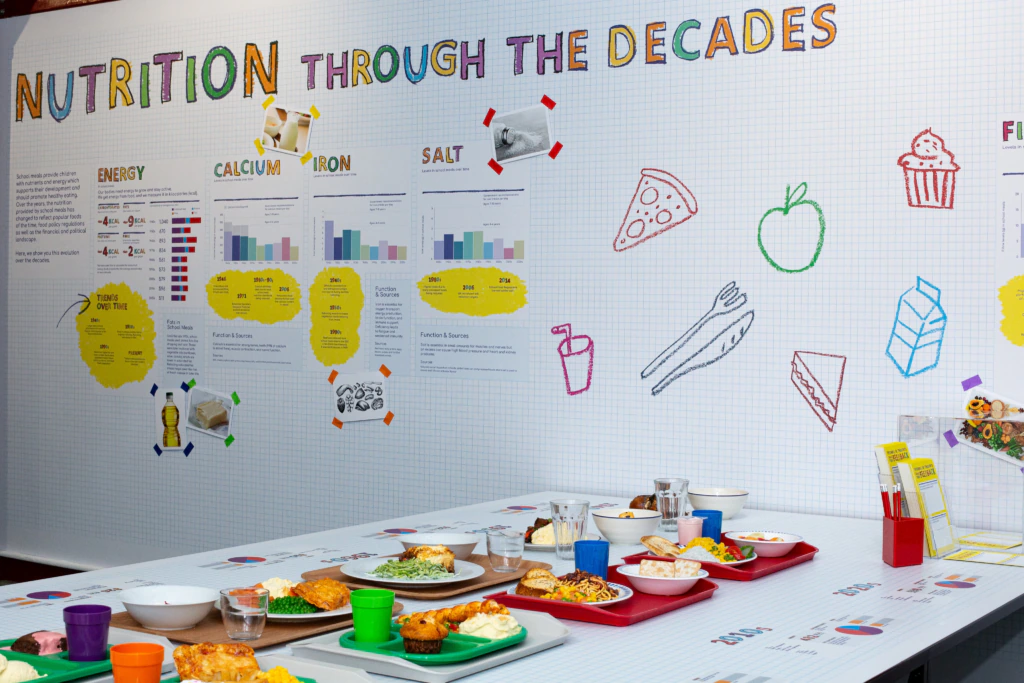
The exhibition explores the campaigns and campaigners who have influenced improvements to school meals and school holiday food provision. It also features the stories and uniforms of the local people responsible for cooking and delivering thousands of school meals each year.
Advertisement
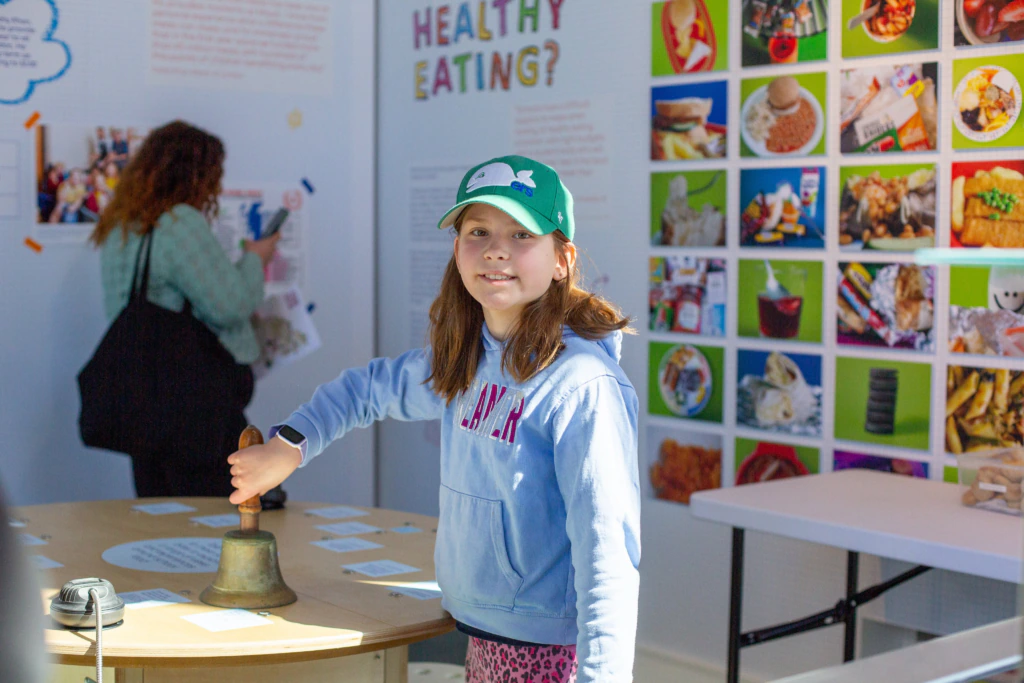
Other sections compare school meals in the UK with those from other countries – French children seem to do particularly well – and also consider healthy eating campaigns and developments in teaching food science.
It was good to see the voices of today’s young people reflected in the gallery, with a range of teenage Young Curators sharing their views of school dinners. The exhibition might have benefited from using the voices of more children to reinforce the relevance of this topic to today’s generation of school dinner queuers.
The exhibition is rich in archives and documents, including recipe books, menu cards and copies of national guidelines and reports. Finding objects to support this exhibition has clearly been more challenging. That said, the objects that are on display are quietly evocative, such as the simple steel serving trays, standard crockery and water glasses that are instantly recognisable.
I was also strongly reminded about the power of objects to make a personal connection, despite their apparent simplicity. The free school milk bottles and accompanying Milk Monitor badge brought back memories of those warm afternoons from the 1970s when the milk would be slightly dubious by the time you drank it.
However, the biggest personal impact came from a simple metal token reading “School Meals Service”, on loan from National Museums Liverpool.
Advertisement
These reusable tokens were issued to children eligible for free school meals, apparently without much thought as to the risk of those young people being stigmatised by their peers.
Today, schools would not dream of publicly identifying children eligible for free school meals. It made me recall the free school meals queue I had to join each day in my secondary school.
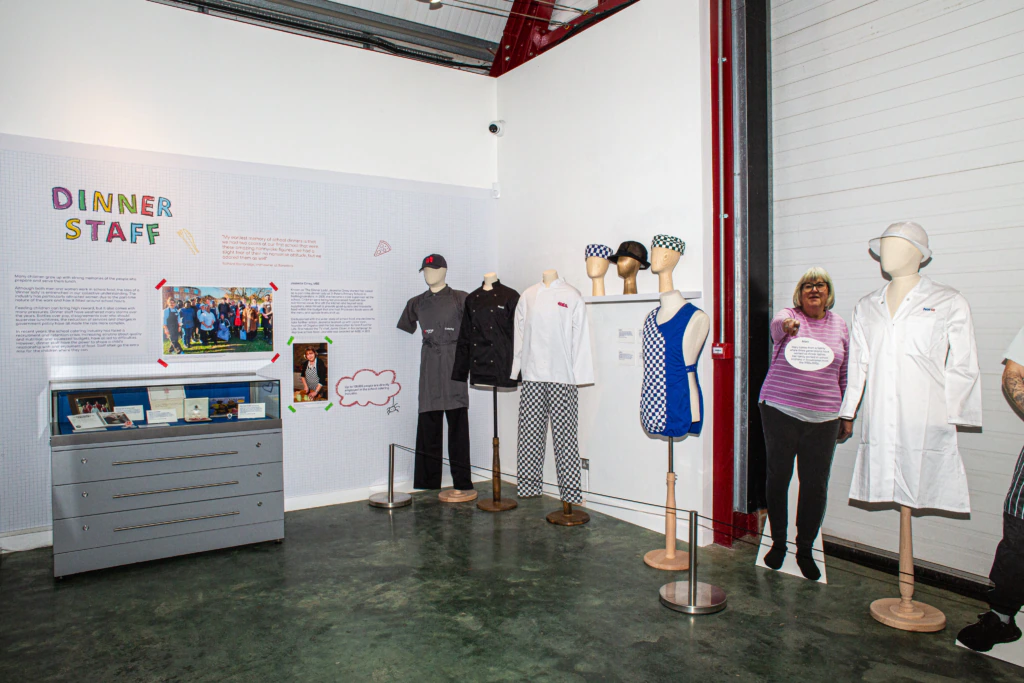
The simple exhibition design is bright, clear and cheery and effectively evokes the world of school. The wallpaper graphics feature a school graph paper background, with coloured tape fixings. For visitors wishing to go deeper, there are listening posts and also films with representations of school dinners in popular culture, such as the 1978-2008 television series Grange Hill.
Getting around
Accessibility to the galleries is good and a Changing Place toilet has recently been installed as part of a Mend-funded upgrade of the site’s main facilities. Access and other visit planning information is clearly set out on the website.
Visitors are encouraged to give feedback through a Share With Us post board and feedback cards. There is also a simple but attractive Family Trail booklet. To complete the experience you can even pre-book a school meal in the excellent site cafe.
We all know how important good food is to a child’s health, wellbeing and their ability to learn. This exhibition demonstrates the potential for museums to play a role in enabling people to engage with this subject.
Our own in-gallery conversations covering both the merits of pink custard and the nutritional value of school dinners showed how this exhibition is making this happen. Spam fritter anyone?
Robin Hanley is the assistant head of museums (head of service delivery) at Norfolk Museums Service
Project data
Cost
£55,000
Main funders
National Lottery Heritage Fund; Arts Council England; Linbury Trust; Headley Trust; Thomas Ridley Food Service; Quadram Institute; Arts and Humanities Research Council
Partners
The School Meals Service Project (UCL, University of Sheffield and University of Wolverhampton); Quadram Institute; Norse Catering (part of the Norse Group); Jeanette Orrey; Museum of the Home; Food for Life; Chefs in Schools; The Food Foundation; Bite Back; Jamie Oliver Enterprises Vertas; Greater London Authority
Exhibition design
Phaedra Corrigan
Graphic design concept
Studio Grafique
3D and graphic artwork
Food Museum
Meal re-creation
The Fake Food Workshop
Wall vinyls
Wallace Print
Display cases
Click Netherfield
Printed images
Pureprint Group
Exhibition ends
25 February 2027
Admission
Free entry for Museums Association members