The history of crime is a consistent source of public fascination. Notorious criminals such as London gangsters the Kray twins and the enormously wealthy Colombian drug lord Pablo Escobar have become household names, while true crime podcasts are in abundance.
In museums, salacious crimes can serve as a classic social history hook that can grab the public’s imagination. But how can this be done appropriately, with clear questions of care, context and even legality?
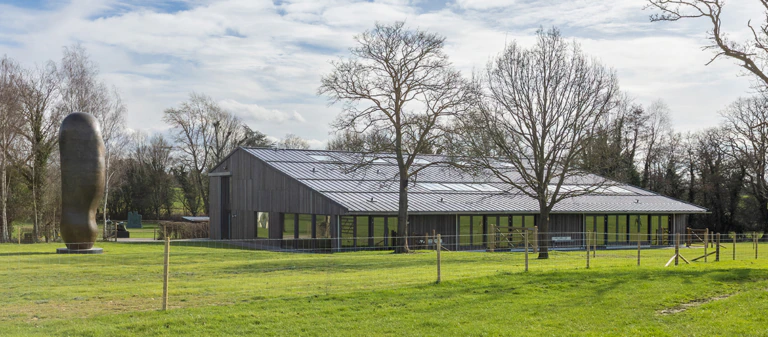
The Metropolitan Police Crime Museum in Sidcup is uniquely placed to answer this question. Founded in 1875 by the Met as a private teaching collection, it comprises evidence collected from significant cases and is used to train new officers and staff. It continues to be used and added to today.
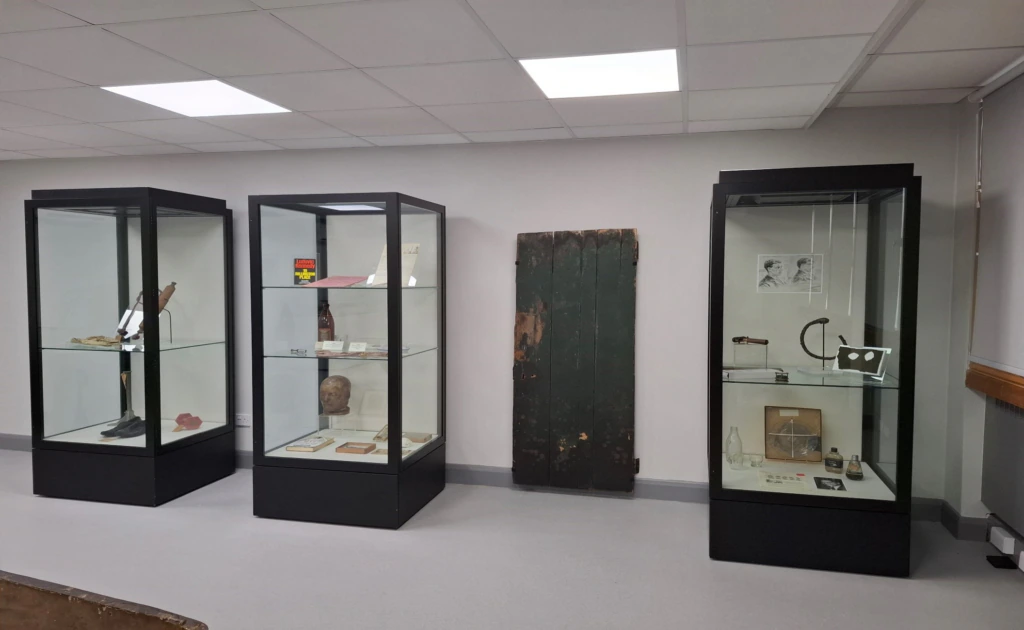
The Crime Museum was 150 years old in 2025, and this exhibition (until 2 April 2026) showcases the collection’s development. The result is not only a history of the collection, but also of the Met and how we view crime in wider society.
Under police protection
The museum is in a working police building. Members of the public are not allowed to enter without a staff escort, so the collection has seldom been publicly accessible.
Advertisement
It has however been developed, researched and cared for to a very high standard. It is used in outreach events by the Met, academic research and exhibitions with partners.
This exhibition can only be viewed on a guided tour and has proved popular – all tours have been fully booked weeks in advance. It also shows that crime has always been a source of public (and often celebrity) fascination. A 19th-century logbook records the visit of Arthur Conan Doyle, the author who created the detective character Sherlock Holmes. Novelist Agatha Christie referenced several items in the collection in her writing.
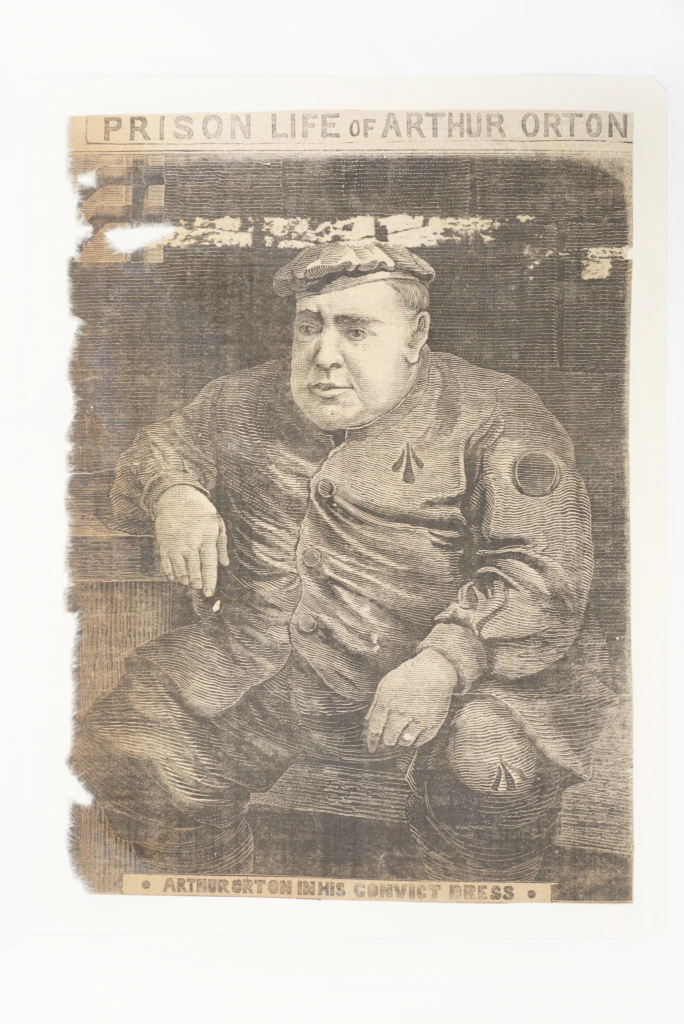
There are objects from the 1860s Tichborne trial, the longest in British history, in which Arthur Orton had claimed to be the heir to the Tichborne baronetcy. The ensuing trial and Orton’s eventual conviction for perjury captivated the Victorian public. Objects include cartoons and souvenirs, even sheet music for a song inspired by the case.
One of the earliest conclusions you draw from being among this material is that nothing much changes.
A copy of the Illustrated Police News from 1888, a tabloid sharing gossip about ongoing police cases, is largely fictional. But it contains enough truth to reveal that people on the inside were evidently selling information.
Advertisement
It would be easy to sensationalise the material, but the exhibition deliberately avoids this. There are no labels, so all interpretation comes from the tour guide, which brings a different experience when viewing the objects. Staff leading the tours are excellent communicators and their judgement in how to share the collection is crucial.
The best illustration of this is the material displayed in relation to Ronnie and Reggie Kray. It is refreshing to see their story told without resort to romanticising events or sensationalism. Instead, a light has been shone on the story of Leonard Reed, the officer who eventually caught them and who left his pocket books to the collection.
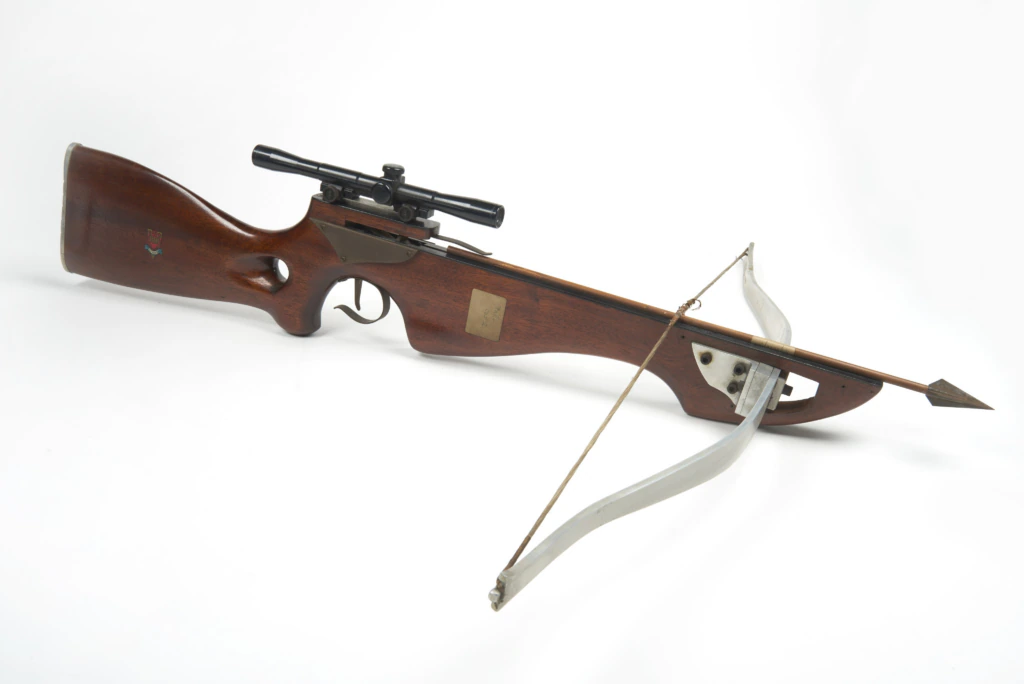
This story includes one of the more striking objects on display: a huge crossbow that one of the Kray twins’ accomplices bought over the counter at a Lillywhites sports store.
One of the most interesting threads throughout is that innovations in policing and public safety are often in direct response to a crime. There are objects from a court case where the moment of conviction was secretly photographed and published. The images caused outrage, ultimately leading to the 1925 banning of any images being taken in a courtroom.
There are also objects relating to the 1905 case of the Stratton brothers – the first murder conviction using fingerprint evidence.
A more recent example is the homemade bomb from a foiled 2006 aircraft bomb plot devised by Islamic extremists. It was this plot that led to the ban on taking liquids on planes. To the naked eye it is a juice bottle with a small case taped to it. Its simplicity makes it all the more frightening, and brings to mind the bravery of the people who tackled the would-be bomber.
Advertisement
One name that comes up repeatedly in the exhibition is that of Bernard Spilsbury, the early 20th-century pathologist known as the “father of forensics”. His advances in forensic science illustrate how one person can have a huge impact on how policing is conducted and perceived.
Moral dilemma
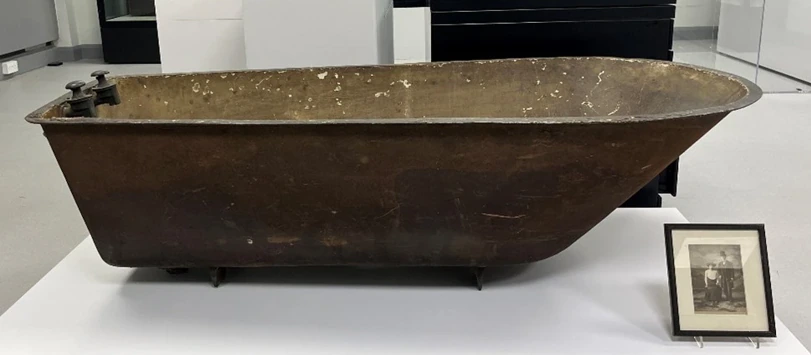
The conflicting ethics of being in the presence of this material are exemplified by one of the largest objects – a bath that was used as evidence in the infamous “brides in the bath” murders.
Serial killer and bigamist George Joseph Smith was hanged in 1915 for marrying and then drowning three women: Bessie Mundy, Alice Burnham and Margaret Lofty. The case has been the inspiration for a film and numerous documentaries.
The bath on display is the one in which Bessie Mundy died, displayed next to a photograph of the two on their wedding day. She’d sent it to her family without Smith knowing, and it proved to be a vital piece of evidence in his conviction. The case was a further breakthrough in the work of Spilsbury, whose meticulous study of the bath was also crucial in the verdict.
Being in the presence of this and multiple other murder weapons is an unnerving and upsetting experience. It raises the question of whether it should be displayed at all. But it is also an illustration of the value of what we all do, which is hold, interrogate and learn from material culture. These objects are tangible evidence of terrible acts, but they also show us how our society has developed its response to them.
This collection is an evolving training resource, brought together so policing can continue to develop and get better for us all. This learning, in the hands of talented people who are the heirs to Bernard Spilsbury and Leonard Reed, can only have a positive outcome.
Simon Brown is curator at Newstead Abbey, Nottingham, and relationship manager (Accreditation) for Arts Council England
Project data
Cost
Undisclosed
Main funder
Met Police
Curation and interpretation
Clare Smith
Design
Hara Clark
Conservation
Artefacts Conservation Services
Mounts
Artefacts Conservation Services
Exhibition ends
2 April
Admission
Free, but strict booking procedures, visit met.police.uk