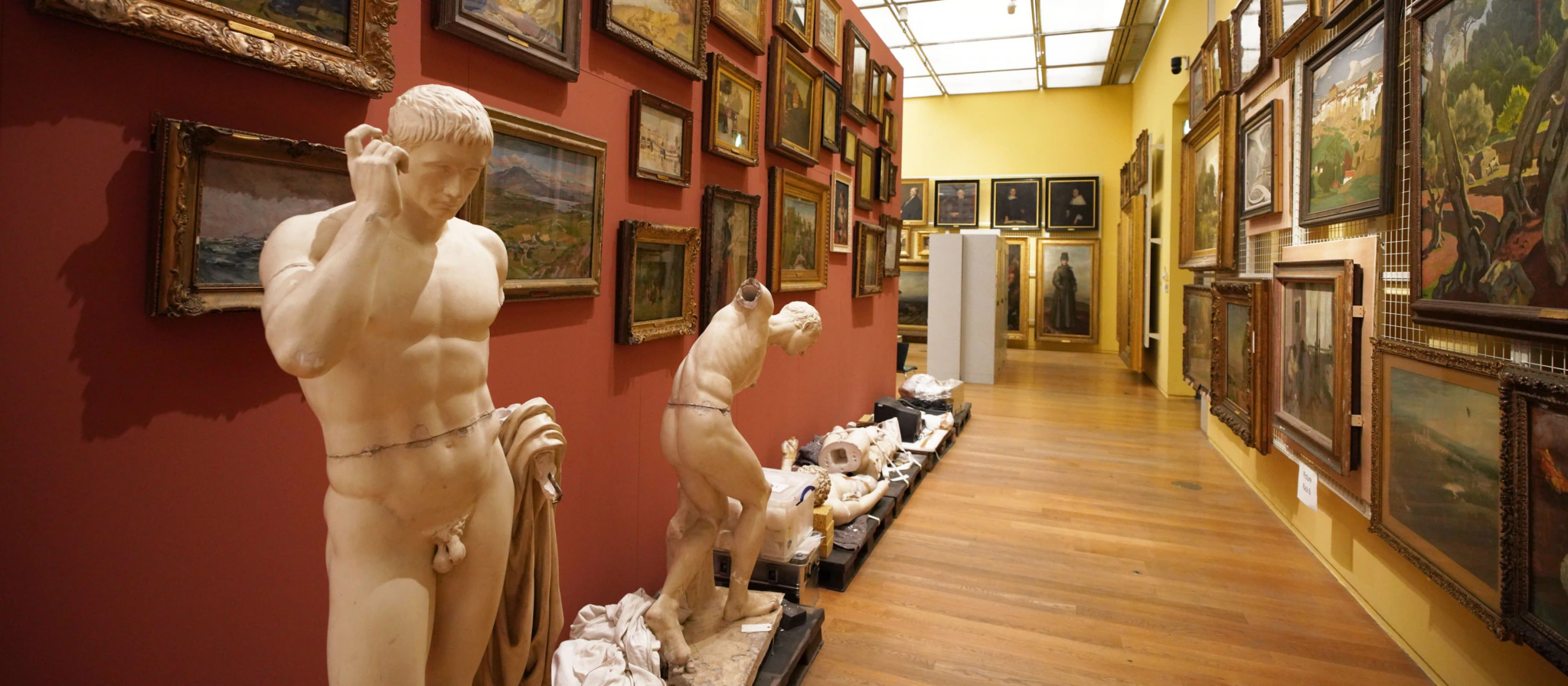
Many museums have extensive collections and continue to receive new items. However, the resources available to properly care for, study and display these objects are often limited.
Disposals practice is not a new phenomenon. As Jennifer Durrant suggests in her book, museums have been exploring collections reviews for decades.
The Food Museum, formerly the Museum of East Anglian Life in Suffolk, is an example of this. Historically, items were poorly documented and had been amassed without the guiding principles of a collections development policy.
The museum’s change of name and renewed sense of purpose meant a collections audit was long overdue – and is ongoing. As a curator at the museum, I can tell you that right from the outset, we debated how to communicate all of this, so Durrant’s book serves as a timely mechanism of support.
Deaccessioning Museum Objects: Transparency and Ethics in Disposal Practice provides a theoretical and practical approach to an area of collections management that museums must confront, while also prompting us to elevate our practice, questioning how we can embed transparency and ethical principles into our work.
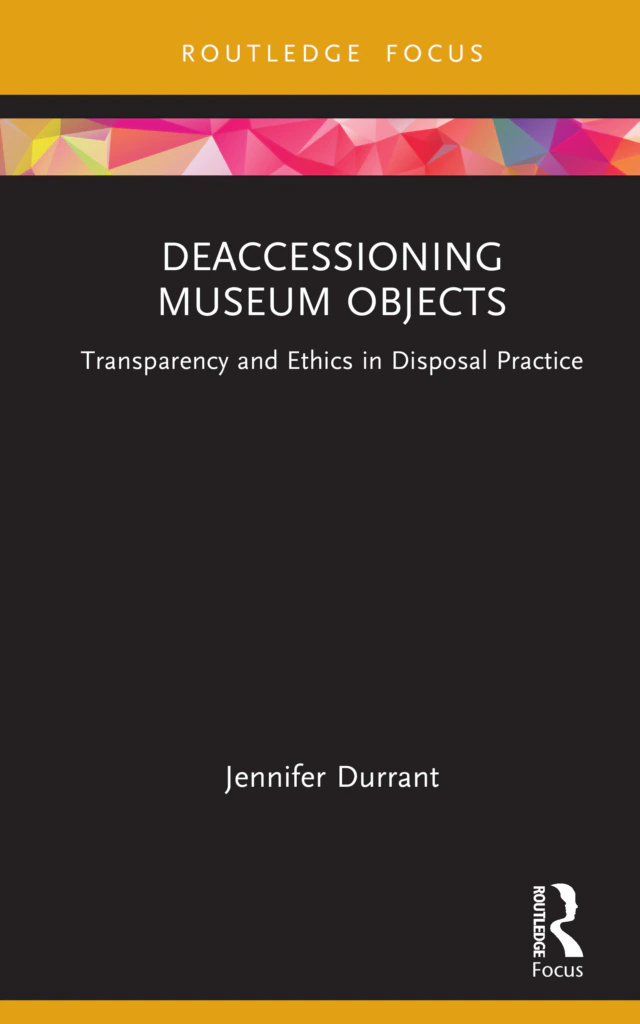
EBook, £17.59
ISBN 9781-032618425
Durrant’s breadth of experience and research contributes to a practical assessment of significant developments in societal and professional views of disposal practice. This includes being the “first professional context in which the sector has the solid underpinning for transparency”.
Advertisement
Both the Museums Association’s Code of Ethics and its Off the Shelf: A Toolkit for Ethical Transfer, Reuse and Disposal refer to transparency and ethical practice. However, each museum is different so needs a different route. Durrant’s book suggests a path forward.
Durrant questions evolving understandings of the professional museum role and object permanence, including whether an object, by virtue of being given to a museum, should obtain an exalted level of significance.
As Durrant suggests, in our current state, acquisition and disposal should form a symbiotic relationship – one can be eased by the other.
She argues that we’re living through an “ethical revolution”, moving towards a broader “people-centred museum practice”. Disposals may play a part in building open and meaningful relationships with our publics, if they wish to engage.
Many practitioners remain fearful about taking disposal processes out into the open for fear of what could go wrong, or because of previous difficult experiences. Others are excited but haven’t yet worked out how to make disposals “visible and understandable”.
Through Durrant’s “transparent communication model”, the book successfully appeals to those in the earlier stages of their transparency journey, while also exploring layers that help experienced practitioners evaluate and evolve their practice.
Advertisement
The model breaks the process into two strands: people and communication. This allows museums to establish their own version of transparency through the interaction of “risk, relationships and trust”.
Rather than proposing a one-size-fits-all model, Durrant explores how museums can scale their transparency up and down – from basic “dashboard” through to “radical” – dependent on varying factors. The important point is that decisions are conscious and the intentions behind the communication model are considered.
The analysis of contemporary case studies establishes that in the realm of transparency, practice is live – “ethical boundaries are not a fixed line in the sand”. It would be interesting to seek greater balance by reflecting on instances where considered communication had led to difficulty.
What Durrant does well is to show that transparency need not be big-budget or revolutionary. Hastings Museum and Art Gallery’s Demystifying Disposals took the form of a simple intervention in an existing display, leading to engagement with their primary audience.
Equally, if practical, projects such as Manchester Art Gallery’s Taking Stock play a more substantial role, enacting a democratic vision of transparency, reflecting the public ownership of the collection.
These case studies embody the assertion that ethical practice and conscious intention sit at the heart of transparency, yet the method reflects the circumstances of the institution.
Durrant ultimately sets out to build confidence and inspire change. As we move towards disposals practice becoming a sustainable part of our work, ethical working and transparency offer a way to guide our practice into a new chapter.
Katherine Bridges is a curator at the Food Museum, Stowmarket, Suffolk