
I don’t know if the John Rylands Library quite qualifies for “hidden gem” status, but I must admit, I have walked past it a dozen times without realising it was there.
Nestled away on one of Manchester’s busiest and most fashionable streets, the library stands alone in its gothic majesty. It feels – and must always have felt – like a building out of time and place.
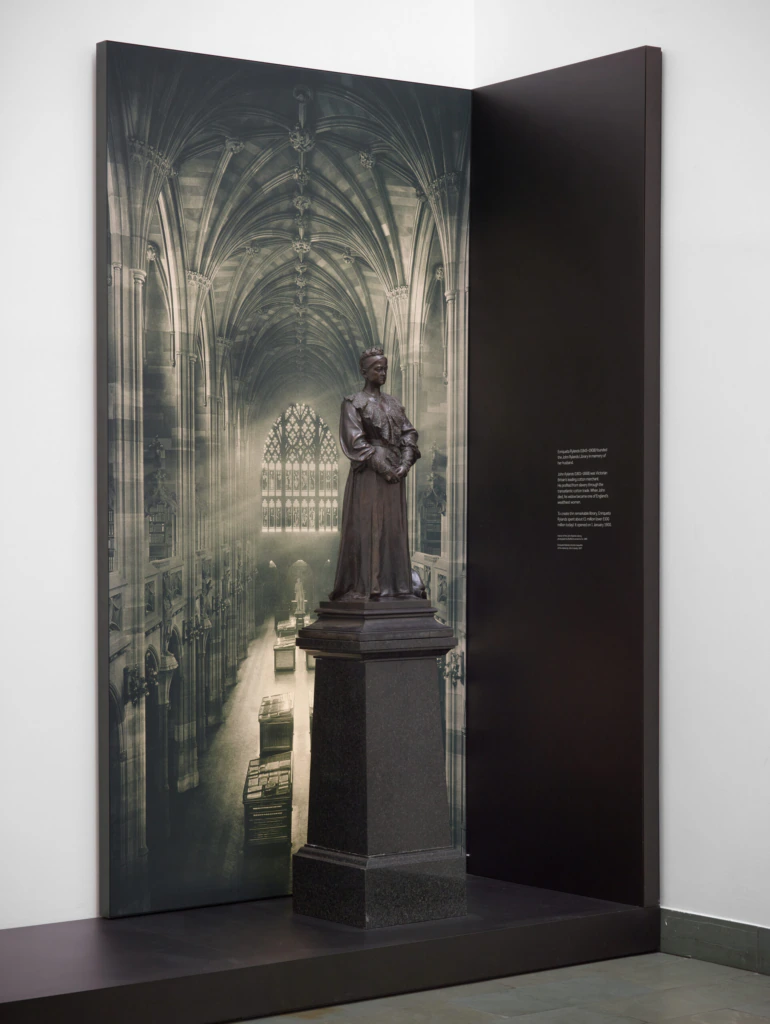
Built in 1900 by Cuban-born philanthropist Enriqueta Rylands to honour her dead husband John, its gothic splendour evokes that of a cathedral. Despite its appearance, however, this library is not an act of godly worship but rather a temple of learning for the people of Manchester.
For Enriqueta, it must also have felt like an act of assertion. It is based on the idea of an Oxford college, though the John Rylands is consciously built on a larger scale. With electric lighting, it was constructed to be modern, but also progressive, with the admission of women and the working class.
Given the Rylands’ joint status as wealthy industrialists, it might be going a bit too far to describe them as anti-establishment figures. Yet the library does have the feel of a place that does things a little differently.
Advertisement
It is a spirit that feels alive and well in the library’s current incarnation following a £7.6m redevelopment called the Next Chapter project.
To celebrate both its official opening and the launch of its latest exhibition, The Secret Public, the reading room reverberates to queer club classics while the space is lit in rainbow lights. Whether or not the man himself would approve, John Rylands’ statue stands splendidly illuminated in pink.
Technology meets history
This four-year project has added a world class digital imaging lab, a new and improved entrance and two new exhibition spaces. It is clearly a labour of love for university librarian and director of the John Rylands Library, Christopher Pressler, who has also acknowledged the librarians, curators and conservators who helped to make the renovations possible.
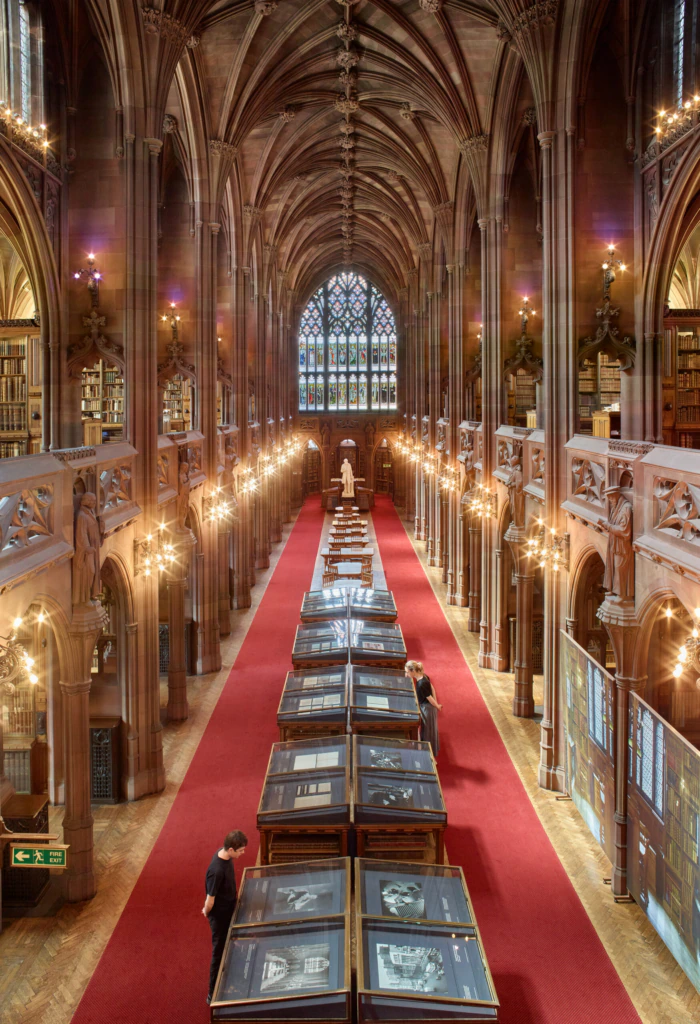
While I’m sure I’m doing someone a disservice, the reading room doesn't
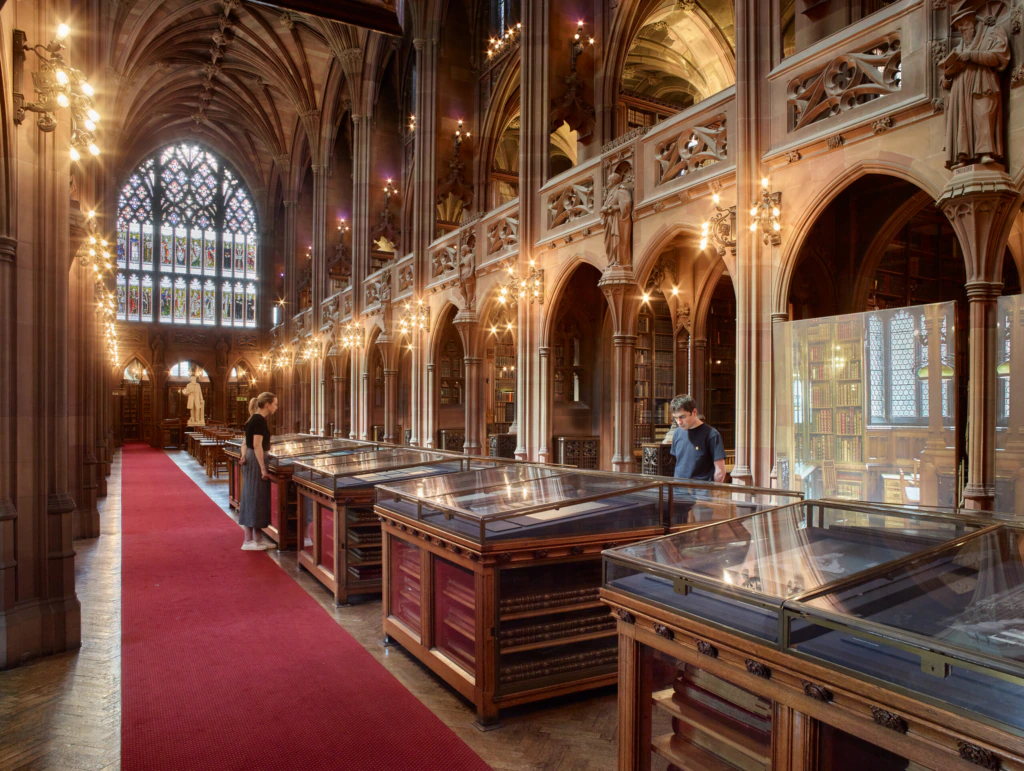
look like it’s changed in a hundred years. And that’s a good thing. With its high vaulted ceiling and book nooks, it is a place where you want to sit and get lost in research.
Surrounded by leather bound volumes amid abundant oak panelling, you feel part of something solid, unchanging, a link in an unbroken line of scholars who once sat where you sat.
Appearances can be deceptive as this is not what the library is about at all. When Enriqueta acquired the library’s two foundational collections – those of the 2nd Earl Spencer and the 26th Earl of Crawford – she made waves by insisting that they sit alongside more modern works.
Advertisement
While it is no doubt a scholarly institution, the central display in the reading room makes great play of its history of allowing people of all learning interests and backgrounds to enjoy the books on offer here.
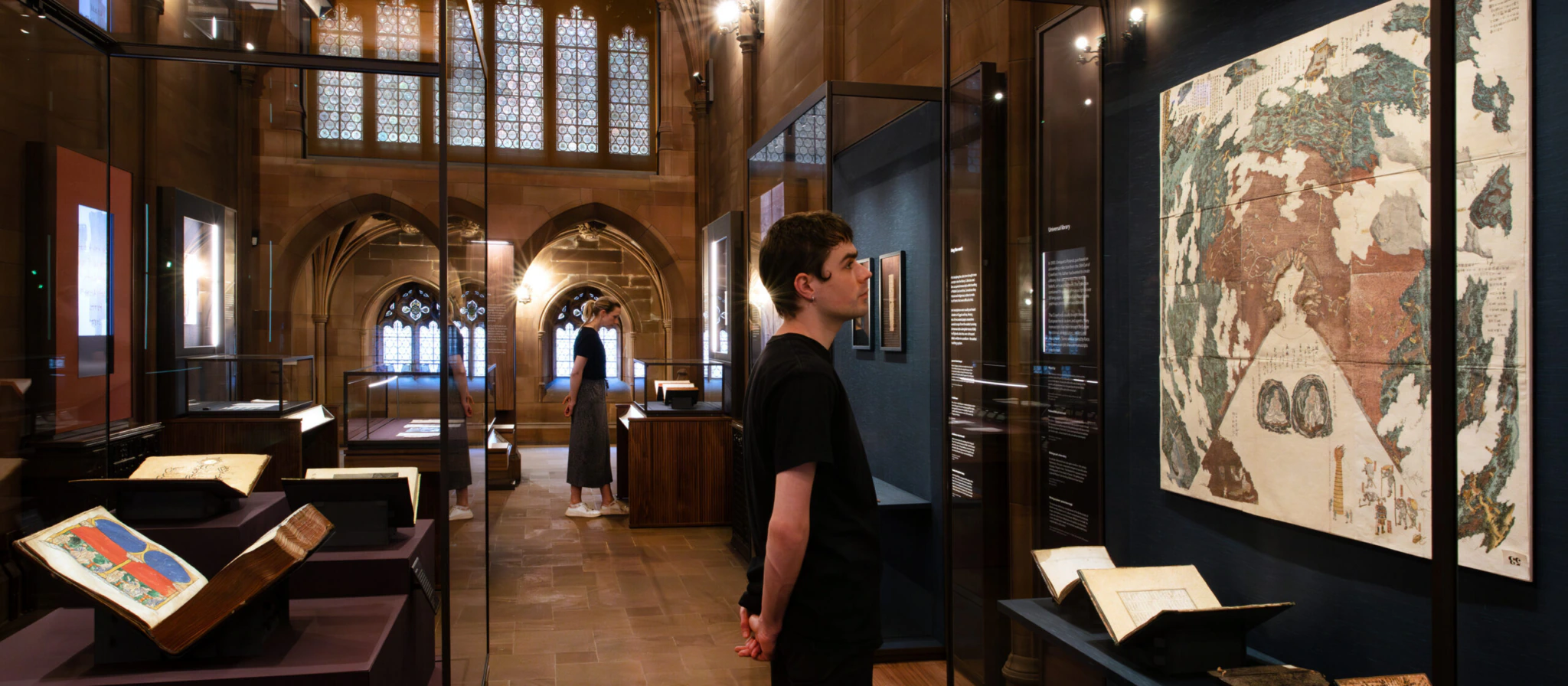
The jewel in this gem of a library is its Collection Gallery. I love a good treasures gallery in the same way that I love a good Wunderkammer – it’s a chance to see an assorted collection of stuff with no connection other than that it’s interesting. With treasures galleries it’s often a chance also to have a celebrity experience and to see objects you might have only have seen on television.
However, I’m often left with the nagging question of who gets to decide what is and isn’t a treasure. I know that it’s probably a succession of white, male curators and I wonder what effect their decision to put some things in cases and leave others out has on the people who don’t see themselves there.
To an extent, the library hasn’t been able to fully answer this question, but I think it has got closer than a lot of similar galleries I’ve visited. It acknowledges that the items on display weren’t always collected in a way we’d find ethical today and notes that much of John Rylands’ wealth came through the exploitation of enslaved people.
Original vision
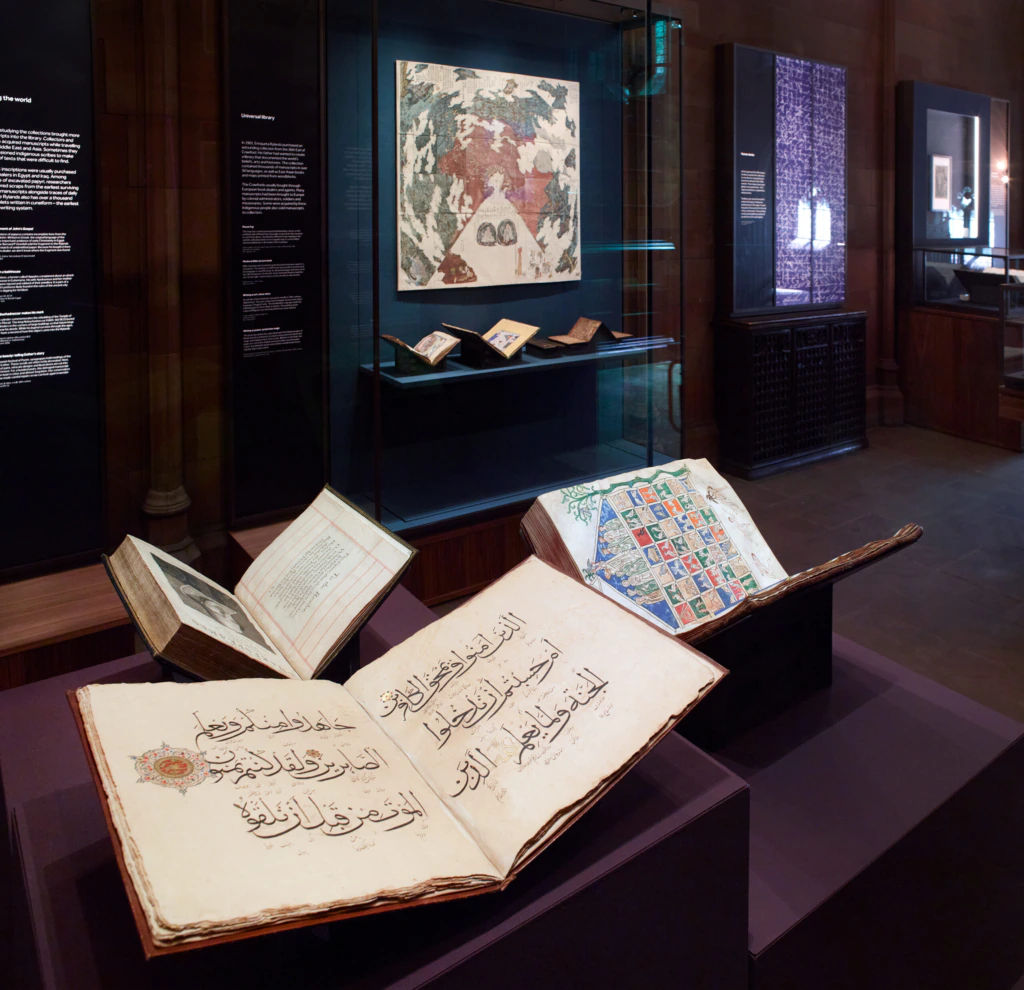
There are of course still the superstars you might expect to see in such a gallery. A first folio of Shakespeare’s Comedies, Histories & Tragedies brings you face to face with the big man himself. Open at the first page, it entreats the reader to “looke Not on his Picture, but his Booke”.
Advertisement
A tiny fragment, thought to be one of the earliest examples of the New Testament takes pride of place. Alongside this nestles items such as a trilingual Qur’an and the Megillat Esther that celebrate cultures representative of Manchester’s diverse citizens.
What impressed me most was that the Collection Gallery stays true to Enriqueta’s original vision for the library, giving prestige also to modern treasures from Manchester’s past. An optical toy depicts the suffragette Christabel Pankhurst escaping the police, while a 1981 Free the Bradford 12 newsletter shows local campaigner Anwar Ditta marching for racial justice.
My favourite object is the diary of Rob Gretton, manager of Joy Division, which outlines his manifesto for the band. Its anti-establishment ethos feels like an expression of what the library, in its own gentle way, is trying to do.
The gallery, a fitting home for the Peterloo Relief Fund accounts, recognises that Manchester’s real treasures are the rebellious spirit and innovation of its people.
The team at the John Rylands Library should be proud of what they have achieved with this latest renovation. They have preserved not only Enriqueta Rylands’ building and library but also her spirit. In doing so, they’ve managed to make it something unique – a true treasure for the people of Manchester and beyond.
Jamie Taylor is the director of collections, programmes and learning at the Thackray Museum of Medicine in Leeds
Project data
Cost
Undisclosed
Main funder
University of Manchester
Architect and lead designer
Donald Insall Associates
Exhibition design
Nissen Richards Studio
Main contractor
HH Smith
Exhibition build
Setworks
Showcases
Meyvaert
Graphic production
Displayways
Lighting design
DHA Lighting
Mounts
The John Rylands Library
Exhibition accessibility
Hada
Admission
Free


