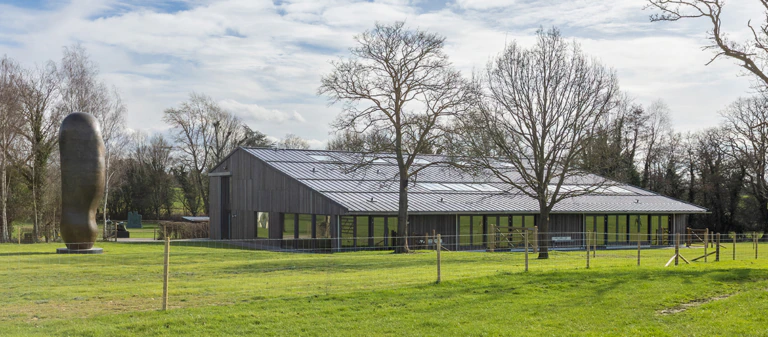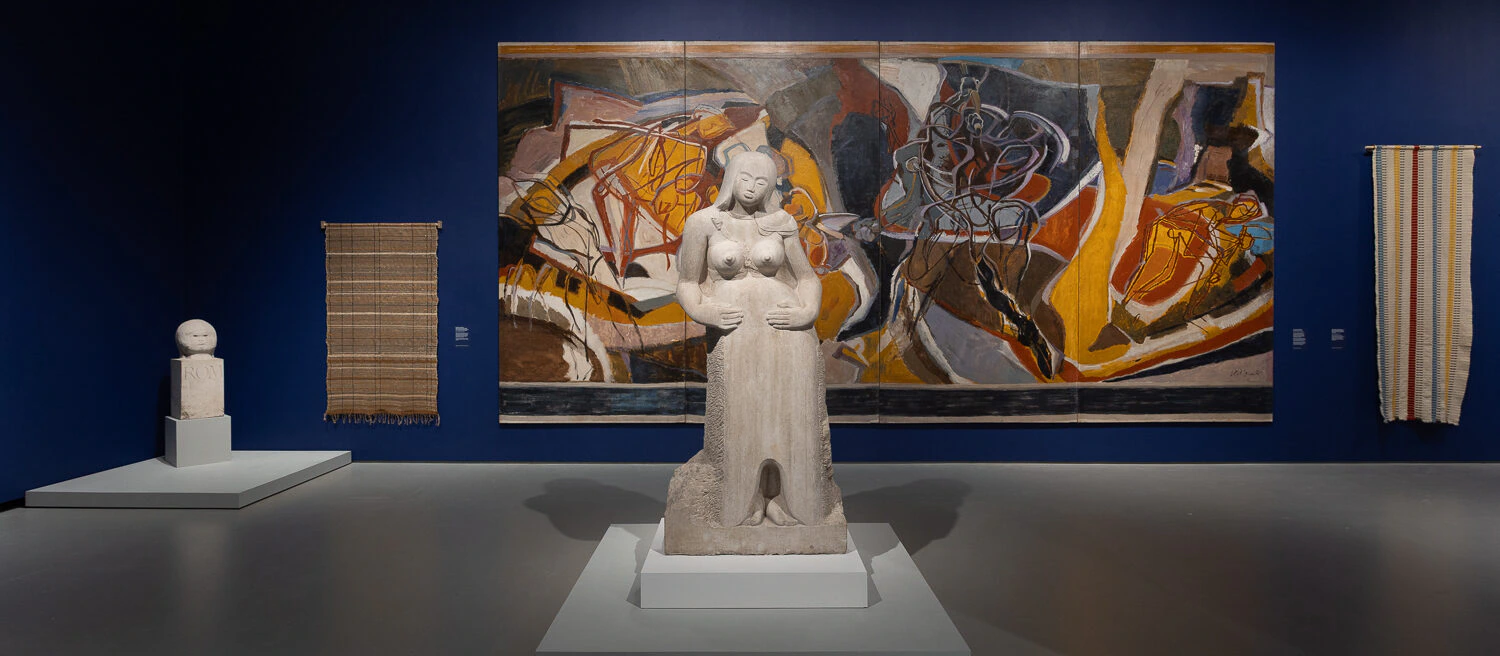
The Towner’s 2009 relocation to a 21st-century purpose-built iteration of modernist architecture, designed by Rick Mather Architects, provides the perfect setting for its exhibition Sussex Modernism (until 28 September).
The Towner was the Art Fund’s Museum of the Year in 2020 and is pursuing a powerhouse drive to put the Sussex region on the map, in terms of cultural thinking, debate and public access.
This will include a new designated gallery space for the Ravilious Collection, opening on 26 September, where some of Ravilious’s works – watercolours, preparatory drawings, prints and ceramics – will always be visible, alongside his contemporaries including women artists, including his wife, Tirzah Garwood, and the Collection Library.
Towner Eastbourne is also involved in a joint development, with Eastbourne Borough Council, transforming Black Robin Farm into a new centre for art, heritage and nature in the South Downs National Park. Art forms that address “landscape, place and environment” are key to the Towner’s current acquisition and display policies.
Twentieth century beginnings
Originally opened in 1923, the Towner assumed responsibility for the South East Arts Association Collection of paintings and works on paper and pursued the “Pictures of Sussex” acquisitions policy.
Advertisement
The presence of an artist-curator, the abstract painter, William Gear, from 1958-1964, a breed of institutionally based curators who have now virtually disappeared (the Towner’s new director has a fine art training), sought to challenge this approach: Gear’s contribution and his paintings feature in Sussex Modernism.
In the substantial accompanying publication, Sussex Modernism (Yale University Press), Hope Wolf, University of Sussex, the guest curator, explores the cultural frameworks in which UK public museums and art galleries operate.
While the synonyms “provincial” and “regional” were often equated with “cultural backwardness”, Harold Mockford was one local artist happy to be labelled provincial.
Wolf brings her faultless scholarship to the handling of alternative textual strands, arguing that “provincial” was seen by some as expressive of a positive stance of separateness and opposition to centralised government, lifestyle choices and pervading class structures.
Images such as Eric Ravilious’s Long Man of Wilmington are instantly recognisable as geographically specific, but Wolf’s thesis argues for a much broader definition of Sussex’s cultural identity as “ composite, ever-changing cultural form”, where artists and writers continued to come and go, finding their sources of inspiration in rural and coastal retreats, urban streets, seedy bars (the artist Edward Burra openly satirised Sussex, and is represented by several works including Hastings Pub) and rubbish dumps, offering “polyphonous visions”.
Advertisement
Midcentury modern
The main focus of the exhibition are the period from 1910 to 1980 when “many different modernist movements sprang up, fizzled out or were adapted to meet new needs”.
Pioneering initiatives, some little known, are revealed in this exhibition alongside the more familiar presence of Virginia Woolf’s experimental writings and Bloomsbury art.
These include Miller’s, a commercial art gallery, which Clive Bell hoped would nurture “a new regionalism”; Jacob Epstein’s and Eric Gill’s unrealised collaborative planning for a “20th-century Stonehenge”; Edward James, the self-styled “Horticultural Einstein” (used as an exhibition heading) and his idiosyncratic garden design at West Dean; and the psychoanalytic writings and art of Marion Milner.
Diverging aesthetic juxtapositions abound in the selection of works on display, so as to question received ideas surrounding modernism, and attendant internationalism, and the role of imagination in creativity.
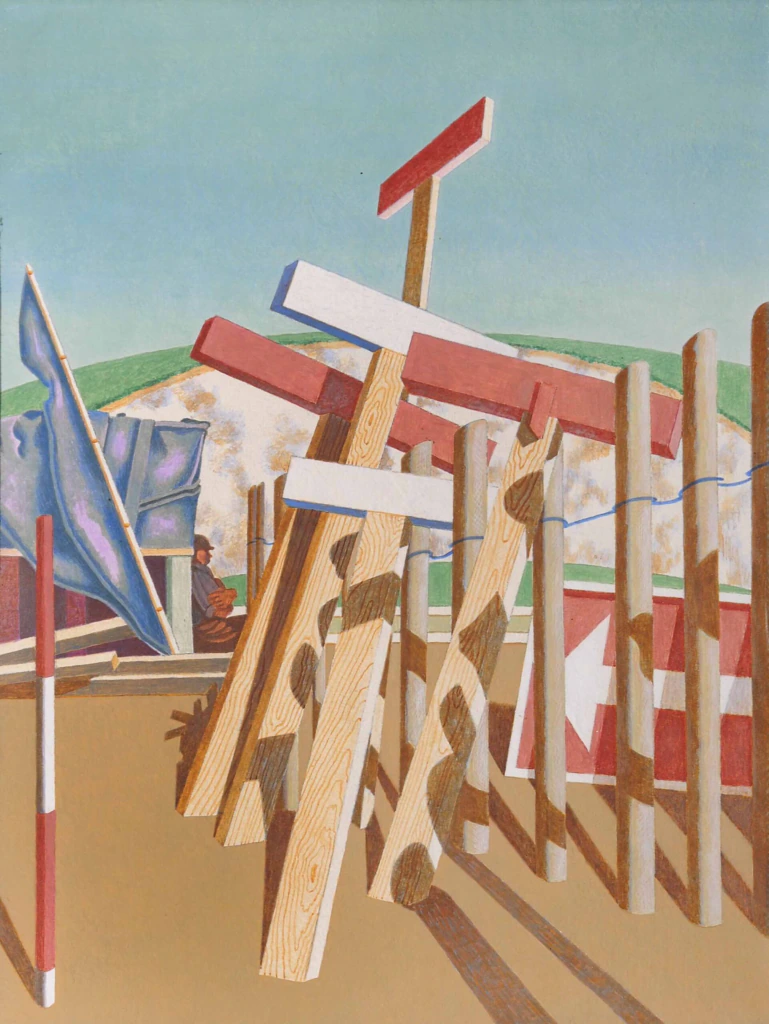
For example, adjacent walls show several of surrealist works by Edward Wadsworth and the delicate poetically conceived watercolours of David Jones.
Advertisement
The selection of artworks is also attuned to contemporary history of art contextual theories and subjects: left-wing politics, feminism, sexuality, race and “outsider” art.
The exhibition is split into sections, titled Magically Situated, which addresses regional folklore; Still Point, under which the “jostling perspectives” of Virginal Woolf and Kabe Wilson, a contemporary artist, are explored; and Anything will Happen (the inscription on Gus Cummins’s painting of the repurposed St Mary’s) encapsulates the legacy theme, hung adjacent to Lazlo Moholy-Nagy’s photograph of the pioneering Bexhill-on-Sea De La Warr Pavilion of 1935.
As a form of visual experience, the exhibition is compelling. There are more than 100 works of paintings, sculpture, works on paper (including photography), film, textiles and literary text from the late 19th-century to the present day.
A vortex of art
A copy of the publication “Blast” – made by artists who were part of the early-20th century art movement “Vorticism” – sits in a centralised case, like an incendiary device, in the exhibition’s opening gallery space.
The vorticists were the primary modernist movers in British art, who rejected “conventions of representation” and embraced the man-made of a “new age”.
Free-flowing gallery spaces, together with a spacious hang, allow the visitor to marvel or quietly contemplate works such as Epstein’s monumental Maternity and Bill Brandt’s photograph, River Cuckmere.
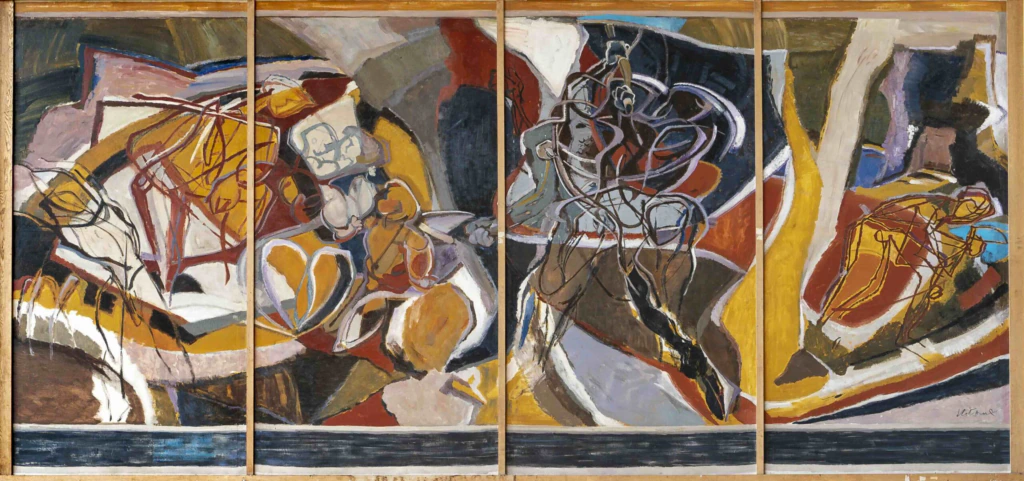
A rare opportunity to see one of Ivon Hitchens’ largest works (usually hung high up in the University of Sussex’s refectory) Day’s Rest, Day’s Work, was made possible by conservation funding (University of Sussex AHRC and Impact Acceleration Account); the Towner incorporated both a public talk and viewing of in-progress conservation.
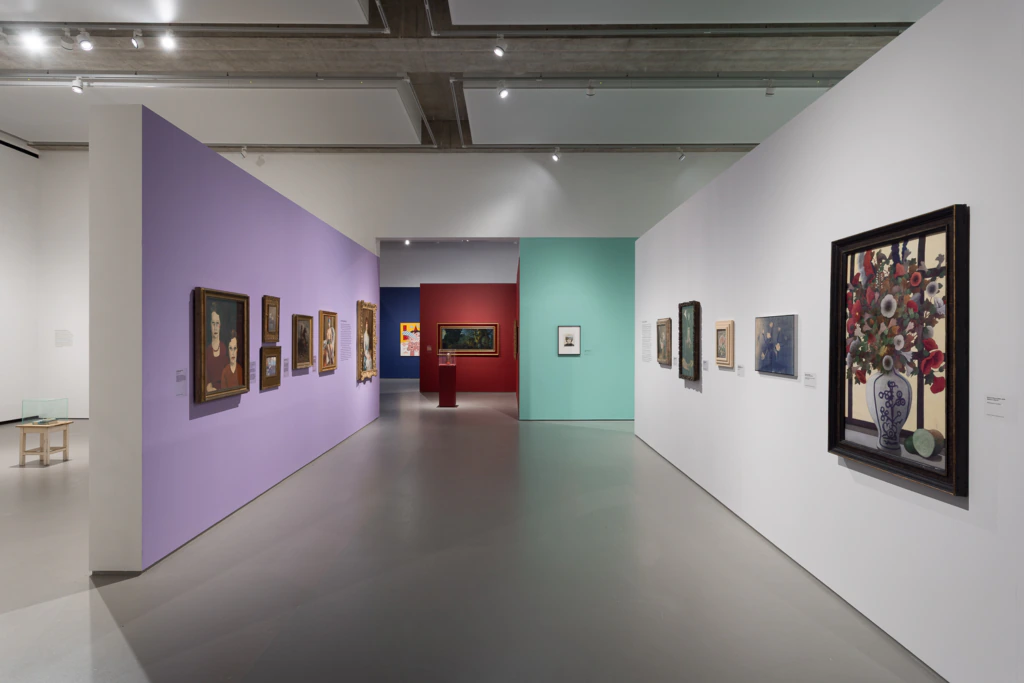
Lively coloured walls – pink, lilac and mint green – which are optically light and bright, are zoned so as to work well with the more tonally subdued Prussian Blue and Earth Red: together all serving to define each space as a more intimate form of engagement.
After the first introductory gallery space, visitors can choose their orientation route in the exhibition, although the final gallery ends with recent works.
Vorticism promoted the rejection of the natural (although Vorticist landscape paintings do exist).
In terms of visual experience, Vorticism’s legacy of hard-edge image-making of diagonals and angles, which celebrated all man-made and urban, appears as a counter theme to the curves, textures and organic forms in the exhibition: for example, the artist Gluck’s diminutive landscape painting Sulky Spring, Southease, and the marble Coffer by Henri Gaudier-Brzeska.
Undulating curves are, of course, part of the natural progression of the Southern Downs, while its geological significance appears encapsulated in Jacob Epstein’s Flenite Relief.
This show is a masterclass in how to create a non-linear narrative exhibition, which addresses the culturally overlooked imaginative enquiries pursued by forward-looking regionally based artists, both past and present.
Such regional narratives need to be part of our national cultural discourse and educational programming. In this, national institutions, such as Tate Britain, could do well to designate gallery space to receive regionally initiated (in the best sense of the word) touring exhibitions such as Sussex Modernism.
Angela Summerfield is an artist and author, and formerly a senior curator at the Royal Academy of Arts, London