Cornwall Museum and Art Gallery, formerly the Royal Cornwall Museum, undoubtedly has the largest and richest collections relating to the history of the area. But the organisation has suffered from complex funding challenges in recent years and its latest redevelopment is part of a wider plan to address this uncertainty.
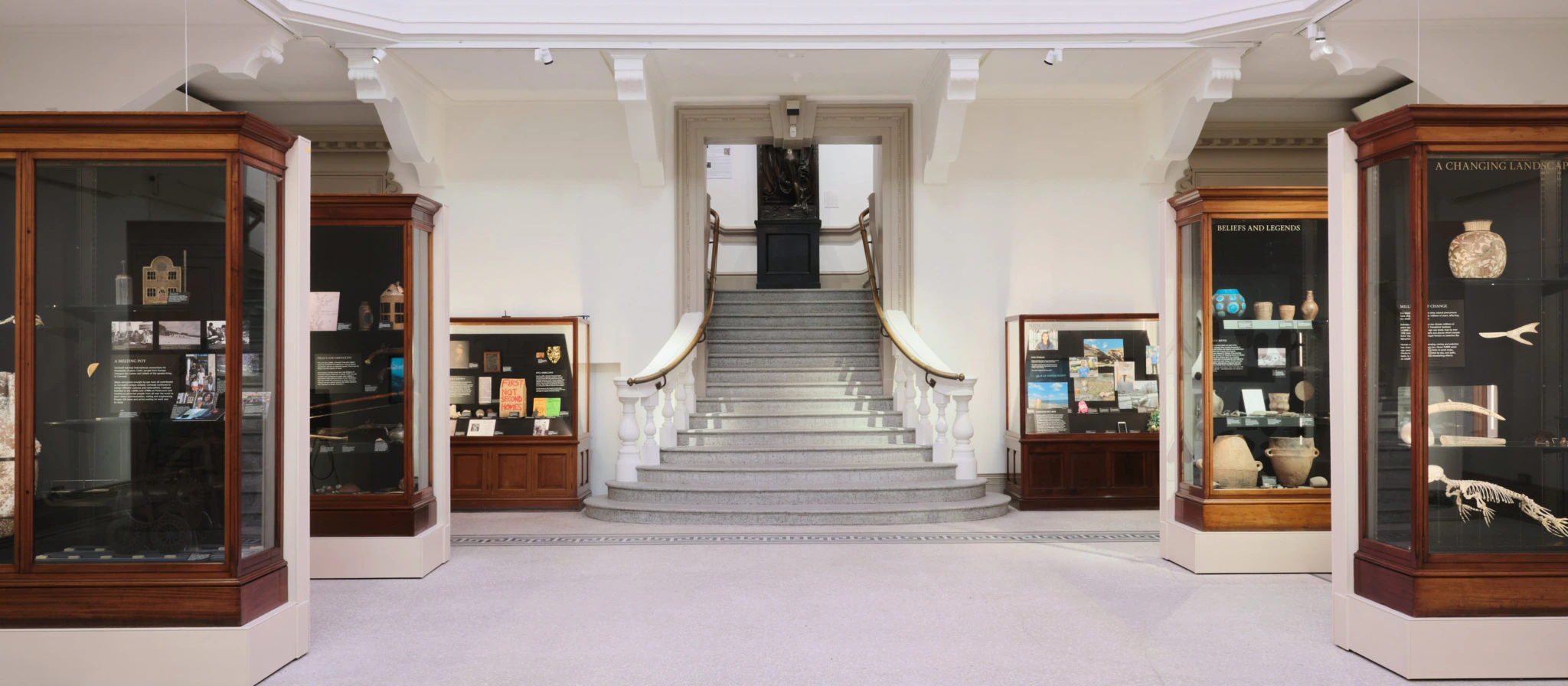
The redisplay extends to the ground floor galleries and the upstairs balcony, overlooking the Heart of Cornwall Gallery, which interprets the history of the county and remains the introductory gallery.
All these spaces, which are available to hire, have improved lighting, fresh paint, refurbished cases, better and more seating and new interpretation. For frequent visitors this central space feels very different.
I heard a family hunting for their old favourites say: “I like it, but where are all the objects?”, while another visitor commented: “They’ve had a good clear out. It’s much better now.”
There are two key changes, most noticeably the physical rearrangement of the old, beautifully refurbished and now easily adjustable cases, relocated from the walls into two columns. Sight lines and the space are much clearer and the objects are corralled.
Advertisement
The other change is moving from a chronological display to thematic interpretation. To achieve this, a number of external specialists and stakeholders were engaged to aid object selection and create the balanced narrative in a succinct manner.
This is a successful approach for a museum that has a small staff but large, specialised collections. There is breathing space here, both physically and intellectually.
Focus on | Exhibition design
Operating between our central London design studio and our Yorkshire workshops, we specialise in creative conservation, bringing imaginative thinking and modern technology into historic settings and heritage experiences.
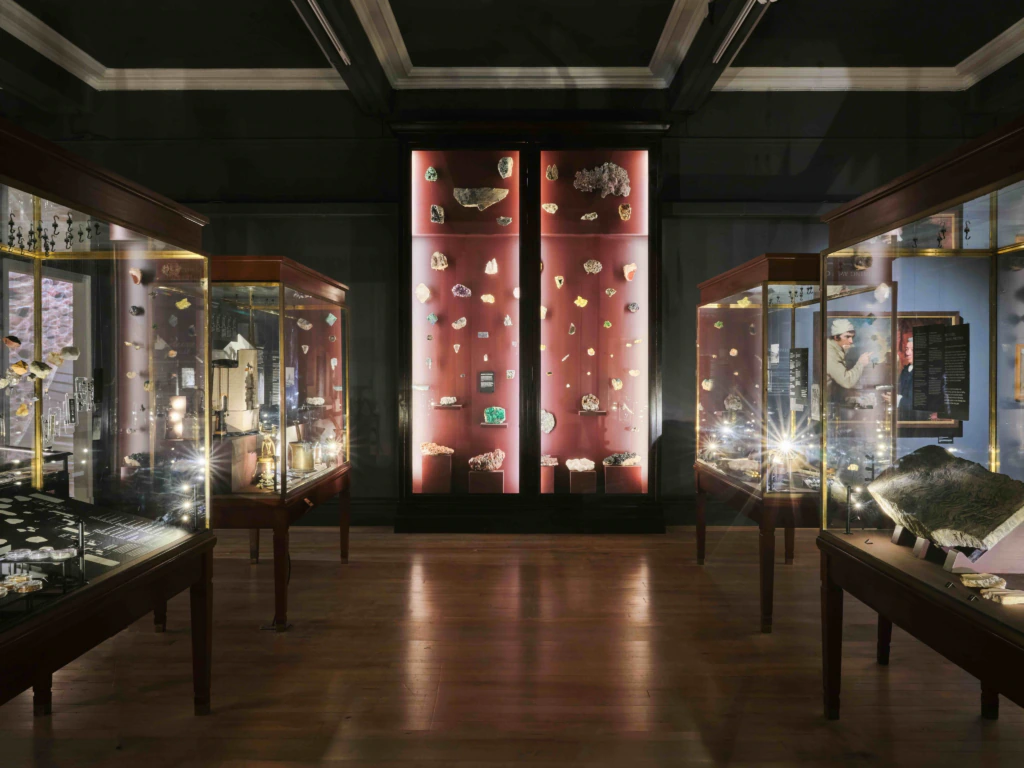
The team was initially commissioned to reimagine the museum’s Mineral Gallery. Our design of the lighting, cases and atmosphere put this globally important collection of minerals front and centre, making it more accessible.
We also incorporated an immersive Digital Lab for lectures, workshops and video content about the collection. And we worked with paint specialist London Pigment to create a new mineral-based pigment for the gallery walls.
Following this we worked with the museum to transform the Heart of Cornwall, Nature, and Art galleries. In the Nature Gallery, we looked at humankind’s impact on the environment, explored through a mixed collection that intertwines handmade objects with the museum’s natural history collection.
In the main gallery, we stripped back previous design iterations to reveal the beautiful architecture that had been obscured by it. The result is that the heart of the museum is now flooded with light, giving the art and artefacts more impact. Similarly, we ensured the cases in the main gallery can now be moved to seamlessly facilitate different events.
In summary, our simple design approach has created a cohesive overall design across each space, with an emphasis on craftsmanship, quality and immersive experiences. There is a sense of renewal without losing the museum’s charm.
It has been a privilege to work with the museum team, who take huge pride in the collection and put community at the heart of everything.
James Wignall is a founding director at design firm Wignall & Moore
I would have liked to see more provision for younger audiences, such as smell boxes at different heights and a greater breadth of objects for all ages. However, I appreciated the clearly written text, reuse of materials and good mixture of AV experiences.
Also impressive was the telling of Cornwall’s myths and lesser-known stories, such as the life of Joseph Emidy, an enslaved musician abandoned in Falmouth in 1799 – all testament to a museum fully engaged with contemporary best practice.
Mine of information
It is difficult to condense the history of Cornwall into so few words and objects – only a few lines of text are provided in a top-level interpretation plaque. Some visitors will want more, but this is history in headlines. Signposting to the museum’s own undisplayed collections, other collections or historic sites would be useful here.
It also begs the question of what the relationship is between county museum and county council is.
Advertisement
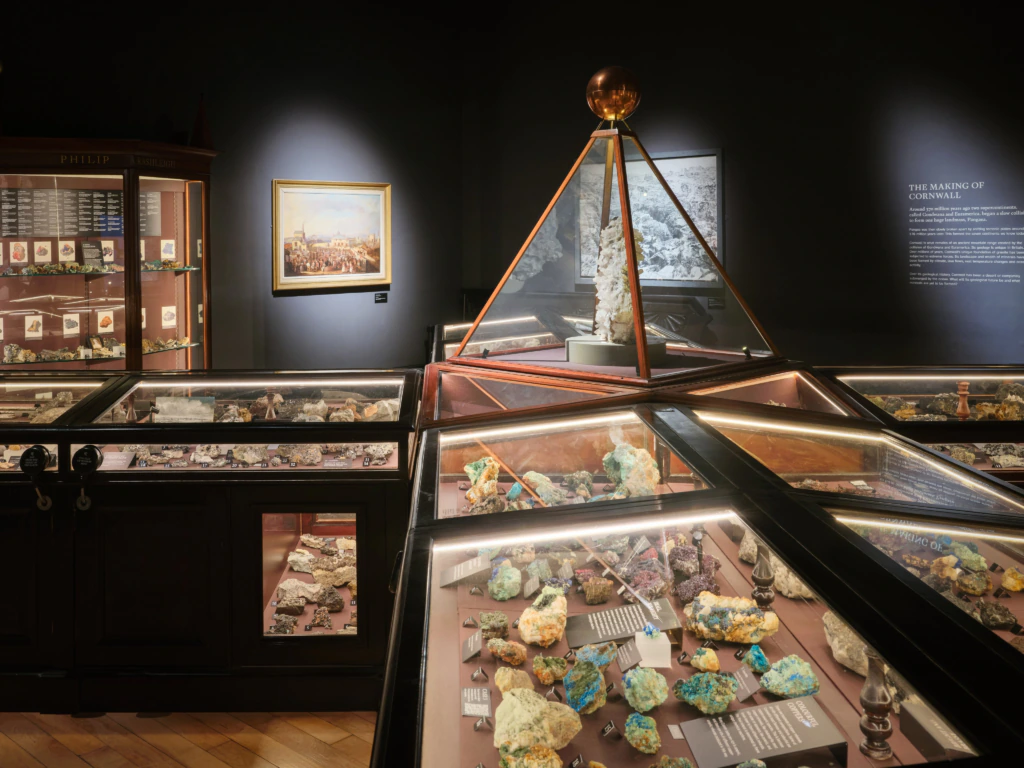
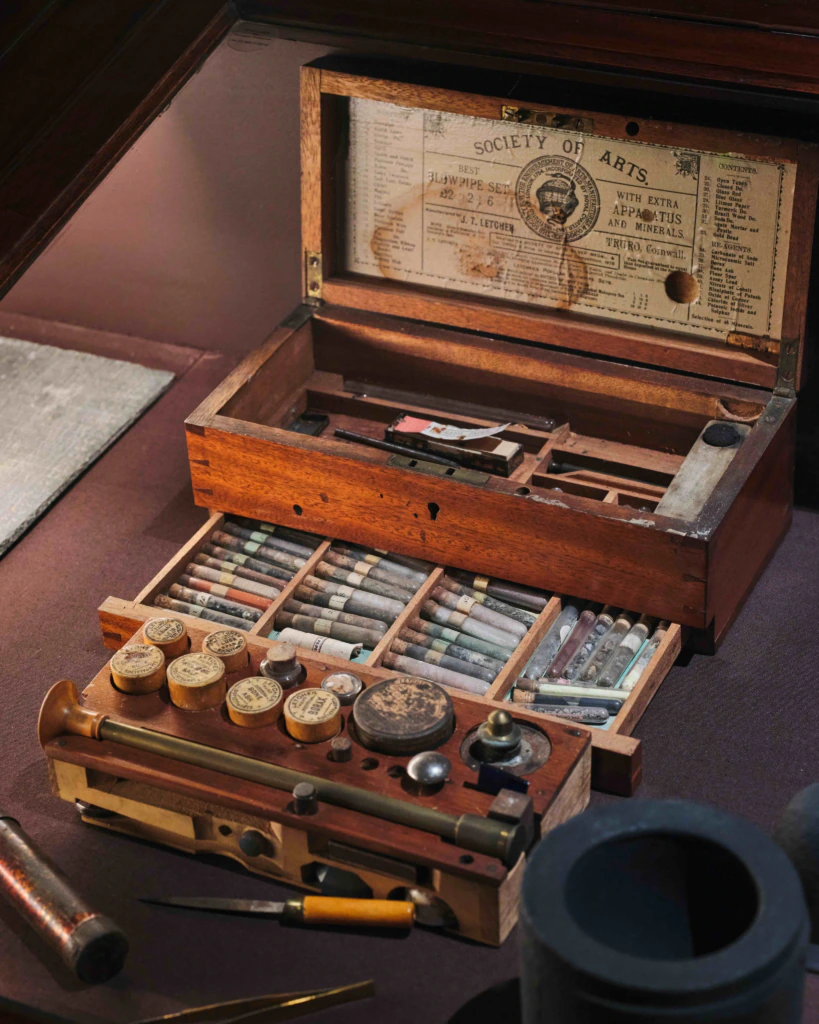
Much consideration has been given to the Rashleigh Mineral Gallery redisplay. It is full of geological specimens, but also clocks, models and fine art combining different disciplines to create a unified and compelling story – also a great opportunity to show works from the art collection.
Interpretation is light with more information accessible through QR codes, an approach favoured since Covid. The lighting is dramatic, giving the space a hallowed atmosphere. It has been divided into two to create a digital “laboratory” within the gallery, but it was unclear how this affected the interpretive scheme and visitor activity. I would have liked to have seen it in action.
My favourite object was the Levant Mine clock, which has beautifully painted bucolic scenes depicting mining in sharp contrast to the grim realities of the industry.
You are reminded that mineral extraction, while producing the raw materials for many essential items (an exploded phone part was especially effectively displayed), has a great many environmental drawbacks, in addition to economic benefits. Overall, I found it a creative and effective interpretation of mining, with which Cornwall is synonymous.
Striking displays
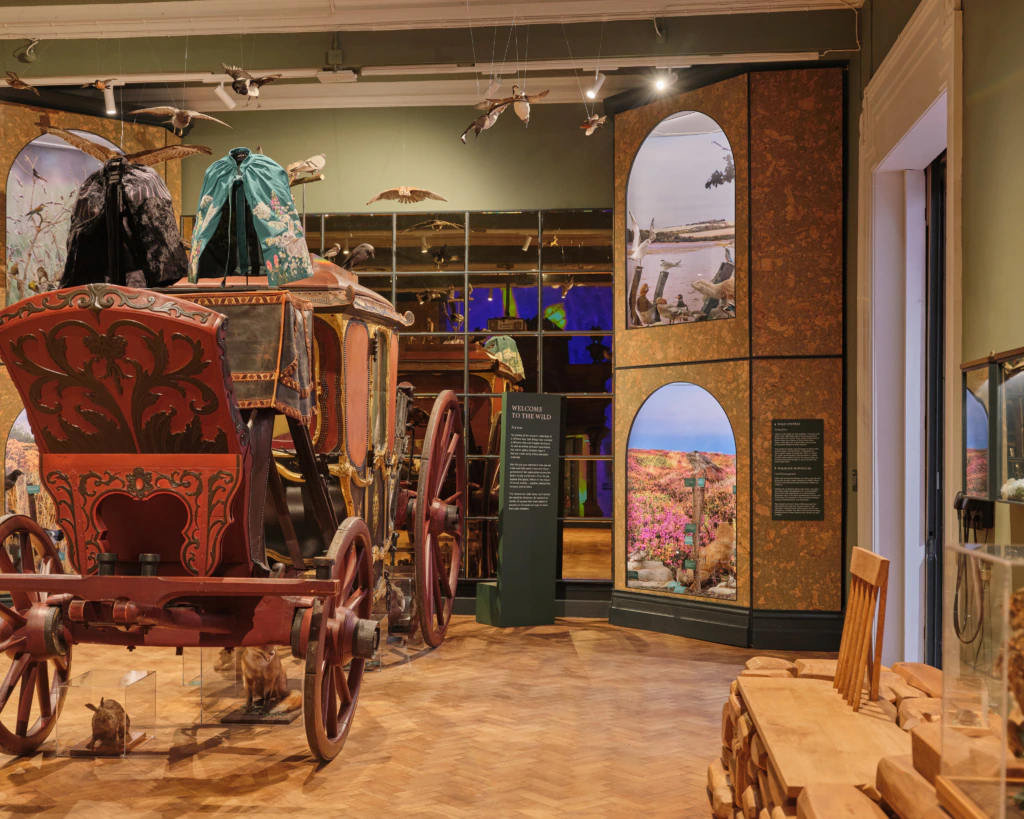
The Bonython Natural History Gallery looks remarkably different. The centrepiece is a carriage that used to be in the introductory gallery. Using the premise that many objects are made from animals and the natural world, the team made a virtue of not having to move this large object into storage.
Advertisement
Underneath, on top of and inside the carriage are cases showing some of Cornwall’s fauna – two badgers, a hedgehog, a fox and more. Inside the windows are striking displays of butterflies. I was not convinced, however, that it worked either as an artistic installation or a display of new curatorial practice.
I preferred the more traditional panoramas of birds and animals left from the old gallery, especially the bird display. Cornish names were given alongside the common names, which gave a stronger sense of place and linked to the Kernewek (Cornish language) AV presentation in the adjacent gallery.
The upper display cases were set so high that it was a challenge to see the specimens. I enjoyed the impressive flock of birds on open display “flying” around the carriage, but painful professional experience makes me worry about moth damage.
One family activity area can be found here, using two old cases. One contains dressing-up clothes, the other encourages visitors to become “the human exhibit”. It was ambiguous whether this was intended to draw parallels with imperial collecting of the past.
Making room for art
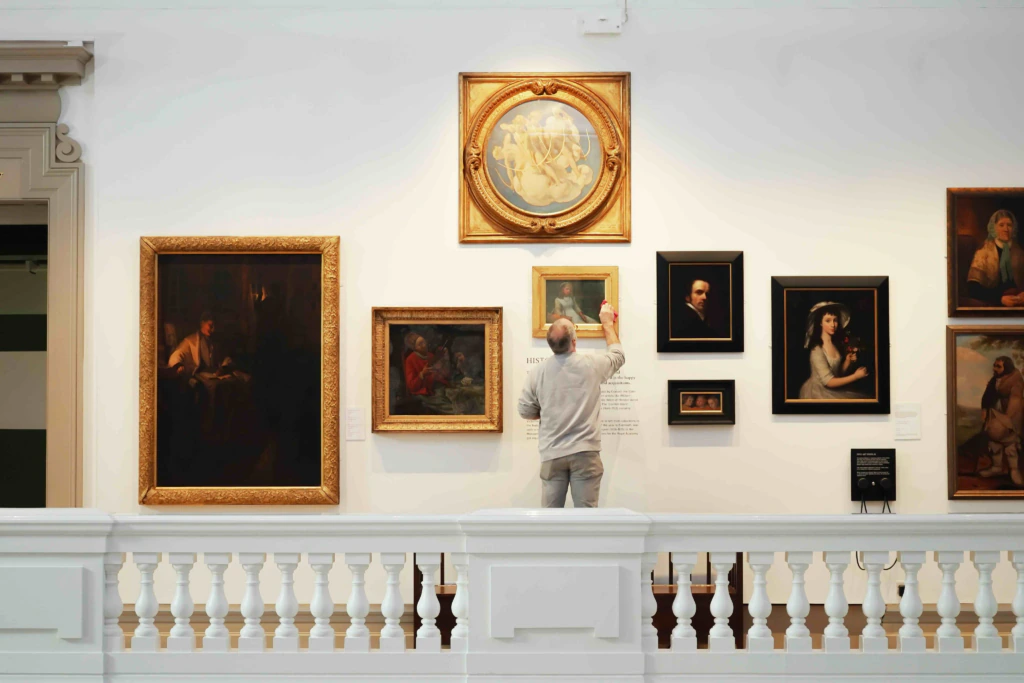
The casualties of redevelopment were more noticeable in the balcony gallery, with three walls of cases previously filled with applied and decorative arts now reduced to one. The remaining walls were redisplayed with a salon hang showing Cornwall’s colony of artists and historic collection.
It is an attractive gallery and gives weight to the inclusion of “Art Gallery” in the organisation’s new title.
Indeed, this is a case for “less is more” and I’m generally a “more is more” person. Capturing a whole county’s history in one space was never going to be easy. It was inevitable that some stories and objects would not be included or given the depth they deserve.
However, focusing on fewer objects with essential text has facilitated clearer, crisper displays and opened up the gallery spaces, while allowing more opportunities to show the museum’s art collections.
The redisplay shows great ambition in reconsidering audiences, mission, engagement and a search for financial security in an unstable world. I look forward to seeing more.
Sarah Riddle is a curator for the National Maritime Museum Cornwall in Falmouth
Project data
Cost
£2.3m
Main funders
Cornwall and Isles of Scilly Good Growth Programme, managed by Cornwall Council; Truro Town Deal
Architectural design
Wignall & Moore
Lead designer
Wignall & Moore
Carpentry
Brend Fine Furniture
Interpretation strategy
Headland Design
Project management
Jackie George
Exhibitions
Tony Foster: Exploring Time, 8 July-25 October
Admission
Adult £10 (free for Museums Association members); under 18s free