On entering Space: Could Life Exist Beyond Earth? at the Natural History Museum, visitors are immediately confronted with the exhibition’s ambitious scale: a vast globe covered with microbes. The uncomfortable, cosmic question of whether or not we’re alone in our universe is inescapable.
What comes through most effectively, however, is the exhibit’s appreciation of life’s improbability – a confrontation of our own good fortune in being alive to visit the showcase at all.
In this space, the sunlight sneaking through the gallery’s blackout curtain feels just as miraculous as the stars the museum has brought down to Earth.
The displays explore how life began on Earth, what conditions it needs to develop, and where else in the universe it might one day be found.
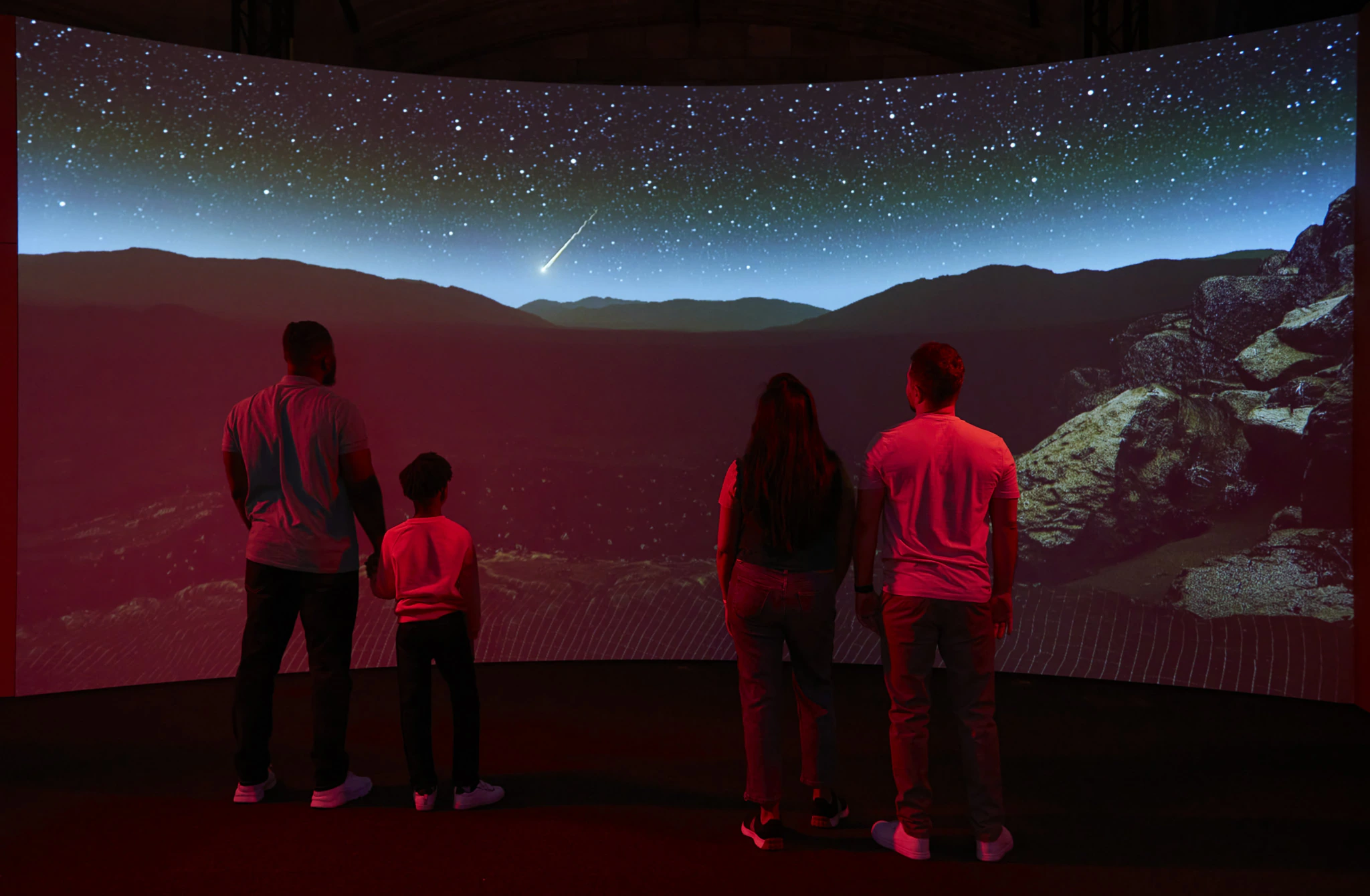
The visit begins on Earth to examine the conditions that facilitated life, before exploring asteroids and meteors and visiting Mars. It’s then just a quick stop at the moon and other icy planets, before we’re posed the exhibit’s biggest question in an interactive game of prediction.
Advertisement
The show does well to avoid speculation for the most part in favour of a touching meditation on Earth’s own development. With a contemplative soundtrack thrumming in the background, visitors might feel themselves at the centre of the universe. The showcase emphasises tactility over an excess of information, with polished slices of meteors and bottled planetary scents available to touch and sniff.
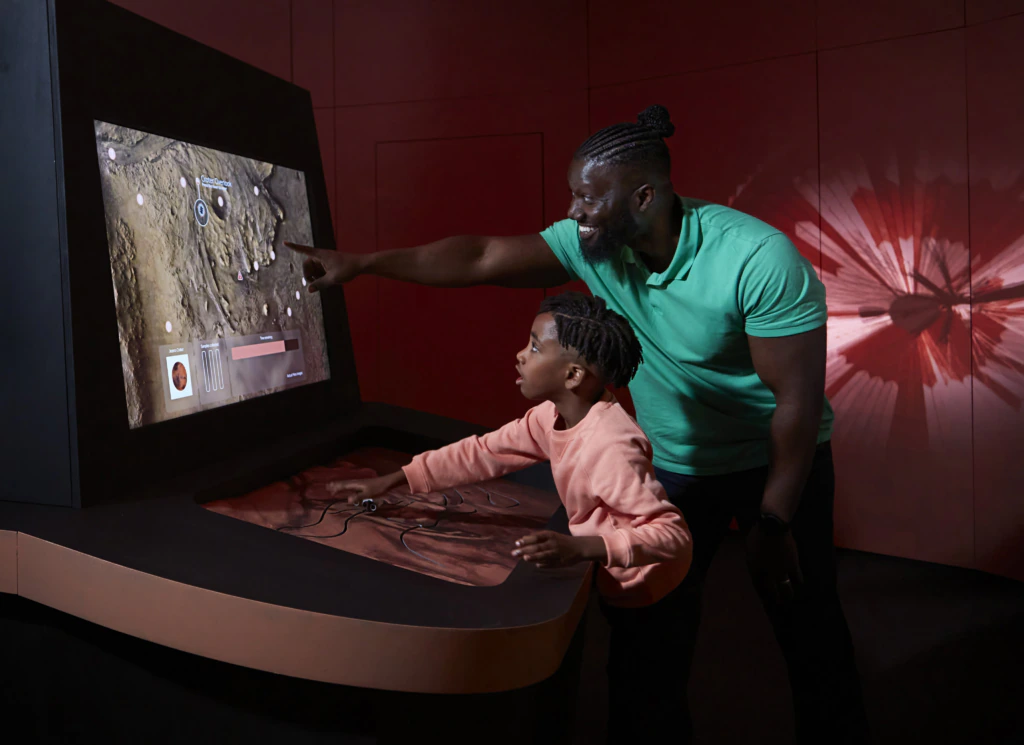
Space encapsulates a light sense of play that its titular question might not at first suggest. Interactive games pull in the attention of both parents, children, and solo visitors, bridging back towards that innocence sense of wonder that space exploration represents to a child.
Highlights include guiding a Mars rover on an exploration mission to gather samples that might hold the key to finding evidence of life on the planet, while the game of chance that is life’s development is playfully reflected in a spinning wheel of fortune that details the necessary resources that allows microbes to grow.
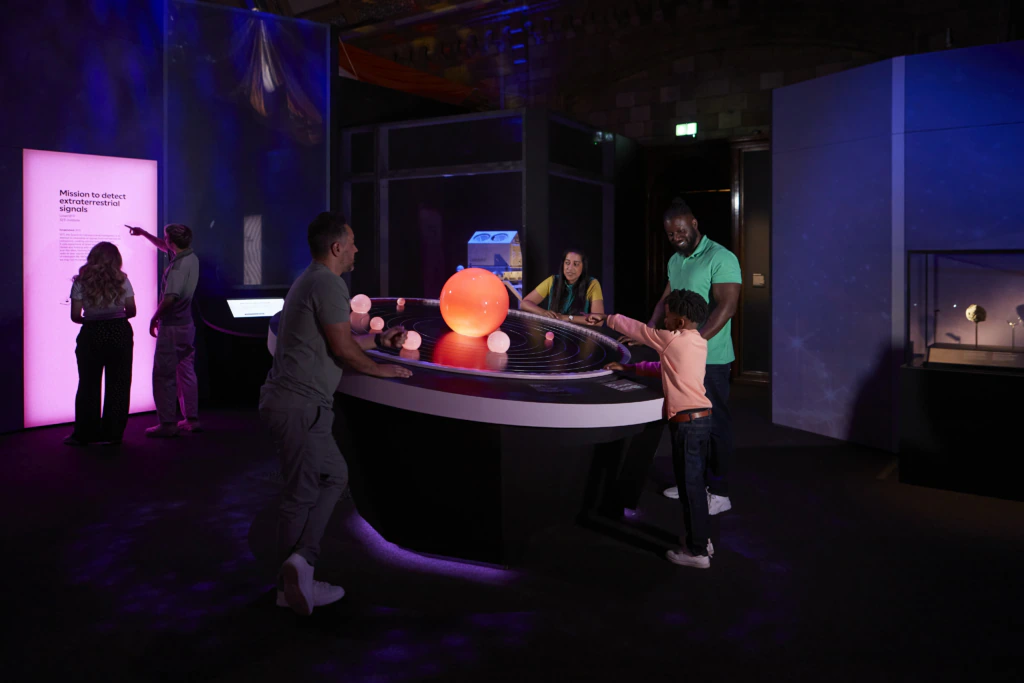
The exhibition embraces the fun to be found in the unknown – finishing up with a detailed map of our known universe, we end on a lighter note of what lifeforms might be found in the mysterious playground of space. Hopping between motion-activated spotlights, circular screens unveil these unknown creatures.
But visitors might still be preoccupied with the large glass case standing just outside this last room, showcasing the oddities and adaptations that Earth has borne witness to. After all, who needs aliens when our own planet is host to gutless worms and scaly-foot snails?
Space: Could Life Exist Beyond Earth? runs until 22 February 2026. Entry is free for Museums Association members