The internet changed everything, from the way that we work to how we interact with our friends. It also changed art and museums, in less obvious ways. We still walk around public galleries to look at physical art and objects much as we did 50 years ago, even if we now have our phones in our hands.
Museums still help us to rethink and reassess what we know about the past. As art passes from the contemporary to the historic, as collectors pass work to institutions, and curators create bodies of knowledge about moments and movements, exhibitions offer us new ways to look at the past and at our culture.
And so, Electric Dreams: Art and Technology Before the Internet at Tate Modern rethinks the recent history of digital art. It explores how artists saw the promise of computers, and of thinking like computers, before networked computing became ubiquitous. It offers you the chance to immerse yourself in the art and culture that existed when there was something still magical and beguiling about electronics.
It’s a surprisingly popular approach. This isn’t the kind of digital art exhibition that’s full of immersive gigapixel environments, but it was packed both times that I went to see it, despite a hefty ticket price. Audiences, including plenty of children, seemed genuinely engaged with what is at times a rather intellectualised history of digital art.
The exhibition itself snakes in a U-shape through half a floor of Tate Modern in a roughly chronological path covering the second half of the 20th century and the beginning of the 21st.
Advertisement
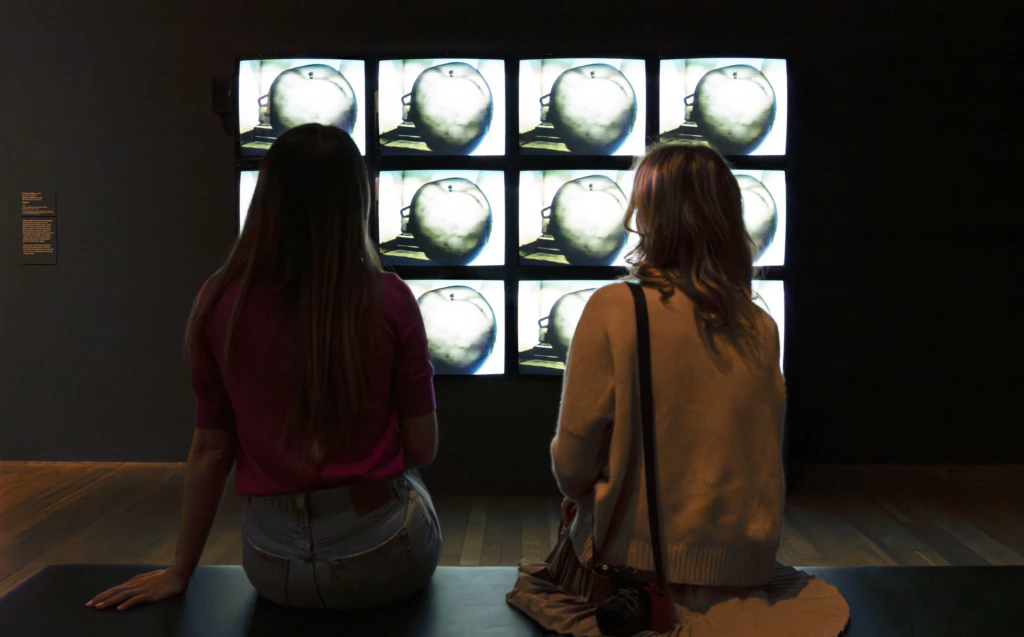
It eases you in gently with Atsuko Tanaka’s fabulous but weighty Electric Dress and Steina and Woody Vasulka’s multi-screen video Matrix II. It hints that digital technology enables both creative florescence and social control. On the walls, a potted glossary offers helpful but slightly patronising definitions of terms such as“Binary Code” and “Punched Cards”.
Art movement
The next stop is kinetic art, which has long shared with digital art a desire to programme the movement of images and objects. Here, a substantial shout should go out to the work of Tate’s conservators and technicians who have made it possible for older works by kinetic artists such as Liliane Lijn and Davide Boriani to still move.
Many of these works need time to rest between exertions, but this has been done equitably with short activity and resting periods, so everyone gets a chance to see them in motion.
The exhibition focuses on groups, galleries and significant exhibitions, as well as single artists. It is international in scope, including not only London’s Signals art gallery but also Zagreb’s Nove Tendencije group and Italy’s Arte Programmata movement.
Some of the works in this section, like Mohsen Vaziri Moghaddam’s geometric reliefs, owe more to the idea of numerical progression than to actual computers.
All that changes around the halfway point, where the exhibition pivots from artists thinking computationally to artists working with computers. Sounds and screens begin to emerge, and it becomes clear that this exhibition is not only packed with people, but also with an enormous number of artworks.
Advertisement
Part of this must simply be down to the weight of an international survey show, but there might also be a bang-for-buck factor. A full-fat ticket for Electric Dreams will set you back £25.
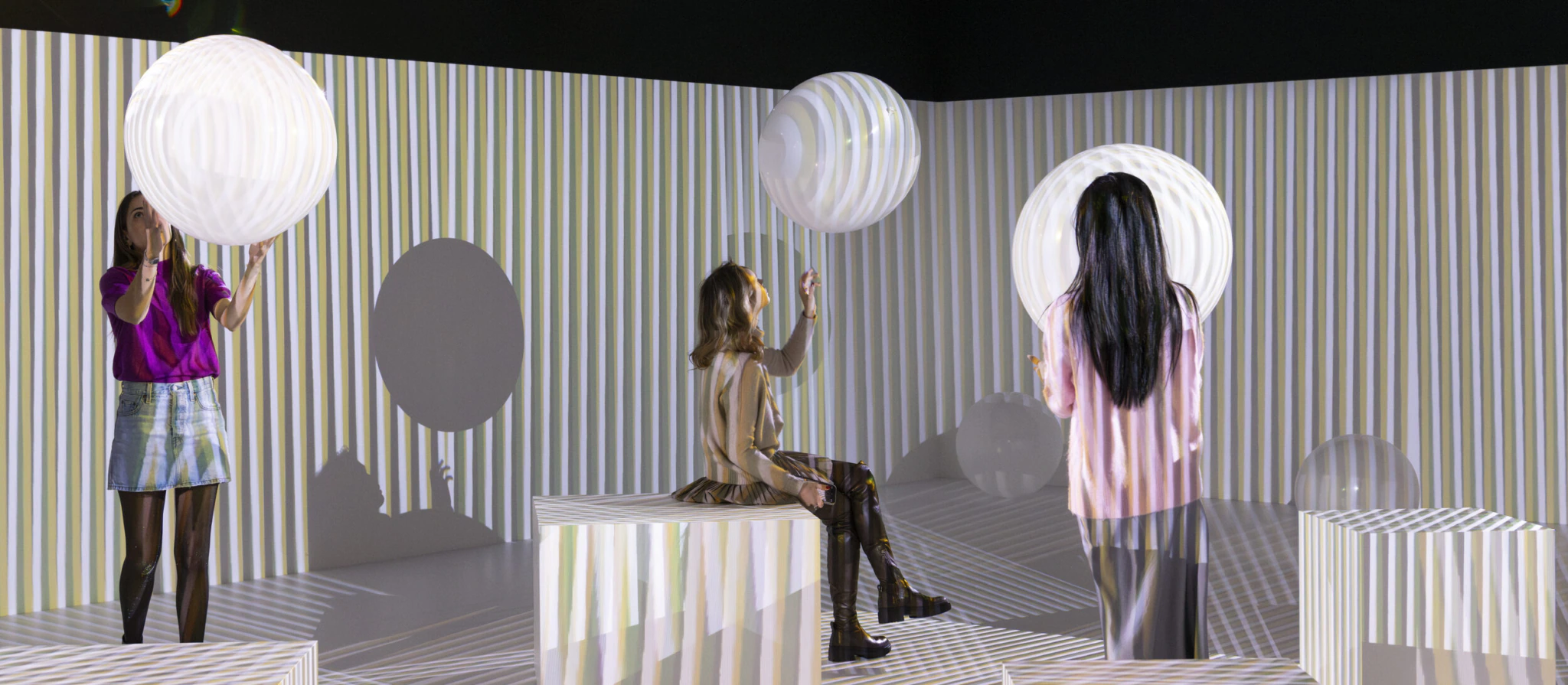
Some works benefit from a more relaxed and crowded vibe. The prismatic light show of Carlos Cruz-Diez’s Chromointerférent Environment might be more fun today, full of toddlers bashing balloons, than it was when the Serious Art People first saw it in 1974.
On the other hand, Wen-Ying Tsai’s sound responsive light sculptures are better when approached alone in a darkened room rather than experienced as a competition with other visitors to make them twitch and move to the sound of phones.
These works might anticipate the overwhelming digital world we now live in, but they need more space for contemplation than this exhibition allows.
Rushing onwards towards the future, the galleries become louder and brighter. Here is Cybernetic Serendipity, Jasia Reichardt’s legendary Institute of Contemporary Arts exhibition that introduced the mainstream art world to the idea of computing. But the most haunting works are those that hint at lost futures and other possibilities.
Life after AI
Suzanne Treister’s Fictional Videogame Stills are mysterious lost graphic adventure games from the 1990s. They are doubly lost, in that Treister’s original discs were corrupted, so what you see are photographs of her screen.
Advertisement
A vitrine of printed publications including Whole Earth Catalogue and Guerrilla Television shows the irony of vital and imaginative approaches to digital technology taking root in printed form.
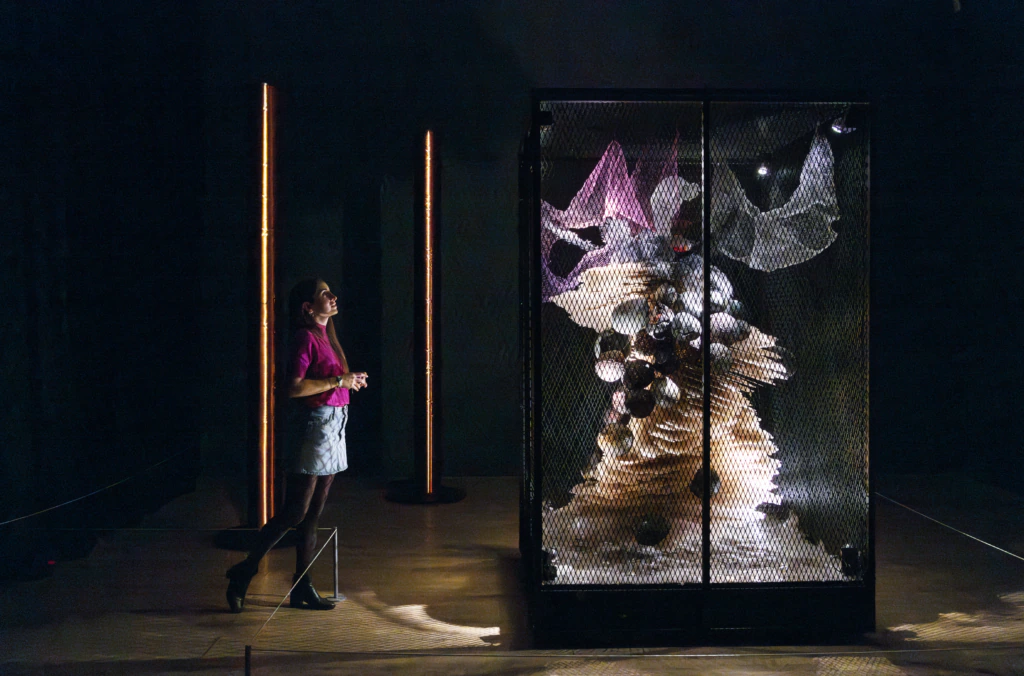
The show ends with a large, recent and complex Liliane Lijn sculpture as if to remind us that this kind of work is still valuable, even as its moment of being the “future” has passed.
But the spectre of resistance precedes it. For many artists, working with early computing technology meant working with either giant technology companies or transnational corporate sponsors.
A room dedicated to Experiments in Art and Technology’s work in the Pepsi Pavilion at Expo ’70 in Osaka includes Nic Tummers and Tjebbe van Tijen’s typewritten broadside against artists’ complicity with the techno-profiteering of world fairs.
Tate has its own question of complicity. The exhibition’s second-line sponsor is Anthropic, one of a new generation of tech giants that often come under fire for their profligate use of energy and water and cavalier attitude to human intellectual property.
Courtesy of these tech firms, we are now at a point that could once again change life as much as the arrival of the internet in our homes. If we don’t create an alternative to what the AI tech bros propose now, what will our current art and culture look like in a future museum?
What moments and movements will be conserved and curated and presented on white walls when life has been utterly transformed once again, and we are looking for the lost dreams of how it could have been? Whatever that exhibition will be, it could do a much worse job than Electric Dreams.
Project data
Cost
Undisclosed
Exhibition partner
Gucci
Supporters
Anthropic; The Electric Dreams Exhibition Supporters Circle; Tate Americas Foundation; Tate International Council; Tate Patrons Research Hyundai Tate Research Centre: Transnational in partnership with Hyundai Motor
Exhibition build
Sam Forster, The Hub
Graphics printing and installation
Albemarle Graphics; OMNI
Lighting
Lightwaves
AV installation
ADI
Curation
Val Ravaglia, curator, international art, Tate Modern; Odessa Warren, assistant curator, international art (Hyundai Tate Research Centre: Transnational), Tate Modern; Kira Wainstein, research assistant, Tate Modern
Exhibition ends
1 June
Admission
Free to Museums Association members