What Are Museums For? It’s a relatively easy question to ask but not necessarily an easy one to answer.
If you work in the sector you’ve probably had this conversation, or at least thought about it, and, depending on who you talk to, the answer will be different each time.
Gone are the days when museums simply displayed their collections for learning and enlightenment and expected people to visit. As this book argues, museums are complex civic institutions, occupying a space and role in the past, but also very much central in contemporary life.
It is this complex role that museums play in the here and now that author and museum professional Jon Sleigh investigates in his book. Each chapter highlights a different idea – from the museum as a player in digital innovation to bring its work to a global audience, to the museum as a space of trust and healing for visitors.
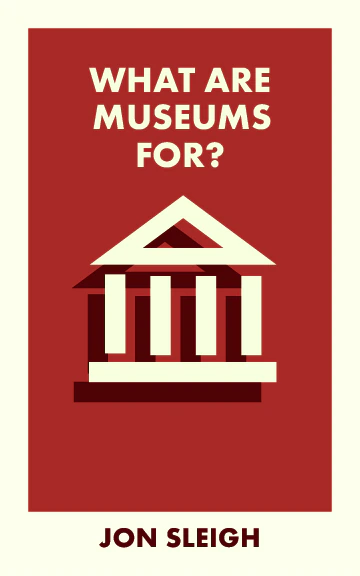
ISBN 978-1529231397
Museums are expected to react and adapt to what is going on in contemporary society, to evolve in order to keep up with the modern world and, as Sleigh highlights within the eight chapters of this book, there are multiple ways to do this.
Advertisement
However, at the heart of each chapter, and the central theme running throughout the book, are people and the wonderful role they play in keeping museums relevant and interesting.
If you have ever had the pleasure of listening to Sleigh speak, you will know that this people-centred approach to the question “what are museums for?” is central to his practice as a sector professional.
Collections make museums unique, but they are nothing without people: “Without our interaction as visitors, museums are elaborate storage and conservation centres,” Sleigh writes. “The museum exists to engage with society.”
This book argues that the lived experience of museum visitors brings collections alive, and that there are multiple perspectives and interpretations depending on who the visitor is.
In understanding that representation and care towards our audiences should be at the heart of the work we do, museums can be spaces of meaningful personal experiences for visitors, which in turn increases their trust in these public institutions.
As put forward by different museum professionals throughout this book, it is about being transparent and vulnerable, admitting that museums don’t know everything and allowing a whole range of voices to be present within the displays and objects contained within the museum building. It is argued that this approach would help towards rewriting the negative perceptions of museums, particularly in the west where their histories are entwined with colonial violence, as authoritarian gate keepers to cultural heritage.
Advertisement
Each chapter follows the same format to explore these different ideas, using collection objects and the opinions of an array of different museum colleagues to highlight each idea. These multiple voices and perspectives reinforce the discussions taking place in the book, humanising complex ideas around what the role of a museum is.
Sleigh manages to present them in a way that makes them more relatable and less daunting to understand, by including different interpretations. It is written in a gentle, eloquent way that is encouraging and accessible to the reader.
It is not necessarily a book only for museum professionals, but for anyone who might have asked this question before. It celebrates the adaptability of museums to be places for care, inclusion and trust in a world that can at times feel at odds with these ideas.
At 140 pages it is a short book, particularly when compared with most publications about museum theory. But thanks to Sleigh’s gentle and inquisitive writing style it puts across each discussion perfectly.
As a reader you feel hopeful and excited by what museums are for, and as a museum professional it has made me think about how my own practice can be more caring and person-focused, giving me a renewed optimism of the importance of museums in the contemporary world.
Helen Beckett is the collections and exhibitions manager at Touchstones, Rochdale