Never underestimate the power of children’s morbid curiously.
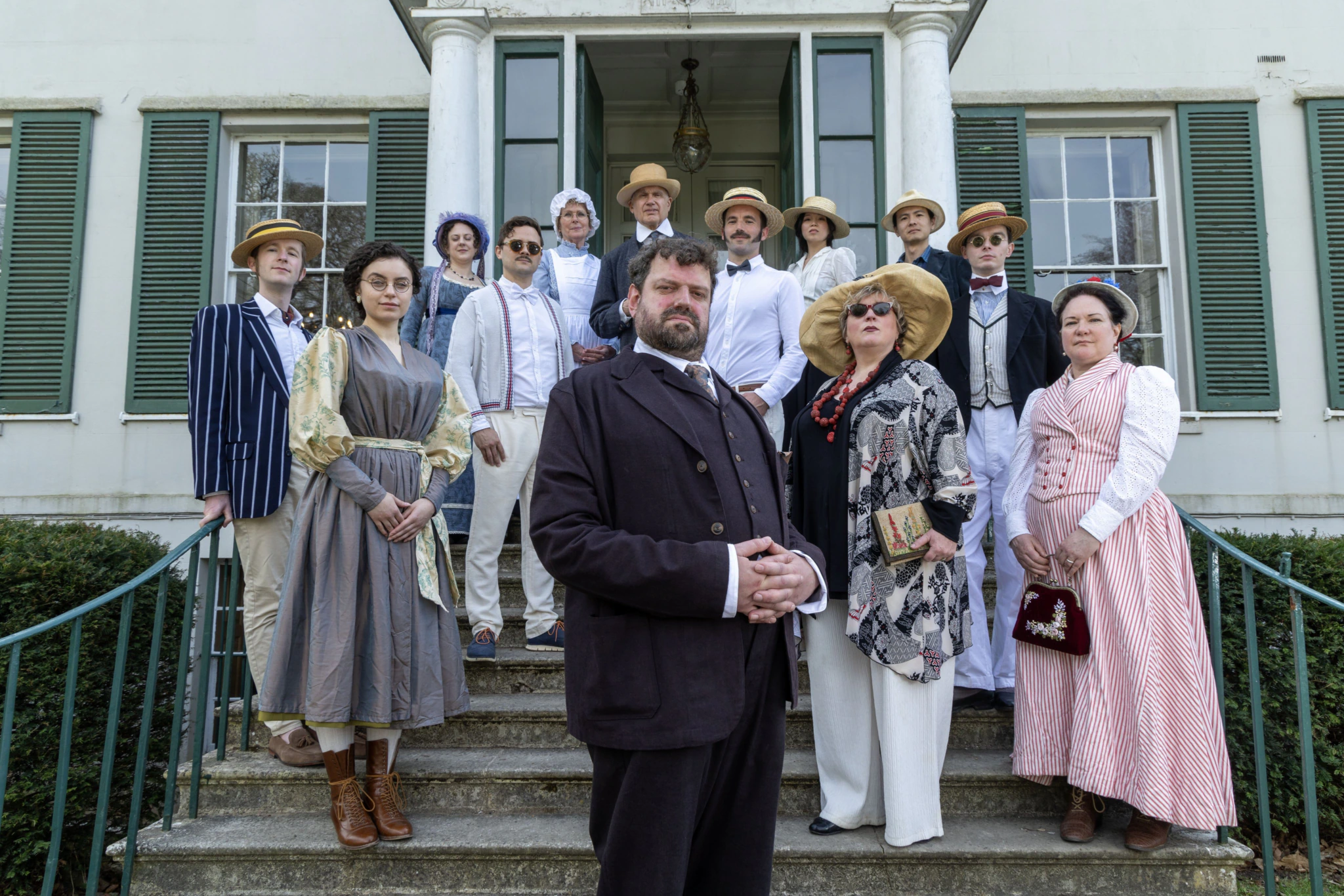
I didn’t think my primary-school-aged children and nephew would last five minutes at the recently reopened Preston Manor in Brighton during our visit over the Easter holidays.
But the promise of ghostly sightings, a pet cemetery and a demonstration of a drop-weight mouse trap kept them entertained long enough for me to enjoy the historic house in all its glory.
The manor is situated on the edge of Preston Park on the main road out of the city, a good 45-minute walk from the pier. Built on what is believed to be the remains of a Roman villa, the property mostly dates from 1738, when Thomas Western rebuilt an original 13th-century structure.
In 1905, it was renovated and enlarged by Ellen and Charles Thomas-Stanford, once the wealthiest family in Sussex, and was turned into a museum in 1933.
It closed during the Covid pandemic in 2020, and only reopened this Easter following a refresh and re-interpretation.
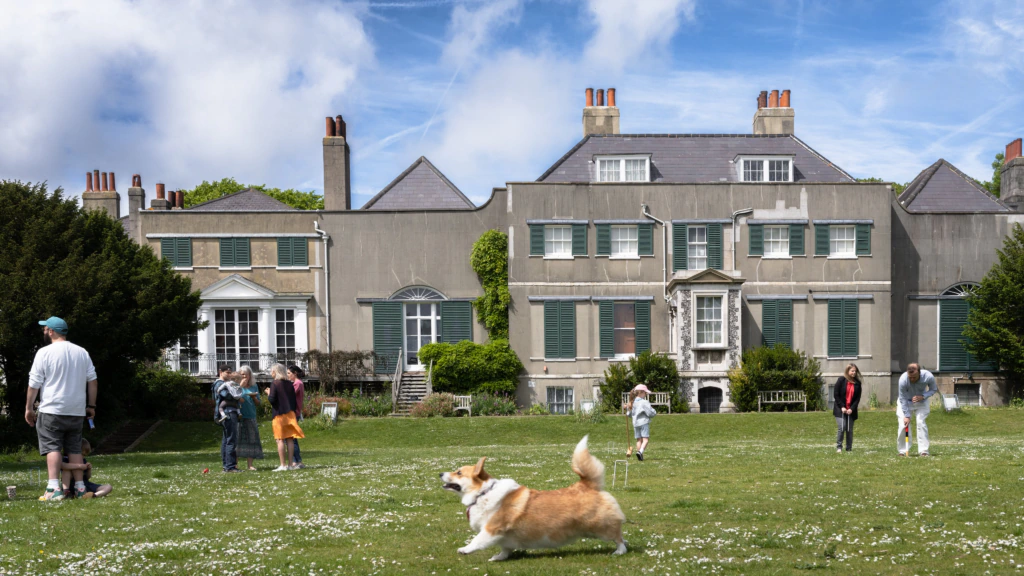
With so much history on offer, Brighton & Hove Museums could have been forgiven for following a traditional approach to interpreting the historic house, telling a range of different stories of the building and its residents through time.
Advertisement
Instead, they have taken a different approach, with the entire narrative focusing on one day in mid-April 1912 – the same week that HMS Titanic struck an iceberg on her maiden voyage, killing about 1,500 of her crew and passengers.
Here, the curators have imagined what a typical spring morning might have looked like in the Thomas-Stanford’s home that week. While technically a work of fiction, it is all based on real former occupants of the property, testimonies and research connected to the collection.
Visitors enter through the grand front entrance into the formal entrance hall, before following an ordained path around the house.
We start in the dining room where a long table is laden with replicas of the morning meal – devilled kidneys, smoked haddock and bottles of champagne.
This and each subsequent room has a text panel written in the present tense explaining what the various occupants of the house were doing on the morning in question.
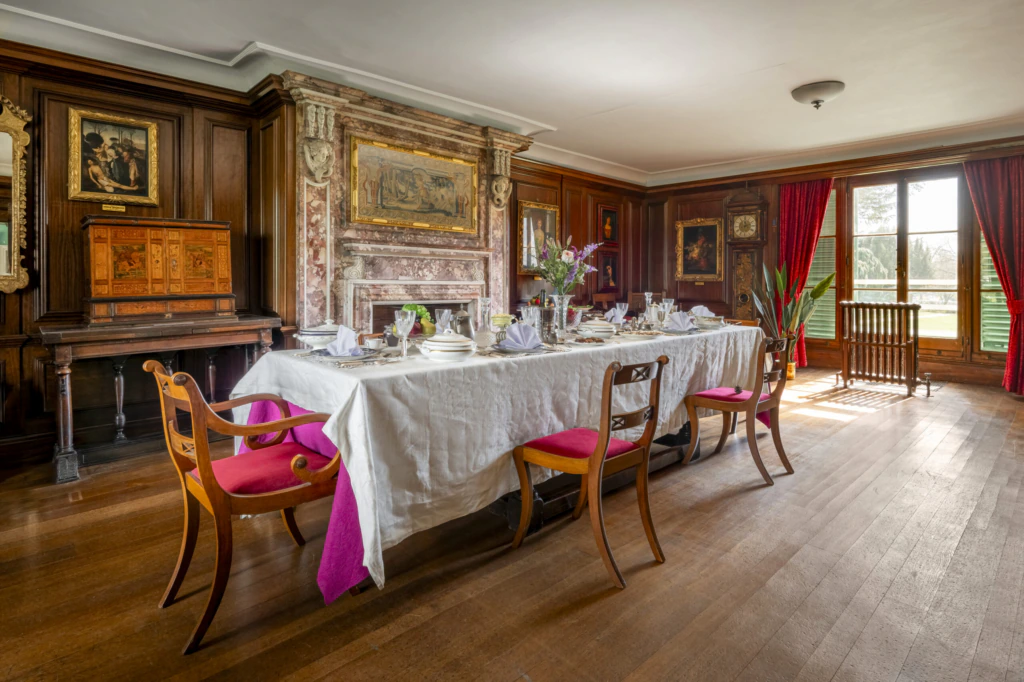
Visitors can explore the rooms at their leisure, taking in the gorgeous furniture and paintings without too much in the way of interpretation. There is a free audio guide to download, but with three children to look after I had to skip this.
Advertisement
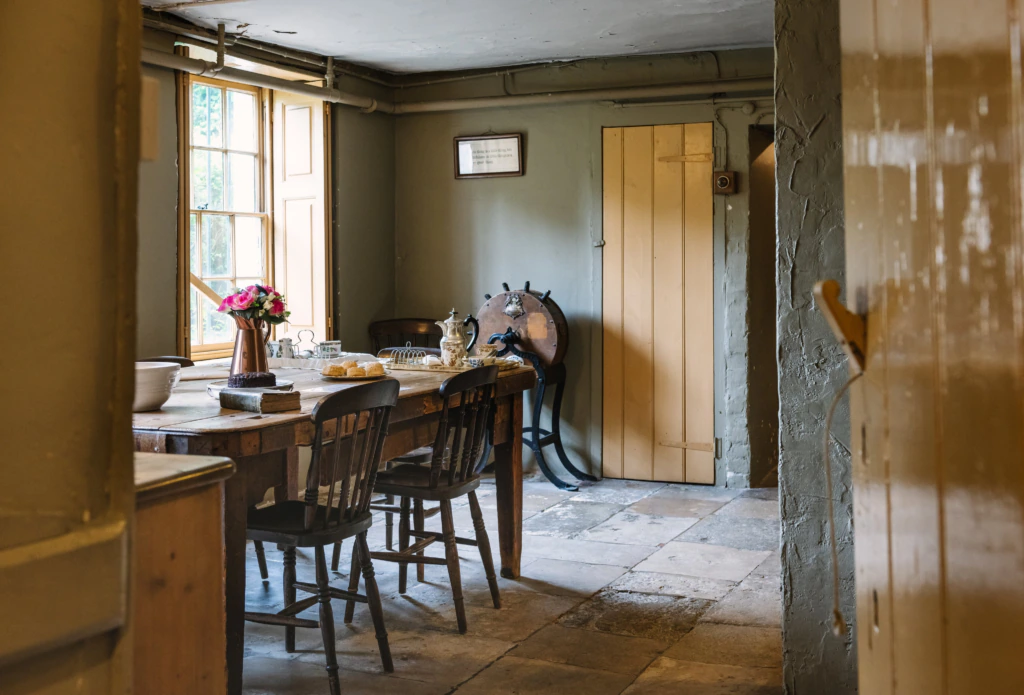
From the dining room, we go to the study-cum-sitting room where, according to the panel, "Ellen weights out the daily tea allowance". Then it’s downstairs to the kitchens, home to a long line of noisy servant bell cranks and the aforementioned mouse trap.
During our visit, a brilliant costumed interpreter told us about what it was like to work at the manor and demonstrated how the trap worked (with a toy mouse). I would have loved to have met more like her elsewhere in the house, but sadly we didn’t see any on our visit.
Some very steep stairs take visitors to the first floor to admire two generously sized servants’ bedrooms and Ellen’s bathroom-cum-darkroom.
This leads onto three much grander bedrooms for the owners and guests, and a library. Back downstairs, it would be easy to miss directions to the gorgeous drawing room, where preparations for the evening’s party are taking place.
I did in fact manage to leave without finding the Cleves Room, famous for a séance that was held there in the 1890s.
Advertisement
An immersive experience
Brighton & Hove Museum’s press team has dubbed the museum a “Downton Abbey-style experience” and will offer visitors guided tours of the house and its gardens.
Perhaps this explains the lack of immersive sounds – other than bells in the kitchen and music in the dining room, it felt a little too quiet and museum-like for me.
Hopefully, visitors who take a tour will be offered a deeper glimpse into the lives of Preston Manors’ owners and staff and the wider context of life in 1912.
Around the house are lots of contemporaneous references, such as a brochure from the coronation of George V the previous year and a copy of the Daily Mirror with a large photograph of Eleanor Smith, widow of the Titanic’s Commander, as its front cover.
On Ellen’s bed is a French version of the Kama Sutra, but I didn’t manage to work out if this was usual reading material for aristocrats at the time or if she was particularly interested in the subject matter.
In the library, the text panel provides a lot of information about Charles’s obsession for recording catches from his fishing trips, which is fine, I suppose, but I would have preferred the limited interpretation to bring in some bigger context.
What did the couple think of the new king? Were they aware that war with Germany was brewing? What about the Suffragette movement, the current coal mining strike and political unrest in Ireland?
There is a slight nod to the origins of the Thomas-Stanford’s money in the Charles’s bedroom, where we learn that he made his fortune in South African gold “with his friend Cecil Rhodes”.
The label concedes that “Rhodes’s treatment of indigenous people has been so appalling that even Charles thinks he sometimes goes a bit far” but stops at telling us more.
Preston Manor should be held up as a model for how to interpret a historic house in a way that is engaging for visitors, even young children.
By focusing on one narrative, there is a huge opportunity to pull out relevant and interesting stories that speak to the history of a place as well as a moment in time.
Through tours and confident historical interpreters, this paid attraction should bring in visitors and revenue for the service.