The Serpentine Gallery was not crowded on the spring weekday I visited – perhaps the sunny weather had lured most people outdoors. Yet with over one million visitors each year, the gallery remains a fitting home for the internationally-renowned Italian artist Giuseppe Penone’s work.
Thoughts in the Roots is a captivating exhibition running at the gallery’s Serpentine South location in Kensington Gardens, which is within Hyde Park and a short walk away from the original Serpentine gallery space.
Penone rose to prominence as part the Arte Povera movement that emerged in the 1960s and 70s and rejected traditional art forms – oil painting, sculpture, drawing – in favour of unconventional processes and non-traditional materials such as soil, rags, leaves, as well as other natural and found objects.
Spanning five decades of his career, this exhibition brings together works from 1969 to the present, celebrating his enduring fascination with the intersection of organic and artistic processes.
The setting could hardly be more ideal. Sunlight pours in through the gallery’s large windows, casting natural light across the space and enhancing the serene atmosphere. Upon entry, visitors are greeted with an introduction to Penone’s practice, preparing them for the quiet introspection that awaits beyond the automatic doors.
Inside, a sense of calm envelops you. The gallery is hushed, allowing for a deep connection with the artworks. Each piece is given space to breathe – there is little clutter, inviting you to slow down and absorb each work properly.
Advertisement
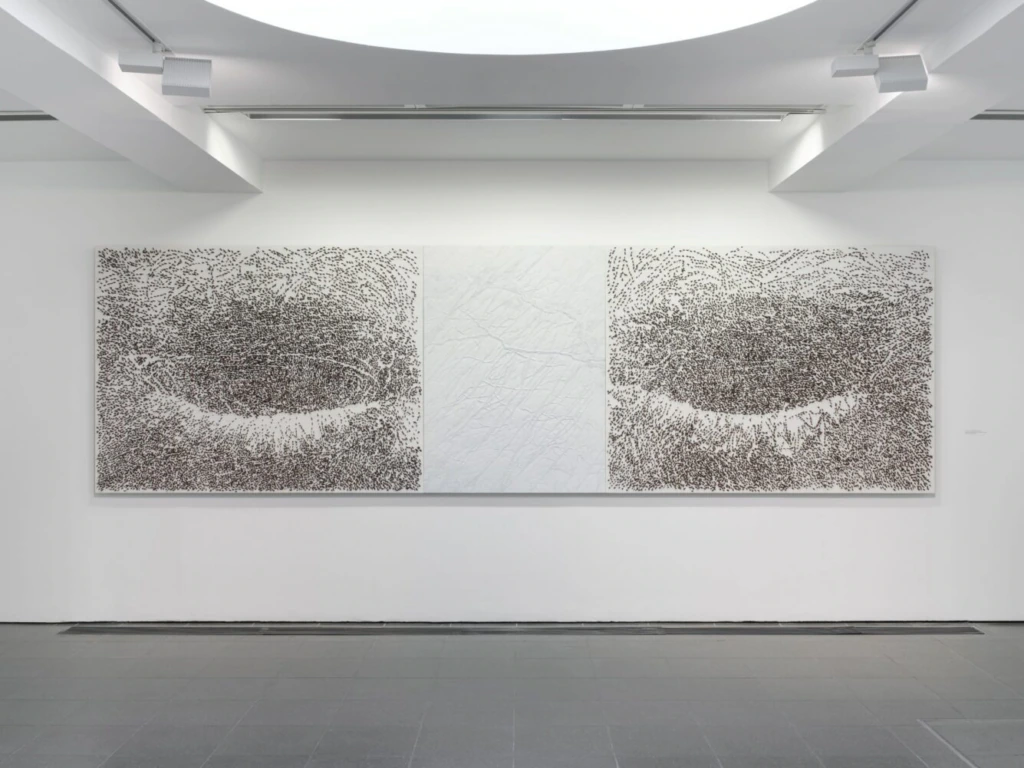
Leaves play a central role in Penone’s work. In many pieces, their natural green colour is rubbed onto white cotton canvas. The exhibition opens with "A occhi chiusi (With Eyes Closed)", a striking piece adorned with acacia thorns arranged to evoke the sensation of closed eyes.
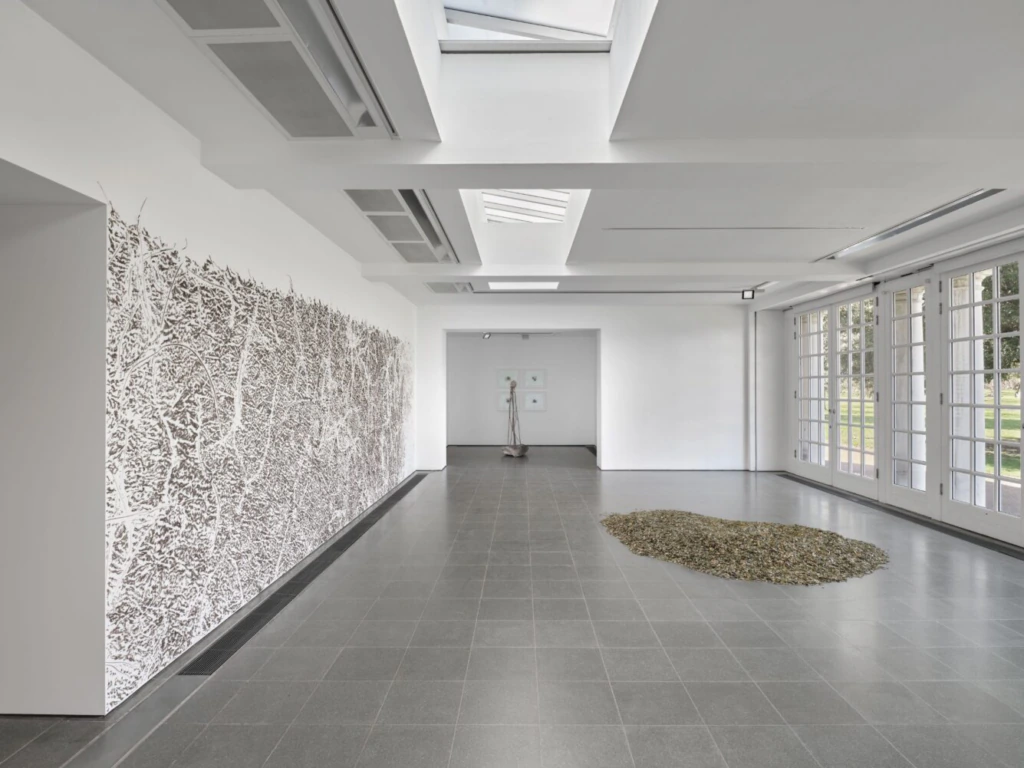
One of the simplest yet most evocative pieces is "Soffio di foglie (Breath of Leaves)", where the imprint of the artist’s body and breath gently lingers on a bed of leaves. As sunlight filters through the gallery, the leaves seem to glow, transforming the work into something luminous and meditative.
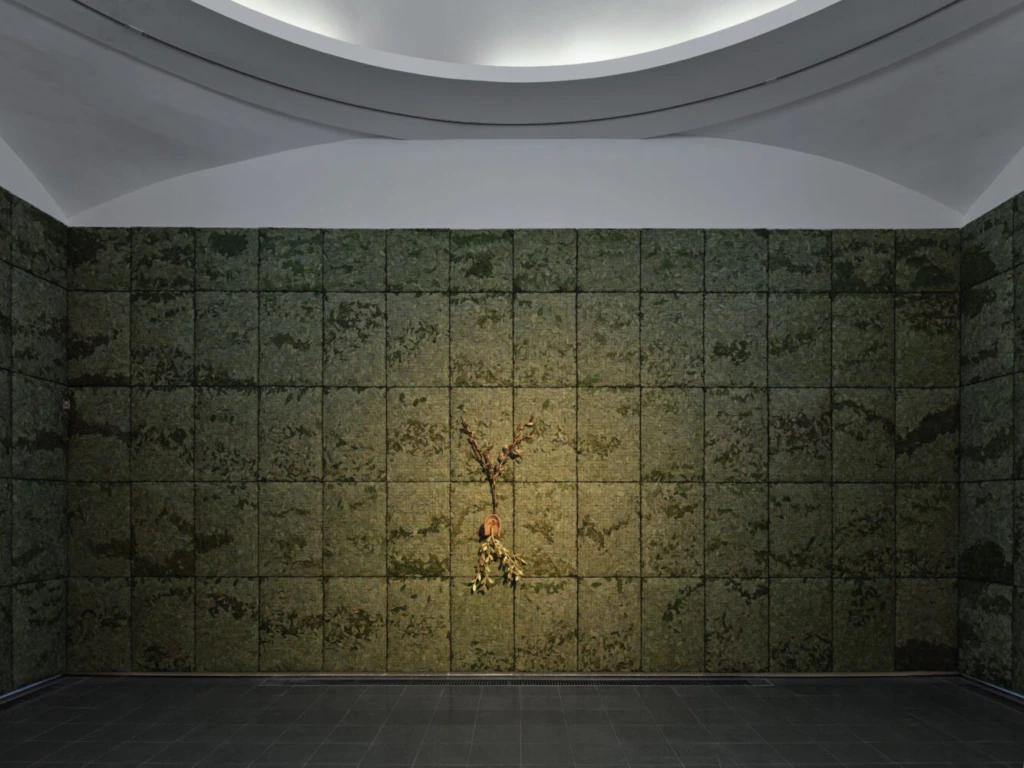
Perhaps the most immersive space is the room at the centre of the gallery that resembles a chapel, crowned with a dome. Here, "Respirare l’ombra (To Breathe the Shadow)" engages the senses in unexpected ways. The scent of laurel leaves fills the room, emanating from metal grids lining the walls. In the centre, a gold-cast sculpture of a human lung is embedded at eye level, which is both arresting and poetic. All the senses are at play in this exhibition.
This multisensory journey continues with his many sculptures using trees, which highlight Penone’s enduring relationship with wood. Intricate and raw, the sculptures reveal the inner knots and veins of trees, emphasising the intimate, almost human character of trees.
Advertisement
In another room, "Gesti vegetali (Vegetal Gestures)" features bronze human figures entwined with living plants. Their silhouettes emerge organically from the greenery, blurring the boundary between the natural and the human.
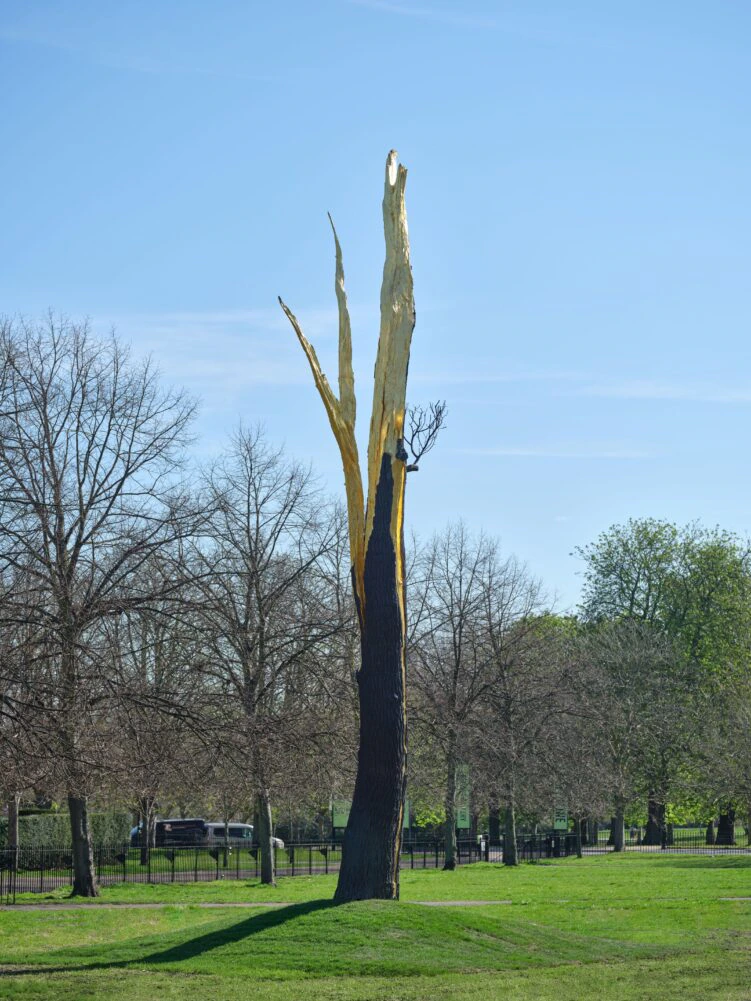
The exhibition’s final, and perhaps most awe-inspiring piece lies outdoors: "Albero folgorato (Thunderstruck Tree)", based on a 100-year-old willow in Belgium that was split by lightning. The sculpture reveals the tree’s inner structure, symbolising vulnerability and resilience in equal measure, with its injured pulp decorated in gold.
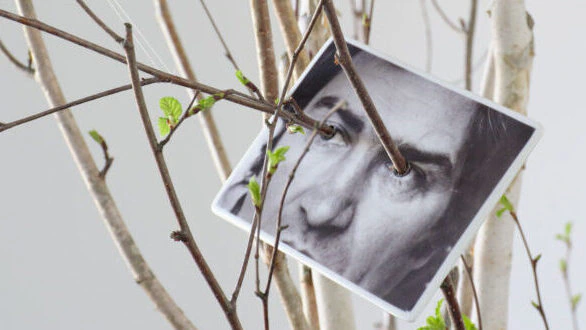
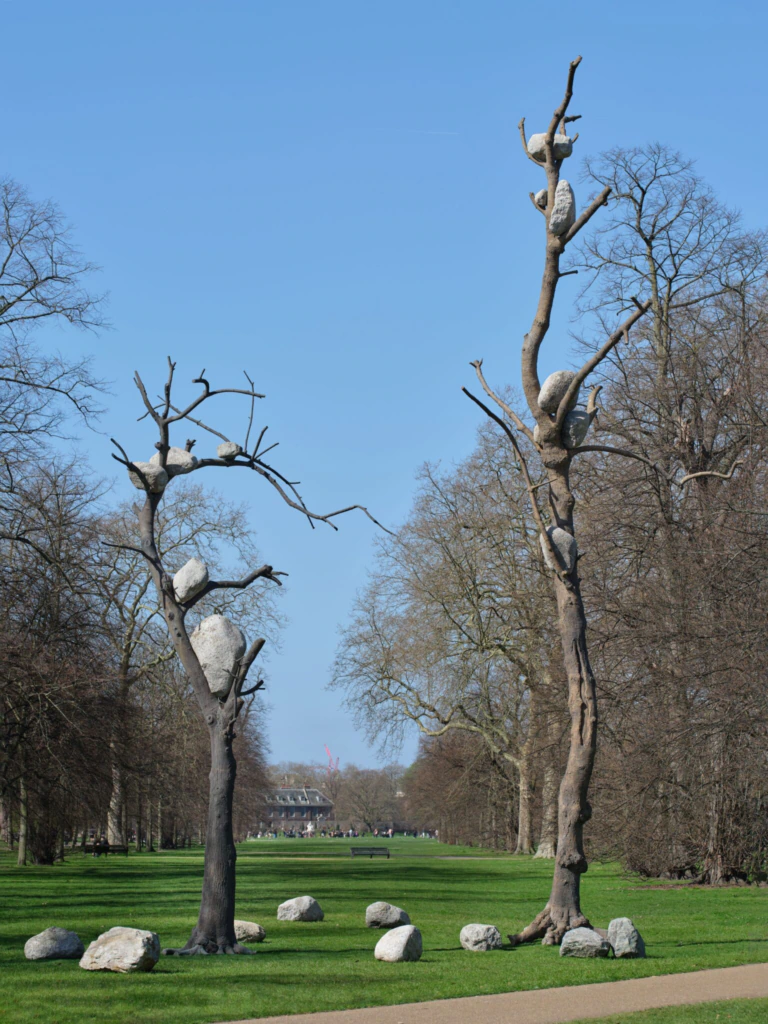
Nearby, "Idee di pietra (Ideas of Stone)" presents bronze-cast trees holding stones in their branches. With a bit of artistic licence, these sculptures contemplate the strength of both trees and human thought.
Thoughts in the Roots is a soothing, deeply poetic exhibition. Through it Penone invites us into a space where trees and humans are no longer separate, but part of a continuous, living dialogue, one that unfolds both inside and out, rooted in nature, and reaching quietly toward the soul.
Flore Boitel is a freelance journalist
Giuseppe Penone: Thoughts in the Roots runs at the Serpentine Gallery, London, until 7 September