Oxford University Museum of Natural History was created in 1860 following a memorandum from Henry Acland, a distinguished medical practitioner and reader in anatomy. It was to be built to assemble “all the materials explanatory of the organic beings placed upon the globe”.
This resolution was the beginning of modern science in Oxford. The museum was created as a teaching space where students could study subjects such as chemistry, physics, biology and geology for the first time.
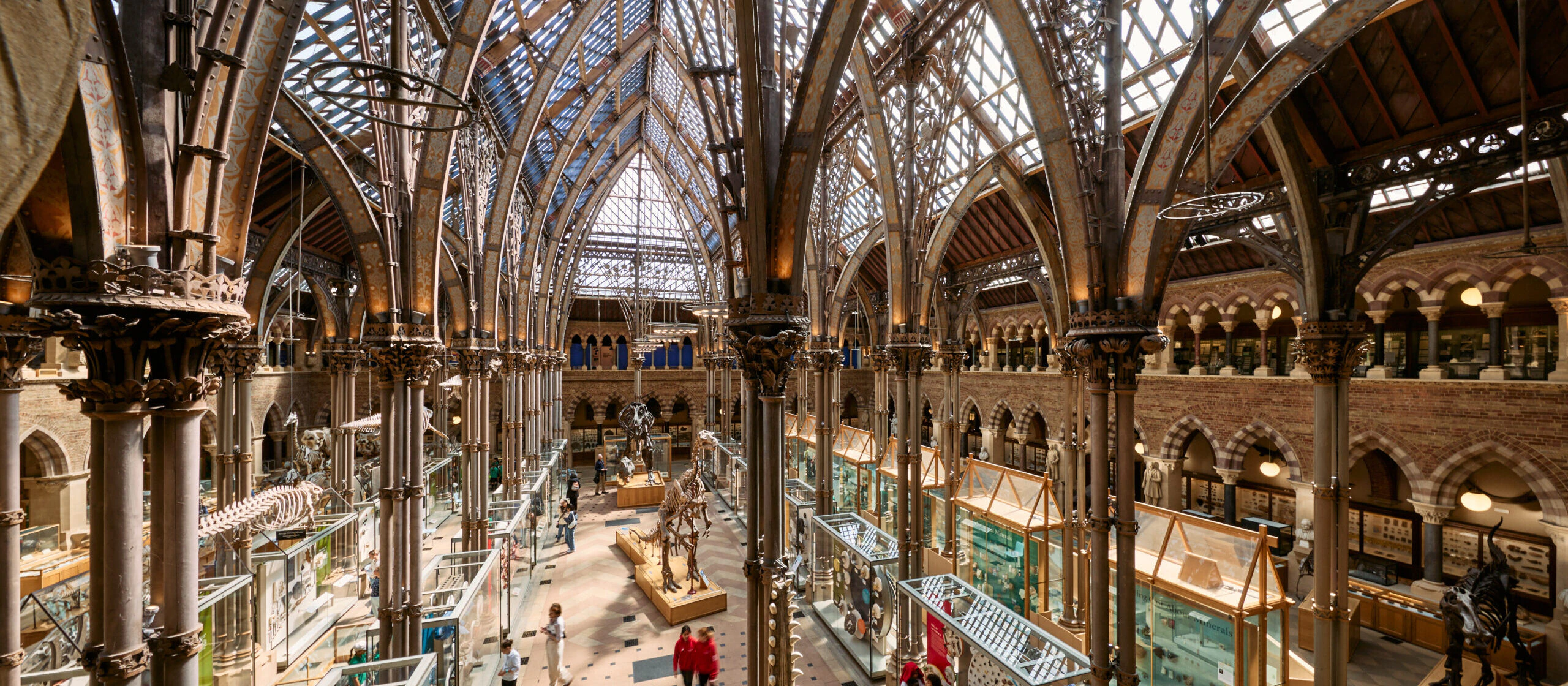
The building was designed as a cathedral to science, celebrating and revealing nature, with plants and animals carved and cast into the stonework and ironwork, blending science and the arts. It was largely influenced by the design principles of Acland’s friend, the Victorian polymath John Ruskin.
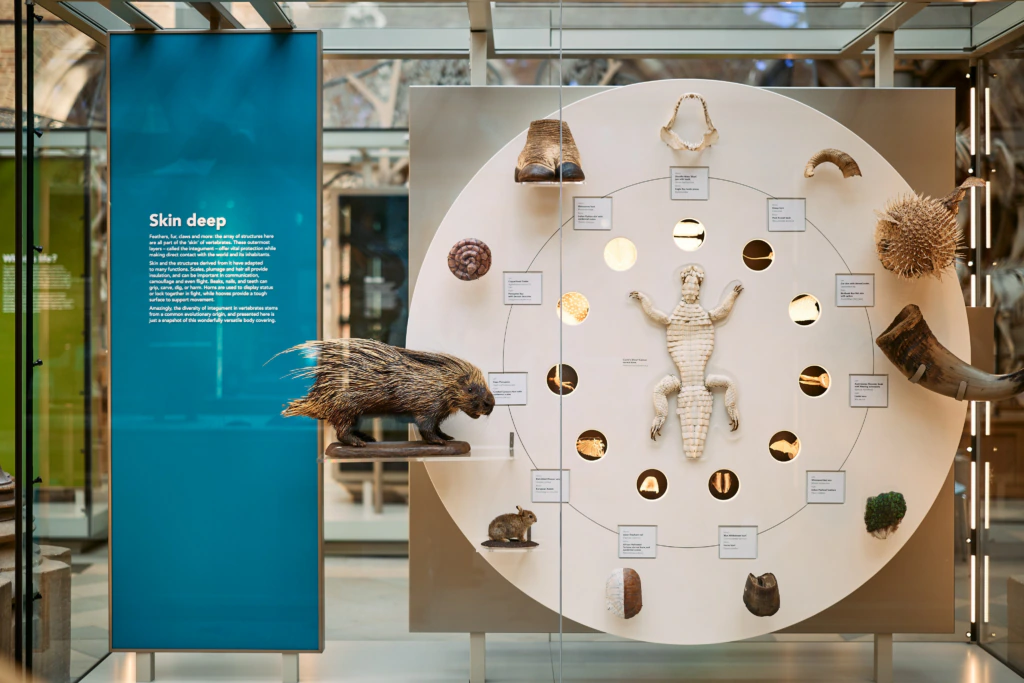
When the museum was founded, the role of natural history museums was to classify the world. Today’s 21st-century natural history museum has a much broader remit to present the current understanding of the complex links between life and the environment, and the impact that humans have on natural systems.
A modern perspective
The Life, As We Know It displays move away from the traditional taxonomic arrangement to one that emphasises the connections between and dynamism of life processes.
Advertisement
They weave together objects, graphics and digital interpretation that deliver aesthetic, intellectual and emotional impact. The visually-led exhibits are aimed at non-specialist adults and families, inviting curiosity and learning about the natural world and encouraging visitors to care about and engage with current issues.
The transformation of the museum’s main court – its key display space on the ground floor – into a modernised space began in 2018. The permanent exhibits had been largely unchanged for 20 years.
The interpretation approach has also evolved over six years, culminating in the display of the three themes of Biodiversity, Evolution and Ecosystems.
There are 18 glass double-sided cases containing 30 new exhibits across the three themes. The main court is a challenging space to display because visitors can approach the cases from many directions.
This means that a narrative that builds on the information or objects from a previous space does not work. Each display is designed as a standalone subject that is not dependent on its neighbour, which allows visitors to graze the exhibition in any order.
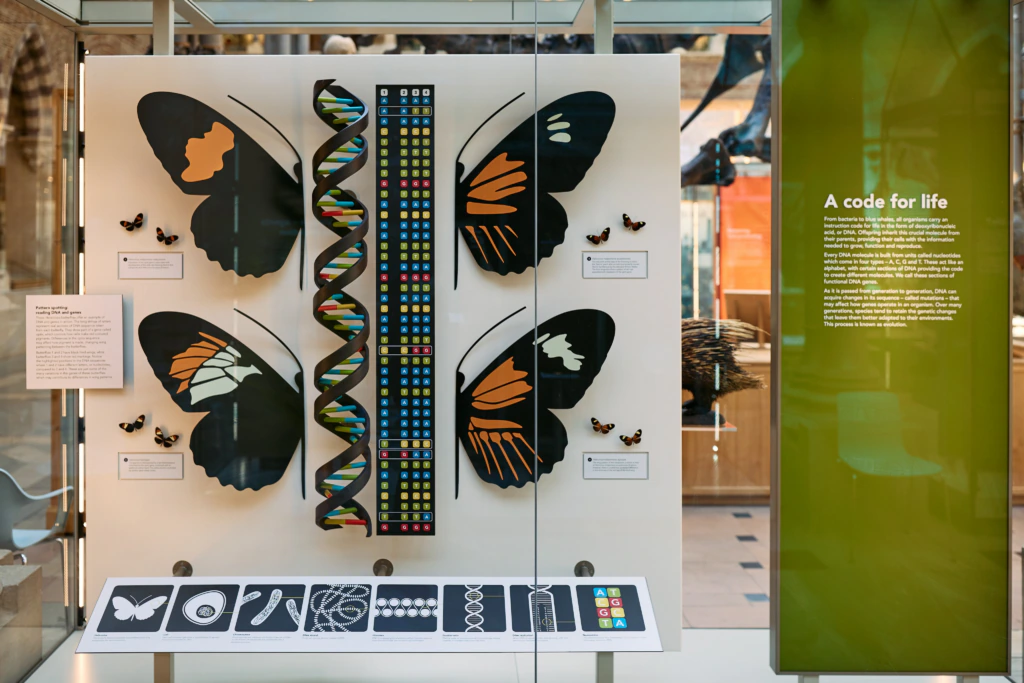
More than that, each exhibit is like an art installation, visually exciting with bright graphics and objects arranged in bold patterns, and use of digital interpretation that adds movement.
Advertisement
Each display has a different look that breaks up what could have been a monotonous series of rectangular glass cases. Artworks are cleverly integrated too, with beautiful glass sculptures depicting organisms; hands cast from real life, each holding a species in crisis; and six deadly viruses woven in wicker hanging from the ceiling.
Generation games
The displays deliver their message visually, but there are also two large permanent handling tables that can be moved aside to make space for children’s drop-in activities. On the Saturday that I visited, excited children were using microscopes and being shown objects by staff and volunteers in the Biodiversity space.
The benefit of having one of the best natural history collections in the world is that there is scope to create colour and drama. The objects use the full height of the cases and many of the most spectacular ones were at children’s eye-level. The Japanese spider crab – the world’s largest living arthropod – was a magnet for selfies.
The Ecosystems displays are a witty new take on old-fashioned, but popular, dioramas with stylised natural environments. The interpretation formula is effective, with a brief introductory text, a photograph of the actual environment, a location map, stylised foliage and animals in their favoured habitats at different levels. This gives the cases a rhythm and makes them easy to follow and to understand.
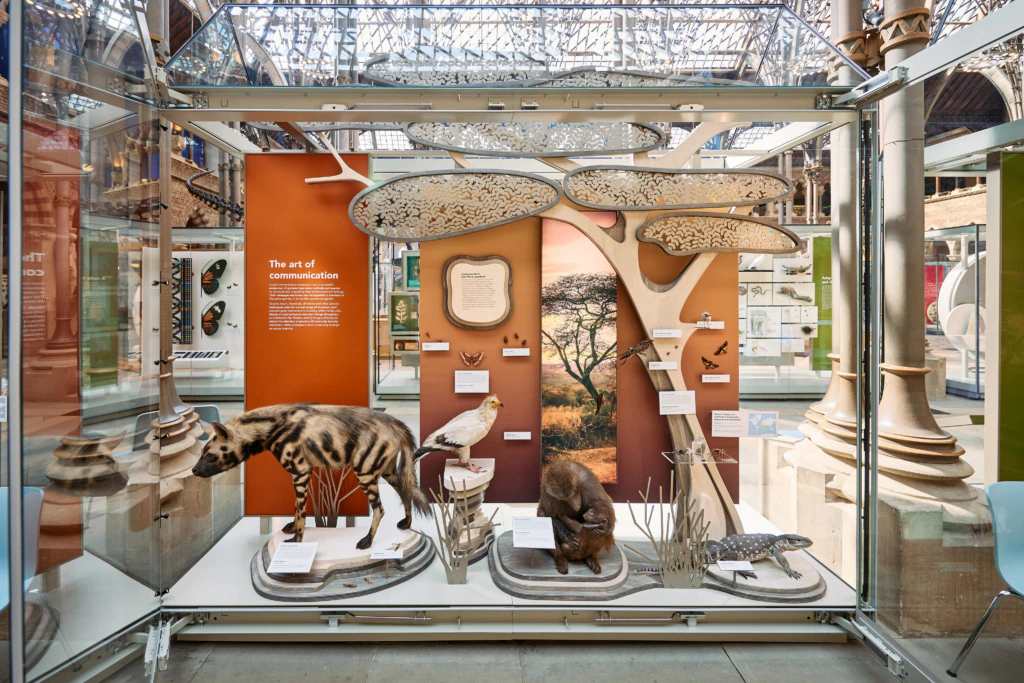
The visitors to the gallery on the day that I visited were mostly adults, aged from 20 to 40 years old. The families were all absorbed by the drop-in sessions and hands-on touch tables. People were not reading the labels much, but were drawn in by the objects and digital interpretation. Once they were drawn in, I witnessed many discussions in front of the cases.
Advertisement
Focus on… Exhibition Design
Oxford University Museum of Natural History presents the natural world in one huge room. Stepping into such a bright, vaulted court offers a “wow” moment for many visitors, as they take in its open run of exhibits.
However, this structure presents challenges. Without any clear route to follow, and no obvious hierarchy of exhibits, it is not necessarily clear where to start or where to go next.
In the Life, As We Know It project, we addressed this by introducing a stronger interpretative structure and rhythm to the displays. The court is already divided into a central area, two narrower aisles, and open areas on each side. We used the Paddler-Swimmer-Diver model of visitor interest, to cater for incremental levels of knowledge and engagement.
For paddlers, the largely visual displays in the centre introduce overarching ideas of biodiversity. The open areas present ecosystems in action with stylised environments and additional layered science for those who are interested – perfect for the swimmers. For knowledge-hungry divers, the aisles offer more text to tackle evolution and the planet.
In this way, the single space subtly interconnects the content of the displays. Visitors may start anywhere, but we hope they will leave with a sense of how biological and geological processes drive our planet, giving rise to incredible biodiversity in ever-changing ecosystems.
Scott Billings is project manager for Oxford University Museum of Natural History and oversaw the redisplay project
However, I did wonder how much the non-specialist visitors were learning and whether they even realised the space had been divided into the three themes. Maybe none of that matters as the aim is to be an introduction and whet the appetite to find out more. Only a visitor survey and evaluation of the galleries will tell.
The Evolution section of the gallery was much less absorbing than the Biodiversity and Ecosystems sections. The objects were smaller, less familiar and harder to engage with, and some of the cases were text heavy. Because of the inaccessibility of the subject matter, this section was enlivened with the majority of the artworks.
For most cases, the text was short, well written and hierarchical, managing to convey complicated subjects in a succinct and understandable way.
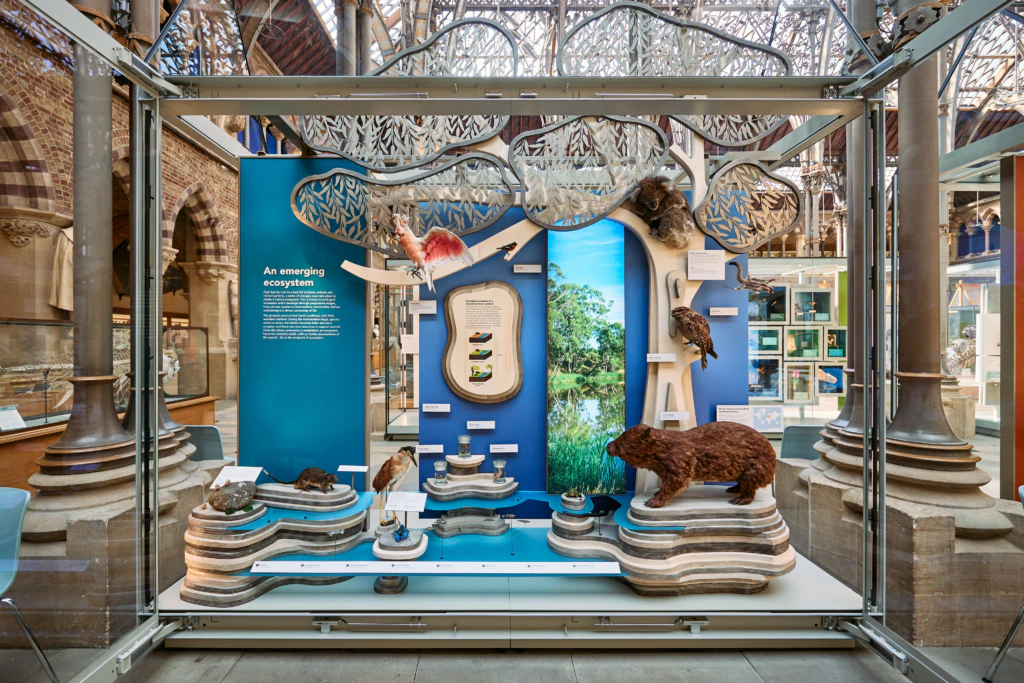
The brightly coloured text panels also worked well, but I did wonder about accessibility, particularly the odd decision to run white text on a yellow background.
Educational and fun
Overall, the gallery has met its aims and objectives very successfully. It provides refreshing and innovative displays that celebrate its wonderful collections and convey complex ideas in a simple yet exciting way – very different to many natural history museum displays.
I am the non-specialist visitor that the museum is aiming for and I thoroughly enjoyed the presentation approach and the quality of the objects. I also learned a thing or two on the way.
Oliver Green is a freelance writer and lecturer on museums and heritage
Project data
Cost
£1.2m
Main funders
FCC Communities Foundation; DCMS/Wolfson Museums and Galleries Improvement Fund; Negaunee Foundation
Showcases
Click Netherfield
Exhibition design
Easy Tiger Creative
Setworks
The Workhaus
External mountmakers
Dauphin; Richard Rogers Conservation
Models
Hellbender Museum; Inese Veismane; JSM; Mighty Fossils
Taxidermy
Jazmine Miles-Long; Alexandra Rose
Electrical
Monard
Admission
Free