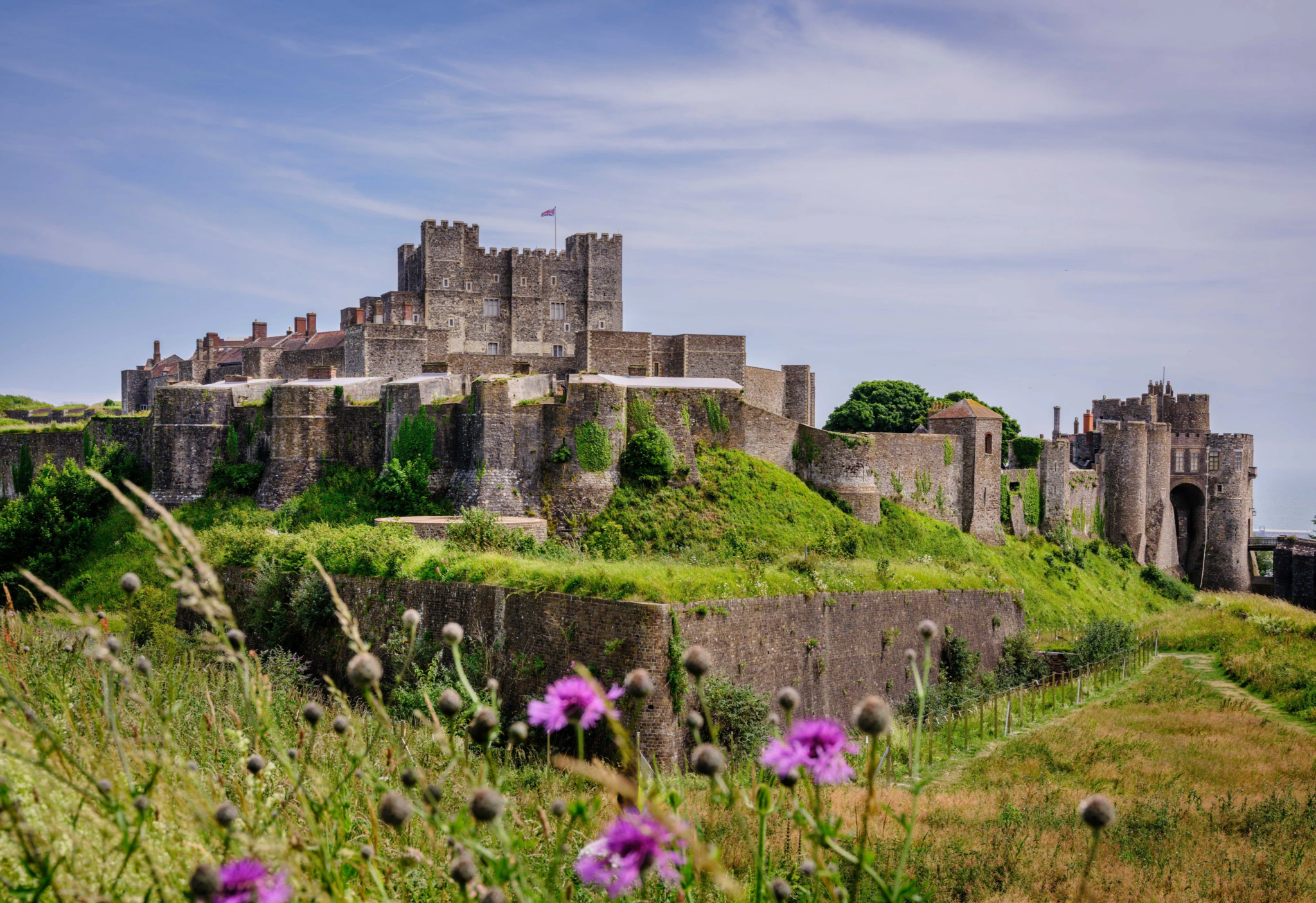
Dover Castle was not crowded on the autumnal weekday when I visited, but with 270,000 annual visits this vast medieval fortress is one of English Heritage’s top attractions.
Early in 2024 the charity reported that attendance at its major castles was particularly strong, saying parents wanted to pass on to the next generation the sense of awe and wonder they experienced on their own first castle visit.
Private operators of castle attractions have long understood how themed family activities and interpretation can boost engagement and earnings. Well placed to do the same, English Heritage this summer launched the multimillion-pound new permanent display Dover Castle Under Siege.
The exhibition embraces two sieges during the 1215-17 English civil war, features four galleries, an adventure play area, newly opened tunnels and views of the castle, plus a fifth gallery about its redcoat defenders in the Napoleonic Wars.
This experience augments the castle’s well-established presentation as a world war two command centre, hospital and regimental museum. The banner on the railings promises “a new view of England’s greatest fortress”.
Getting there by public transport involves a half-hour uphill trek from Dover Priory station or a 10-minute walk and short bus ride up the hill to the castle.
Advertisement
Battle stations
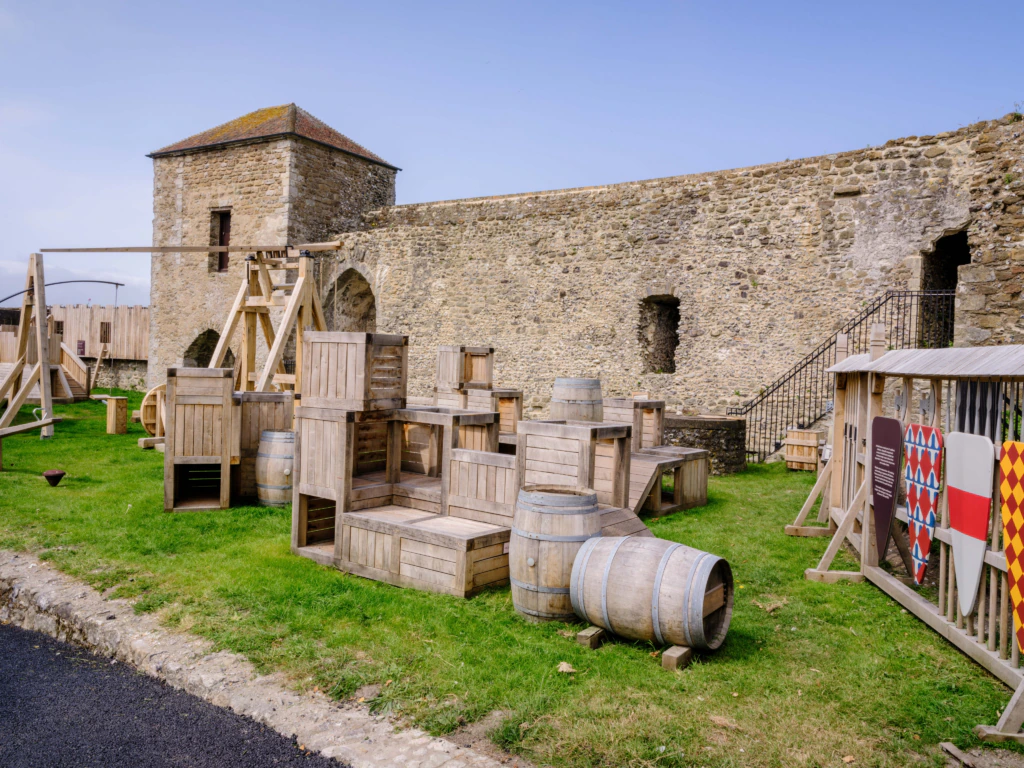
From the pedestrian entrance over a drawbridge, you come straightaway to the grassed Siege play area. The designers have packed an impressive range of siege-themed wooden activities, including a trebuchet (a type of catapult), into a small site beneath the castle walls.
Each activity features interpretation panels for adults to distil and share with children, while keeping a weather-eye on the short drop from stonework down to a cobbled gully alongside the play area. This has been flagged with free-standing warning signs.
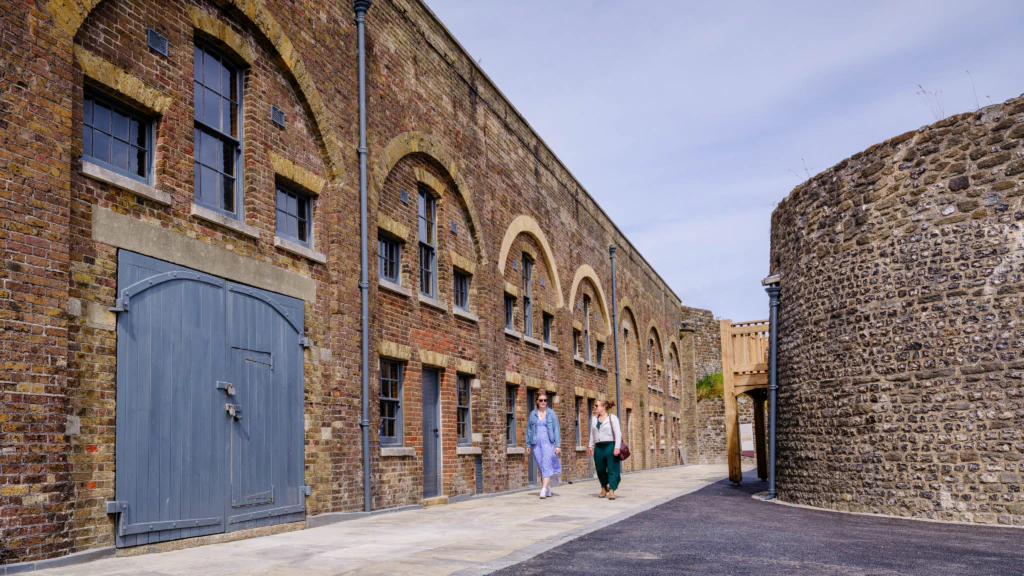
Next to the play area, four casemate gun emplacements have been turned into galleries telling the story of the sieges. In the first gallery, interpretation panels and a short film describe the crisis that led to the war, after King John reneged on the promises he made to the barons in the 1215 Magna Carta.
The brutal nature of 13th-century armed combat is described against a soundscape of music, drips, coughs and metal on stone, a theme developed further in the second gallery with descriptions of the fighters and an interactive that reveals how heavy a spear was to lift, let alone throw.
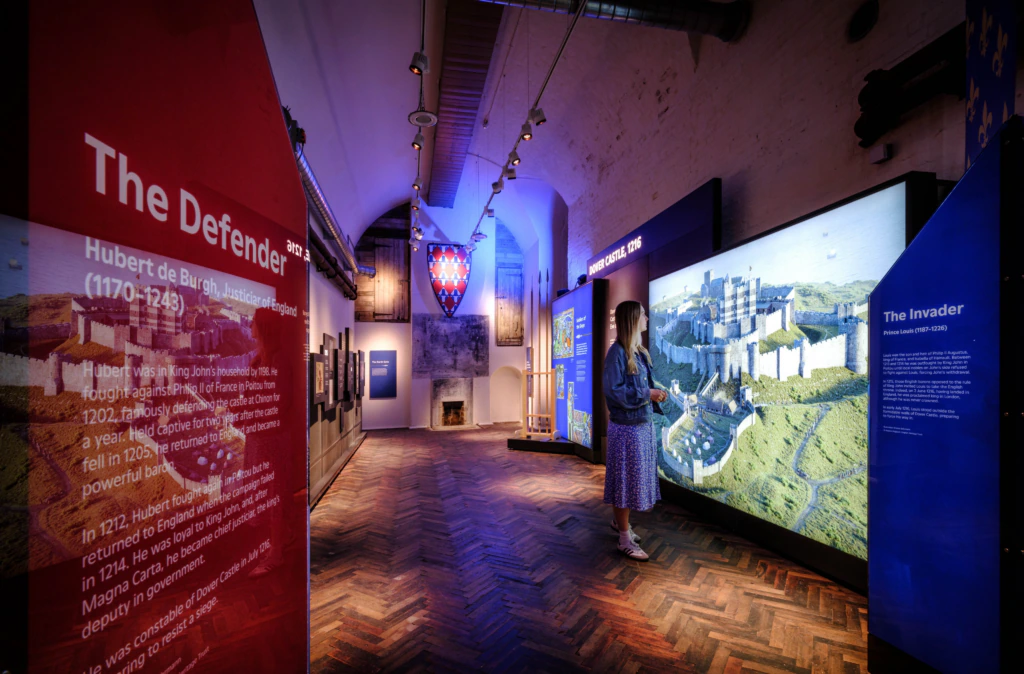
There is an elegant timeline of the build-up to the first siege in 1216 along one wall of the second gallery. We learn that under its constable, Hubert de Burgh, the great castle at Dover was the main barrier to a successful invasion by Prince Louis of France, who had been proclaimed king by the rebel barons.
Advertisement
Pride of place in this gallery goes to a large, finely rendered digital model of the castle on the eve of the siege, which uses recent research to “restore” the original entrance and took 800 hours to create.
The third gallery covers the July start of the first siege, with the soundscape suitably louder and more dramatic. Only two of five large projectors in this casemate operated when I visited. These showed a drawn animation of the fighting, but otherwise there was little description here of the valiant defence of the castle.
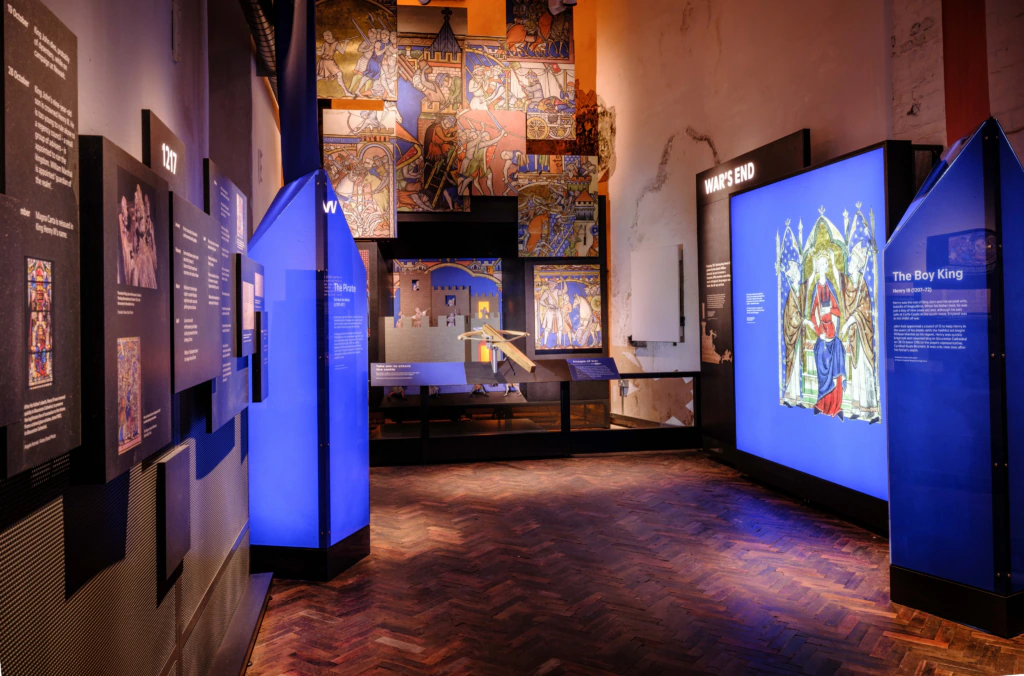
In the fourth gallery, we learn that by the autumn the siege was failing. On hearing of King John’s death Louis returned to France for reinforcements, including the first recorded trebuchet, to have a second go in 1217. However, with John out of the way the barons installed nine-year-old Henry III on the throne, and Louis’ losing battle concluded in a naval defeat off the coastal town of Sandwich by the resourceful de Burgh.
This gallery includes the second half of the timeline and a large crossbow interactive that worked fitfully when I was there. Beneath a film about the post-siege rebuild is a physical model of the castle, which may give blind and partially sighted people some sense of its features.
Focus: Exhibition design
As the exhibition designer for Dover Castle, our aim was to bring its rich heritage to life in a captivating and immersive way. We focused on creating a visitor experience that brings a unique blend of interpretation and play, centring on the siege of 1216 and later periods of conflict, such as the 18th and 19th centuries.
One of the core aspects of our design is the transformation of the casemates into immersive interpretation spaces. Stories within the casemates include the First Barons’ War, the Second Siege of 1217, Life of the Garrison, living conditions and many more. Within the Spur Casemates, visitors can aim and fire at a range of targets with a crossbow, collecting a score. Visitors can also explore the castle’s structural defences as they evolved to respond to the threat of new offensive technologies.
We also transformed the medieval tunnels, using cutting-edge audiovisual installations to enhance the dramatic atmosphere. Visitors who explore these tunnels are immersed in a soundscape that responds to their presence, creating a sense of discovery and eerie disorientation.
The exhibition spaces at Dover Castle, particularly the underground medieval tunnels, posed significant environmental and logistical challenges due to their historical sensitivity and stringent building protection regulations. To address these, a tailored design strategy was adopted using materials and technologies that could withstand environmental pressures while preserving the integrity of the site.
We feel the results of our work are spaces that bring to life history and storytelling in contrasting environments, delivering new experiences for visitors.
Paul Lee is the design director at Mather & Co
Advertisement
A soldier’s life
Evocatively set out as an army dormitory, a fifth gallery portrays the early 19th-century redcoat’s life in barracks, with objects and replicas displayed on rows of wooden “beds”.
Outside, there is the entrance to the self-guided Spur Tunnels Experience. The tunnels were originally built after the 13th-century sieges to enable soldiers to reach and defend the spur, a fortified barbican at the castle’s northern tip.
A spiral staircase and ramps lead you down through the tunnels, the rubble walls of the medieval tunnels contrasting with the brick of those remodelled for the Napoleonic Wars (1803-15). Internally lit text panels and a discrete soundscape give sufficient interpretation without obtruding on the atmosphere of the place.
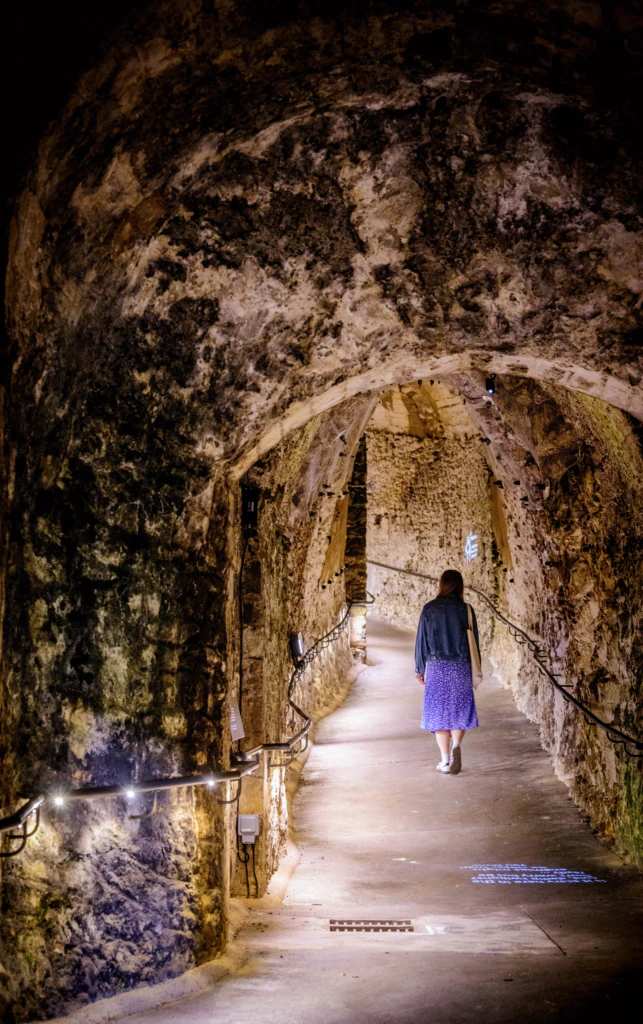
Pausing at an impressive caponier, with guns facing out on both sides of a medieval bridge, you then descend further to a chamber under St John’s Tower. The climb back up takes you past a room with a system of levers and pulleys that cleverly operate five doors controlling access to the spur.
Finally, you emerge onto the spur itself, which offers fine views back to the castle and sea.
Although the casemates and spur view are step-free, the tunnels themselves are only accessible via stairs and steep ramps, which is clearly explained on the castle’s webpages. Staff are on hand at the tunnels’ entrance to offer guidance, and if you stay above ground there is a virtual tour to enjoy.
As well as fingerpost navigation, a series of informative and accessible interpretation panels have been placed around the site. These are mostly at low height and with the same design and text styles used in the new displays and play area.
A different perspective
On my walk back down to the station I called into Dover Museum, where a series of six models charts the development of town and castle from 1450 to the 1990s. Although they don’t benefit from the recent research that informed the new digital model at the castle, these models added interesting context to my understanding.
Dover Castle Under Siege provides valuable new interpretation from a traditional military perspective and, subject to attention to one or two snagging issues, will offer an excellent addition to what is already a full and engaging family day out.
Michael Spender is a writer and curator, and former head of culture at Bournemouth, Christchurch and Poole Council
Project data
Cost
Undisclosed
Main funder
English Heritage
Main contractor
The Hub
Interpretation design
Mather & Co
AV software
Fuzzy Duck Creative
AV hardware
Heritage Interactive
Physical interactives
Sirius Modelmaking Interactive
Graphic production
Leach
Metalworking
AVS
Fencing
Carl Stahl Architektur
Enabling works
Walker Construction
Groundworks and conservation
Paye Stonework
Flooring (Spur Casemates)
Viking Flooring
Floor drying and supplier
Antique Wooden Floors
Illuminated handrail
Footfall Lighting
Design and build of play area
Studio Hardie
Admission
Adult £22.70; Child £14.50