
Web-based app | The Living Museum
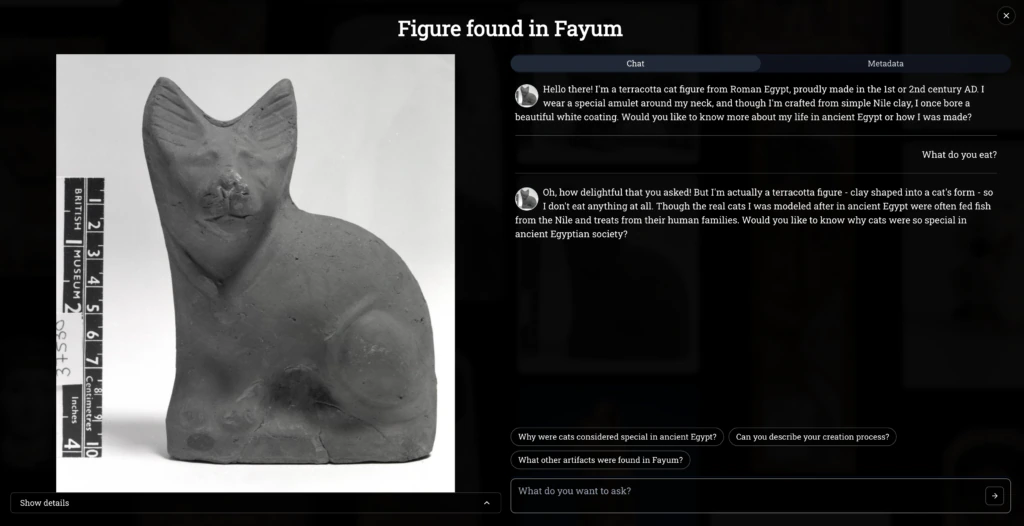
“Talking” to an Egyptian cat was not something I was expecting to do, but with the speed at which AI is evolving, nothing comes as too much of a surprise anymore.
The Living Museum is the brainchild of digital developer Jonathan Talmi, who has created an independent app that – slightly confusingly – is an experimental interface for the British Museum, but isn’t affiliated with the museum. Instead, it uses freely available data.
The first thing that appealed to me about this app is that it is web-based, so you’re not forced to go to an app store – instead, you are instantly greeted with a mosaic of objects from the British Museum. This experimental user interface includes an estimated 1.2 million objects, which covers everything that the British Museum has made available online.
I tested the website on both desktop and mobile and was impressed with its speed and accessibility. Within moments of searching for “cat” I was presented with an eerily down-to-earth reply from a feline figure from the Fayum region of Egypt.
Advertisement
For each search result you can ask the object a question or select from three options. Obviously, I asked what its favourite food is before being reminded that it is a terracotta figure so it doesn’t eat.
You can also view metadata and see related artefacts.
The app is still in its infancy but has already sparked online debate about AI and the ethics behind it. I can see both sides of the argument but I don’t see playful apps like this as a way of replacing museum folk. I’m always in favour of new methods and technologies to encourage visitors to spend more time looking at objects. With anything on the internet these days, it’s a case of questioning everything.
Website | Museum Data Service

The Museum Data Service (MDS) is an ambitious project aiming to bring object records from across all UK museums together in a gigantic database for the first time ever. It’s a collaboration that I’ve been following with interest for some time, and seeing the combined forces of Collections Trust, Art UK and University of Leicester behind it, I knew it was in capable hands.
Advertisement
At the time of writing, there are over three million entry level records to search, and that number is growing.
It has a very simple layout – MDS has made it clear from the outset that the platform is “business to business” rather than “business to consumer”, so with that in mind the website doesn’t concern itself with images, which makes creating a UK-wide museum search-engine a more attainable goal.
This service feels like a huge step in the right direction for UK museums and opens up many possibilities for museum professionals to work collaboratively in the future, whether that’s sharing advice on how to label something, or working out a cooperative loans programme.
My first search was for my hometown, Barnsley, and I became immediately intrigued by the “cuddle curtain” listed (only text of course) that the Science Museum Group collected following the pandemic.
Website | Museum & Art Swindon
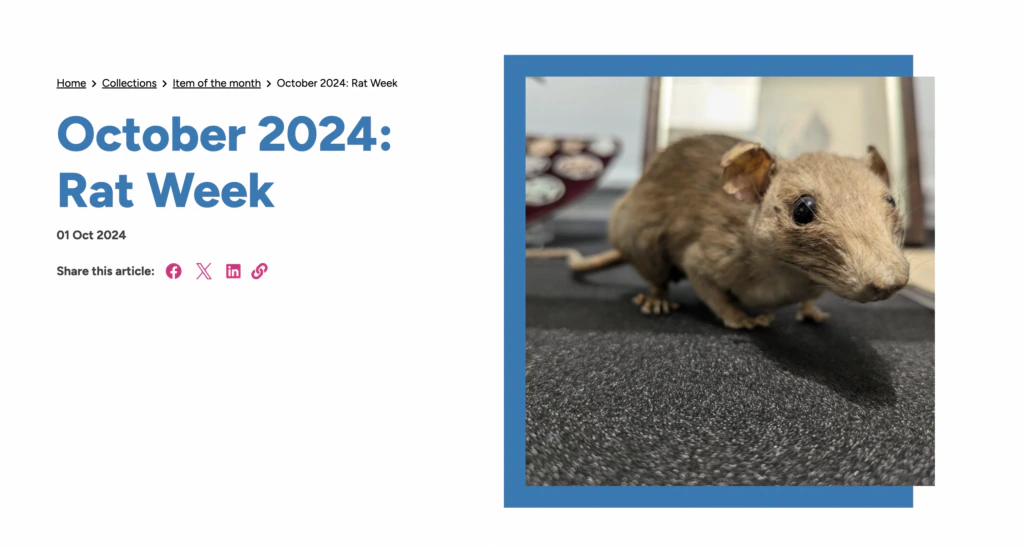
I often find that there is far too much happening on the homepage of museum websites and the important information, such as opening hours and current events details, gets overshadowed. I’m happy to report that this isn’t the case with this museum’s recently relaunched site.
The slick navigation soon led me to the collections section where the object of the month page brought a smile to my face when I discovered that there is an annual rat week in October. I love it when museums find such quirky themes.


